
Éditions David
Livres Canada Books
View Rights Portal

David and Charles is an independent publisher of non-fiction books, predominantly in art, craft and creative categories. Our titles feature industry-leading authors and award-winning editorial and design, commissioned for commercial success in all markets. Category focus on practical how-to books in art, crochet, knitting, general crafts, patchwork & quilting, sewing and wellbeing. Cornerstone titles which are highly illustrated, project, technique and trend orientated.
View Rights Portal

David and Bathsheba presents a modernised edition of George Peele's explosive biblical drama about the tangled lives, deadly liaisons, and twisted histories of Ancient Israel's royal family. Martin's critical edition is the first modern single-volume edition of the play since 1912 and opens up this unduly neglected gem of English Renaissance drama to student and scholar alike. The introduction examines such topics as the play's treatment of its biblical and poetic sources, its engagement with Elizabethan politics, and its forceful representations of religious fanaticism, genocide, and sexual violence. Its commentary notes clarify the text's meaning and staging, guide the reader through the play's dramatisation of the turbulent Davidic period of Ancient Israel's history, and place the play in its broader cultural and artistic milieu. Martin's edition aims to encourage new contemporary critical study of Peele's powerful and disturbing drama.
 Trusted Partner

David and Bathsheba presents a modernised edition of George Peele's explosive biblical drama about the tangled lives, deadly liaisons, and twisted histories of Ancient Israel's royal family. Martin's critical edition is the first modern single-volume edition of the play since 1912 and opens up this unduly neglected gem of English Renaissance drama to student and scholar alike. The introduction examines such topics as the play's treatment of its biblical and poetic sources, its engagement with Elizabethan politics, and its forceful representations of religious fanaticism, genocide, and sexual violence. Its commentary notes clarify the text's meaning and staging, guide the reader through the play's dramatisation of the turbulent Davidic period of Ancient Israel's history, and place the play in its broader cultural and artistic milieu. Martin's edition aims to encourage new contemporary critical study of Peele's powerful and disturbing drama.
Trusted Partner

This book examines the television serials created by influential showrunner David Simon. The book argues that Simon's main theme is the state of the contemporary American city and that all of his serials (barring one about the Iraq War) explore different facets of the metropolis. Each series offers distinctly different visions of the American city, but taken together they represent a sustained and intricate exploration of urban problems in modern America. From deindustrialisation in The Wire and residential segregation in Show Me a Hero to post-Katrina New Orleans in Treme and the transformation of the urban core in The Deuce, David Simon's American city traces the urban through-line in Simon's body of work. Based on sustained analysis of these serials and their engagement with contemporary politics and culture, David Simon's American city offers a compelling examination of one of television's most arresting voices.
Trusted Partner
For nearly half a century Anne Lake Prescott has been a force and an inspiration in Renaissance studies. A force, because of her unique blend of learning and wit and an inspiration through her tireless encouragement of younger scholars and students. Her passion has always been the invisible bridge across the Channel: the complex of relations, literary and political, between Britain and France. The essays in this long-awaited collection range from Edmund Spenser to John Donne, from Clément Marot to Pierre de Ronsard. Prescott has a particular fondness for King David, who appears several times; and the reader will encounter chessmen, bishops, male lesbian voices and Roman whores. Always Prescott's immense erudition is accompanied by a sly and gentle wit that invites readers to share her amusement. Reading her is a joyful education.
Trusted Partner
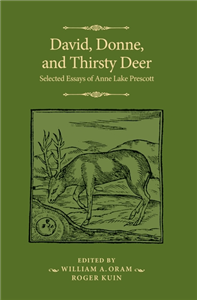
For nearly half a century Anne Lake Prescott has been a force and an inspiration in Renaissance studies. A force, because of her unique blend of learning and wit and an inspiration through her tireless encouragement of younger scholars and students. Her passion has always been the invisible bridge across the Channel: the complex of relations, literary and political, between Britain and France. The essays in this long-awaited collection range from Edmund Spenser to John Donne, from Clément Marot to Pierre de Ronsard. Prescott has a particular fondness for King David, who appears several times; and the reader will encounter chessmen, bishops, male lesbian voices and Roman whores. Always Prescott's immense erudition is accompanied by a sly and gentle wit that invites readers to share her amusement. Reading her is a joyful education.
Trusted Partner

New D.H. Lawrence uses current and emergent approaches in literary studies to explore one of Britain's major modernist writers. The collection features new work by the present generation of Lawrence scholars, who are brought together here for the first time. Chapters include: Andrew Harrison on the marketing of Sons and Lovers; Howard J. Booth on The Rainbow, Marxist criticism and colonialism; Holly A. Laird on ethics and suicide in Women in Love; Hugh Stevens on psychoanalysis and war in Women in Love; Jeff Wallace on Lawrence, Deleuze and abstraction; Stefania Michelucci on myth and war in 'The Ladybird'; Bethan Jones on gender and comedy in the late short fiction; Fiona Becket on green cultural critique, Apocalypse and Birds, Beasts and Flowers; and Sean Matthews on class, Leavis and the trial of Lady Chatterley. New D.H. Lawrence will be of interest to all concerned with contemporary writing on Lawrence, modernism and English radical cultures. ;
Trusted Partner

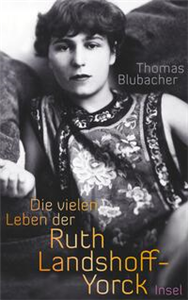
Die erste Biographie der Ruth Landshoff-Yorck Sie spielte Krocket mit Thomas Mann, wurde von Oskar Kokoschka porträtiert, verhalf Marlene Dietrich zu ihrer Rolle im Blauen Engel, verkehrte mit Andy Warhol, Patricia Highsmith und Salvador Dalí … Ruth Landshoff-Yorck war Glitzergirl und androgyne Stil-Ikone, vor allem aber eine vielseitige Literatin, die die Presse der Weimarer Republik mit flotten Feuilletons versorgte und mehrere Romane publizierte. Ihre Kurzgeschichten und Gedichte wurden weltweit veröffentlicht. Das Leben der Ruth Landshoff schlägt eine Brücke von der Bohème der Weimarer Republik zur amerikanischen New Bohemia der 60er Jahre, vom expressionistischen Stummfilm zur Entstehung des experimentellen Off-Off-Broadways und nicht zuletzt von der schwulen Subkultur der „goldenen“ Zwanziger zur alternativen Szene New Yorks. In jahrelanger Arbeit hat Thomas Blubacher unbekannte Dokumente aufgespürt und Zeitzeugen befragt. Erstmals liegt nun eine Biographie der verkannten Avantgarde-Literatin und engagierten Antifaschistin vor, deren viele Leben in Berlin, Paris und Venedig, London und New York die Zeitläufte eines halben Jahrhunderts spiegeln.
Trusted Partner


Die Frau auf dem Bahnhof, ist es wirklich Ruth, die geheimnisvolle Freundin eines Mitschülers auf der Klosterschule, kaum verändert nach all den Jahren? Oder nur eine Einbildung? Zu erzählen wäre eine irritierende Liebesgeschichte. Plötzlich, unabweisbar tauchen Erinnerungsbilder auf aus einer Welt, die jahrzehntelang versunken war. Eine Eisenbahnbrücke wird sichtbar, ein Stauwehr, eine Totenwache. Zögernd tastet sich der Erinnernde zurück, vergegenwärtigt: den ersten Schultag, die strengen Regeln des Zusammenlebens im Internat, die Bösartigkeiten der Jungen, aber auch das Schweigen zwischen ihnen, die Rivalitäten und Intrigen, die Eigenarten der Lehrer, die ersten Erfahrungen mit Liebe und Liebelei. Immer wieder gehen die Erinnerungen zu Erich, dem verletzlichen Zimmergenossen von damals, der von den anderen verspottet wurde und – uneingestanden – beneidet. Das Erinnern gerät ins Stocken und setzt immer wieder neu an. Was waren das für Briefe, die Erich zu seiner Verzweiflungstat trieben? Wer schrieb sie? Und welche Rolle spielt Ruth bei allem? Immer wieder werden einzelne Motive umkreist, wie Mosaiksteine fügen sich langsam die Details zu einem Bild, wird das Unaussprechliche benennbar: Einer ist gegangen. Erich. Und Ruth? Urs Faes’ Roman fragt mit bohrender Intensität nach Verantwortung und Schuld, ohne durch einfache Zuweisungen Entlastung zu gewähren.
Trusted Partner

Die Frau auf dem Bahnhof, ist es wirklich Ruth, die geheimnisvolle Freundin eines Mitschülers auf der Klosterschule? Oder nur eine Einbildung? Zögernd erinnert sich der Erzähler: an den ersten Schultag, die strengen Regeln des Zusammenlebens im Internat, die Rivalitäten und Intrigen der Jungen, die Eigenarten der Lehrer, die ersten Erfahrungen mit Liebe und Liebelei. Immer wieder gehen die Erinnerungen zu Erich, dem verletzlichen Zimmergenossen von damals, von den anderen verspottet und – uneingestanden – beneidet. Was waren das für Briefe, die Erich zu seiner Verzweiflungstat trieben? Wer schrieb sie? Und welche Rolle spielte Ruth bei alldem?
Trusted Partner
Trusted Partner
 Trusted Partner
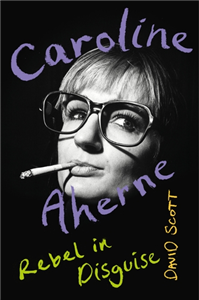
A thoughtful exploration of the work of this unique comedian and writer. Caroline Aherne was one of the most influential and beloved of British comedians. In this book David Scott explores Aherne's comedic artistry and creative legacy, focusing on her iconic characters and ground-breaking TV shows. Scott dives into Aherne's most beloved creations, from the sharp-tongued Mrs Merton to the quietly revolutionary The Royle Family. Drawing on the tales of collaborators and telling behind-the-scenes stories, he provides an intimate glimpse into the creative processes that brought these iconic works to life. At the same time, he examines the social and cultural influences that shaped Aherne's work, from the rich traditions of Northern working-class humour to the experiences of Irish migrants. Aherne's work is celebrated for its sharp wit, warmth and ability to find comedy in adversity. This book offers an exploration and celebration of one of comedy's most inventive minds, revealing how she reshaped the British comedy landscape.
Trusted Partner
Trusted Partner
»Als ich Paul Celan im Sommer 1940 in Czernowitz kennenlernte, brachte er mir, sehr bald danach, einige seiner Gedichte. Er sprach nicht über sie. Während ich sie las, achtete er genau auf den Ausdruck in meinem Gesicht. Er merkte, daß sie mir gefielen. So wurden wir Freunde«, schreibt Ruth Kraft im Vorwort zu dieser Sammlung der frühen Gedichte, die Celan ihr 1944 überreichte. »Wind der Welt im Sternenkleid,/ bring der Dunkelheit Bescheid.«
Trusted Partner
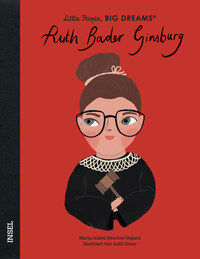
Als Ruth geboren wurde, hatten Männer und Frauen noch nicht die gleichen Rechte. Das fand sie nicht fair. Sie nahm sich vor, etwas zu ändern und für gleiche Chancen für alle zu kämpfen. Nach ihrem Studium wurde sie Richterin und setzte sich vor allem dafür ein, dass Frauen nicht mehr benachteiligt werden. Mit ihrem Mut und ihrem Einsatz für Gerechtigkeit wurde sie zum Vorbild für zahlreiche Menschen. Little People, Big Dreams erzählt von den beeindruckenden Lebensgeschichten großer Menschen: Jede dieser Persönlichkeiten, ob Künstlerin, Pilotin oder Wissenschaftler, hat Unvorstellbares erreicht. Dabei begann alles, als sie noch klein waren: mit großen Träumen.
Trusted Partner
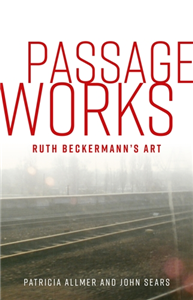
Passage Works is the first book-length English language critical analysis of the transdisciplinary work of the Austrian film-maker, writer, and artist Ruth Beckermann (b. 1952, Vienna). Beckermann's works interrogate identity and geography as formations of the intersections between the past and the contemporary. Taking as her central topics Austria and its history and politics, her own identity as a Jewish woman, and the contemporary global geopolitics of migration and displacement, Beckermann develops wider meditations in film, art, and writing on the persistence of European memory, and the meanings of Europe itself; on borders, migrations, and identities; on memories, traumas, and traditions; on the image as marker of presence and absence, repository of the traces of historical violence; and on the passage as metaphor for a range of physical, psychological, and ideological movements defining the complexities of contemporary cosmopolitan identities.
Trusted Partner
 Trusted Partner

This volume is the first ever attempt to unite and translate some of the key texts which informed Johan Huizinga's famous study of the Burgundian court, The Waning of the Middle Ages, a work which has never gone out of print. It combines these texts with sources that Huizinga did not consider, those that illuminate the wider civic world that the Burgundian court inhabited and the dynamic interaction between court and city. Through these sources, and an introduction offering new perspectives on recent historiography, the book tests whether Huizinga's controversial vision of the period still stands. Covering subjects including ceremonial events, such as the spectacles and gargantuan banquets that made the Burgundian dukes the talk of Europe, the workings of the court, and jousting, archery and rhetoric competitions, the book will appeal to students of late medieval and early modern Europe and to those with wider interests in court culture, ritual and ceremony.
Trusted Partner

Tony Richardson was a key figure in British cinema of the 1950s and 1960s. Having established himself in the theatre with the first production of John Osborne's landmark play Look Back in Anger, he became a central director in the New Wave, bringing greater realism to British cinema. He went on to make some of the most significant films of the 1960s including the multi Oscar-winning Tom Jones. This detailed and authoritative account of Richardson's career provides a reassessment of his achievements. As well as looking at his best known films, it considers neglected works such as Ned Kelly and Joseph Andrews, illustrating how Richardson remained a champion of the socially marginalised. In mapping out his life and work, from the English Stage Company to his final films in America, Shail re-establishes Richardson's at the front rank of British film directors, confirming his contribution to a period of dynamic change in British culture. ;



