
QuestFriendz
QuestFriendz is an independent publisher with a focus on imaginative, interactive and inclusive STEM-themed books and resources for children.
View Rights Portal
QuestFriendz is an independent publisher with a focus on imaginative, interactive and inclusive STEM-themed books and resources for children.
View Rights Portal


This book brings a new classroom approach for primary teachers to teach the explicit knowledge of scientific question-asking. This is an essential skill when children are involved in finding out about the world around them through science enquiry. Challenging the assumption that because children ask lots of questions in science, this automatically leads to meaningful learning of the enquiry curriculum, QuBuild is important for all children developing as scientific thinkers. It outlines an approach to explicitly plan for, practice and develop the craft of scientific question-asking. Unlock your children's science learning potential by exploring the QuBuild Process.
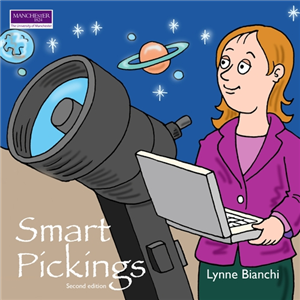
Smart Pickings (2nd Edition) further engages young readers with the world of science. It promotes talk between children, their classmates, teachers, parents, family and friends. The book introduces a range of diverse and inspirational scientists who have or are making a difference through their innovations and research. A book to encouraging us all to wonder, ask questions and ask 'Who are they?', 'How might I be like them?'
 Trusted Partner
Trusted Partner
Trusted Partner

This electronic version has been made available under a Creative Commons (BY-NC-ND) open access license. This book is about science in theatre and performance. It explores how theatre and performance engage with emerging scientific themes from artificial intelligence to genetics and climate change. The book covers a wide range of performance forms from Broadway musicals to educational theatre, from Somali drama to grime videos. It features work by pioneering companies including Gob Squad, Headlong Theatre and Theatre of Debate as well as offering fresh analysis of global blockbusters such as Wicked and Urinetown. The book offers detailed description and analysis of theatre and performance practices as well as broader commentary on the politics of theatre as public engagement with science. Science in performance is essential reading for researchers, students and practitioners working between science and the arts within fields such as theatre and performance studies, science communication, interdisciplinary arts and health humanities.
Trusted Partner

Do dogs belong with humans? Scientific accounts of dogs' 'species story,' in which contemporary dog-human relations are naturalised with reference to dogs' evolutionary becoming, suggest that they do. Dog politics dissects this story. This book offers a rich empirical analysis and critique of the development and consolidation of dogs' species story in science, asking what evidence exists to support it, and what practical consequences, for dogs, follow from it. It explores how this story is woven into broader scientific shifts in understandings of species, animals, and animal behaviours, and how such shifts were informed by and informed transformative political events, including slavery and colonialism, the Second World War and its aftermath, and the emergence of anti-racist movements in the twentieth and twenty-first centuries. The book pays particular attention to how species-thinking bears on 'race,' racism, and individuals.
Trusted Partner


We‘re in heaven when we‘re in love, admire the stars and Milky Way on crystal-clear nights, and look up to attempt to forecast the weather. We have always been fascinated and shaped by the sky, and even though science may have demythologised it, nonetheless it uses evernew technology to gaze deeper and farther into the universe and is constantly making new discoveries. Rolf Heilmann picks us up with our everyday experiences and questions about the sky, and takes us along on a fascinating journey through the times – from the worlds of the gods and art, philosophy and technology to the exploration of nearby and distant galaxies and the last secrets of science.
Trusted Partner
 Trusted Partner
 Trusted Partner


Solution based communication is a positive and very effective approach in therapy sessions. By means of specific questions, the strengths of the client are emphasized. This fan brings together the most important questions, ordered by subject (e.g. getting to know the client, goals, exceptions) and by type of conversation partner (clients who do not want to co-operate, who are in conflict, or who currently experience a crisis). All relevant questions close are at hand with this extremely practical tool!
Trusted Partner
Head in the game brings together international scholars from multiple humanities, social science, and scientific disciplines to critically examine one of the most vexing issues in global sport: concussion. It argues that science and medicine alone cannot solve the concussion crisis: sociocultural factors must also be considered. This edited collection draws attention to the ways that social, cultural, historical, political, literary, philosophical, and legal factors have shaped the concussion crisis in sport. Head in the game is essential reading for those who want to understand how the concussion crisis came to be, and provides guidance for developing ethical and evidence-based solutions in the future.
Trusted Partner


Does the coil interfere with MRI? Is a latex allergy the reason for condom intolerance? Does the contraceptive patch stay on whilst swimming? The subject of contraception raises far more questions in the pharmacy than those about the price of a particular contraceptive pill. This book brings together questions from customers about the basic principles, problems and risks of the different methods of contraception: ■ Natural family planning ■ Barrier methods ■ Intrauterine devices (IUD) ■ Hormonal contraceptives ■ Morning after pill (emergency pill) With the aid of patient- and customer-friendly formulated answers and a clarification of the pharmacological and medical background, all questions about the pill, ring, condoms and more can be faced without any problems!
Trusted Partner
As literary theory has grown more influential, interdisciplinary and sophisticated, it has come to concern itself with a much greater range of issues and objects than those traditionally considered literary. It now addresses philosophy, history, psychology, politics and the media. Addressing a central and fundamental, but relatively neglected, issue in literary theory, this title seeks to recontextualise how theory has changed our understanding of literature and its questions by relating literature to the institution of the university, to ethical judgements and values, new media and computer technology and the nature of representative democracy. ;
Trusted Partner

This catalogue of examination question is the ideal companion to the Short Textbook on Chemistry I. Together, both volumes help you prepare effectively for semester finals and for the first section of the German pharmaceutical licensing examination. ■ 1788 original IMPP questions from the years 1979–2017 ■ With annotated solutions ■ Covers Pharmacy I, or arranged by examination ■ Comments use the same chapter numbering as the Short Textbook on Chemistry I ■ Highlighting marks questions which have appeared more than once in the same wording. Ace your exams with Ehlers!
Trusted Partner

“Well, that’s football for you!” – football-related conventional wisdom when there’s nothing left to explain after a lucky win or unlucky defeat. But Jörg Heinrich, the renowned football journalist, is not satisfied with this platitude. “Woulda, Coulda, Shoulda”: in the 25 essays in this ball-smart book, bursting with esprit and wit, Jörg Heinrich addresses questions and topics that have never even been considered before, never mind answered. Such as: “What if Günter Netzer had not come on as a substitute in 1973?”, or “if Birgit Prinz had aimed better in the 1995 World Cup?”. “What if Mario Basler had been a non-smoker in 1999”, or “if SC Freiburg had fired their coach Christian Streich after relegation in 2015?”.
Trusted Partner

Working at the sales counter is never dull: Every day, people come to you with the widest possible variety of questions and expect good advice. It does not matter whether it is about self-medication for adults, pregnant women, children, about aids and appliances, vegan diets or alternative medicine: Whatever your customer’s concerns – you always offer well-founded counselling. Based on real-life counselling situations routinely encountered in a pharmacy, the authors – all pharmacists with experience of retail sales – provide important information for such conversations and suggest helpful questions to ask when patients seek advice. Become a sales counter expert in no time!
Trusted Partner
The book offers a new interpretation of the cultural and intellectual exchanges between Britain and southeastern Europe in an age of imperial transformation. It considers systematically the question of the management of ethnic difference in multinational imperial states as diverse as Britain, Austria-Hungary and the Ottoman Empire. It traces the regional experiences and impact of British scholars and public intellectuals steering through competing nationalisms and translating regional national questions to British and international audiences. The emphasis on past attempts to reconcile liberal democracy and nationalism with imperial rule continues to resonate in our day as intellectuals confront the challenges presented the rise of ethno-nationalist politics and shifting place of Britain in Europe.
Trusted Partner

 Trusted Partner
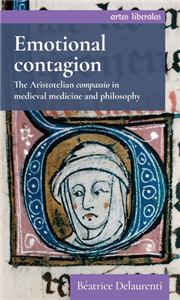
Yawning makes one yawn, crying makes one cry. In the same way, a shiver, appetite, sexual desire and confidence are transmitted from one person to another. These examples capture the contagion-like dimension of emotion, spreading rapidly among people with tangible behavioural manifestations. Emotional contagion still challenges scientific explanation, and philosophical, scientific and anthropological topics converge around this issue. In Medieval Latin, there is a specific name for this contagion: compassio ('compassion'). Etymologically, 'compassion' means the co-experience of a 'passion', involving an involuntary reaction of the soul or the body imitating the reactions of others. The book investigates how these topics were treated in medieval learned texts, and illuminates the twofold enigma, that of the trajectory of the term compassio, and that of explaining the phenomenon it denoted.
Trusted Partner

When is the use of force for humanitarian purposes legitimate? The book examines this question through one of the most controversial examples of humanitarian intervention in the post Cold War period: the 1999 NATO intervention in Kosovo. Justifying Violence applies a critical theoretical approach to an interrogation of the communicative practices which underpin claims to legitimacy for the use of force by actors in international politics. Drawing on the theory of communicative ethics, the book develops an innovative conceptual framework which contributes a critical communicative dimension to the question of legitimacy that extends beyond the moral and legal approaches so often applied to the intervention in Kosovo. The empirical application of communicative ethics offers a provocative and nuanced account which contests conventional interpretations of the legitimacy of NATO's intervention. ;
Trusted Partner


