
Scion Publishing Ltd
Scion was formed in 2003 with the aim of producing innovative books for the life, medical and biomedical sciences. Their textbooks are recommended at Harvard, Yale and Stanford universities.
View Rights Portal
Scion was formed in 2003 with the aim of producing innovative books for the life, medical and biomedical sciences. Their textbooks are recommended at Harvard, Yale and Stanford universities.
View Rights Portal
Burleigh Dodds Subliscience Publishing was established in 2015 by former staff at the award-winning Woodhead Publishing. Our vision is to help solve one of the world’s greatest challenges: to feed the world’s growing population. There is an urgent need for a more climate-smart agriculture able to feed a growing population whilst, at the same time, adapting to (and not exacerbating) climate change. Our goal is to build collections of research on key topics in agricultural science so that researchers can build on existing work and collaborate more effectively. We are achieving this by using ’smart-publishing’ to help achieve ’climate-smart’ agriculture.
View Rights Portal

Zwei Herzen, zerrissen zwischen zwei Welten. Die Göttlich-Saga entwickelt sich dramatisch, und Helens Schicksal gleicht einer antiken Tragödie. Verdammt zu einer Liebe, die nicht sein darf, und hin und her gerissen zwischen Fluch und Gefühlen, zwischen Highschool und Unterwelt, muss Helen gleich zweifach durch die Hölle gehen. Nachts schlägt sie sich durch die Götterwelt, aber noch schlimmer quält sie tags, dass Lucas und sie sich unmöglich lieben dürfen. In der Unterwelt aber trifft Helen auf Orion, und je mehr Zeit die beiden miteinander verbringen, desto näher kommen sie sich. Doch dann geschieht etwas, das ausgerechnet Orion und Lucas zum Zusammenhalt zwingt: Die vier Scion-Häuser werden vereint, ein neuer Trojanischer Krieg scheint unausweichlich … Helen und Lucas - die göttliche Fortsetzung. - Der US-amerikanischen Megaerfolgs von Josephine Angelini. - Romantasy verknüpft mit griechischer Mythologie und einer Liebe zwischen Todfeinden. - Freue dich schon jetzt auf Teil 3 Unleashed. Göttlich verliebt.


Zwei Herzen, zerrissen zwischen zwei Welten. Die Göttlich-Saga entwickelt sich dramatisch, und Helens Schicksal gleicht einer antiken Tragödie. Verdammt zu einer Liebe, die nicht sein darf, und hin und her gerissen zwischen Fluch und Gefühlen, zwischen Highschool und Unterwelt, muss Helen gleich zweifach durch die Hölle gehen. Nachts schlägt sie sich durch die Götterwelt, aber noch schlimmer quält sie tags, dass Lucas und sie sich unmöglich lieben dürfen. In der Unterwelt aber trifft Helen auf Orion, und je mehr Zeit die beiden miteinander verbringen, desto näher kommen sie sich. Doch dann geschieht etwas, das ausgerechnet Orion und Lucas zum Zusammenhalt zwingt: Die vier Scion-Häuser werden vereint, ein neuer Trojanischer Krieg scheint unausweichlich … Helen und Lucas - die göttliche Fortsetzung. Der schön gestaltete Relaunch des US-amerikanischen Megaerfolgs von Josephine Angelini. Band 2 der Göttlich-Neuauflage im hippen Look: für noch mehr Style in deinem Bücherregal. Romantasy verknüpft mit griechischer Mythologie und einer Liebe zwischen Todfeinden. Freue dich schon jetzt auf Band 3 Unleashed. Göttlich verliebt.
 Trusted Partner


This book examines the links between major contemporary public sector reforms and neoliberal thinking. The key contribution of the book is to enhance our understanding of contemporary neoliberalism as it plays out in the public administration and to provide a critical analysis of generally overlooked aspects of administrative power. The book examines the quest for accountability, credibility and evidence in the public sector. It asks whether this quest may be understood in terms of neoliberal thinking and, if so, how? The book makes the argument that while current administrative reforms are informed by several distinct political rationalities, they evolve above all around a particular form of neoliberalism: constructivist neoliberalism. The book analyses the dangers of the kinds of administrative power seeking to invoke the self-steering capacities of society and administration itself.
Trusted Partner
Migration and social policy in a changing world bridges the generally separate fields of social policy and migration studies. This book traces social policy responses to migration from the Industrial Revolution to today's era of globalisation and large-scale migration. Through case studies from across the globe, the book explores key themes including rural-urban migration, social citizenship, welfare internationalism and diasporic care systems. It examines how migrants are included in or excluded from social citizenship in host societies, and how they become providers of welfare services such as health and social care. Moving beyond a methodological nationalist focus, the book investigates migrant incorporation into welfare states through family networks, faith communities, and other informal welfare structures. It combines migrants' experiences with host societies' immigration politics, institutional perspectives and policies to present a comprehensive analysis of the migration-welfare relationship. This volume fills a gap in academic literature and offers policymakers, practitioners and scholars a framework for understanding the interplay between migration and social policy in our changing world.
Trusted Partner

This electronic version has been made available under a Creative Commons (BY-NC-ND) open access license. This book is about science in theatre and performance. It explores how theatre and performance engage with emerging scientific themes from artificial intelligence to genetics and climate change. The book covers a wide range of performance forms from Broadway musicals to educational theatre, from Somali drama to grime videos. It features work by pioneering companies including Gob Squad, Headlong Theatre and Theatre of Debate as well as offering fresh analysis of global blockbusters such as Wicked and Urinetown. The book offers detailed description and analysis of theatre and performance practices as well as broader commentary on the politics of theatre as public engagement with science. Science in performance is essential reading for researchers, students and practitioners working between science and the arts within fields such as theatre and performance studies, science communication, interdisciplinary arts and health humanities.
Trusted Partner
 Trusted Partner


Böll’s well-known opposition to fascism and war informs this moving story of a single day in the life of traumatized soldier Robert Faehmel, scion of a family of successful Cologne architects, as he struggles to return to ordinary life after the Second World War. An encounter with a war-time nemesis, now a power in the reconstruction of Germany, forces him to confront private memories and the wounds of Germany’s defeat in the two World Wars.
Trusted Partner
This collection brings together studies of popular performance and politics across the nineteenth century, offering a fresh perspective from an archivally grounded research base. It works with the concept that politics is performative and performance is political. The book is organised into three parts in dialogue regarding specific approaches to popular performance and politics. Part I offers a series of conceptual studies using popular culture as an analytical category for social and political history. Part II explores the ways that performance represents and constructs contemporary ideologies of race, nation and empire. Part III investigates the performance techniques of specific politicians - including Robert Peel, Keir Hardie and Henry Hyndman - and analyses the performative elements of collective movements.
Trusted Partner

This important book provides new understandings of how the politics of memory impacts peace in societies transitioning from a violent past. It does so by developing a theoretical approach focusing on the intersection of sites, agency, narratives, and events in memory-making. Drawing on rich empirical studies of mnemonic formations in Cyprus, Bosnia and Herzegovina, Rwanda, South Africa and Cambodia, the book speaks to a broad audience. The in-depth, cross-case analysis shows that inclusivity, pluralism, and dignity in memory politics are key to the construction of a just peace. The book contributes crucial and timely knowledge about societies that grapple with the painful legacies of the past and advances the study of memory and peace.
Trusted Partner
This book is about power in welfare encounters. Present-day citizens are no longer the passive clients of the bureaucracy and welfare workers are no longer automatically the powerful party of the encounter. Instead, citizens are expected to engage in active, responsible and coproducing relationships with welfare workers. However, other factors impact these interactions; factors which often pull in different directions. Welfare encounters are thus influenced by bureaucratic principles and market values as well. Consequently, this book engages with both Weberian (bureaucracy) and Foucauldian (market values/NPM) studies when investigating the powerful welfare encounter. The book is targeted Academics, post-graduates, and undergraduates within sociology, anthropology and political science.
Trusted Partner
Hitchcock's professed disdain for actors is belied by the extraordinary range and depth of performances featured in his films. It might even be argued that many stars gave their richest and most complex performances in his work. Hitchcock's films are also imbued with the theme of performance, as when his fugitive men and errant women assume fragile new identities and move between roles. Actors and other performers also often feature as characters. However, the exhaustive academic literature on Hitchcock has to date produced surprisingly little work about acting and performance in his films. The collection includes contributions from a range of leading scholars on Hitchcock, performance, stardom, and British Cinema, including Charles Barr, David Greven, Mark Glancy, Lucy Bolton, Lawrence Napper and Michael Williams, and an interview with leading composers/accompanists Neil Brand and Stephen Horne on scoring performance in Silent Hitchcock.
Trusted Partner
The pastor in print explores the phenomenon of early modern pastors who chose to become print authors, addressing ways authorship could enhance, limit or change clerical ministry and ways pastor-authors conceived of their work in parish and print. It identifies strategies through which pastor-authors established authorial identities, targeted different sorts of audiences and strategically selected genre and content as intentional parts of their clerical vocation. The first study to provide a book-length analysis of the phenomenon of early modern pastors writing for print, it uses a case study of prolific pastor-author Richard Bernard to offer a new lens through which to view religious change in this pivotal period. By bringing together questions of print, genre, religio-politics and theology, the book will interest scholars and postgraduate students in history, literature and theological studies, and its readability will appeal to undergraduates and non-specialists.
Trusted Partner

Air empire is a fresh study of civil aviation as a tool of late British imperialism. The first pioneering flights across the British empire in 1919-20 were flag-waving adventures that recreated an era of plucky British maritime exploration and conquest. Britain's development of international air routes and services was approved, organised and celebrated largely in London; there was some resistance in and beyond the subordinate colonies and dominions. Negotiating the financing and geopolitics of regular commercial air service delayed its inception until the 1930s. Technological, managerial and logistical problems also meant that Britain was slow into the air and slow in the air. Propaganda concealed underperformance and criticism. The study uses archival sources, biographies, industry magazines and newspapers to chronicle the disputed progress toward air empire. The rhetoric behind imperial air service offers a glimpse of late imperial hopes, fears, attitudes and style. Empire air service had emotional appeal and symbolic value, but disappointed in practice.
Trusted Partner
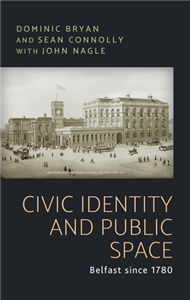
Civic identity and public space, focussing on Belfast, and bringing together the work of a historian and two social scientists, offers a new perspective on the sometimes lethal conflicts over parades, flags and other issues that continue to disrupt political life in Northern Ireland. It examines the emergence during the nineteenth century of the concept of public space and the development of new strategies for its regulation, the establishment, the new conditions created by the emergence in 1920 of a Northern Ireland state, of a near monopoly of public space enjoyed by Protestants and unionists, and the break down of that monopoly in more recent decades. Today policy makers and politicians struggle to devise a strategy for the management of public space in a divided city, while endeavouring to promote a new sense of civic identity that will transcend long-standing sectarian and political divisions.
Trusted Partner
 Trusted Partner

Musicians and Copyright explores the role of Collective Management Organizations (CMOs) in shaping the music industry from the mid-nineteenth century to today. Edited by VéroniquePouillard, Marius Buning, and Mala Loth, the book traces the development of CMOs and their impact on copyright and cultural production. Through historical analysis, it examines the challenges CMOs have faced, from colonial contexts to European integration and the digital age, and shows how CMOs have navigated regulatory changes, technological shifts, and internal politics. Offering a detailed history of these important institutions, Musicians and Copyright is a valuable resource for anyone interested in the intersection of music, law, and the cultural industries.
Trusted Partner

This book analyses the international phenomenon of private peace entrepreneurs. These are private citizens with no official authority who initiate channels of communication with official representatives from the other side of a conflict in order to promote a conflict resolution process. It combines theoretical discussion with historical analysis, examining four cases from different conflicts: Norman Cousins and Suzanne Massie in the Cold War, Brendan Duddy in the Northern Ireland conflict and Uri Avnery in the Israeli-Palestinian conflict. The book defines the phenomenon, examines the resources and activities of private peace entrepreneurs and their impact on the official diplomacy, and examines the conditions under which they can play an effective role in peace-making processes. This book is relevant to United Nations Sustainable Development Goal 16, Peace, justice and strong institutions.
Trusted Partner
The history of contemporary art is also a history of its newsletters, manifestos, magazines, pamphlets, and journals. Those periodical publications do not simply communicate or record ideas but have worked in exciting ways to shape art's practices, histories and communities. As a new generation of artists, activists and scholars seek to uncover the histories of alternative publishing and artistic networks, this book gathers original archival discoveries while offering methodologies for studying and thinking with those artefacts. As the first essay collection to focus on the periodical art press and the ways we study it, Counter print offers readers an alternative route into the past fifty years of contemporary art, one that is defiantly collaborative, border crossing and disruptive.
Trusted Partner

A grand strategy of peace is the first detailed account of Britain's role in the creation of the United Nations Organization during the Second World War. As a work of traditional diplomatic history that brings in elements of intellectual history, the book describes how British officials, diplomats, politicians, and writers - previously seen to be secondary actors to the United States in this period - thought about, planned for, and helped to establish a future international order. While in the present day, many scholars and analysts have returned to the origins of the post- 1945 international system, this book offers an exhaustive account of how the statesmen and more importantly, the officials working below the statesmen, actually conceived of and worked to establish a post-war world order.
Trusted Partner

Looking at contemporary film and television, this book explores how popular genres frame our understanding of on-screen performance. Previous studies of screen performance have tended to fix upon star actors, directors, or programme makers, or they have concentrated upon particular training and acting styles. Moving outside of these confines, this book provides a truly interdisciplinary account of performance in film and television and examines a much neglected area in our understanding of how popular genres and performance intersect on screen. Each chapter concentrates upon a particular genre or draws upon generic case studies in examining the significance of screen performance. Individual chapters examine contemporary film noir, horror, the biopic, drama-documentary, the western, science fiction, comedy performance in 'spoof news' programmes and the television 'sit com' and popular Bollywood films.

