
Hunan Literature and Art Publishing House
Publisher of fine Literature and Art books from China.
View Rights Portal
Publisher of fine Literature and Art books from China.
View Rights Portal
People’s Literature Publishing House Co., Ltd., currently a member of China Publishing Group Corporation, is the first and the largest professional national publishing institution in China. Founded in 1951, PLPH has published a vast number of quality literary works, from all time classics to the latest titles, by domestic writers and translated from other languages. PLPH enjoys a great amount of exclusive publishing resources, a high reputation among readers and was awarded many times with national literary and publishing prizes. Along with regular editing and production departments, it has a sub brand, Daylight Publishing, specializing in children’s book and five magazines and journals. We publish over a thousand titles each year, sharing outstanding literary works in a global platform. All-time classics such as the complete works of Shakespeare, Balzac, Tolstoy, Dostoevsky, Kafka, Hemingway, Sartre, and international bestsellers such as Harry Potter series are all introduced to Chinese readers by PLPH.
View Rights Portal

 Trusted Partner
Trusted Partner
Trusted Partner
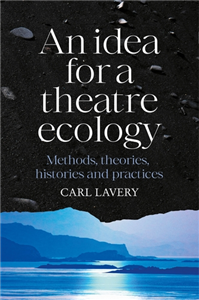
An Idea for a Theatre Ecology is the first book in the discipline of Theatre and Performance Studies to provide a rigorous and coherent theory of the ecology that is immanent to the theatrical medium. Over six clearly written chapters, the book provides a genealogy, outlines a method, provides a lexicon and demonstrates an alternative practice of ecoperformance analysis grounded in the figure of the archipelago. Focusing on Antonin Artaud's theatre of cruelty, the book argues that theatre has no need to provide ecological messages nor to transform itself into a platform for the narration of ecological stories. Instead, more is to be gained, environmentally and politically, by concentrating on the power of images, gestures and voices to create corporeal affects and sensations that implicate the spectators in a terrestrial event.
Trusted Partner

Death in modern theatre offers a unique account of modern Western theatre, focusing on the ways in which dramatists and theatre-makers have explored historically informed ideas about death and dying in their work. It investigates the opportunities theatre affords to reflect on the end of life in a compelling and socially meaningful fashion. In a series of interrelated, mostly chronological, micronarratives beginning in the late nineteenth century and ending in the early twenty-first century, this book considers how and why death and dying are represented at certain historical moments using dramaturgy and aesthetics that challenge audiences' conceptions, sensibilities, and sense-making faculties. It includes a mix of well-known and lesser-known plays from an international range of dramatists and theatre-makers, and offers original interpretations through close reading and performance analysis.
Trusted Partner

This volume explores the characteristics of the art and literature of the Second Empire in France; it examines the attitudes and positioning of artists and writers of the period in relation to a regime of dubious legitimacy, and the ways in which that regime exploited to its advantage the artistic capital available to it. ;
Trusted Partner

This electronic version has been made available under a Creative Commons (BY-NC-ND) open access license. This book is about science in theatre and performance. It explores how theatre and performance engage with emerging scientific themes from artificial intelligence to genetics and climate change. The book covers a wide range of performance forms from Broadway musicals to educational theatre, from Somali drama to grime videos. It features work by pioneering companies including Gob Squad, Headlong Theatre and Theatre of Debate as well as offering fresh analysis of global blockbusters such as Wicked and Urinetown. The book offers detailed description and analysis of theatre and performance practices as well as broader commentary on the politics of theatre as public engagement with science. Science in performance is essential reading for researchers, students and practitioners working between science and the arts within fields such as theatre and performance studies, science communication, interdisciplinary arts and health humanities.
Trusted Partner
Migration and social policy in a changing world bridges the generally separate fields of social policy and migration studies. This book traces social policy responses to migration from the Industrial Revolution to today's era of globalisation and large-scale migration. Through case studies from across the globe, the book explores key themes including rural-urban migration, social citizenship, welfare internationalism and diasporic care systems. It examines how migrants are included in or excluded from social citizenship in host societies, and how they become providers of welfare services such as health and social care. Moving beyond a methodological nationalist focus, the book investigates migrant incorporation into welfare states through family networks, faith communities, and other informal welfare structures. It combines migrants' experiences with host societies' immigration politics, institutional perspectives and policies to present a comprehensive analysis of the migration-welfare relationship. This volume fills a gap in academic literature and offers policymakers, practitioners and scholars a framework for understanding the interplay between migration and social policy in our changing world.
Trusted Partner
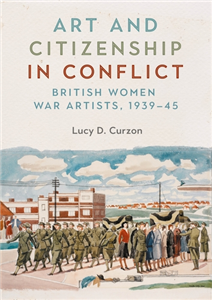
Art and Citizenship in Conflict examines the work of women war artists in order to highlight the complexity of citizenship and gender in Britain during the Second World War. Evelyn Dunbar, Mary Kessell, Ethel Gabain, Stella Schmolle, and Laura Knight, among others, were commissioned by the War Artists' Advisory Committee (WAAC) to document the millions of women who took up sometimes unconventional roles-in agriculture, the auxiliary services, and manufacturing, among others-to support the British war effort. Indeed, their prints, drawings, and paintings were part of a broader scheme to uphold morale and promote much-needed citizen involvement on the home front. While there is growing interest, the importance of their remit in the history of the Second World War and the quality of their artistry have nonetheless not yet secured them a significant place in scholarship. Art and Citizenship in Conflict seeks to amend this gap while also broadening approaches to the study of war itself.
Trusted Partner
On 25 January 1474, Charles the Bold, duke of Burgundy, appeared before his subjects in Dijon. Robed in silk, gold and precious jewels and wearing a headpiece that gave the illusion of a crown, he made a speech in which he cryptically expressed his desire to become a king. Three years later, Charles was killed at the battle of Nancy, an event that plunged the Great Principality of Burgundy into chaos. This book, innovative and essential, not only explores Burgundian history and historiography but offers a complete synthesis about the nature of politics in this region, considered both from the north and the south. Focusing on political ideologies, a number of important issues are raised relating to the medieval state, the signification of the nation under the 'Ancien Regime', the role of warfare in the creation of political power and the impact of political loyalties in the exercise of government. In doing so, the book challenges a number of existing ideas about the Burgundian state.
Trusted Partner
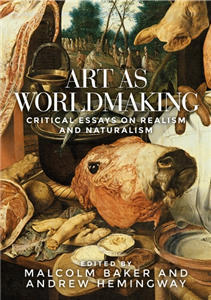
Art as worldmaking is a response to Alex Potts's provocative 2013 book Experiments in modern realism. Twenty essays by leading scholars test Potts's recasting of realism through examinations of art produced in different media and periods, ranging from eighth-century Chinese garden aesthetics to video work by the contemporary Russian collective Radek Community. While the book does not neglect avatars of pictorial realism such as Menzel and Eakins, or the question of nineteenth-century realism's historical antecedents, it is contemporary in orientation in that many contributors are particularly concerned with the questions that sculpture, photography and non-traditional media pose for realism as an aesthetic norm. It will be essential reading for students of art history concerned with art's truth value or more broadly with conceptual problems of representation and the intersections of art and politics.
Trusted Partner
Trusted Partner
Trusted Partner
At every level of human interaction new levels of identity-based tension are in evidence. Contributors to this book explore facets of fragmentation processes within systems of state and interstate organisation, how they influence the use of negotiation, and how negotiation might be used to effect renewed coherence. Following Anstey's (Ch1) introductory chapter framing the nature and shape of fragmentation dynamics, Zartman (Ch 2) argues that the use of negotiation as a process of conflict resolution is deeply shaped by identity groups whose internal coherence is dependent on sustaining a negative identity of others. International relations are no longer solely the realm of experienced diplomats but are shaped as Meerts (Ch3) points out by politicians seeking to be responsive to voting publics rather than wider concerns. Anstey digs into problems of fragmentation (Ch. 4) and Troitskiy (Ch 5) points out how a reluctant acceptance of the power of 'the other' can lead to a form of strategic stability in relations. Anstey and Meerts (Ch 6) point out in their analysis of the Israeli-Palestinian case as an identity conflict turned very bad. Guggenbuhl (Ch 7 ) reveals how structures and processes have been designed within the EU to prevent, contain and regulate conflicts to limit risks of confrontation and fragmentation. Schuessler (Ch 8) to advocates a shift away from a template or roadmap approach to EU membership to a cohesion based on non-dominance. There is still a strong desire on the part of some states, like Northern Macedonia, to become EU members, as reflected in Manton's (Ch 9). Paula Garzon and Frans Schram explain the success of the Colombia Peace Negotiations (Ch 10), while Odigie and da Rocha (Ch 11) analyse the struggle faced by ECOWAS to influence coup leaders in Mali to return to constitutional government and changes of government by constitutional means. Liang (Ch12) discusses how the internet as the modern vehicle of inter-state, inter-group and interpersonal communication has become weaponised. In Ch 13 Anstey draws some lessons from contributions to the compilation.
Trusted Partner
Art History: A critical introduction to its methods provides a lively and stimulating introduction to methodological debates within art history. Offering a lucid account of approaches from Hegel to post-colonialism, the book provides a sense of art history's own history as a discipline from its emergence in the late-eighteenth century to contemporary debates. By explaining the underlying philosophical and political assumptions behind each method, along with clear examples of how these are brought to bear on visual and historical analysis, the authors show that an adherence to a certain method is, in effect, a commitment to a set of beliefs and values. The book makes a strong case for the vitality of the discipline and its methodological centrality to new fields such as visual culture. This book will be of enormous value to undergraduate and graduate students, and also makes its own contributions to ongoing scholarly debates about theory and method. ;
Trusted Partner

Rescaling the state provides a theoretically-informed and empirically-rich account of the process of devolution undertaken in the UK since 1997, focusing in particular on the devolution of economic governance. Using case studies from England, Scotland, Northern Ireland and Wales, the book examines the purported reasons for, and the unintended consequences of, devolution. As well as comparing policy and practice across the four devolved territories, the book also explores the pitfalls and instances of good practice associated with devolution in the UK. Rescaling the state is an important text for all social scientists - particularly political scientists, sociologists, anthropologists and human geographers - interested in the devolution of power in the UK and, indeed, all instances of contemporary state restructuring. It is also a significant book for all policy-makers interested in understanding the increasing complexity of the policy landscapes of economic governance in the UK. ;
Trusted Partner
Trusted Partner

This book is the only one of its kind, providing a clear and exhaustive analysis of the different approaches to the future of Britain's second chamber. The House of Lords has long been the subject of proposals for reform - some successful, others not - and calls for the existing membership to be replaced by elected members have been a staple of political debate. The debate has been characterised by heat rather than light, proponents and opponents of change often talking past one another. This work gives shape to the debate, drawing out the role of the House of Lords, previous attempts at reform, and the different approaches to the future of the House. It develops the argument for each and analyses the current state of the debate about the future of the upper house in Britain's political system.
Trusted Partner
Trusted Partner
Empirical art: Filmmaking for fieldwork in practice is an insightful exploration of what the craft of filmmaking brings to social science research. Providing creative avenues on how to narrate encounters, relationships, and experiences during fieldwork, this comprehensive volume offers a rich tapestry of theoretical explorations and explorative methodologies. Skilfully connecting the worlds of ethnography, art and cinema, the contributors in this book act as a compass for filmmakers and researchers venturing to use a camera and microphone to relate and narrate their research collaborations and fieldsites. Drawing from the authors' extensive experience in disciplines like social anthropology, environmental humanities, and political science, "Empirical Art" breaks down the intricate process of crafting ethnographic films that departs from the researcher's subjectivity. Covering aspects of filmmaking from conceptualisation to production and distribution, readers are equipped with a treasure trove of collaborative techniques, innovative approaches, and ethical considerations necessary to generate and examine storytelling practices in contemporary fields of study. The authors discuss the significance of the multiple roles that technologies of filmmaking play in reflecting on cultural practices, social dynamics, and (beyond) human storytelling and their transformative potentials. Whether a seasoned filmmaker, an aspiring ethnographer, or an academic seeking new dimensions for their research, Empirical Art serves as a guide to integrating visual storytelling, cinema craft and empirical research.



