
September 2010
Your Search Results
-
Promoted Content


-
Promoted Content
-
 Trusted Partner

 Humanities & Social SciencesApril 2023
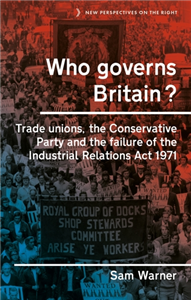
Who governs Britain?
Trade unions, the Conservative Party and the failure of the Industrial Relations Act 1971
by Sam Warner
Providing fresh insights from the archival record, Who governs Britain? revisits the 1970-74 Conservative government to explain why the Party tried - and failed - to reform the system of industrial relations. Designed to tackle Britain's strike problem and perceived disorder in collective bargaining, the Industrial Relations Act 1971 established a formal legal framework to counteract trade union power. As the state attempted to disengage from and 'depoliticise' collective bargaining practices, trade union leaders and employers were instructed to discipline industry. In just three-and-a-half years, the Act contributed to a crisis of the British state as industrial unrest engulfed industry and risked undermining the rule of law. Warner explores the power dynamics, strategic errors and industrial battles that destroyed this attempt to tame trade unions and ultimately brought down a government, and that shape Conservative attitudes towards trade unions to this day.
-
Trusted Partner
 Humanities & Social SciencesApril 2017
Britain and the formation of the Gulf States
Embers of empire
by Shohei Sato, Andrew Thompson, John M. MacKenzie
This book offers new insight into the end of the British Empire in the Middle East. It takes a fresh look at the relationship between Britain and the Gulf rulers at the height of the British Empire, and how its effects are still felt internationally today. Over the last four decades, the Persian Gulf region has gone through oil shocks, wars and political changes, and yet the basic entities of the southern Gulf states have remained largely in place. Drawing on extensive multi-archival research in the British, American and Gulf archives, this book illuminates a series of negotiations between British diplomats and the Gulf rulers that inadvertently led Bahrain, Qatar and the UAE to take their current shapes. The story addresses the crucial question of self-determination versus 'better together', a dilemma pertinent to anyone interested in the transformation of the modern world.
-
Trusted Partner
 The ArtsNovember 2010
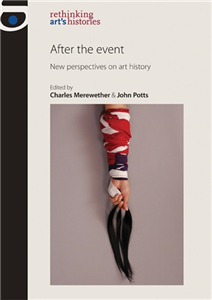
After the Event
New perspectives on art history
by Amelia Jones, Charles Merewether, John Potts, Marsha Meskimmon
The event occurs in and over time; the aftermath concerns the traces, which are frozen into images, objects, re-presentations. Traditionally, art history is written in the aftermath as representational. A different perspective on the visual arts is opened up when scholars insist on exploring the status of the event itself, allowing temporality to remain in place. By focusing on the event, recognition of the complex character of the traces becomes all the more evident, challenging the singularity of representation itself. This book opens up debates on art history and theory to a broad range of perspectives, offering fresh approaches to art history and media culture alongside diverse investigations into cross-cultural and non-Western art practices. The essays draw together a wide and regionally diverse range of scholars from numerous areas, including film and documentary studies, philosophy, intellectual and cultural history, media theory and performance studies, as well as art history and theory. ;
-
Trusted Partner
 Humanities & Social SciencesJanuary 2012
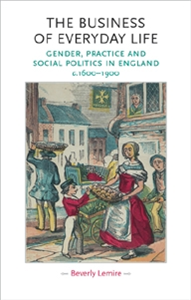
The business of everyday life
Gender, practice and social politics in England, c.1600–1900
by Beverly Lemire, Pamela Sharpe, Penny Summerfield, Lynn Abrams, Cordelia Beattie, Kim Latham
From 1600 to 1900 a growing consumerism fired the English economy, shaping the priorities of individuals, and determining the allocation of resources within families. Everyday business might mean making a trip to the pawnbroker, giving a loan to a trusted friend of selling off a coat, all to make ends meet. Both women and men engaged in this daily budgeting, but women's roles were especially important in achieving some level of comfort and avoiding penury. In some communities, the daily practices in place in the seventeenth century persisted into the twentieth, whilst other groups adopted new ways, such as using numbers to chart domestic affairs and turning to the savings banks that appeared in the nineteenth century. In the material world of the past and in the changing habits of earlier generations lie crucial turning points. This book explores these previously under-researched patterns and practices that gave shape to modern consumer society. ;
-
Trusted Partner

 September 2025
Liberated Pleasure. A workbook for Women
by Julia Sparmann
Far too often, everyday stress, pressure to perform or inner blockages spoil our enjoyment of the most beautiful thing in the world: our female sexuality. How can we free ourselves from firmly internalized taboos? What little tricks can we use to get our sex life back on track and keep the imagination in our head running successfully?Experienced sex therapist Julia Sparmann not only offers surprising solutions to typical problems such as loss of libido, communication difficulties or orgasm problems. She also encourages women to deal confidently with their sexuality and develop a positive body image.
-
Trusted Partner
 Humanities & Social SciencesJanuary 2007
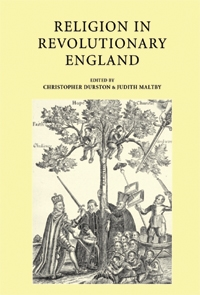
Religion in Revolutionary England
by Christopher Durston, Judith Maltby
This book offers a collection of essays tightly focused around the issue of religion in England between 1640 and 1660, a time of upheaval and civil war in England. Edited by well-known scholars of the subject, topics include the toleration controversy, women's theological writing, observance of the Lord's Day and prayer books. To aid understanding, the essays are divided into three sections examining theology in revolutionary England, inside and outside the revolutionary National Church and local impacts of religious revolution. Carefully and thoughtfully presented, this book will be of great use for those seeking to better understand the practices and patterns of religious life in England in this important and fascinating period. ;


