Your Search Results

      • Trusted Partner
        Humanities & Social Sciences
        March 2017

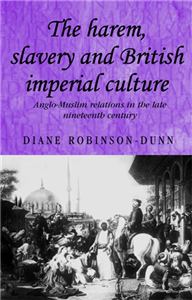
        The harem, slavery and British imperial culture

        Anglo-Muslim relations in the late nineteenth century

        by Diane Robinson-Dunn

        This book focuses on British efforts to suppress the traffic in female slaves destined for Egyptian harems during the late-nineteenth century. It considers this campaign in relation to gender debates in England, and examines the ways in which the assumptions and dominant imperialist discourses of these abolitionists were challenged by the newly-established Muslim communities in England, as well as by English people who converted to or were sympathetic with Islam. While previous scholars have treated antislavery activity in Egypt first and foremost as an extension of earlier efforts to abolish plantation slavery in the New World, this book considers it in terms of encounters with Islam during a period which it argues marked a new departure in Anglo-Muslim relations. This approach illuminates the role of Islam in the creation of English national identities within the global cultural system of the British Empire. This book would appeal to those with an interest in British imperial history; Islam; gender, feminism, and women's studies; slavery and race; the formation of national identities; global processes; Orientalism; and Middle Eastern studies.

      • Trusted Partner
      • Trusted Partner
        Humanities & Social Sciences
        July 2021

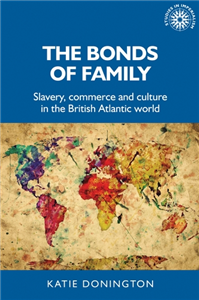
        The bonds of family

        Slavery, commerce and culture in the British Atlantic world

        by Katie Donington

        Moving between Britain and Jamaica The bonds of family reconstructs the world of commerce, consumption and cultivation sustained through an extended engagement with the business of slavery. Transatlantic slavery was both shaping of and shaped by the dynamic networks of family that established Britain's Caribbean empire. Tracing the activities of a single extended family - the Hibberts - this book explores how slavery impacted on the social, cultural, economic and political landscape of Britain. It is a history of trade, colonisation, enrichment and the tangled web of relations that gave meaning to the transatlantic world. The Hibberts's trans-generational story imbricates the personal and the political, the private and the public, the local and the global. It is both the intimate narrative of a family and an analytical frame through which to explore Britain's history and legacies of slavery.

      • Trusted Partner
      • Trusted Partner
        Humanities & Social Sciences
        June 2014

        The harem, slavery and British imperial culture

        Anglo-Muslim relations in the late nineteenth century

        by Diane Robinson-Dunn, Andrew Thompson, John Mackenzie, Kim Latham

        This book focuses on British efforts to suppress the traffic in female slaves destined for Egyptian harems during the late nineteenth century. It considers this campaign in relation to gender debates in England, and examines the ways in which the assumptions and dominant imperialist discourses of these abolitionists were challenged by the newly established Muslim communities in England, as well as by English people who converted to or were sympathetic with Islam. While previous scholars treated antislavery activity in Egypt first and foremost as an extension of earlier efforts to abolish plantation slavery in the New World, this book considers it in terms of encounters with Islam during a period which it argues marked a new departure in Anglo-Muslim relations. This approach illuminates the role of Islam in the creation of English national identities within the global cultural system of the British Empire. This book will appeal to those with an interest in British imperial history; Islam; gender, feminism and women's studies; slavery and race; the formation of national identities; global processes; Orientalism; and Middle Eastern studies. ;

      • Trusted Partner
        Humanities & Social Sciences
        April 2025

        Beyond the antislavery haven

        Slavery in early Canadian print culture, 1789–1889

        by Ellie Bird

        This book challenges the idealised narrative of Canada as an antislavery haven for self-liberated people to explore Canada's complicated relationship with slavery. Examining advertisements, abolitionist texts and narratives about slavery in Canadian newspapers and the texts that were printed alongside them, it shows how Canadian readers and enslavers developed an image of themselves as belonging to an antislavery community even while recognising their own complicity in slavery. The book explores narratives that depict the lives of Black settlers in Canada and how slave narratives circulated in Canada. Canada's relationship with slavery is far more complicated than seeing it as either an antislavery haven or a slaveholding space. Canada was connected to Britain, France, the Caribbean and the United States and this was central to how Canadians and Canadian readers fashioned their self-image in relation to slavery.

      • Trusted Partner
        Humanities & Social Sciences
        February 2025

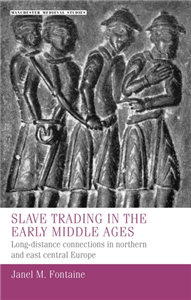
        Slave trading in the Early Middle Ages

        Long-distance connections in northern and east central Europe

        by Janel M. Fontaine

        This book examines slave trading in northern and eastern central Europe from the seventh century through the eleventh century, tracing its growth, climax, and decline. Demand from the Islamic world in the ninth and tenth centuries prompted changes in warfare, trade logistics, and administrative responses to slavery in the slaving zones centred on the British Isles and the Czech lands. This study establishes slave trading as a core driver of connectivity and presents a model for this practice in politically fragmented areas of Europe.

      • Trusted Partner
      • Trusted Partner
        Humanities & Social Sciences
        November 2019

        The bonds of family

        by Katie Donington, Alan Lester, Andrew Thompson

      • Trusted Partner
        Humanities & Social Sciences
        April 2018

        Frontiers of servitude

        by Michael Harrigan, Anne Dunan-Page

      • Trusted Partner
      • Trusted Partner
      • Trusted Partner
      • Trusted Partner
        Humanities & Social Sciences
        October 2024

        Humanitarianism, empire and transnationalism, 1760-1995

        Selective humanity in the Anglophone world

        by Joy Damousi, Trevor Burnard, Alan Lester

        This is the first book to examine the shifting relationship between humanitarianism and the expansion, consolidation and postcolonial transformation of the Anglophone world across three centuries, from the antislavery campaign of the late eighteenth century to the role of NGOs balancing humanitarianism and human rights in the late twentieth century. Contributors explore the trade-offs between humane concern and the altered context of colonial and postcolonial realpolitik. They also showcase an array of methodologies and sources with which to explore the relationship between humanitarianism and colonialism. These range from the biography of material objects to interviews as well as more conventional archival enquiry. They also include work with and for Indigenous people whose family histories have been defined in large part by 'humanitarian' interventions.

      • Trusted Partner
        Humanities & Social Sciences
        April 2024

        Celebrities, heroes and champions

        by Simon James Morgan

      • Trusted Partner
        Humanities & Social Sciences
        May 2026

        Sexual violence in racial capitalism

        by Alison Phipps

        Most texts on sexual violence treat capitalism as backdrop or afterthought. In contrast, political economy is the core of this book. Phipps explores the centrality of sexual violence to racial capitalist processes: the enclosure of bodies, the extraction of labour, the expropriation of land and resources, and the disposal of unwanted populations. Importantly, she argues that both sexual violence and sexual fear create social control and surplus value. Through a framework called the coloniality of sexual violence, Phipps conjoins acts of sexual violence and ideas of sexual threat in an analysis of gendered and raced property relations and the split colonial/modern psyche. She argues that fantasies of sexual danger represent the infolded violence of racial capitalism, which is why fear of revolution is often fear of rape. Revolution, however, is always imminent: violence is necessary because power is incomplete.

      • Trusted Partner
        Humanities & Social Sciences
        September 2019

        Inequality and democratic egalitarianism

        by Mark Harvey, Norman Geras

      • Trusted Partner

      Subscribe to our

      newsletter