Deutscher Apotheker Verlag
Specialist books in the fields of pharmacy - drug information - medicine.
View Rights Portal Trusted Partner

Specialist books in the fields of pharmacy - drug information - medicine.
View Rights Portal
The German Cultural Forum for Central and Eastern Europe publishes richly illustrated non-fiction books about the cultural history of those areas of Central and Eastern Europe where Germans used to, or still do live. The carefully edited titles with elaborated appendices are written by well-known experts who are able to present information about Central and Eastern Europe in an attractive way by cultural travel guides or historical overview books. The Cultural Forum also edits an annual and a bimonthly magazine, Blickwechsel ("Change of perspective") and Kulturkorrespondenz östliches Europa ("Cultural Correspondence Central and Eastern Europe"). Furthermore, the Forum organizes popular lectures, discussions, readings, exhibitions, concerts, journalist trips, writer residencies and prize-givings.
View Rights Portal Trusted Partner
Trusted Partner
Trusted Partner

 Trusted Partner

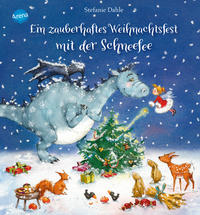
Emmo would also like to celebrate Christmas for a change. He’s lucky that his best friend Gwendoline, the Snow Fairy, is there to help him with his preparations. A Christmas tree, presents, delicious biscuits, sweet-smelling baked apples, and of course glittering white snow - all in readiness for the most wonderful Christmas party the Silver Forest has ever seen. With Stefanie Dahle’s enchanting illustrations, this solid, read-aloud picture book will accompany big and little picture-book lovers through a wonderfully harmonious Advent and Christmas.
Trusted Partner


Carol Reed is one of the truly outstanding directors of British cinema, and one whose work is long overdue for reconsideration. This major study ranges over Reed's entire career, combining observation of general trends and patterns with detailed analysis of twenty films, both acknowledged masterpieces and lesser-known works. Evans avoids a simplistic auteurist approach, placing the films in their autobiographical, socio-political and cultural contexts and relating these to the analysis of Reed's art. The critical approach combines psychoanalysis, gender theory, and the analysis of form. Archival research is also relied on to clarify Reed's relations with his creative team, financial backers and others. Films examined include Bank Holiday, A Girl Must Live, Odd Man Out, The Fallen Idol, The Third Man, Night Train to Munich, The Way Ahead, Outcast of the Islands, Trapeze and Oliver!.
Trusted Partner
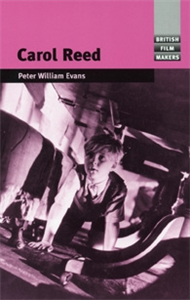
Carol Reed is one of the truly outstanding directors of British cinema, and one whose work is long overdue for reconsideration. This major study ranges over Reed's entire career, combining observation of general trends and patterns with detailed analysis of twenty films, both acknowledged masterpieces and lesser-known works. Evans avoids a simplistic auteurist approach, placing the films in their autobiographical, socio-political and cultural contexts and relating these to the analysis of Reed's art. The critical approach combines psychoanalysis, gender theory, and the analysis of form. Archival research is also relied on to clarify Reed's relations with his creative team, financial backers and others. Films examined include Bank Holiday, A Girl Must Live, Odd Man Out, The Fallen Idol, The Third Man, Night Train to Munich, The Way Ahead, Outcast of the Islands, Trapeze and Oliver!. ;
Trusted Partner
Trusted Partner
Trusted Partner


An innovative & different princess story! • The three princesses love to quarrel • Original and incredibly witty • Written by Ursula Poznanski and stunning illustrations by Sabine Büchner • Translation Grant! Bianca, Violetta and Rosalind are three adorable princesses. But they share a tiny quirk: they love to argue! One day a visitor asks for entrance into the castle. Prince Waldomir doesn’t enjoy hunting dragons anymore and rather prefers to get married know. Of course each princess is convinced to be the best choice and the prince’s one and only. So a rat race is launched before they have even met the puny prince for the first time…
Trusted Partner
Trusted Partner
Trusted Partner
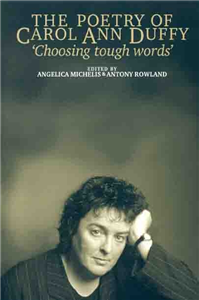
The first full-length collection of essays on the poetry of Carol Ann Duffy. Duffy's poetry is both respected by academics, and widely read and enjoyed by both children and adults. Approaches Duffy's work from a variety of literary theoretical perspectives, including feminism, masculinity, national identity and post-structuralism. Situates Duffy's work in relation to current debates about the state, value and social relevance of contemporary British poetry. Will become the benchmark anthology on Duffy. ;
Trusted Partner
Trusted Partner

Von allen deutschen Autoren, die nach 1945 zu schreiben begannen, ist Artmann ohne jeden Zweifel der vielseitigste, originellste und erfinderischste. So wie Artmann in fast allen Gattungen gearbeitet hat, auch den angeblich antiquierten, und ohne sich um die Tagesparolen der mal reine Dichtung betreibenden, mal engagierten, mal die Literatur totsagenden Kollegen zu kümmern, so hat er seine Quellen, seine Herkunft überall: in der Artusepik, in barocker Schäferpoesie, in den Wörterbüchern und Grammatiken von gut zwei Dutzend Sprachen, in Irland und im England des Sherlock Holmes, bei Villon und dem Wiener Vorstadtdialekt, Lorca, Gomez de la Serna, den Surrealisten und Dadaisten, in den Detektivheftchen der 20er Jahre und den Comic strips von damals bis heute. Unsere Auswahl versucht, nicht nur einen repräsentativen Querschnitt durch das Werk Artmanns zu geben, sondern gleichzeitig Verstreutes, an entlegensten Orten Publiziertes zu sammeln.
Trusted Partner
Trusted Partner
Student, traveller, secretary, scoundrel, spy: introducing the maverick whose diplomacy saved Europe from war. Henry Wotton had already exhausted several lives when he arrived in Venice as England's ambassador in 1604. Yet the most remarkable phase of his career was yet to come. In Lying abroad, Carol Chillington Rutter tells Wotton's extraordinary story. She reveals how this one-time exile, who fled England after his employer was convicted of treason, gained the favour of King James, securing a knighthood and a diplomatic posting. Charged with restoring relations with Venice after a fifty-year hiatus, he drew criticism for his breaches of protocol. But when a dispute brought Europe to the brink of war, Wotton took a risk - one that changed European history. This engrossing biography recounts a life that was tumultuous, tarnished and endlessly theatrical. The man King James called his 'honest dissembler' was a maverick who fashioned diplomacy in ways that still inform international relations today.
Trusted Partner
In the Middle Ages, hell was useful because it was vaguely defined. Canonical scriptures scarcely mention hell, leaving much to the imaginations of early Christians, who used it to sort out who belonged within the faith. This book explores how hell became a place for literary experiments with local challenges in theology and identity. Following the reception and transformations of two popular hell apocrypha, it argues that they served as this role because of their liminal textual authority. As noncanonical scriptures, apocrypha afforded medieval writers space to revise their hells (since they were not actually scripture), while also encouraging readers to revere those experiments as valid (since they seemed like scripture). The book brings together adaptations from early medieval England, Iceland, Ireland, and Wales, placing the early vernacular theologies of the North Sea in comparative conversation.
Trusted Partner
Representing Renaissance art, c.1500-c.1600 is a study of change and continuity in the iconographies of art and the visual representation of artists during the sixteenth century, especially in Italy and the Netherlands. The issue of how, and how far, artists obtained higher status for their profession during the Renaissance is a key question for the study of the early modern period. This book considers the maintenance of well-established traditions for the visual representation of artists, and also examines the new iconographies that emerged in the sixteenth century. By highlighting art and architecture that artists designed for their personal use, including the decoration of their houses, this study provides insight into the tastes and 'ways of looking' specific to artists. By examining the visual evidence we see the opinions both of artists who expressed their views in literary texts, and additionally those of artists who did not publish their ideas in written form.