Your Search Results

      • Plastik sparen - Initiative zur Vermeidung von Plastik im Alltag

        Plastik sparen Die Geschichte einer Idee Die Idee für Plastik sparen ist im Juni 2018 entstanden. Wie schon so oft endete ein Wocheneinkauf im totalen Plastik-Inferno. Kennt ihr das? Einmal einkaufen beim Supermarkt um die Ecke und schon ist eine Mülltüte voll mit Plastik. Aber wie kann ich das ändern, fragte ich mich. Also informierte ich mich, war bei einem Vortrag zum Thema "plastikfrei leben" um dann mit dem Gefühl zurück zu bleiben, das nicht leisten zu können. Aber einfach weiter Plastik konsumieren war für mich auch keine Alternative. Es musste doch Möglichkeiten geben Plastik zu reduzieren, die Jedermann*frau ganz einfach in den Alltag einbauen kann. Und so war "Plastik sparen" geboren.  Die Idee dahinter, durch viele kleine Plastik-spar-Aktivitäten den Plastikmüll in meinem Haushalt zu reduzieren. Und, ich kann sagen es funktioniert. Bei jedem Einkauf landet wesentlich weniger Plastikverpackung im Einkaufswagen als früher.  Alles Aktivitäten, die keine (oder nur wenig) Zeit gekostet haben, die oftmals Geld gespart haben und die ich problemlos in den Alltag integrieren konnte.    "Plastik sparen" ist unser Beitrag für eine Umwelt mit weniger Plastik. Meine Ideen, Gedanken und Erlebnisse möchte  ich teilen und viele Menschen dafür begeistern, immer weniger Plastik in ihr Leben zu lassen.

        View Rights Portal
      • Terra Ignota Ediciones - Grupo Angkor SL

        Publishing house from Spain working since 2015. We publish all kind of books and lately we are trying to improve our non-fiction line. Here we would like to show a very small sample of our books, for the complete catalogue, please visit us here. Open to new proposals, business and dreams.

        View Rights Portal
      • Trusted Partner
        Humanities & Social Sciences
        May 2020

        Spain in the nineteenth century

        New essays on experiences of culture and society

        by Andrew Ginger, Geraldine Lawless

        The nineteenth-century Hispanic world was shattered to its core by war, civil war, and revolution. At the same time, it confronted a new period of European and North-American expansion and development. In these essays, authors explore major, dynamic ways that people in Spain envisaged how they would adapt and change, or simply continue as they were. Each chapter title begins with the words "How to...", and examines the ways in which Spaniards conceived or undertook major activities that shaped their lives. These range from telling the time to being a man. Adaptability, paradox, and inconsistency come to the fore in many of the essays. We find before us a human quest for opportunity and survival in a complex and changing world. This wide-ranging book contains chapters by leading scholars from the United States, United Kingdom, and Spain.

      • Trusted Partner
      • Trusted Partner
      • Trusted Partner
        September 2017

        Hilfe, die Herdmanns kommen 1

        by Barbara Robinson, Anke Kuhl, Paul Maar, Nele Maar

        Der etwas andere Weihnachtsklassiker - lustig, unkonventionell und ganz schön frech Das kann ja heiter werden! Im ganzen Viertel ist man sich einig: Die Kinder der Familie Herdmann sind die schlimmsten Kinder aller Zeiten. Sie lügen, klauen, rauchen Zigarren (auch die Mädchen), bringen die Nachbarn zur Verzweiflung und können ein Klassenzimmer mit Hilfe ihrer halbwilden Katze in Rekordzeit vollkommen leer fegen. Zu allem Überfluss haben sie es auch noch geschafft, alle Hauptrollen im weihnachtlichen Krippenspiel zu bekommen. Womöglich steht damit die schlimmste Aufführung aller Zeiten bevor. Seit 50 Jahren geliebte Weihnachtstradition. Übersetzt von Erfolgsduo Paul und Nele Maar. Mit neuen, ebenso pfiffigen wie farbigen Illustrationen von Anke Kuhl, die ihre ganz eigene Geschichte im Detail erzählen. Begeistert Kinder ab 8 Jahren genauso wie Erwachsene.

      • Trusted Partner
        August 2024

        Die Familie

        Psychothriller

        by Katzenbach, John

        Übersetzt von Anke Kreutzer und Eberhard Kreutzer

      • Trusted Partner
      • Trusted Partner
      • Trusted Partner
      • Trusted Partner
      • Trusted Partner
      • Trusted Partner
      • Trusted Partner
      • Trusted Partner
      • Trusted Partner
      • Trusted Partner
      • Trusted Partner
      • Trusted Partner
        Humanities & Social Sciences
        January 2011

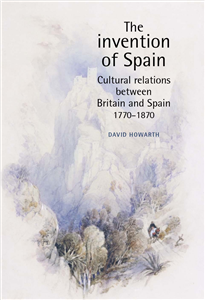
        The invention of Spain

        Cultural relations between Britain and Spain, 1770–1870 (NEW SUBTITLE)

        by David Howarth

        This book considers the close but sometimes contested relationship between Britain and Iberia in the period c.1770-1870. It begins by considering how British Enlightenment writers came to terms with the decline of Spain as a political and economic force following the Seven Years War. It then considers the great debates in Britain about Catholic emancipation, franchise reform, how the British historically understood themselves, issues of intervention or non-intervention in Europe, the emergence of history writing as a popular form of reading, an academic discipline and an extension of national identity. The discovery of Spanish art and the emergence of a debate in Victorian architecture about the use of the vernacular and craft techniques are also discussed, and consequently the book makes a significant addition to our understanding of Victorian taste and aesthetics. Spain was therefore something of a mirror in which the British saw themselves both reflected and perhaps distorted, and so we learn as much about the British as about the Spanish. A broad cultural history which is multi-disciplined in its approach and appeal, it will become essential reading for senior level undergraduates and postgraduates in Hispanic Studies departments. ;

      • Trusted Partner
        Humanities & Social Sciences
        July 2013

        Diversity management in Spain

        New dimensions, new challenges

        by Ricard Zapata-Barrero

        In the current European dilemma as to whether to increase diversity policies or move towards an assimilationist policy, it is difficult to know what the Spanish approach is. This book argues that Spain represents a context of "multiple diversity", where two frameworks interact: an old, unresolved one, arising from democratic transition, and a new one due to immigration. This explains the Spanish practical approach, where the recent past plays the role of an iron cage, limiting institutional innovation and change. The author proposes a heuristic model, to better understand the "Spanish laboratory of diversities". In order to go through these steps, the author analyses three case studies, coming from the political/social agenda: education, workplace, and political rights. At the end, the reader will have an empirically informed and theoretically founded overview on how Spain is managing diversity. This book is timely for a wide range of academic and professional readers. ;

      Subscribe to our

      newsletter