
Deutscher Apotheker Verlag
Specialist books in the fields of pharmacy - drug information - medicine.
View Rights Portal Trusted Partner

Specialist books in the fields of pharmacy - drug information - medicine.
View Rights Portal
The German Cultural Forum for Central and Eastern Europe publishes richly illustrated non-fiction books about the cultural history of those areas of Central and Eastern Europe where Germans used to, or still do live. The carefully edited titles with elaborated appendices are written by well-known experts who are able to present information about Central and Eastern Europe in an attractive way by cultural travel guides or historical overview books. The Cultural Forum also edits an annual and a bimonthly magazine, Blickwechsel ("Change of perspective") and Kulturkorrespondenz östliches Europa ("Cultural Correspondence Central and Eastern Europe"). Furthermore, the Forum organizes popular lectures, discussions, readings, exhibitions, concerts, journalist trips, writer residencies and prize-givings.
View Rights Portal
 Trusted Partner
Trusted Partner
Trusted Partner
 Trusted Partner
Trusted Partner
Trusted Partner

 Trusted Partner


In dieser Studie zu drei Grundbegriffen unserer historisch-politischen Welt verbindet Horst Günther zwei bisher beziehungslos nebeneinander bestehende Arbeitsweisen: die der historischen Semantik - eine philologische Disziplin, die insbesondere von den großen Romanisten Erich Auerbach und Leo Spitzer im Rahmen der europäischen Literaturen zur Meisterschaft entwickelt wurde - und die der wesentlich durch Roman Jakobson geprägten strukturalen Sprachwissenschaft. Horst Günther führt den Wandel von Begriffen an Quellen aus der ganzen europäischen Neuzeit vor. Dabei läßt er die aufbauenden oder polemischen Beziehungen im einzelnen deutlich werden und zieht dadurch den Leser in die historischen Auseinandersetzungen hinein.
Trusted Partner

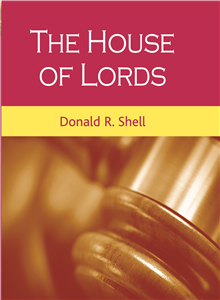
The House of Lords has undergone significant change in recent years. The exclusion of the great majority of the hereditary peers in 1999 was intended as the first step in a two-stage reform process. But further reform has proved difficult to achieve and remains a matter of considerable controversy. Meanwhile, the present House has become more assertive, and is now widely recognised as making a substantial contribution to the overall work of parliament. This book, available in paperback for the first time, examines the role of the contemporary House. Who are the peers, and who among the total of over 700 are the active peers? How does the House work, and how effective is it in revising legislation and in scrutinising the work of government? Why has fundamental reform of the House been so long delayed, and what are the main arguments about reform today? These are among the questions discussed in this timely volume, which seeks to locate discussion about the House of Lords in the wider context of a clear understanding of the developing British constitution. This book will be of great value to students and academics in British politics, as well as to serious journalists and researchers. ;
Trusted Partner
Trusted Partner
 Trusted Partner
Trusted Partner
Trusted Partner
 Trusted Partner

This volume is the first ever attempt to unite and translate some of the key texts which informed Johan Huizinga's famous study of the Burgundian court, The Waning of the Middle Ages, a work which has never gone out of print. It combines these texts with sources that Huizinga did not consider, those that illuminate the wider civic world that the Burgundian court inhabited and the dynamic interaction between court and city. Through these sources, and an introduction offering new perspectives on recent historiography, the book tests whether Huizinga's controversial vision of the period still stands. Covering subjects including ceremonial events, such as the spectacles and gargantuan banquets that made the Burgundian dukes the talk of Europe, the workings of the court, and jousting, archery and rhetoric competitions, the book will appeal to students of late medieval and early modern Europe and to those with wider interests in court culture, ritual and ceremony.
Trusted Partner
 Trusted Partner
 Trusted Partner
Trusted Partner
Trusted Partner
Trusted Partner
Trusted Partner
Trusted Partner
Trusted Partner
Trusted Partner
Trusted Partner



