
Manuel Giron
Literature, photography and Music
View Rights Portal

Girassol Brasil has been in existence for 20 years. Despite still being a young company,it has attained prominence in the children’s book scene thanks to the quality and interactivity of its books. They offer educational books; children’s literature, especiallyfrom renowned Brazilian authors; tales and fables; world literary classics; gamesand puzzles; and several reference books. The catalogue is also filled with pop-uptitles, bath books, wipe and clean books, flap books and many different interactiveelements that provide a pleasant reading experience and make learning fun for youngchildren and early readers. A series we would like to recommend you especially is Heartwarming stories,written by educational psychologist Paula Furtado in order to help young children todeal with difficult situations and life circumstances.
View Rights Portal Trusted Partner


Best known for his partnership with Raphael, the engraver Marcantonio Raimondi (c. 1480-c. 1534) enabled Renaissance artists to disseminate their designs in print, advancing a revolution in visual communication that still reverberates in our own information age. Yet Marcantonio did more than render compositions by famous artists in the novel medium of engraving. The entries and essays in this catalogue, written by a group of international scholars and published to accompany the first exhibition of Marcantonio's work in over three decades, reveal the diversity of Marcantonio's oeuvre and the scope of his innovation as the leading printmaker of the Italian Renaissance. In-depth studies of Marcantonio's engravings expand our knowledge of his collaboration with Raphael, while also probing Marcantonio's creative response to the dynamic humanist culture in his native Bologna and later in Venice and Rome. Contributions also examine engravings by Marcantonio's 'followers' and consider the importance of his work to the history of print collecting.
Trusted Partner
Trusted Partner
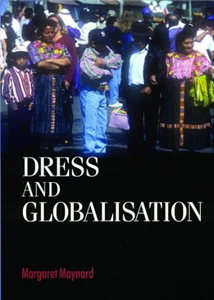
Dress and globalisation is the first work to survey dress around the world, drawing together issues of consumption, ethnicity, gender and the body, as well as anthropological accounts and studies of representation. It examines international western style dress, including jeans and business suits, headwear and hairdressing, ethnicity and so called 'ethnic chic', clothes for the tourist market, the politicisation of traditional dress, 'alternative' dressing, and T-shirts as temporary markers of identity. It also considers dress and environmental issues, touching on adventure gear, the 'green' consumer and the possible impact of 'smart' clothing. Dispelling the myth of universal 'world' attire, this book demonstrates that western-style clothing transcends geographical boundaries but along with other forms of dress, can form a montage of differing tastes, ethnic preferences and national and local imperatives. By discussing the nature of globalisation, this book shows that, if economics permit, all cultures are selective in their choice of what to wear. Dress and globalisation will be welcomed by students of dress history and cultural studies. ;
Trusted Partner
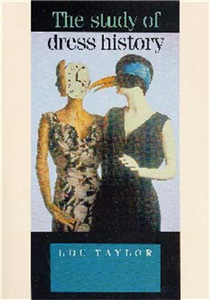
Over the past ten years the study of dress history has finally achieved academic respectability. This book shows how the fields of dress history and dress studies are now benefitting from the adoption of new multi-disciplinary approaches and outlines the full range of these approaches which draw on material culture, ethnography, and cultural studies. Raises a series of frank and fresh issues surrounding approaches to the history of dress, including analysis of the academic gender and subject divides that have riven it in the past. Comprehensive, engaging and trenchant, this will become the benchmark volume in the study of dress history.
Trusted Partner

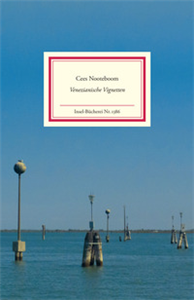
Wer Venedig kennenlernen will, muss sich darin verirren. Cees Nooteboom lässt sich auf das Wagnis ein und findet dabei seine ganz eigene Lagunenstadt. Kleine, versteckte Wege verlocken zum Betreten, vor allem, wenn ein Schild genau das verbietet. Die Gondeln schaukeln sanft auf dem Wasser und verführen schließlich auch den, der sich gegen solch touristischen Zeitvertreib immer gewehrt hat. Die Kostbarkeiten des Museo Correr betören den Besucher. Und über allem ruhen die Dogen, in ihren Sarkophagen auf halber Höhe der Kirchenmauer von Santi Giovanni e Paolo. In den Texten des großen Reisenden Cees Nooteboom und den Fotos von Simone Sassen ist eine der schönsten Städte der Welt neu zu entdecken.
Trusted Partner

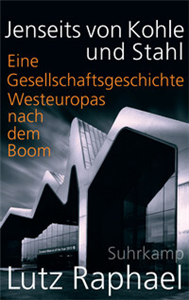
In den siebziger Jahren des 20. Jahrhunderts wurden viele Staaten Westeuropas von einem beispiellosen Strukturwandel erfasst: Die Fabriken der alten Industrien verschwanden, Millionen von Arbeitsplätzen gingen verloren, vormals boomende Städte gerieten in die Krise und neue soziale Fragen bestimmten die politische Agenda. Was aber ist aus dem stolzen Industriebürger geworden – aus seinen Arbeitsplätzen, Karrierewegen und Wohnquartieren? Wie haben sich soziale Rechte und politische Teilhabe von Arbeiterinnen verändert, als der Wettbewerb global, das Management schlank und der Finanzkapitalismus dominant wurde? Welche Ideen und Ideologien begleiteten den Wandel? Am Beispiel der Industriearbeit in Großbritannien, Frankreich und der Bundesrepublik erzählt Lutz Raphael die außerordentlich vielschichtige und spannende Geschichte der westeuropäischen Deindustrialisierung. Sie dauerte drei Jahrzehnte, ging mit einer Steigerung der Produktivität und des Lebensstandards einher, brachte aber auch Niedriglöhne, wachsende Ungleichheiten und eine Krise der demokratischen Repräsentation. Und vielleicht das Entscheidende: Sie wirkt bis heute fort – als Vorgeschichte unserer postindustriellen Gegenwart. Dieses Buch hilft, sie zu verstehen.
Trusted Partner
Trusted Partner
Trusted Partner

 Trusted Partner
 Trusted Partner
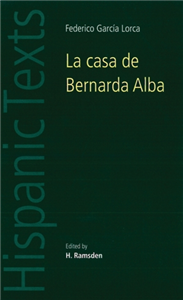
Completed only two months before the author's execution in Granada at the age of thirty-eight, La casa de Bernarda Alba marks the completion of Lorca's 'trilogia de la tierra española' and is commonly held to be his greatest play. The theme of vitality and repression that runs as a leitmotif through his writings takes on a clearer social dimension in the 'drama de mujeres en los pueblos de España', with the presentation of a household of five unmarried daughters tyrannised by their mother's excessive concern with social class and obscurantist village morality. ;
Trusted Partner

 Trusted Partner
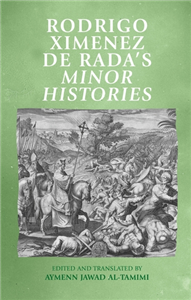
This work provides the first complete English translation of works by Toledan archbishop Rodrigo Ximénez de Rada (1170-1247 CE), whose 'Minor Histories' are sequels to his larger 'Gothic History' and thus round off his grand history of Spain project that he began at the request of King Ferdinand III. The 'Minor Histories' include Rodrigo's 'History of the Arabs' that can be considered the first surviving Western monograph focused on Arab and Islamic history and thus occupies a unique position in the medieval Latin corpus of writings. In addition to the translation, this book provides a thorough and accessible introduction to the life and works of Rodrigo, making sense of the context in which he wrote and his historical method. The translations are thoroughly annotated including cross-references to other Latin and Arabic sources for comparison.
Trusted Partner
 Trusted Partner
Trusted Partner
Trusted Partner


This bestselling title is a practical handbook on the concept of basic stimulation in nursing and its application for patients suffering from perceptional deficits, developmental delays and mental handicaps. It enables nurses to develop, improve and stabilize physically and mentally handicapped people with impaired perceptional, communicative and motor skills. Target Group: Nurses
Trusted Partner
 Trusted Partner



