
Franz Steiner Verlag / Berliner Wissenschafts-Verlag
Academic publishing house (ancient history of economics, history of science/medicine, geography, musicology, philosophy of law). Berliner Wissenschaft-Verlag is an imprint.
View Rights Portal Trusted Partner

Academic publishing house (ancient history of economics, history of science/medicine, geography, musicology, philosophy of law). Berliner Wissenschaft-Verlag is an imprint.
View Rights Portal
John Wiley & Sons, Inc. (Wiley)is a renowned, global publishing company focusing on academic publishing for professionals and researchers within the field of science and medicine.
View Rights Portal


Am malerischen Genfersee wird der Bestsellerautor und Abenteurer Marceau Miller tot am Fuß einer Felswand aufgefunden. Seine Frau Sarah, ungestüm und naturverbunden, ist als Einzige überzeugt, dass es kein Unfall war: Vor zwanzig Jahren führte ein tragisches Ereignis sie schon einmal in diese Gegend, und nun hat Marceau ein letztes Manuskript hinterlassen, das ein lebenslanges Geheimnis enthüllen soll – enthält es auch den Grund seines Todes?Von der lokalen Polizei im Stich gelassen, begibt sich Sarah auf den Gipfeln und in den dichten Wäldern, auf den Wassern des Genfersees und gar in den eigenen vier Wänden auf eine Spurensuche, die sie alles – und jeden um sie herum – in Frage stellen lässt. Eine rasante Ermittlung setzt ein, die keine Verschnaufpause erlaubt, denn das Manuskript ist verschwunden! Wem kann sie noch vertrauen? Und wer ist ihr Mann, wer ist dieser Marceau Miller eigentlich gewesen? Das Buch von Marceau Miller ist ein fesselnder, vielschichtiger Spannungsroman darüber, wie wenig wir unsere Nächsten kennen; über die dunklen Hintergründe von Erfolg, über Verrat und die Unbeständigkeit der Wahrheit – ein Meisterwerk psychologischer Spannung vor atemberaubender Kulisse!
Trusted Partner
Trusted Partner
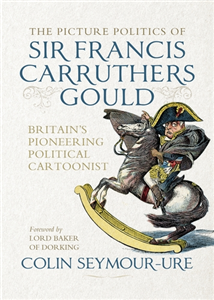
This is the first major study of Britain's pioneering graphic satirist, Sir Francis Carruthers Gould (1844-1925), the first staff political cartoonist on a daily newspaper in Britain, and the first of his kind to be knighted. Written by the distinguished media historian, Colin Seymour-Ure, it is essential reading for anyone interested in cartoons, caricature and illustration and will also be welcomed by students of history, politics and the media. It examines Gould's career in Fleet Street until his retirement after the First World War. It also discusses his illustrations for magazines and books and there is an analysis of his use of symbolism and literary allusion to lampoon such eminent politicians as Gladstone and Joseph Chamberlain. As Lord Baker says in his Foreword, this book is 'a major contribution to our knowledge of British cartooning.'
Trusted Partner

This is the first major study of Britain's pioneering graphic satirist, Sir Francis Carruthers Gould (1844-1925), the first staff political cartoonist on a daily newspaper in Britain, and the first of his kind to be knighted. Written by the distinguished media historian, Colin Seymour-Ure, it is essential reading for anyone interested in cartoons, caricature and illustration and will also be welcomed by students of history, politics and the media. It examines Gould's career in Fleet Street until his retirement after the First World War. It also discusses his illustrations for magazines and books and there is an analysis of his use of symbolism and literary allusion to lampoon such eminent politicians as Gladstone and Joseph Chamberlain. As Lord Baker says in his Foreword, this book is 'a major contribution to our knowledge of British cartooning.'
Trusted Partner
Im Mittelpunkt des umfangreichen Prosawerks von Henry James (1843-1916) steht der Gegensatz von „alter“ und „neuer Welt“, so auch in Daisy Miller. Die Amerikanerin ist eine Frau, die weiß, was sie will, und sich nicht geniert,es auch zu tun ...
Trusted Partner
Hitchcock's professed disdain for actors is belied by the extraordinary range and depth of performances featured in his films. It might even be argued that many stars gave their richest and most complex performances in his work. Hitchcock's films are also imbued with the theme of performance, as when his fugitive men and errant women assume fragile new identities and move between roles. Actors and other performers also often feature as characters. However, the exhaustive academic literature on Hitchcock has to date produced surprisingly little work about acting and performance in his films. The collection includes contributions from a range of leading scholars on Hitchcock, performance, stardom, and British Cinema, including Charles Barr, David Greven, Mark Glancy, Lucy Bolton, Lawrence Napper and Michael Williams, and an interview with leading composers/accompanists Neil Brand and Stephen Horne on scoring performance in Silent Hitchcock.
Trusted Partner
This book examines the political works of Andrew Michael Ramsay (1683-1743) within the context of early eighteenth-century British and French political thought. In the first monograph on Ramsay in English for over sixty years, the author uses Ramsay to engage in a broader evaluation of the political theory in the two countries and the exchange between them. At the beginning of the eighteenth century, Britain and France were on divergent political paths. Yet in the first three decades of that century, the growing impetus of mixed government in Britain influenced the political theory of its long-standing enemy. Shaped by experiences and ideologies of the seventeenth century, thinkers in both states exhibited a desire to produce great change by integrating past wisdom with modern knowledge.
Trusted Partner
 Trusted Partner

Looks at why witch-trials failed to gain momentum and escalate into 'witch-crazes' in certain parts of early modern Europe. Exames the rich legal records of the German city of Rothenburg ob der Tauber, a city which experienced a very restrained pattern of witch-trials and just one execution for witchcraft between 1561 and 1652. Explores the social and psychological conflicts that lay behind the making of accusations and confessions of witchcraft. Offers insights into other areas of early modern life, such as experiences of and beliefs about communal conflict, magic, motherhood, childhood and illness. Offers a critique of existing explanations for the gender bias of witch-trials, and a new explanation as to why most witches were women.
Trusted Partner
 Trusted Partner
 Trusted Partner

Jews on trial concentrates on Inquisitorial activity during the period which historians have argued was the most active in the Inquisition's history: the first forty years of the tribunal in Modena, from 1598 to 1638, the year of the Jews' enclosure in the ghetto. Scholars have in the past tended to group trials of Jews and conversos in Italy together. This book emphasises the fundamental disparity in Inquisitorial procedure, as well as the evidence examined, and argues that this was especially true in Modena where the secular authority did not have the power during the period in question to reject, or even significantly monitor, Inquisitorial trial procedure. It draws upon the detailed testimony to be found in trial transcripts to analyse Jewish interaction with Christian society in an early modern community. This book will appeal to scholars of inquisitorial studies, social and cultural interaction in early modern Europe, Jewish Italian social history and anti-Semitism.
Trusted Partner

This book re-examines French cinema of the 1970s. It focuses on the debates which shook French cinema, and the calls for film-makers to rethink their manner of filming, subject matter and ideals in the immediate aftermath of the student revolution of May 1968. Alison Smith examines the effect of this re-thinking across the spectrum of French production, the rise of new genres and re-formulation of older ones. Chapters investigate political thrillers, historical films, new naturalism and Utopian fantasies, dealing with a wide variety of films. A particular concern is the extent to which film-makers' ideas and intentions are contained in or contradicted by their finished work, and the gradual change in these ideas over the decade. The final chapter is a detailed study of two directors who were deeply involved in the debates and events of the 70s, William Klein and Alain Tanner, here taken as exemplary spokesmen for those changing debates as their echoes reached the cinema.
Trusted Partner
Trusted Partner
Trusted Partner

»Ich hatte kein Geld, keine Rücklagen, keine Hoffnungen. Ich war der glücklichste Mensch der Welt.« So schreibt Henry Miller über seine Zeit im Frankreich der dreißiger Jahre. Sein Rückblick ist ein leidenschaftliches Liebesbekenntnis zu Frankreich, besonders zu Paris, wo er mit Künstlern und Lebenskünstlern ein abenteuerliches Bohemeleben führte. »Wir halten an unseren Erinnerungen fest, um eine Identität zu bewahren, die ohnehin nie verloren gehen kann«, so beginnt Millers Erinnerungsbuch, während er sich über einen Metro-Plan beugt und sehnsüchtig die Viertel und Straßen heraufbeschwört, ihren Klang, ihre Gerüche, ihren Zauber. Gegen den »american way of life« preist Henry Miller mit kraftvoller Sprache Frankreich, seine Landschaften, Menschen und die Kunst, die alle Lebensbereiche durchdringt »von der Kirche bis zur Küche«. Henry Millers Erinnerungsbuch ist eine zärtliche Liebeserklärung an das alte Europa.
Trusted Partner
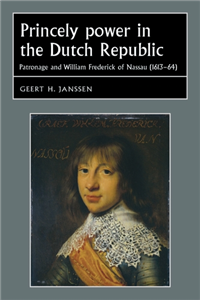
Based on one of the richest surviving diaries of the Dutch Golden Age, Princely Power in the Dutch Republic recaptures the social world of William Frederick of Nassau (1613-1664). As a Stadholder and relative of the Prince of Orange, William Frederick was among the key players in a fragmented republican state system. This study offers a vivid analysis of his political strategies and reveals how unwritten codes of patronage guided his daily contacts and shaped his mental world. As a patron at his court and as a client of the Prince of Orange, William Frederick developed distinctive patronage roles, appropriate to different social spheres. By assessing these different roles, Janssen provides a unique insight into the ways in which a seventeenth-century nobleman negotiated and articulated clientage, friendship and corruption in his life. This study offers an in-depth analysis of political practices in the Dutch Republic and reconsiders the way in which patronage shaped early modern politics, affected religious divisions and framed social identities. ;
Trusted Partner
Works of travel have been the subject of increasingly sophisticated studies in recent years. This book undermines the conviction with which nineteenth-century British writers talked about darkest Africa. It places the works of travel within the rapidly developing dynamic of Victorian imperialism. Images of Abyssinia and the means of communicating those images changed in response to social developments in Britain. As bourgeois values became increasingly important in the nineteenth century and technology advanced, the distance between the consumer and the product were justified by the scorn of African ways of eating. The book argues that the ambiguities and ambivalence of the travellers are revealed in their relation to a range of objects and commodities mentioned in narratives. For instance, beads occupy the dual role of currency and commodity. The book deals with Henry Morton Stanley's expedition to relieve Emin Pasha, and attempts to prove that racial representations are in large part determined by the cultural conditions of the traveller's society. By looking at Joseph Conrad's Heart of Darkness, it argues that the text is best read as what it purports to be: a kind of travel narrative. Only when it is seen as such and is regarded in the context of the fin de siecle can one begin to appreciate both the extent and the limitations of Conrad's innovativeness.
Trusted Partner

The career of Wisconsin-born Joseph Losey spanned over four decades and several countries. A self-proclaimed Marxist and veteran of the 1930s Soviet agit-prop theater, he collaborated with Bertholt Brecht before directing noir B-pictures in Hollywood. A victim of McCarthyism, he later crossed the Atlantic to direct a series of seminal British films such as "Time Without Pity," "Eve," "The Servant," and "The Go-Between," which mark him as one of the cinema's greatest baroque stylists. His British films reflect on exile and the outsider's view of a class-bound society in crisis through a style rooted in the European art house tradition of Resnais and Godard. Gardner employs recent methodologies from cultural studies and poststructural theory, exploring and clarifying the films' uneasy tension between class and gender, and their explorations of fractured temporality.



