
Daniel Goleman - Foreign Audio
Please contact anaban@gmail.com for information
View Rights Portal

Evan-Moor is an award-winning educational publisher based in the U.S. We support parents and educators with resources that develop important academic and life skills for children.
View Rights Portal

Maps take place in time as well as representing space. The Google map on your smartphone appears to fix the world, serving as a practical spatial tool, but in practice is deployed in ways that draw attention to memories, rhythm, synchronicity, sequence and duration. This interdisciplinary collection focuses on how these temporal aspects of mapping might be understood, at a time when mapping technologies have been profoundly changed by digital developments. It contrasts different aspects of this temporality, bringing together experts from critical cartography, media studies and science and technology studies. Together the chapters offer a unique interdisciplinary focus revealing the complex and social ways in which time in wrapped up with digital technologies and revealed in everyday mapping tasks: from navigating across cities, to serving as scientific groundings for news stories; from managing smart cities, to visual art practice. It brings time back into the map!

 Trusted Partner

Carol Reed is one of the truly outstanding directors of British cinema, and one whose work is long overdue for reconsideration. This major study ranges over Reed's entire career, combining observation of general trends and patterns with detailed analysis of twenty films, both acknowledged masterpieces and lesser-known works. Evans avoids a simplistic auteurist approach, placing the films in their autobiographical, socio-political and cultural contexts and relating these to the analysis of Reed's art. The critical approach combines psychoanalysis, gender theory, and the analysis of form. Archival research is also relied on to clarify Reed's relations with his creative team, financial backers and others. Films examined include Bank Holiday, A Girl Must Live, Odd Man Out, The Fallen Idol, The Third Man, Night Train to Munich, The Way Ahead, Outcast of the Islands, Trapeze and Oliver!.
Trusted Partner

Daniel Calparsoro, a director who has made a crucial contribution to contemporary Spanish and Basque cinema, has provoked strong reactions from the critics. Reductively dismissed as a works of crude violence by those lamenting a 'lost golden age' of Spanish filmmaking, Calparsoro's films in fact reveal a more complex interaction with trends and traditions in both Spanish and Hollywood cinema. This book is the first full-length study of the director's work, from his early social-realist films set in the Basque Country to his later forays into the genres of the war and horror. It offers an in-depth film-by-film analysis while simultaneously exploring the director's position in the contemporary Spanish context, the tension between directors and critics and the question of national cinema in an area - the Basque Country - of heightened national and regional sensitivities.
Trusted Partner

Daniel Calparsoro, a director who has provided a crucial contribution to the contemporary scene in Spanish and Basque cinema, has provoked strong reactions from the critics. Reductively dismissed as a purveyor of crude violence by those critics lamenting a 'lost golden age' of Spanish filmmaking, Calparsoro's films reveal in fact a more complex interaction with trends and traditions in both Spanish and Hollywood cinema. This book is the first full-length study of the director's work, from his early social realist films set in the Basque Country to his later forays into the genres of the war and horror film. It offers an in-depth film-by-film analysis, while simultaneously exploring the function of the director in the contemporary Spanish context, the tension between directors and critics, and the question of national cinema in an area - the Basque Country - of heightened national and regional sensitivities. ;
Trusted Partner
Trusted Partner


Jedes Jahr reisen Millionen Menschen im Dezember hektisch nach Hause – um dort in aller Besinnlichkeit Weihnachten zu feiern. Obwohl alle auf Kommerz und Materialismus schimpfen, geben sie sich jede Mühe, Verwandten und Freunden mit teuren Geschenken ihre Liebe zu beweisen. Weihnachten steckt voller Paradoxien, mit denen sich Daniel Miller in seinem Essay über die Geschichte und Bedeutung eines Festes befaßt, das wie kein anderes dazu geeignet ist, den Kalender der Weltgesellschaft zu synchronisieren.
Trusted Partner
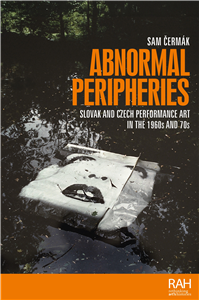
This book traces an early history of performance art from the former Czechoslovakia, which emerged in the 1960s and 1970s in the context of the Prague Spring and the subsequent policy of Normalization that brought on cultural censorship, prosecution, and state violence against artists. The book draws on Czech and Slovak scholarship as well as primary research in archives, interviews, and fieldwork to dispel misreadings of visual and cultural idioms in pre-existing Anglophone scholarship about the region. Although the former Soviet Bloc is often equated with repression and lack of experimental art in public spaces, performance artists within the former Socialist Czechoslovakia often used public, semi-public and clandestine spheres to create their performances. By analysing both works of established artists such as Aktual, Alex Mlynárcik, Petr Stembera, Jan Mlcoch, as well as under-theorised practitioners including Luba Lauffová, Karel Miler, Temporary Society of Intense Living, and Crusaders School of Pure Humour with no Joke, this book analyses how performance can survive and sometimes even thrive on the background of a politically oppressive regime. Cermak tells a unique story of localised resistance to a monolithic public sphere through artistic intervention, a closely knit community, artistic exchange, and agonistic reframing of socialism as a philosophy rather than state ideology.
Trusted Partner

This book is available as an open access ebook under a CC-BY-NC-ND licence. What is autism and where has it come from? Increased diagnostic rates, the rise of the 'neurodiversity' movement, and growing autism journalism, have recently fuelled autism's fame and controversy. The metamorphosis of autism is the first book to explain our current fascination with autism by linking it to a longer history of childhood development. Drawing from a staggering array of primary sources, Bonnie Evans traces autism back to its origins in the early twentieth century and explains why the idea of autism has always been controversial and why it experienced a 'metamorphosis' in the 1960s and 1970s. Evans takes the reader on a journey of discovery from the ill-managed wards of 'mental deficiency' hospitals, to high-powered debates in the houses of parliament, and beyond. The book will appeal to a wide market of scholars and others interested in autism.
Trusted Partner

Über die moderne Welt sind viele diagnostische Mythen im Umlauf: Sie sei homogenisiert, individualisiert, und die isolierten Individuen gäben sich hemmungslos dem Konsum hin. Der englische Anthropologe Daniel Miller hat diese Mythen hinterfragt – genauer: Er hat die Bewohner einer Londoner Straße befragt. Und da die Menschen nun einmal nicht gerne über ihr Leben Auskunft geben, hat er mit ihnen über die Dinge in ihren Wohnungen gesprochen: über Simons 15000 Schallplatten, die für ihn alle emotionalen Schattierungen zum Ausdruck bringen; über den Laptop, auf dem Malcolm Unmengen von Briefen und Fotos speichert, um die Erinnerungskultur seiner Aborigines-Vorfahren aufrechtzuerhalten; über die billigen Spielfiguren aus dem Fast-food-Restaurant, mit denen Marina ihren Kindern ihre Liebe zeigt.
Trusted Partner

This book re-examines French cinema of the 1970s. It focuses on the debates which shook French cinema, and the calls for film-makers to rethink their manner of filming, subject matter and ideals in the immediate aftermath of the student revolution of May 1968. Alison Smith examines the effect of this re-thinking across the spectrum of French production, the rise of new genres and re-formulation of older ones. Chapters investigate political thrillers, historical films, new naturalism and Utopian fantasies, dealing with a wide variety of films. A particular concern is the extent to which film-makers' ideas and intentions are contained in or contradicted by their finished work, and the gradual change in these ideas over the decade. The final chapter is a detailed study of two directors who were deeply involved in the debates and events of the 70s, William Klein and Alain Tanner, here taken as exemplary spokesmen for those changing debates as their echoes reached the cinema.
Trusted Partner

This book offers an accessible critical introduction to the work of Graham Swift, one of Britain's most significant contemporary authors. Through detailed readings of his novels and short stories from 'The Sweet Shop Owner' (1980) to 'The Light of Day' (2003), Daniel Lea lucidly addresses the key themes of history, loss, masculinity and ethical redemption, to present a fresh approach to Swift. This study proposes that one of the side-effects of modernity has been the destruction of traditional pathways of self and collective belief, leading to a loss of understanding between individuals about their duties to each other and to society. Swift's writing returns repeatedly to the question of what we can believe in when all the established markers of identity - family, community, gender, profession, history - have become destabilised. Lea suggests that Swift increasingly moves towards a notion of redemption through a lived ethical practice as the only means of finding solace in a world lacking a central symbolic authority. ;
Trusted Partner

Carol Reed is one of the truly outstanding directors of British cinema, and one whose work is long overdue for reconsideration. This major study ranges over Reed's entire career, combining observation of general trends and patterns with detailed analysis of twenty films, both acknowledged masterpieces and lesser-known works. Evans avoids a simplistic auteurist approach, placing the films in their autobiographical, socio-political and cultural contexts and relating these to the analysis of Reed's art. The critical approach combines psychoanalysis, gender theory, and the analysis of form. Archival research is also relied on to clarify Reed's relations with his creative team, financial backers and others. Films examined include Bank Holiday, A Girl Must Live, Odd Man Out, The Fallen Idol, The Third Man, Night Train to Munich, The Way Ahead, Outcast of the Islands, Trapeze and Oliver!. ;
Trusted Partner

Edwin Morgan is Scotland's major living poet, and Inventions of modernity was the first book-length study of his work. Since the 1940s Morgan's poetry has been carving out an alternative to the conventional evolutions from Modernism to Postmodernism, creating instead a substantial body of writing that ranges from the sublime to the hilarious. Instinctively at odds with the literary politics of the Pound-Eliot axis that remained influential deep into the twentieth century, Morgan develops instead a radical and libertarian poetics in an encyclopaedia of forms; from Anglo-Saxon metre through sonnet-sequences to concrete poems, and including gay poetry, science fiction verse and prize-winning translations into both English and Scots from numerous languages. This authoritative volume is of interest to students, teachers and academic researchers involved with strategies of reading, with cultural studies, with the politics of literary history and with gay and transgressive writing. ;
Trusted Partner
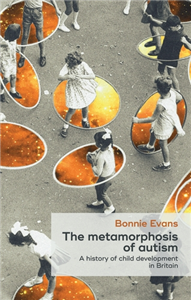
What is autism and where has it come from? Increased diagnostic rates, the rise of the 'neurodiversity' movement, and growing autism journalism, have recently fuelled autism's fame and controversy. The metamorphosis of autism is the first book to explain our current fascination with autism by linking it to a longer history of childhood development. Drawing from a staggering array of primary sources, Bonnie Evans traces autism back to its origins in the early twentieth century and explains why the idea of autism has always been controversial and why it experienced a 'metamorphosis' in the 1960s and 1970s. Evans takes the reader on a journey of discovery from the ill-managed wards of 'mental deficiency' hospitals, to high-powered debates in the houses of parliament, and beyond. The book will appeal to a wide market of scholars and others interested in autism, neurodiversity and how this relates to wider theories of children's psychological development.
Trusted Partner
Als der Neurowissenschaftler Maxwell Bennett und der Philosoph Peter Hacker den Klassiker Philosophical Foundations of Neuroscience veröffentlichten, war dies die erste systematische Untersuchung der begrifflichen Grundlagen der Neurowissenschaften und der Startschuss für den bis heute intensiv geführten Kampf um die Deutungsmacht über den menschlichen Geist. Besonders kritisch fiel seinerzeit die Auseinandersetzung mit den einflussreichen Arbeiten von Daniel Dennett und John Searle aus – also mit jenen beiden Denkern, die von der neurowissenschaftlichen Seite gerne als philosophische Gewährsmänner herangezogen werden. In Neurowissenschaft und Philosophie diskutieren die vier kongenialen »Streithähne« miteinander.
Trusted Partner
Trusted Partner
Trusted Partner

The French empire at war draws on original research in France and Britain to investigate the history of the divided French empire - the Vichy and the Free French empires - during the Second World War. What emerges is a fascinating story. While it is clear that both the Vichy and Free French colonial authorities were only rarely masters of their own destiny during the war, preservation of limited imperial control served them both in different ways. The Vichy government exploited the empire in an effort to withstand German-Italian pressure for concessions in metropolitan France and it was key to its claim to be more than the mouthpiece of a defeated nation. For Free France too, the empire acquired a political and symbolic importance which far outweighed its material significance to the Gaullist war effort. As the war progressed, the Vichy empire lost ground to that of the Free French, something which has often been attributed to the attraction of the Gaullist mystique and the spirit of resistance in the colonies. In this radical new interpretation, Thomas argues that it was neither of these. The course of the war itself, and the initiatives of the major combatant powers, played the greatest part in the rise of the Gaullist empire and the demise of Vichy colonial control.
Trusted Partner

Bei dem hier vorliegenden Band handelt es sich um eine von Eva Gillies gekürzte und eingeleitete Ausgabe des zuerst 1937 erschienenen großen Werkes »Witchcraft, Oracles and Magic among the Azande«, das den seither unbestrittenen Ruf des bedeutenden englischen Sozialanthropologen E.E. Evans-Pritchard (1902-1973) begründet hat. Diese Monographie gehört zu den umfangreichen Publikationen Evans-Pritchards, die eine Frucht der intensiven ethnologischen Felduntersuchungen darstellen, die er in den zwanziger und dreißiger Jahren im damals Anglo-Ägyptischen Sudan unternommen hat und in deren Verlauf er neben den Zande u. a. auch die Gesellschaften der Nuer, der Anuak und der Luo studiert hat. Evans-Pritchards Arbeit weist die innere Logik des Glaubens an Hexerei und Magie auf, eines Glaubens, der in der Vorstellungswelt und der gesellschaftlichen Wirklichkeit vieler afrikanischer Gesellschaften einen festen Platz hat. »Hexerei, Orakel und Magie bei den Zande« ist bahnbrechend für den Versuch geworden, fremde Denksysteme auf ihre eigene Logik hin zu untersuchen und ihre Grundvoraussetzungen explizit zu machen. Seit den fünfziger Jahren beeinflußt Evans-Pritchards Werk neben Ethnologen zunehmend auch Philosophen, Soziologen und Theologen. In ihrem Vorwort umreißt Eva Gillies die heutige Bedeutung des Buchs von Evans-Pritchard und beschreibt die soziale und politische Organisation der Zande um 1930, um dem Leser die Einordnung in den historischen Kontext zu ermöglichen.




