
EDGE Science Fiction and Fantasy Publishing
Livres Canada Books
View Rights Portal
 Trusted Partner

Chile is Guest of Honour at Frankfurter Buchmesse 2027. At the Chilean organiser’s invitation, an open call was conducted among Chilean publishers to find out which titles they would recommend for translation. This is the result. The Chilean Ministry of Foreign Affairs supports the translation and production of Chilean books through the programmeTranslating Chile. Next call for all languages 2026-2027: November 2025 More information:https://www.dirac.gob.cl/open-call-2026-for-translating-chilean-literature
View Rights Portal

Wieder zurück in der Welt der Tierwandler, bei den Erben der Animox! Das große Abenteuer, das Simon Thorn bestehen muss, nähert sich seinem Ende. Auf vier Kontinente hat es ihn und seine Freund*innen bereits geführt. Und es waren zweifellos schwierige Aufgaben zu lösen in Europa, Australien, Afrika und Südamerika. Im fünften und letzten Band „Die Rache des Tigers“ verschlägt es sie ins geheimnisvolle Asien. Wird es Simon Thorn gelingen, die Welt der Animox und ihrer Erben zu retten? Und kann er den gefürchteten Krieg zwischen dem Imperium und den Erben der Animox verhindern? Das grandiose Ende der zweiten Reihe aus dieser einzigartigen Fantasywelt der Gestaltwandler ist ein unvergleichlich spannendes Leseabenteuer. Die Erben der Animox Band 5: Die Rache des Tigers – actionreich und hochspannend. Der fünfte und letzte Band ist das fulminante Finale der zweiten Reihe aus dem Animox-Kosmos. Mitreißende Tierwandler-Fantasy, die dich ins faszinierende Asien entführt, wo diesmal der Tiger im Fokus steht. Atmosphärisch dicht und superspannend erzählter Roman für Kinder ab 10 Jahren. In der zweiten Animox-Reihe „Die Erben der Animox“ sind bisher erschienen: „Die Beute des Fuchses“ (Band 1) „Das Gift des Oktopus“ (Band 2) „Der Kampf des Elefanten“ (Band 3) „Der Verrat des Kaimans“ (Band 4) Entdecke auch die fünf Bände der ersten Animox-Reihe von Aimée Carter: „Das Heulen der Wölfe“ (Band 1) „Das Auge der Schlange“ (Band 2) „Die Stadt der Haie“ (Band 3) „Der Biss der Schwarzen Witwe“ (Band 4) „Der Flug des Adlers“ (Band 5)


Das große Finale steht bevor: Auf vier Kontinenten haben Simon Thorn und seine Freunde bereits Abenteuer erlebt und schwierige Aufgaben gelöst – in Europa, Australien, Afrika und Südamerika. Im fünften und letzten Band verschlägt es sie nach Asien. Wird es Simon Thorn gelingen, die Welt der Animox und ihrer Erben zu retten? Und kann er den gefürchteten Krieg zwischen dem Imperium und den Erben verhindern? Das epische Ende der zweiten Reihe aus der Welt der Animox – ein spannendes Hörabenteuer. Jetzt die anderen Teile der "Animox"-Reihe entdecken: Das Heulen der Wölfe Das Auge der Schlange Die Stadt der Haie Der Biss der Schwarzen Witwe Der Flug des Adlers Alle Bände von "Die Erben der Animox": Die Beute des Fuchses Das Gift des Oktopus Der Kampf des Elefanten Der Verrat des Kaimans Die Rache des Tigers Der spannende fünfte Band der neuen ANIMOX-Bestseller-Serie ungekürzt und packend erzählt von Peter Kaempfe.
Trusted Partner


Through the Fiction of Phebe Gibbes places this prolific, newly recovered English writer at the centre of the revolutionary period. Gibbes's novels mark the struggles of women for agency in an expanding British empire, from the Seven Years' War to revolutions in American, Haiti and France. With Gibbes as a nexus in a lineage of women writers from Aphra Behn to Jane Austen, Kathryn S. Freeman offers a valuable perspective on the 'long eighteenth century', with Gibbes' own evolution mirroring that of the larger period. The study traces the development of Gibbes' authorial voice from satire to irony through a range of female characters subverting patriarchal oppression. Freeman guides the reader through patterns of narrative voice, concerns with gender and sexuality, and elements of wordplay through detailed discussion of five novels representing Gibbes' evolving representation of a subversive female subjectivity.
Trusted Partner

Any reader who has ever visited Asia knows that the great bulk of Western-language fiction about Asian cultures turns on stereotypes. This book, a collection of essays, explores the problem of entering Asian societies through Western fiction, since this is the major port of entry for most school children, university students and most adults. In the thirteenth century, serious attempts were made to understand Asian literature for its own sake. Hau Kioou Choaan, a typical Chinese novel, was quite different from the wild and magical pseudo-Oriental tales. European perceptions of the Muslim world are centuries old, originating in medieval Christendom's encounter with Islam in the age of the Crusades. There is explicit and sustained criticism of medieval mores and values in Scott's novels set in the Middle Ages, and this is to be true of much English-language historical fiction of the nineteenth and early twentieth centuries. Even mediocre novels take on momentary importance because of the pervasive power of India. The awesome, remote and inaccessible Himalayas inevitably became for Western writers an idealised setting for novels of magic, romance and high adventure, and for travellers' tales that read like fiction. Chinese fictions flourish in many guises. Most contemporary Hong Kong fiction reinforced corrupt mandarins, barbaric punishments and heathens. Of the novels about Japan published after 1945, two may serve to frame a discussion of Japanese behaviour as it could be observed (or imagined) by prisoners of war: Black Fountains and Three Bamboos.
Trusted Partner
Penny politics offers a new way to read early Victorian popular fiction such as Jack Sheppard, Sweeney Todd, and The Mysteries of London. It locates forms of radical discourse in the popular literature that emerged simultaneously with Brittan's longest and most significant people's movement. It listens for echoes of Chartist fiction in popular fiction. The book rethinks the relationship between the popular and political, understanding that radical politics had popular appeal and that the lines separating a genuine radicalism from commercial success are complicated and never absolute. With archival work into Newgate calendars and Chartist periodicals, as well as media history and culture, it brings together histories of the popular and political so as to rewrite the radical canon.
Trusted Partner
 Trusted Partner


Dieser Abschlussband von Lems Essays enthält nur Arbeiten, die in der Insel-Ausgabe der Essays (1981) nicht enthalten waren. Stärker als die früheren Bände ist dieser persönlich bestimmt. Einmal handelt es sich um Essays, die autobiografisch sind oder sich auf das eigene Werk beziehen. Zum anderen gibt es Vorworte zu Rezensionen von Büchern und Autoren, die Lem menschlich besonders nahestehen: Szymon Kobyliński, Władysław Bartoszewski und Jan Józef Szczepański. Neben Rezensionen, die Lem deutsche RIAS Berlin schrieb, vornehmlich über populärwissenschaftliche und pseudowissenschaftliche Bücher, aus denen Lems rationalistische Denkhaltung offenbar wird, und spekulativen Aufsätzen enthält dieser Band auch einige von Lems scharfsinnigsten Kritiken zu Autoren, denen er sich geistesverwandt fühlt oder die ihm widerstreben: Dick, Borges, die Strugatzkis und eine scharfe Abrechnung mit der Gattung, der der Großteil von Lems eigenem Werk zugezählt wird: der Science-Fiction. Eine beachtliche Anzahl der Essays schrieb Lem gleich in deutscher Sprache. Weitere Essays von Stanisław Lem liegen in den Bänden Sade und die Spieltheorie und Über außersinnliche Wahrnehmungen vor.
Trusted Partner
Trusted Partner

 Trusted Partner
Trusted Partner
Trusted Partner

Stanisław Lem wurde am 12. September 1921 in Lwów (Lemberg) geboren, lebte zuletzt in Krakau, wo er am 27. März 2006 starb. Er studierte von 1939 bis 1941 Medizin. Während des Zweiten Weltkrieges musste er sein Studium unterbrechen und arbeitete als Automechaniker. Von 1945 bis 1948 setze er sein Medizinstudium fort, nach dem Absolutorium erwarb Lem jedoch nicht den Doktorgrad und übte den Arztberuf nicht aus. Er übersetzte Fachliteratur aus dem Russischen und ab den fünfziger Jahren arbeitete Lem als freier Schriftsteller in Krákow. Er wandte sich früh dem Genre Science-fiction zu, schrieb aber auch gewichtige theoretische Abhandlungen und Essays zu Kybernetik, Literaturtheorie und Futurologie. Stanisław Lem zählt heute zu den erfolgreichsten Autoren Polens. Sein Werk wurde vielfach ausgezeichnet, verfilmt und in 57 Sprachen übersetzt.
Trusted Partner
Trusted Partner


This unique guide brings together the vast experience of the author with the science and the practice of positive psychology in such a way that both new and experienced practitioners will benefit. New practitioners will learn about the core concepts of character and signature strengths and how to fine-tune their approach and troubleshoot. Experienced practitioners will deepen their knowledge about advanced topics such as strengths overuse and collisions, hot button issues, morality, and integrating strengths with savoring, flow, and mindfulness. Hands-on practitioner tips throughout the book provide valuable hints on how to take a truly strengths-based approach. The 24 summary sheets spotlighting each of the universal character strengths are an indispensable resource for client sessions, succinctly summarizing the core features of and research on each strength. 70 evidence-based step-by-step activity handouts can be given to clients to help them develop character strengths awareness and use, increase resilience, set and meet goals, develop positive relationships, and find meaning and engagement in their daily lives. Working with client’s (and our own) character strengths boosts well-being, fosters resilience, improves relationships, and creates strong, supportive cultures in our practices, classrooms, and organizations. Target Group: psychotherapists / clinical psychologists / counselors/ teachers
Trusted Partner
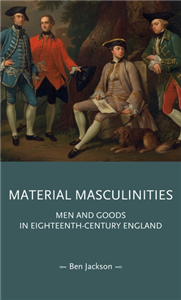
Material Masculinities examines the material and consumer practices of over 1000 men from the middling and upper ranks of eighteenth-century society, c.1650-1850. It draws upon evidence from over 35 archives and museum collections to detail how material objects were integral for men in forming identities and shaping experiences. For men of all social ranks, ages, and geographic locations, material knowledge was imperative for masculine social identities to operate in a commercial society. Before the centralised factory and widespread mass-produced goods, men personalised and repaired their goods; products were shaped by men's attitudes and concerns. Objects were tools in men's identity formation and the exercise of social and gendered power. There was a reciprocal relationship between men and goods in this period; men were active agents of material and commercial change driving product and aesthetic innovation.
Trusted Partner
 Trusted Partner
 Trusted Partner
Trusted Partner
Trusted Partner
Trusted Partner
Trusted Partner
Trusted Partner
Trusted Partner



