Your Search Results

      • Trusted Partner
        Humanities & Social Sciences
        February 2026

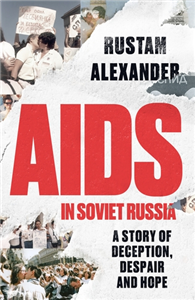
        AIDS in Soviet Russia

        A story of deception, despair and hope

        by Rustam Alexander

        The first book to tell the shocking story of the AIDS crisis in Soviet Russia. Throughout the 1980s, as the world was grappling with the escalating crisis of AIDS, Soviet Russia continued to deny there was a problem. Arguing that the disease was limited to foreigners and 'immoral' groups, the government failed to take meaningful action, long past the point other countries had begun to recognise the full scale of the threat. In this ground-breaking book, Rustam Alexander tells the story of AIDS in Soviet Russia. Fixated on disinformation, censorship and the persecution of marginalised communities, the Soviet authorities wasted precious time, allowing the epidemic to strike at the very heart of the nation: its children. Yet, despite the government's failure, a number of brave journalists, doctors and nascent gay groups decided to take matters into their own hands and engage in full-fledged AIDS activism. Tracing the political and social response to AIDS in the final years of the Soviet era, Alexander sheds light on the devastating consequences of government inaction. He draws on personal stories, media reports and archival materials to provide a riveting account of the Russian people's fight against AIDS amid the tumultuous transformations of Gorbachev's perestroika.

      • Trusted Partner
        Literature & Literary Studies
        March 2018

        The universal Baroque

        by Peter Davidson

      • Trusted Partner
        Humanities & Social Sciences
        January 2025

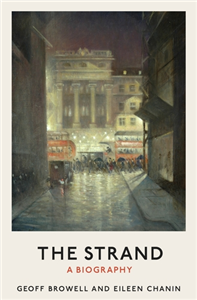
        The Strand

        A biography

        by Geoff Browell, Eileen Chanin

        The first history of one of London's most extraordinary streets. Running along the Thames's northern shore and spanning three-quarters of a mile from Trafalgar Square to Temple Bar, the Strand has been a witness to London's growth and change from the earliest years of the city's existence. In The Strand: A biography, Geoff Browell and Eileen Chanin uncover the deep history of this remarkable street. Tracing its origins in the Roman era, they reveal how it grew in importance as authority shifted from church to aristocracy, then to commerce, media and law. Over time, everything that mattered converged on the Strand: tradition and ceremony clashed with rebellion and destitution. By 1910, the street was known as the 'centre of the world'. Drawing on remarkable archival discoveries, Browell and Chanin present the most complete and compelling history of the Strand ever written. Filled with surprising, untold stories, The Strand: A biography is a must-read for lovers of one of the world's greatest cities.

      • Trusted Partner
        Humanities & Social Sciences
        November 2023

        Intimacy and mobility in an era of hardening borders

        Gender, reproduction, regulation

        by Haldis Haukanes, Frances Pine

        This book is a collection of articles by anthropologists and social scientists concerned with gendered labour, care, intimacy and sexuality, in relation to mobility and the hardening of borders in Europe. Interrogating the relation between physical, geopolitical borders and ideological, conceptual boundaries, it offers a range of vivid and original ethnographic case studies that will capture the imagination of anyone interested in gendered migration, policies of inclusion and exclusion, and regulation of reproduction and intimacy. The book presents ethnographic and phenomenological discussions of people's changing lives as they cross borders, how people transgress and reshape moral boundaries of proper gender and kinship behaviour, and moral economies of intimacy and sexuality. It also focuses on migrants' navigation of social and financial services in their destination countries, putting questions about rights and limitations on citizenship at the core.

      • Trusted Partner
      • Trusted Partner
        Humanities & Social Sciences
        February 2018

        How to save politics in a post-truth era

        by Ilan Zvi Baron

      • Trusted Partner
      • Trusted Partner
      • Trusted Partner
      • Trusted Partner
        Art & design styles: Baroque
        October 2016

        The matter of miracles

        Neapolitan baroque architecture and sanctity

        by Series edited by Amelia Jones, Helen Hills, Marsha Meskimmon

        This book investigates baroque architecture through the lens of San Gennaro's miraculously liquefying blood in Naples. This vantage point allows a bracing and thoroughly original rethink of the power of baroque relics and reliquaries. It shows how a focus on miracles produces original interpretations of architecture, sanctity and place which will engage architectural historians everywhere. The matter of the baroque miracle extends into a rigorous engagement with natural history, telluric philosophy, new materialism, theory and philosophy. The study will transform our understanding of baroque art and architecture, sanctity and Naples. Bristling with new archival materials and historical insights, this study lifts the baroque from its previous marginalisation to engage fiercely with materiality and potentiality and thus unleash baroque art and architecture as productive and transformational.

      • Trusted Partner
      • Trusted Partner
      • Trusted Partner
      • Trusted Partner
        Humanities & Social Sciences
        June 2003

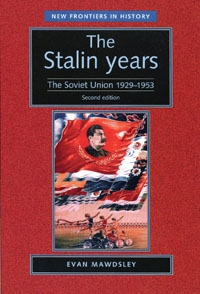
        The Stalin Years

        The Soviet Union, 1929–53 (second edition)

        by Helen Skelton

        The collapse of the USSR, the end of the Cold War and the opening of the Soviet archives have transformed both what is known about the events of the Stalin period and the historian's perspective. Published 50 years after his death, this revised and expanded second edition looks at the entire period of Stalin's rule and includes chapters on ideology, politics, economic development, social change, the nationalities, culture and external relations (including World War II) and the Great Terror. The interpretation stresses the connnection between internal and external policy and the influence of ideology on both. Mawdsley includes many primary resources, which provide insights into the Stalin era. Some of these are important theoretical or propaganda documents which are re-published here together for the first time in many years. Others are secret items from the Russian archives that have only become available since late 1980s.

      • Trusted Partner
        Humanities & Social Sciences
        April 2004

        The Victorians since 1901

        Histories, representations and revisions

        by Miles Taylor, Michael Wolff

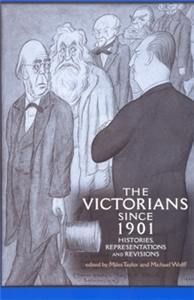
        Over a century after the death of Queen Victoria, historians are busy re-appraising her age and achievements. However, our understanding of the Victorian era is itself a part of history, shaped by changing political, cultural and intellectual fashions. From widespread reaction against Victorian values led by the Bloomsbury set, through to the rehabilitation of Victorian literature and architecture in the 1950s and 1960s, down to the present enthusiasm for film and television adaptations of Charles Dickens and George Eliot, our image of the Victorians has changed a great deal. The Victorians since 1901 provides a much-needed survey of these trends in modern historiography. Bringing together a group of international scholars from the disciplines of history, English literature, art history and cultural studies, it identifies and assesses the principal influences on twentieth-century attitudes towards the Victorians. Developments in academia, popular culture, public history and the internet are covered in this important and stimulating collection, and the final chapters anticipate future global trends in interpretations of the Victorian era, making an essential volume for students of Victorian Studies. ;

      • Trusted Partner
        The Arts
        January 2019

        Algerian national cinema

        by Guy Austin

        This topical and innovative study is the first book on Algerian cinema to be published in English since the 1970s. At a time when North African and Islamic cultures are of increasing political significance, Algerian National Cinema presents a dynamic, detailed and up to date analysis of how film has represented this often misunderstood nation. Algerian National Cinema explores key films from The Battle of Algiers (1966) to Mascarades (2007). Introductions to Algerian history and to the national film industry are followed by chapters on the essential genres and themes of filmmaking in Algeria, including films of anti-colonial struggle, representations of gender, Berber cinema, and filming the 'black decade' of the 1990s. This thoughtful and timely book will appeal to all interested in world cinemas, in North African and Islamic cultures, and in the role of cinema as a vehicle for the expression of contested identities. By the author of the critically-acclaimed Contemporary French Cinema.

      • Trusted Partner
        The Arts
        June 2021

        Algerian national cinema

        by Guy Austin

        This topical and innovative study is the first book on Algerian cinema to be published in English since the 1970s. At a time when North African and Islamic cultures are of increasing political significance, Algerian National Cinema presents a dynamic, detailed and up to date analysis of how film has represented this often misunderstood nation. Algerian National Cinema explores key films from The Battle of Algiers (1966) to Mascarades (2007). Introductions to Algerian history and to the national film industry are followed by chapters on the essential genres and themes of filmmaking in Algeria, including films of anti-colonial struggle, representations of gender, Berber cinema, and filming the 'black decade' of the 1990s. This thoughtful and timely book will appeal to all interested in world cinemas, in North African and Islamic cultures, and in the role of cinema as a vehicle for the expression of contested identities. By the author of the critically-acclaimed Contemporary French Cinema.

      • Trusted Partner
        Humanities & Social Sciences
        July 2022

        The looking machine

        Essays on cinema, anthropology and documentary filmmaking

        by David MacDougall

        This new collection of essays presents the latest thoughts of one of the world's leading ethnographic filmmakers and writers on cinema. It will provide essential reading for students in cinema studies, filmmaking, and visual anthropology. The dozen wide-ranging essays give unique insights into the history of documentary, how films evoke space, time and physical sensations, and the intellectual and emotional links between filmmakers and their subjects. In an era of reality television, historical re-enactments, and designer packaging, MacDougall defends the principles that inspired the earliest practitioners of documentary cinema. He urges us to consider how the form can more accurately reflect the realities of our everyday lives. Building on his own practice in filmmaking, he argues that this means resisting the pressures for self-censorship and the inherent ethnocentrism of our own society and those we film.

      Subscribe to our

      newsletter