
Cassava Republic Press
Cassava Republic Presswas founded with the aim of bringing high quality fiction and non-fiction for adults and children alike to a global audience.
View Rights Portal
Cassava Republic Presswas founded with the aim of bringing high quality fiction and non-fiction for adults and children alike to a global audience.
View Rights Portal
Republika Penerbit is a Jakarta-based publishing company. We publish books with genres ranging from religious (Islamic books), nonfiction, biography, historical fiction, contemporary fiction, fantasy, picture books, to comics. Some of our fiction has been adapted into films and there will be more to be filmed.
View Rights Portal
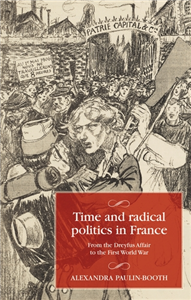
This book investigates how people have thought about and experienced time, and how their ideas about time have shaped their political views and actions. Using French thinkers and activists of the radical left and right between the Dreyfus Affair and the First World War as a case study, it argues that time provides an important means of exploring how concepts such as nationalism, revolution and social change were understood at the turn of the century. Attending to different experiences of time - the speed at which it was perceived to move, the extent to which the future was near and graspable, the ways in which the past was seen to impinge on the present - opens up exciting new possibilities for analysing politics, ideologies and worldviews.
 Trusted Partner
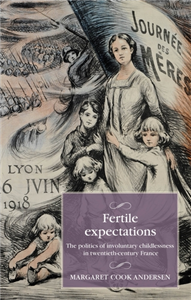
An engaging history of motherhood, demography, and infertility in twentieth-century France, this book explores fraught political and cultural meanings attached to the notion of an "ideal" family size. When statistics revealed a sustained drop in France's birthrate, pronatalist activists pushed for financial benefits, propaganda, and punitive measures to counter declining fertility. Situating infertility within this history, the author details innovations in fertility medicine, cultural awareness of artificial insemination, and changing laws on child adoption. These practices offered new ways of responding to infertility and formed part of a growing expectation of being able to control one's fertility and family size. This book presents the political and cultural context for understanding why private questions about when to start a family, how many children to have, and how to cope with involuntary childlessness, evolved and became part of state demographic policies.
Trusted Partner
Trusted Partner
Trusted Partner

Based on one of the richest surviving diaries of the Dutch Golden Age, Princely Power in the Dutch Republic recaptures the social world of William Frederick of Nassau (1613-1664). As a Stadholder and relative of the Prince of Orange, William Frederick was among the key players in a fragmented republican state system. This study offers a vivid analysis of his political strategies and reveals how unwritten codes of patronage guided his daily contacts and shaped his mental world. As a patron at his court and as a client of the Prince of Orange, William Frederick developed distinctive patronage roles, appropriate to different social spheres. By assessing these different roles, Janssen provides a unique insight into the ways in which a seventeenth-century nobleman negotiated and articulated clientage, friendship and corruption in his life. This study offers an in-depth analysis of political practices in the Dutch Republic and reconsiders the way in which patronage shaped early modern politics, affected religious divisions and framed social identities. ;
Trusted Partner
This is a study of the daily life, concerns, and dynamics of aristocratic families in the France of the Third Republic. Elizabeth Macknight draws on a vast range of material from private archives to contest assumptions about the irrelevancy of the nobility under the republican regime. Within a challenging political and economic environment nobles were determined to protect their interests and conserve the integrity of the aristocratic way of life. The convictions that underpinned nobles' responses to government initiatives emerge from the sources with freshness and clarity. Macknight interweaves male and female perspectives to provide a very full account of familial activities and decision-making with attention to all stages of the human lifecycle. Nobles' experiences of parenting and grandparenting, sibling and cousin relations, marriage, property negotiations, and interaction with servants are brought to light in a vivid and engaging narrative. ;
Trusted Partner
The Republic of Letters emerged during the seventeenth century as a concept to describe the interaction between scholars across Europe and beyond. While the concept was an imaginary one, it was firmly grounded in a reality of close circles of interaction between intellectuals, which had always existed but which was now endowed with a renewed sense of collaboration and participation within this community without barriers of statehood or creed. These fifteen essays explore differing aspects of collaboration and interdisciplinarity in the context of the radical change in mindset that the emergence of the Republic of Letters had fostered. Essays deal with French and English theatre, travel writing, the identity of the woman writer, the nature and function of gossip, scholarly interaction, and political and theological ideologies. The concluding essay provides a synthesis of the nature of seventeenth-century scholarship. The volume offers new insights into the mechanisms and workings of the Republic of Letters and charters the transition of scholarly pursuit being classified, even by some scholars themselves, as a solitary and sometimes pedantic pursuit to the notion of a network of ideas and interchange. This self-identification with a transnational league which knew no limits of geography, resources, gender or class marks a radical transition in the history of ideas and was to have far-reaching consequences, solidly preparing the way for the Enlightenment.
Trusted Partner
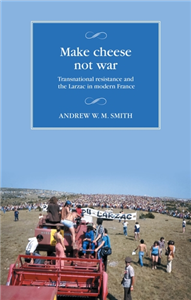
In 1971, the French government announced a massive extension of its military base on the Larzac plateau in southern France. Land was to be expropriated from 107 farms around the small town of La Cavalerie. Limited resistance was expected, but what happened next exceeded all expectations. Local sheep farmers set up protest camps and occupied the land. They soon attracted an astonishing level of support, pioneering a form of regional radicalism with global implications. Drawing out the international dimensions of the protest, Make cheese not war explores a transnational resistance movement in the 1970s that challenged dominant visions of modernity and became a wellspring of radical alternatives. Exploring previously unconsulted archives in France and elsewhere, the book offers an in-depth analysis of the decade-long peasant movement and its aftermath. Repositioning the Larzac struggle within a wider network of French and international solidarities, from the US to the UK, Germany, Burkina Faso, New Caledonia and Japan, the book retraces political networks of pacifist activism, as well as environmental movements and anti-nuclear protest. It shows how this French peasant campaign became both a platform and a model for popular engagement.
Trusted Partner
Newly available in paperback, Redefining the French Republic is an innovative work. Explicitly adopting a multidisciplinary approach, the book investigates continuity and change in contemporary French politics, society and culture. The chapters go beyond the familiar question of whether the Republic is acting in accordance with its vocation, to address the issue of whether that vocation is still viable. Drawing on contributions that reflect a variety of methodological approaches, ranging from theoretical speculations and modelling to the interpretation of fieldwork data, this study examines the dynamics of the relationship between the Republic and its constituencies, in the fields of political relations, territorial identities, social movements, public policy and foreign policy, and in each context juxtaposing what is perceived as the model for that relationship with the current reality. France in the twenty-first century is facing challenges that could not have been imagined a generation ago. The test for the Republic is whether it will resist the ongoing pressures for redefinition imposed by internal contestation and the emergence of powerful supranational and global forces, or whether it will find a way of adapting to these pressures while preserving a part of the vocation and ambition that make it characteristically French. The book concludes that, though the French polity remains characteristically different from other models of modern liberal democracy, internal and external pressures have challenged the republican model to the core. ;
Trusted Partner

Three of the most important chronicles of eleventh-century Germany were composed in the south-western duchy of Swabia. The chronicles reveal how between 1049 and 1100 the centripetal attraction of the reform papacy became the dominant fact of intellectual life in German reformed monastic circles. In the abbey of Reichenau Herman 'the Lame' composed a chronicle of the reign of Emperor Henry III (1039-56). His pupil, Berthold of Reichenau, continued his master's work, composing a detailed account of 1076-1079 in Germany. Bernold, a clergyman of Constance, continued the work of Herman and Berthold in a text containing the fullest extant account of 1080-1100. Herman's waning enthusiasm for the monarchy and growing interest in the newly reformed papacy were intensified in Berthold's chronicle, and writing in the new context of the reformed monasteries of south-western Germany, Bernold preached total obedience to the Gregorian papacy. The Swabian chronicles are an indispensable resource to the student of the changing loyalties and conflicts of eleventh-century Germany.
Trusted Partner

This book examines how Ireland's relationship with the EU was affected by a succession of crises in both the Republic of Ireland and Northern Ireland. The financial crisis, the Brexit crisis and the migration crisis were not of equal significance on the island of Ireland. The financial crisis was a huge issue for the Republic but not Northern Ireland, Brexit had a major impact in both polities, the migration and populism issues were less controversial, while foreign policy challenges had a minimal impact. The book provides a summary of the main features of each of the crises to be considered, from both the EU and the Irish perspective. Ireland and the European Union is the first volume of its kind to provide a comprehensive analysis on British-Irish relations in the context of Brexit. It assesses the Withdrawal Agreement and Protocol on Ireland/Northern Ireland, the devolution settlement and the 1998 Agreement, as well as the European dimension to Northern Ireland's peace process. The contributors explore a number of policy areas that are central to the understanding of each of the crises and the impact of each for Ireland. Chapters examine issues such as security, migration and taxation as well as protest politics, political parties, the media, public opinion and the economic impact of each of these crises on Ireland's relationship with the EU.
Trusted Partner
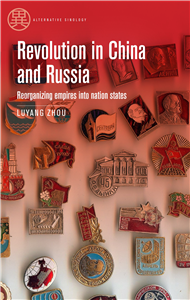
Most scholars believe that China's nationality policy, like that of other socialist states, imitated the Soviet nationality model, a system which has been termed an "affirmative action empire." This book offers two contributions to the literature which run counter to this convention. First, it argues that the People's Republic of China (PRC) and the Soviet Union (USSR) were different; while the PRC was aimed to build an ideal-typical nation-state, the USSR was an open union of nation-states that was only temporarily confined to a physical territory. Second, while scholars who have noted this difference attribute it to contextual factors, such as ethnic structure, geopolitical status, and Russia's intervention into the Chinese Revolution, this book contends that context shaped the Sino-Soviet difference, yet it did not determine it. Rather, there was significant leeway between the implications of the contextual factors, and what the policy-designers ultimately established. This book probes who held agency, and how these individuals bridged this gap.
Trusted Partner
 Trusted Partner
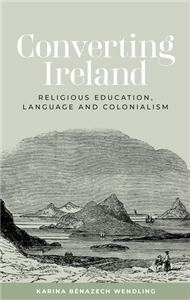
Karina Bénazech Wendling offers a re-assessment of 'souperism'-the long-debated claim that food was used to convert Irish Catholics to Protestantism during the Great Famine. Focusing on the Irish Society for Promoting the Education of the Native Irish through their Own Language, the first group labeled 'soupers' in 1841, she uncovers a more complex picture. Rather than a mere tool of British cultural imperialism, the Society had a deep engagement with the Irish language and Bible translation, while also encouraging religious conversions in the West. The book explores the Society's role in Ireland's religious and political landscape, the rise of Catholic counter-missions, and nationalist resistance. Offering fresh insights into Ireland's religious history and global missionary movements, this book is essential for scholars of Irish studies, interdenominational relations, and education in Ireland.
Trusted Partner
Social democratic parties struggle to appeal to a divided electorate. Particularly prescient is the clash between working-class voters thatare socially conservative and middle-class voters who are liberally inclined but economicallyleft. Are politics and policies that appeal to both even a possibility? Nowhere is thatdebate more acute than in European cities, yet in no other political space are answers more likely to be found.Where urban voters turn left, they are increasingly attracted by radical and green alternatives to social democracy.Social democracy and urban politicsdelves into the changing relationship between these three party families on the urban scene. Mapping electoral geography, governing strategies and the interface between parties and social movements on the left, the authors reflect upon the formation and dilemmas of a broader progressive alliance.
Trusted Partner
Now in its second edition, Racism and Social Change in the Republic of Ireland provides an original and challenging account of racism in twenty-first century Irish society and locates this in its historical, political, sociological and policy contexts. It includes specific case studies of the experiences of racism in twenty-first century Ireland alongside a number of historical case studies that examine how modern Ireland came to marginalize ethnic minorities. Various chapters examine responses by the Irish state to Jewish refugees before, during and after the Holocaust, asylum seekers and Travellers. Other chapters examine policy responses to and academic debates on racism in Ireland. A key focus of the various case studies is upon the mechanics of exclusion experienced by black and ethnic minorities within institutional processes and of the linked challenge of taking racism seriously in twenty-first century Ireland. ;
Trusted Partner

Carol Reed is one of the truly outstanding directors of British cinema, and one whose work is long overdue for reconsideration. This major study ranges over Reed's entire career, combining observation of general trends and patterns with detailed analysis of twenty films, both acknowledged masterpieces and lesser-known works. Evans avoids a simplistic auteurist approach, placing the films in their autobiographical, socio-political and cultural contexts and relating these to the analysis of Reed's art. The critical approach combines psychoanalysis, gender theory, and the analysis of form. Archival research is also relied on to clarify Reed's relations with his creative team, financial backers and others. Films examined include Bank Holiday, A Girl Must Live, Odd Man Out, The Fallen Idol, The Third Man, Night Train to Munich, The Way Ahead, Outcast of the Islands, Trapeze and Oliver!.
Trusted Partner

Socialist republic is a timely account of 1980s left-wing politics in South Yorkshire. It explores how Sheffield City Council set out to renew the British Left. Through careful analysis of the Council's agenda and how it interacted with trade unions, women's groups, lesbian and gay rights groups and acted on issues such as peace, environmentalism, anti-apartheid and anti-racism, the book draws out the complexities involved in building a broad-based politics which aimed unite class and identity politics. Running counter to 1980s narratives dominated by Thatcherism, the book examines the persistence of social democracy locally, demonstrating how grassroots local histories can enrich our understanding of political developments on a national and international level. The book is essential reading for students, scholars, and activists with an interest in left-wing politics and history.
Trusted Partner

Green's The contemporary law of armed conflict has been acclaimed as one of the most significant works on the law of armed conflict to appear in recent years. The first edition was adopted as a basic text by military institutions and educational establishments throughout the world and is among the most comprehensive and readable works on the subject. This new edition brings the work up to date, examining the significance of the World Court's Opinion on the legality of the nuclear weapon. It also considers the importance of such matters as the laser weapon agreement, the mines treaty and the jurisprudence of the two war crimes tribunals, that for the former Yugoslavia as well as for Rwanda, and assesses the role of the proposed International Criminal Court as it may affect the law of armed conflict. The book applies a practical as well as a theoretical approach, and draws on an extensive range of national and international practice. It is thus an indispensable reference for the armed forces and government defence organizations, as well as academics and students interested in the modern law of war.



