
Éditions Sylvain Harvey
Livres Canada Books
View Rights Portal

Our passion is to show kids, how colourful and fascinating the world is. There is not only one way to live but so many. We love curious children and we do the books they need to explore the world. So we do travel books for kids and novels for the journey in a hammock.
View Rights Portal
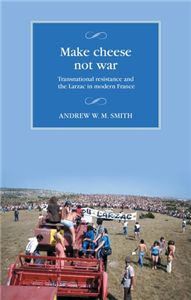
In 1971, the French government announced a massive extension of its military base on the Larzac plateau in southern France. Land was to be expropriated from 107 farms around the small town of La Cavalerie. Limited resistance was expected, but what happened next exceeded all expectations. Local sheep farmers set up protest camps and occupied the land. They soon attracted an astonishing level of support, pioneering a form of regional radicalism with global implications. Drawing out the international dimensions of the protest, Make cheese not war explores a transnational resistance movement in the 1970s that challenged dominant visions of modernity and became a wellspring of radical alternatives. Exploring previously unconsulted archives in France and elsewhere, the book offers an in-depth analysis of the decade-long peasant movement and its aftermath. Repositioning the Larzac struggle within a wider network of French and international solidarities, from the US to the UK, Germany, Burkina Faso, New Caledonia and Japan, the book retraces political networks of pacifist activism, as well as environmental movements and anti-nuclear protest. It shows how this French peasant campaign became both a platform and a model for popular engagement.

Carol Reed is one of the truly outstanding directors of British cinema, and one whose work is long overdue for reconsideration. This major study ranges over Reed's entire career, combining observation of general trends and patterns with detailed analysis of twenty films, both acknowledged masterpieces and lesser-known works. Evans avoids a simplistic auteurist approach, placing the films in their autobiographical, socio-political and cultural contexts and relating these to the analysis of Reed's art. The critical approach combines psychoanalysis, gender theory, and the analysis of form. Archival research is also relied on to clarify Reed's relations with his creative team, financial backers and others. Films examined include Bank Holiday, A Girl Must Live, Odd Man Out, The Fallen Idol, The Third Man, Night Train to Munich, The Way Ahead, Outcast of the Islands, Trapeze and Oliver!.
 Trusted Partner
Trusted Partner
Trusted Partner
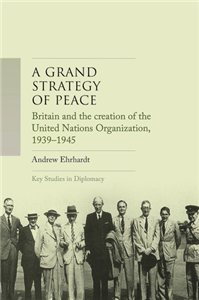
A grand strategy of peace is the first detailed account of Britain's role in the creation of the United Nations Organization during the Second World War. As a work of traditional diplomatic history that brings in elements of intellectual history, the book describes how British officials, diplomats, politicians, and writers - previously seen to be secondary actors to the United States in this period - thought about, planned for, and helped to establish a future international order. While in the present day, many scholars and analysts have returned to the origins of the post- 1945 international system, this book offers an exhaustive account of how the statesmen and more importantly, the officials working below the statesmen, actually conceived of and worked to establish a post-war world order.
Trusted Partner
Trusted Partner
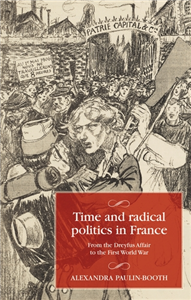
This book investigates how people have thought about and experienced time, and how their ideas about time have shaped their political views and actions. Using French thinkers and activists of the radical left and right between the Dreyfus Affair and the First World War as a case study, it argues that time provides an important means of exploring how concepts such as nationalism, revolution and social change were understood at the turn of the century. Attending to different experiences of time - the speed at which it was perceived to move, the extent to which the future was near and graspable, the ways in which the past was seen to impinge on the present - opens up exciting new possibilities for analysing politics, ideologies and worldviews.
Trusted Partner


Tim is one of them. A runner full of passion, ready to go beyond the limits. When one day he gets a letter from GlobalGames he doesn’t hesitate to accept the challenge for a second. 7 caches have been hidden in 7 locations. 100 young people are chasing after them. Each one against the others. But Tim soon realises that he can’t do it alone. He finds an ally in the fascinating Annika, known as Sakura. But can he really trust her? Or is everyone just running for themselves after all? Who’s ready to go the furthest to find the biggest cache in the world?
Trusted Partner
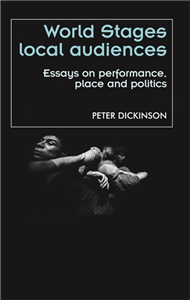
World Stages, local audiences argues that the forms of intimacy and identification that come from being part of the public of a local performance, provide a potential model for rethinking our roles as world citizens. Using his own experience of recent theatrical practice in Vancouver as a starting point, Dickinson maps the spaces of connection and contestation, the flows of sentiment and social responsibility, produced by different communities in response to global sports spectacles. He also analyses how such topics are taken up in the work of playwrights, conceptual, installation, and performance artists like Ai Weiwei, and Rebecca Belmore. In so doing, Dickinson makes an original contribution to the emerging discourse on live art and 'livability' by examining not only the geographical and historical affiliations between different sites of performance, but also the - at times - radical new social bonds created by audiences witness to those performances. ;
Trusted Partner

Christian dualism originated in the reign of Constans II (641-68). It was a popular religion, which shared with orthodoxy an acceptance of scriptual authority and apostolic tradition and held a sacramental doctrine of salvation, but understood all these in a radically different way to the Orthodox Church. One of the differences was the strong part demonology played in the belief system. This text traces, through original sources, the origins of dualist Christianity throughout the Byzantine Empire, focusing on the Paulician movement in Armenia and Bogomilism in Bulgaria. It presents not only the theological texts, but puts the movements into their social and political context.
Trusted Partner
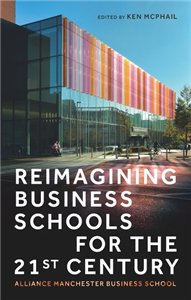
Whether it's dealing with regional economic disparities, global geopolitical upheaval, climate change, or the impact of new technologies such as artificial intelligence, we are living in pivotal times. To mark its 60th anniversary in 2025, this accessible book from Alliance Manchester Business School outlines in detail how business schools can play a significant role in confronting these huge challenges, and equip the next generation of business leaders with the skills they need to embrace them. Informing public and political debate on the role of business in both the causes and solutions to our biggest challenges the book offers a rethinking of the role of business in society. It will also discuss specific examples of how collaborations with business are leading to impact and change in society. Featuring a range of thought-provoking essays co-authored by eminent academics and business leaders, this collection will challenge the status quo and outline how business and management research is helping address grand challenges, generate economic growth, inform policy development, and define business thinking over the next generation.
Trusted Partner

In this bold and exhilarating mix of memoir and writing guide, Melissa Febos tackles the emotional, psychological, and physical work of writing intimately while offering an utterly fresh examination of the storyteller's life and the challenges it presents. How do we write about the relationships that have formed us? How do we describe our bodies, their desires and traumas? What does it mean to have your writing, or living, dismissed as "navel-gazing"-or else hailed as "so brave, so raw"? And to whom, in the end, do our most intimate stories belong? Drawing on her journey from aspiring writer to acclaimed author and writing professor-via addiction and recovery, sex work and academia-Melissa Febos has created a captivating guide to the writing life, and a brilliantly unusual exploration of subjectivity, privacy, and the power of divulgence. Candid and inspiring, Body Work will empower readers and writers alike, offering ideas-and occasional notes of caution-to anyone who has ever hoped to see their true self reflecting back from the open page.
Trusted Partner

In this bold and exhilarating mix of memoir and writing guide, Melissa Febos tackles the emotional, psychological, and physical work of writing intimately while offering an utterly fresh examination of the storyteller's life and the challenges it presents. How do we write about the relationships that have formed us? How do we describe our bodies, their desires and traumas? What does it mean to have your writing, or living, dismissed as "navel-gazing"-or else hailed as "so brave, so raw"? And to whom, in the end, do our most intimate stories belong? Drawing on her journey from aspiring writer to acclaimed author and writing professor-via addiction and recovery, sex work and academia-Melissa Febos has created a captivating guide to the writing life, and a brilliantly unusual exploration of subjectivity, privacy, and the power of divulgence. Candid and inspiring, Body Work will empower readers and writers alike, offering ideas-and occasional notes of caution-to anyone who has ever hoped to see their true self reflecting back from the open page.
Trusted Partner
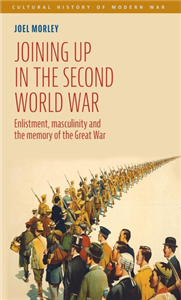
This book connects the First and Second World Wars. It uses oral histories and Mass Observation material to explore men's attitudes to Second World War enlistment and the relationship they perceived between military service and masculinity, and how these were influenced by understandings of the First World War. Locating the cultural legacy of First World War in the subjectivities of men who participated in the Second World War demonstrates the breadth of sources that informed men's understandings of the First World War in interwar Britain. Its cultural legacy was omnipresent and diverse, and informed young men's attitudes and service preferences, but it reinforced Edwardian conceptions of wartime masculinity as often as it undermined them. Two decades after the First World War ended, they remained resilient in the subjective understandings of men who grew up in the Great War's shadow.
Trusted Partner

The international exhibitions held around the world between 1851 and 1939 were spectacular gestures, which briefly held the attention of the world before disappearing into an abrupt oblivion, of the victims of their planned temporality. Known in Britain as Great Exhibitions, in France as Expositions Universelles and in America as World's Fairs, the genre became a self-perpetuating phenomenon, the extraordinary cultural spawn of industry and empire. Thoroughly in the spirit of the first industrial age, the exhibitions illustrated the relation between money and power, and revelled in the belief that the uncontrolled expression of that power was the quintessence of freedom. Philanthropy found its place on exhibition sites functioning as a conscience to the age although even here morality was inextricably linked to economic efficiency and expansion. Imperial achievement was celebrated to the full at international exhibitions. Nevertheless, most World's Fairs maintained an imperial element and out of this blossomed a vibrant racism. Between 1889 and 1914, the exhibitions became a human showcase, when people from all over the world were brought to sites in order to be seen by others for their gratification and education. In essence, the English national profile fabricated in the closing decades of the nineteenth century was derived from the pre-industrial world. The Fine Arts were an important ingredient in any international exhibition of calibre. This book incorporates comparative work on European and American empire-building, with the chronological focus primarily on the nineteenth and twentieth centuries, when these cultural exchanges were most powerfully at work.
Trusted Partner
In this bold and exhilarating mix of memoir and writing guide, Melissa Febos tackles the emotional, psychological, and physical work of writing intimately while offering an utterly fresh examination of the storyteller's life and the challenges it presents. How do we write about the relationships that have formed us? How do we describe our bodies, their desires and traumas? What does it mean to have your writing, or living, dismissed as "navel-gazing"-or else hailed as "so brave, so raw"? And to whom, in the end, do our most intimate stories belong? Drawing on her journey from aspiring writer to acclaimed author and writing professor-via addiction and recovery, sex work and academia-Melissa Febos has created a captivating guide to the writing life, and a brilliantly unusual exploration of subjectivity, privacy, and the power of divulgence. Candid and inspiring, Body Work will empower readers and writers alike, offering ideas-and occasional notes of caution-to anyone who has ever hoped to see their true self reflecting back from the open page.
Trusted Partner

Child, nation, race and empire is an innovative, inter-disciplinary, cross cultural study that contributes to understandings of both contemporary child welfare practices and the complex dynamics of empire. It analyses the construction and transmission of nineteenth-century British child rescue ideology. Locating the origins of contemporary practice in the publications of the prominent English Child rescuers, Dr Barnardo, Thomas Bowman Stephenson, Benjamin Waugh, Edward de Montjoie Rudolf and their colonial disciples and literature written for children, it shows how the vulnerable body of the child at risk came to be reconstituted as central to the survival of nation, race and empire. Yet, as the shocking testimony before the many official enquiries into the past treatment of children in out-of-home 'care' held in Britain, Ireland, Australia and Canada make clear, there was no guarantee that the rescued child would be protected from further harm.
Trusted Partner
'Edward IV' (1599) was printed no less than six times up to 1626, and was one of the best loved plays of the early modern period, but this edition is the first since the 1870s. The play premiered at a moment when the representation of medieval history in any format was coming under the hostile scrutiny of the Elizabethan government. Yet the playwright produced a text which was at once generically complex (the play blurs the distinction between chronicle history and 'domestic' tragedy), brilliantly assured in its dramatic craftsmanship, and politically explosive. The text of this new paperback edition has already been used by the actors at Shakespeare's Globe when they gave the first London performance of 'Edward IV' for more than four centuries. By demonstrating the playwright's dextrous marshalling of a remarkable range of sources, and by examining afresh the dramatist's singular theatrical technique, this volume reopens an exciting if difficult play to a new generation of scholars and performers. ;
Trusted Partner

This collection aims to inaugurate a new direction in research on counterterrorism by exploring global connections - both in terms of practices and discourses, as well as shared ideas and epistemes - that animate counterterrorism practices. The chapters - grouped under the themes of postcoloniality and coloniality, and entanglements of the transnational and the local, and counterterrorism and right-wing extremism - are attentive to global connections and are mindful of the complexities of global historical processes that constitute the politics of counterterrorism. This book aims to bring together scholars studying counterterrorism in the global North and the global South to explore convergence and divergence in how counterterrorism policies function in a range of national and local contexts.
Trusted Partner

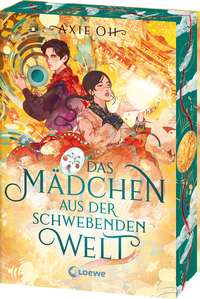
Wenn Licht auf Schatten trifft ... Seit Jahren verbirgt Ren ihre Lichtmagie – bis ihre Familie von einem Dämon angegriffen wird. Da bricht das Licht aus ihr heraus; so hell, dass es selbst ihre Feinde sehen. Doch Ren hat noch andere Sorgen: Ihr Onkel wurde durch den Dämon vergiftet und sie muss dringend ein Heilmittel finden. Auf ihrer Suche begegnet ihr ausgerechnet Sunho – ein Kopfgeldjäger, der auf sie angesetzt wurde. Sunho ahnt nicht, wer Ren wirklich ist. Und wie sehr ihre Schicksale miteinander verwoben sind ... Der Auftakt einer fesselnden Romantasy-Dilogie basierend auf einer koreanischen Sage Axie Ohs New York Times -Bestseller ist eine außergewöhnliche Neuerzählung einer koreanischen Sage voller Spannung und Geheimnissen , Liebe und märchenhafter Atmosphäre . Ein Muss für alle Romantasy-Fans! Band 1 einer fesselnden Romantasy-Dilogie Koreanische Mythologie : basierend auf der Sage Der Holzfäller und die Himmelsfee Beliebte Tropes : Grumpy x Sunshine, Hidden Identity, Found Family sowie eine abgewandelte Form von Enemies to Lovers Spannende Komibantion : Action, Geheimnisse und Intrigen treffen auf märchenhafte Momente, die an Studio-Ghibli-Filme erinnern Originelles Setting : Schwebende Welt vs. Unterwelt vs. idyllische Berglandschaft Über den Kampf mit den eigenen Dämonen und den Glauben an das innere Licht Erstauflage mit opulentem Farbschnitt und exklusiver Charakterpostkarte - Nur in der 1. Auflage!
Trusted Partner

This book offers the first authoritative guide to assumptions about time in theories of contemporary world politics. It demonstrates how predominant theories of the international or global 'present' are affected by temporal assumptions, grounded in western political thought, that fundamentally shape what we can and cannot know about world politics today. The first part of the book traces the philosophical roots of assumptions about time in contemporary political theory. The second part examines contemporary theories of world politics, including liberal and realist International Relations theories and the work of Habermas, Hardt and Negri, Virilio and Agamben. In each case, it is argued, assumptions about political time ensure the identification of the particular temporality of western experience with the political temporality of the world as such and put the theorist in the unsustainable position of holding the key to the direction of world history. In the final chapter, the book draws on postcolonial and feminist thinking, and the philosophical accounts of political time in the work of Derrida and Deleuze, to develop a new 'untimely' way of thinking about time in world politics. ;

