Thornapple Press
Publisher of bestselling and award-winning books including Polysecure, More Than Two and Love’s Not Color Blind.
View Rights Portal
Publisher of bestselling and award-winning books including Polysecure, More Than Two and Love’s Not Color Blind.
View Rights Portal
John Wiley & Sons, Inc. (Wiley)is a renowned, global publishing company focusing on academic publishing for professionals and researchers within the field of science and medicine.
View Rights Portal Trusted Partner

 Trusted Partner
Trusted Partner
Trusted Partner

 Trusted Partner
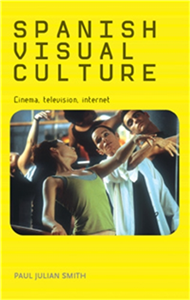
This book is the first to explore three visual media in contemporary Spain: cinema, television and the internet. It also examines cultural products in each of these media in terms of three vital themes: emotion, location and nostalgia. The first two chapters focus on emotion. They analyze the 'emotional imperative' in a recent Almodóvar feature film and in Spanish television's top-rated period drama, and investigate the politics of affect in TV drama in the last decade. The next pair of chapters deal with location. They use cultural geography to re-read contradictory accounts of the movida (the post-Franco cultural boom) and examine an attempt to anchor a US-derived genre (the youth movie) in the urban landscape of Madrid. The fifth and sixth chapters introduce the theme of location into nostalgia. They treat the unique cases of a successful Spanish heritage movie and a contemporary Spanish thriller remade in Hollywood. The peunultimate chapter investigates electronic artists and the virtual universe, and the book ends with a look at the implications of Hispano-Mexican co-productions and the interconnectedness of economic and aesthetic cultural forms. ;
Trusted Partner
Trusted Partner
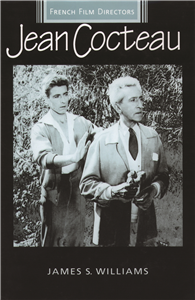
This is a comprehensive, original and accessible account of all aspects of Jean Cocteau's work in the cinema. It is the first major study in English to appear for over forty years and casts new light on Cocteau's most celebrated films as well as those often neglected or little known. Jean Cocteau is not only one of French cinema's greatest and most influential auteurs whose work covered all the major genres but also an experimenter, collaborator, theorist and all-round ambassador of film. This lucid account provides a complete introduction to Cocteau's cinematic project in the context of his entire oeuvre, detailed analysis of individual films, and a thematic engagement with all his cinema from a range of interdisciplinary perspectives. The Cocteau that emerges is at once a materialist filmmaker and visionary who is committed to realism in all its guises and reveals the wonder and mystery of what he called 'the cinematograph'. ;
Trusted Partner
Trusted Partner
Trusted Partner

This collection tells the story of Thomas Becket's turbulent life, violent death and extraordinary posthumous acclaim in the words of his contemporaries. The only modern collection from the twelfth-century Lives of Thomas Becket in English and features all his major biographers, including many previously untranslated extracts. Providing both a valuable glimpse of the late twelfth-century world, and an insight into the minds of those who witnessed the events. By using contemporary sources, this book is the most accessible way to study this central episode in medieval history. Thomas Becket features prominently in most medieval core courses. This book allows the subject to be taught as never before, and is highly suitable as a set text.
Trusted Partner
Trusted Partner
 Trusted Partner
This book offers the first extended study of Queen Henrietta's Men, one of Caroline London's most important professional playing companies. The drama that the company performed at the Cockpit between 1626 and 1636 includes many underexplored and neglected plays from the period alongside more celebrated works by dramatists including James Shirley and John Ford, and a number of Elizabethan and Jacobean revivals. Queen Henrietta's Men and the Cockpit Repertory explores the material and cultural conditions under which the company operated, and offers an account of the dynamics that held between new drama written for the company and the revivals staged alongside that fare. In doing so, this account illuminates the ways in which an appreciation of the work of Queen Henrietta's Men can offer new perspectives on theatre history and the categories of company and repertory that have shaped it.
Trusted Partner
 Trusted Partner
Trusted Partner
Trusted Partner

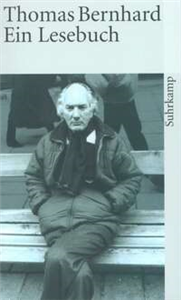
Das vorliegende Lesebuch versteht sich als Vorschlag und Einladung zu einer Erkundung des Bernhardschen Schreibens, dessen begriffs- und geschichtenzerstörende Irritationskraft den Leser in seinen Sog zieht und ihn jene Haltung einnehmen läßt, die Thomas Bernhard als die seinem Werk angemessene beschrieben hat: »Man soll sich vorstellen, man ist im Theater, man macht mit der ersten Seite einen Vorhang auf, der Titel erscheint, totale Finsternis – langsam kommen aus dem Hintergrund, aus der Finsternis heraus, Wörter, die langsam zu Vorgängen äußerer und innerer Natur, gerade wegen ihrer Künstlichkeit besonders deutlich zu einer solchen werden.«
Trusted Partner

This volume proposes new insights into the uses of classical mythology by Shakespeare and his contemporaries, focusing on interweaving processes in early modern appropriations of myth. Its 11 essays show how early modern writing intertwines diverse myths and plays with variant versions of individual myths that derive from multiple classical sources, as well as medieval, Tudor and early modern retellings and translations. Works discussed include poems and plays by William Shakespeare, Christopher Marlowe and others. Essays concentrate on specific plays including The Merchant of Venice and Dido Queen of Carthage, tracing interactions between myths, chronicles, the Bible and contemporary genres. Mythological figures are considered to demonstrate how the weaving together of sources deconstructs gendered representations. New meanings emerge from these readings, which open up methodological perspectives on multi-textuality, artistic appropriation and cultural hybridity.
Trusted Partner

30 Jahre alt, ohne Resonanz auf seine bis dahin veröffentlichten drei Gedichtbände, vom eigenen überragenden schriftstellerischen Können allerdings überzeugt, schreibt Thomas Bernhard im Oktober 1961 an Siegfried Unseld: "Vor ein paar Tagen habe ich an Ihren Verlag ein Prosamanuskript geschickt. Ich kenne Sie nicht, nur ein paar Leute, die Sie kennen. Aber ich gehe den Alleingang." Obwohl der Suhrkamp Verlag das Manuskript ablehnte, gingen der Alleingänger und der Verleger seit dem Erscheinen von Bernhards erstem Roman "Frost" 1963 gemeinsam den Weg, der den Autor in die Weltliteratur führte. In den etwa 500 Briefen zwischen beiden entwickelt sich ein einzigartiges Zwei-Personen-Schauspiel: Mal ist es eine Tragödie, wenn etwa Bernhard die aus seinen Werken bekannten Schimpftiraden auf den Verleger losläßt, der seinerseits auf die Überzeugungskraft des Arguments setzt. Dann gibt Bernhard ein Kammerspiel mit Unseld als Held – 1973 schreibt er ihm: "mit grösster Aufmerksamkeit, mit allen Möglichkeiten, gehe ich gern mit Ihnen." 1984 agieren beide, bei der Beschlagnahme von "Holzfällen", als Kämpfer für die Literatur in einem von Dritten inszenierten Schurkenstück. Es dominiert das Beziehungsdrama: Der Autor stellt die für sein Werk und seine Person unabdingbaren Forderungen. Der Verleger seinerseits weiß, daß gerade bei Bernhard rücksichtslose Selbstbezogenheit notwendige Voraussetzung der Produktivität ist. Solch einen dramatischen Briefwechsel zwischen Autor und Verleger, in dem bei jeder Zeile alles auf dem Spiel steht, kennt das Publikum bislang nicht.
Trusted Partner


Rund 170 historische Fotos und Ansichtskarten, die hier zum größten Teil erstmals veröffentlicht werden, entführen den Leser in das Venedig Thomas Manns. Reinhard Pabst führt auf den Spuren des Dichters durch die Lagunenstadt und zu den Originalschauplätzen der Novelle Der Tod in Venedig. Wie einst Gustav Aschenbach, der Held der Novelle, kann sich der Leser im luxuriösen »Grand Hôtel des Bains« auf dem Lido ergehen, das mondäne Badeleben genießen und sich dem »Vergnügen an den Bildern eines soignierten Strandes« hingeben, an dem sich auch Arthur Schnitzler, Peter Altenberg, Karl Kraus, Georg Trakl und viele andere tummelten.Ein einzigartiges Buch über eine vergangene, faszinierende Epoche.