
Thornapple Press
Publisher of bestselling and award-winning books including Polysecure, More Than Two and Love’s Not Color Blind.
View Rights Portal
Publisher of bestselling and award-winning books including Polysecure, More Than Two and Love’s Not Color Blind.
View Rights Portal
Home to poetry slammers / stage poets and their stages-texts as well as novels / fictional works. What have all our authors in common? They can perform on stages what make every reading quite entertaining. When a stage-experienced actor and poetry slammer writes a dragon-novel for yound readers / listeners, then it's beatuful to read, listen and his readings are always fascinating. That way, the young dragon Fionrir, princess Quirina and their most unusual pack gained a intensely interacting fanbase. As the other stage-performers do.
View Rights Portal

This instructive study examines how a transnational discourse on 'modern' social policy - based the guiding principles of 'activation' and an 'activating welfare state' - intervenes in the concepts and practices of citizenship. What are the consequences of this reorientation for citizenship? How does it relate to patterns of exclusion and inequality inherent in each historical citizenship formation? What exactly is the EU's role in this context? The detailed qualitative study focuses on the European Employment Strategy - and in particular its gender equality dimension - as a central process where the activation agenda is constructed and equipped with meanings. It traces how this discourse is received and translated into practices of citizenship in three EU member states - Germany, the UK, and Hungary. The activation of citizenship in Europe will be principally of interest to academics and practitioners in the fields of European integration, social policy, and citizenship. ;
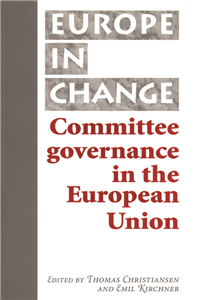
Committees are a pervasive presence in the EU policy process yet little is known about the way in which they operate. This volume, newly available in paperback, brings together an international group of experts from a number of disciplinary backgrounds to provide a comprehensive account of the role played by committees in the European Union. The book looks at committees in the context of inter-institutional relations, a focus based on the recognition that the relationships between Commission, Council, Parliament and national authorities - rather than the institutions themselves - are crucial to the understanding of European policy-making. Much of that interaction is regularised in various kinds of committees and the book provides an in-depth analysis of the nature and the effects of 'committee governance' in the EU system. A number of case studies (monetary, policy, trade, environment, spatial planning and foreign policy) examine the role of committees in specific areas. These are framed by broader perspectives which provide theoretical, statistical and normative analyses of the phenomenon of committee governance. ;
 Trusted Partner
Trusted Partner
Trusted Partner

 Trusted Partner

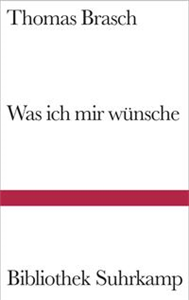
Liebe ist für Thomas Brasch (1945–2001) eine Haltung, die sich jeder Festlegung verweigert. Eine Haltung, die ihre Träume fürchtend und sehnend der Wirklichkeit aussetzt und das Mögliche stets in den Horizont des Unmöglichen stellt. Braschs dichterische Leidenschaft hofft und verzweifelt, vertraut und betrügt, preist und vernichtet. Und sie belehrt: Wann, wem und wie schreibt man ein erotisches Gedicht? In dem Band stehen Gedichte, die Brasch eigenständig und zu Lebzeiten publiziert hat, neben literarischen Hinterlassenschaften. Texte aus den frühen Jahren(»Anna, komm …«) sind ebenso vertreten wie Arbeiten aus jüngerer Zeit, etwa eine Gruppe mit Brunke-Gedichten, die in den 1990er Jahren entstanden sind.
Trusted Partner

»Wir staunen, was wir offenbar schon lange gedacht haben und was wir uns jetzt laut zurufen: Demokratie jetzt oder nie!« Als Christa Wolf am 4. November 1989 diese Worte den versammelten Menschen am Alexanderplatz zuruft, steht die weltberühmte Schriftstellerin im Zentrum politischer Umbrüche. Sogar das Staatspräsidentenamt wird ihr angeboten. Wie hat die engagierte Autorin die DDR, den Mauerfall und die Wiedervereinigung erlebt? Im Jahr 2008 führte Thomas Grimm ein Interview mit Christa Wolf und ihrem Mann Gerhard Wolf. Christa Wolf erinnert sich in dem Gespräch an den Alltag in der DDR, die Überwachung durch die Stasi und die friedliche Revolution von 1989, zu deren wichtigsten Stimmen sie gehörte. Sie spricht über ihre vergebliche Hoffnung auf einen wirklich demokratischen Sozialismus in der DDR, über die Wiedervereinigung und ihre Eindrücke des sich verändernden Kunst- und Kulturbetriebs. Ihre gesellschaftlichen Diagnosen sind ihrer Zeit weit voraus, ob es den Wegzug junger Leute aus Ostdeutschland, die Ausbreitung rechter Gesinnungen oder die drohenden Folgen des Klimawandels betrifft. Christa Wolf zeigt sich als scharfsinnige Analytikerin der Wendezeit und couragierte Zeitgenossin und gibt ganz persönliche Einblicke in ihr Leben.
Trusted Partner

 Trusted Partner
 Trusted Partner
 Trusted Partner
Trusted Partner
Trusted Partner
Trusted Partner
Trusted Partner
Trusted Partner
Trusted Partner
Trusted Partner
Trusted Partner

 Trusted Partner
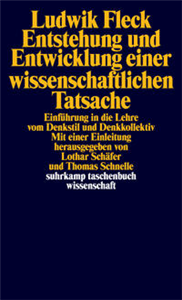
Flecks zuerst 1935 erschienene Studie ist die wohl erste soziologische Untersuchung der Produktion wissenschaftlichen Wissens: Wissen kann nicht losgelöst von den Menschen betrachtet werden, die es besitzen. Fleck entwickelt seine Konzeption am Beispiel einer historischen Fallstudie, nämlich der Entdeckung der sog. Wassermann-Reaktion, mit der sich Syphillis nachweisen läßt.
Trusted Partner
Trusted Partner
 Trusted Partner
Trusted Partner
Trusted Partner
 Trusted Partner






