
Your Search Results
-

-

Thornapple Press
Publisher of bestselling and award-winning books including Polysecure, More Than Two and Love’s Not Color Blind.
View Rights Portal
-
Promoted Content
-
Promoted Content

 February 2006
Die Kunst, Fehler zu machen.
by Manfred Osten
Aus Erfahrung wird man klug, sagt ein Sprichwort. Ohne Fehler und Irrtümer gibt es keine Entwicklung. Die gegenwärtige Null-Fehler-Kultur aber tut sich schwer damit, Fehler zu akzeptieren. Bisher stützte sich der Mensch als »gebrechliches Wesen in der zerbrechlichen Einrichtung der Welt« zur Korrektur und Begrenzung seiner Irrtümer und Fehler vor allem auf Erfahrung. Angesichts der rasanten Zunahme von abstraktem Wissen vor dem Horizont virtueller Welten lassen sich schwer noch sinnliche Erfahrungen machen. Dadurch stellt die Bewältigung von Fehlern zunehmend eine überforderung dar. Mutiert der »antiquierte« Mensch in einer »Null-Fehler-Kultur« selbst zum größten anzunehmenden Unfall und Risikofaktor? Wird deswegen unermüdlich an seiner Perfektionierung gebastelt? Manfred Osten stellt die grundsätzliche Frage nach der Relativität unseres rational orientierten westlichen Fehlerverständnisses und unserer Fehlerbeherrschung. Ein Plädoyer gegen den Perfektionismus, eine kleine Gebrauchsanweisung, Fehler zu machen und Irrtümer einzugestehen. »Wenn irren menschlich ist, dann ist nicht zu irren unmenschlich.«
-
 Trusted Partner
 September 1975
The Best of H. C. Artmann
by H. C. Artmann, Klaus Reichert
Von allen deutschen Autoren, die nach 1945 zu schreiben begannen, ist Artmann ohne jeden Zweifel der vielseitigste, originellste und erfinderischste. So wie Artmann in fast allen Gattungen gearbeitet hat, auch den angeblich antiquierten, und ohne sich um die Tagesparolen der mal reine Dichtung betreibenden, mal engagierten, mal die Literatur totsagenden Kollegen zu kümmern, so hat er seine Quellen, seine Herkunft überall: in der Artusepik, in barocker Schäferpoesie, in den Wörterbüchern und Grammatiken von gut zwei Dutzend Sprachen, in Irland und im England des Sherlock Holmes, bei Villon und dem Wiener Vorstadtdialekt, Lorca, Gomez de la Serna, den Surrealisten und Dadaisten, in den Detektivheftchen der 20er Jahre und den Comic strips von damals bis heute. Unsere Auswahl versucht, nicht nur einen repräsentativen Querschnitt durch das Werk Artmanns zu geben, sondern gleichzeitig Verstreutes, an entlegensten Orten Publiziertes zu sammeln.
-
Trusted Partner

 Teaching, Language & ReferenceAugust 2011
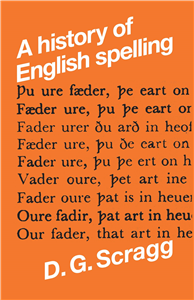
A history of English spelling
by D. G. Scragg
This book provides an outline history of English spelling from the Anglo-Saxon' adoption of the Roman alphabet to the present day. It shows the respective influences on modern usage of native French and Latin orthographies and attempts a definition of the manner in which spelling stabilised. A final chapter traces changing notions of correctness in spelling during the last four centuries, and also gives a summary of the principle movements for its reform in favour of a more consistent and phonetic system of notion. Students in higher education specialising in English or linguistics and also those studying other languages at an advanced level should find this a useful book. The general reader with an interest in the history of his language or the question of spelling will find it most readable ;
-
Trusted Partner
 April 1996
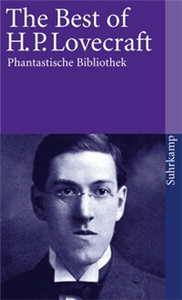
The Best of H. P. Lovecraft
by H. P. Lovecraft, Rudolf Hermstein, H. C. Artmann
Mit seinem Cthulu-Mythos wollte H. P. Lovecraft eine Atmosphäre kosmischen Grauens schaffen, die Archaisches mit den modernen Erkenntnissen der Wissenschaft verbindet und unserer Zeit angemessen ist. Die Angst hielt er für das älteste und stärkste Gefühl, mit dem er in seinen Erzählungen gerne spielte. Die besten Erzählungen von H. P. Lovecraft sind in diesem Rand zusammengefaßt.
-
Trusted Partner
-
Trusted Partner
-
Trusted Partner

 June 2025
Finde den Fehler für Vorschulkinder ab 5
40 Suchbilder und Fehlerrätsel für Kinder ab 5 Jahren. Beschäftigung. Selbstständiges Lernen zuhause und unterwegs. Lösungskontrolle. Konzentration fördern
by Yayo Kawamura, Judith Ganter, Yayo Kawamura, Judith Ganter
40 Fehler-Such-Bilder für Kinder ab 5 Jahren Was ist denn hier passiert? Auf dem Fußballfeld, beim Ausflug in die Natur oder zu Hause – überall haben sich kleine Fehler in die Bilder gemogelt. Aber wo sind sie versteckt?Auf geht’s zur Fehlersuche!Mit den beliebten Fehler-Such-Bildern ist riesengroßer Rätselspaß garantiert. Nebenbei trainieren Vorschulkinder spielerisch Wahrnehmung, Konzentration und logisches Denken. Sind die Fehler allzu gut versteckt, hilft ein Blick in die Lösungen auf der Rückseite. Weitere Titel der Reihe:Ab 4 JahrenFinde den Fehler für Kindergartenkinder ab 4 (978-3-401-71871-2)Finde den Fehler für Kinder ab 4 (978-3-401-09947-7) Ab 5 JahrenFinde den Fehler für Kinder ab 5 (978-3-401-71296-3)Finde den Fehler. Superstarker Rätselspaß ab 5 (978-3-401-71628-2) Ab 6 JahrenFinde den Fehler ab 6 (978-3-401-71742-5)Finde den Fehler. Suchspaß zum Schulstart. Für Kinder ab 6 (978-3-401-70518-7)
-
Trusted Partner
-
Trusted Partner
 Humanities & Social SciencesMarch 2021
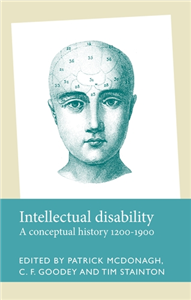
Intellectual disability
A conceptual history, 1200–1900
by Patrick McDonagh, C. F. Goodey, Timothy Stainton
This collection explores the historical origins of our modern concepts of intellectual or learning disability. The essays, from some of the leading historians of ideas of intellectual disability, focus on British and European material from the Middle Ages to the late-nineteenth century and extend across legal, educational, literary, religious, philosophical and psychiatric histories. They investigate how precursor concepts and discourses were shaped by and interacted with their particular social, cultural and intellectual environments, eventually giving rise to contemporary ideas. Intellectual disability is essential reading for scholars interested in the history of intelligence, intellectual disability and related concepts, as well as in disability history generally.
-
Trusted Partner
-
Trusted Partner
 Humanities & Social SciencesJanuary 2020
The life–cycle in Western Europe, c.1300–c.1500
by S. H. Rigby, Deborah Youngs
This is the first study to examine the entire life cycle in the Middle Ages. Drawing on a wide range of secondary and primary material, the book explores the timing and experiences of infancy, childhood, adolescence and youth, adulthood, old age and, finally, death. It discusses attitudes towards ageing, rites of passage, age stereotypes in operation, and the means by which age was used as a form of social control, compelling individuals to work, govern, marry and pay taxes. The wide scope of the study allows contrasts and comparisons to be made across gender, social status and geographical location. It considers whether men and women experienced the ageing process in the same way, and examines the differences that can be discerned between northern and southern Europe. The fourteenth and fifteenth centuries suffered famine, warfare, plague and population collapse. This fascinating consideration of the life cycle adds a new dimension to the debate over continuity and change in a period of social and demographic upheaval.
-
Trusted Partner
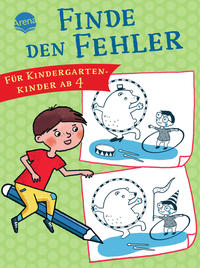 June 2022
Finde den Fehler. Für Kindergartenkinder ab 4
Rätselspaß mit Fehler-Such-Bildern
by Judith Ganter, Judith Ganter
40 Fehler-Such-Bilder für Kinder ab 4 Jahren: Finde die Unterschiede! Was ist denn hier passiert? Im Zirkus, beim Einkaufen oder in der Natur - überall haben sich kleine Fehler in die Bilder gemogelt. Aber wo sind sie versteckt? Auf geht’s zur Fehlersuche! Mit den beliebten Fehler-Such-Bildern ist riesengroßer Rätselspaß garantiert und nebenbei trainieren Kindergartenkinder spielerisch Wahrnehmung, Konzentration und logisches Denken. Sind die Fehler allzu gut versteckt, hilft ein Blick in die Lösungen auf der Rückseite.
-
Trusted Partner
-
Trusted Partner
-
Trusted Partner
 November 2012
Kunst als Philosophie
Hegel und die moderne Bildkunst
by Robert B. Pippin, Wiebke Meier
Robert B. Pippin, einer der weltweit renommiertesten Forscher auf dem Gebiet des Deutschen Idealismus, unternimmt in seinem Buch eine Zeitreise mit einem Philosophen, der auf den ersten Blick dafür denkbar ungeeignet erscheint: Georg Wilhelm Friedrich Hegel. Ausgangspunkt der Reise sind Hegels 1820 in Berlin gehaltene »Vorlesungen über die Ästhetik«, in denen er bekanntlich der Kunst ihren Platz in seinem philosophischen System zuweist: als das unmittelbare sinnliche Wissen des absoluten Geistes. Mit Hegels Theorie im Gepäck erkundet Pippin die Bildkunst der klassischen Moderne, wie sie sich erst nach Hegels Tod ab der Mitte des 19. Jahrhunderts entwickelt hat. Insbesondere in den Werken Édouard Manets und Paul Cézannes findet er Kronzeugen für seine zentralen Thesen, dass die moderne Kunst philosophische Errungenschaften eigener Art hervorbringt, dass sie einen bestimmten Modus der Intelligibilität des »Absoluten« verkörpert und dass Hegel »der« Theoretiker der Moderne in der bildenden Kunst war, wenn auch »avant la lettre«. Pippin verteidigt diese Thesen so eindrucksvoll wie elegant in direkter Auseinandersetzung mit maßgeblichen Werken moderner Malerei und im Spiegel der berühmten kunsthistorischen Debatte zwischen Timothy J. Clark und Michael Fried – und liefert ganz nebenbei eine konzise Geschichte der philosophischen Ästhetik von Kant bis Adorno und Heidegger. - Mit zahlreichen, zum Teil farbigen Abbildungen
-
Trusted Partner
 Literature & Literary StudiesSeptember 2014
A concordance to the rhymes of The Faerie Queene
by Richard Brown, J. B. Lethbridge, J. B. Lethbridge
This book is the first ever concordance to the rhymes of Spenser's epic. It gives the reader unparalleled access to the formal nuts and bolts of this massive poem: the rhymes which he used to structure its intricate stanzas. As well as the main concordance to the rhymes, the volume features a wealth of ancillary materials, which will be of value to both professional Spenserians and students, including distribution lists and an alphabetical listing of all the words in The Faerie Queene. The volume breaks new ground by including two studies by Richard Danson Brown and J. B. Lethbridge, so that the reader is given provocative analyses alongside the raw data about Spenser as a rhymer. Brown considers the reception of rhyme, theoretical models and how Spenser's rhymes may be reading for meaning. Lethbridge in contrast discusses the formulaic and rhetorical character of the rhymes. ;
-
Trusted Partner
 Literature & Literary StudiesJanuary 2021
A concordance to the rhymes of The Faerie Queene
by Richard Danson Brown, J. B. Lethbridge, J. B. Lethbridge
This book is the first ever concordance to the rhymes of Spenser's epic. It gives the reader unparalleled access to the formal nuts and bolts of this massive poem: the rhymes which he used to structure its intricate stanzas. As well as the main concordance to the rhymes, the volume features a wealth of ancillary materials, which will be of value to both professional Spenserians and students, including distribution lists and an alphabetical listing of all the words in The Faerie Queene. The volume breaks new ground by including two studies by Richard Danson Brown and J. B. Lethbridge, so that the reader is given provocative analyses alongside the raw data about Spenser as a rhymer. Brown considers the reception of rhyme, theoretical models and how Spenser's rhymes may be reading for meaning. Lethbridge in contrast discusses the formulaic and rhetorical character of the rhymes.
-
Trusted Partner
-
Trusted Partner
 Literature & Literary StudiesMay 2026
Translating hell
Vernacular theology and apocrypha in the medieval North Sea
by Stephen C. E. Hopkins
In the Middle Ages, hell was useful because it was vaguely defined. Canonical scriptures scarcely mention hell, leaving much to the imaginations of early Christians, who used it to sort out who belonged within the faith. This book explores how hell became a place for literary experiments with local challenges in theology and identity. Following the reception and transformations of two popular hell apocrypha, it argues that they served as this role because of their liminal textual authority. As noncanonical scriptures, apocrypha afforded medieval writers space to revise their hells (since they were not actually scripture), while also encouraging readers to revere those experiments as valid (since they seemed like scripture). The book brings together adaptations from early medieval England, Iceland, Ireland, and Wales, placing the early vernacular theologies of the North Sea in comparative conversation.






