Your Search Results

      • Mercis Publishing bv Dick Bruna inc.

        Mercis Publishing bv is the publisher and world-wide rights holder for Dick Bruna’s books, including Miffy. Mercis Publishing has published the Dutch version of the Dick Bruna books since 1995 and coordinates the publication of all Dick Bruna books in other countries. Dick Bruna’s books have been translated into more than 50 languages. The list includes picture books, board books, bath books, novelty books and colouring & activity titles.

        View Rights Portal
      • Hungry Tomato Ltd.

        Hungry Tomato designs and publishes children’s (5-11 years) non-fiction books that stimulate and encourage reading and learning with fun and engaging topics. We call this soft learning for educational markets. In just a few years, we have published over 200 titles, with 700+ titles licensed in 19 different languages across the world.  Our new pre-school (0 to 4 years) Tiny Tomato imprint launches in 2021 with books designed to promote learning through interaction. These books will feature tactile and engaging material to help nurture and encourage young children’s understanding, early learning and development  Beetle Books (US) and Hungry Banana (UK) are two imprints with books featuring some of the best artists and authors in the world today. We work with established and well-known illustrators as well, as is part of our ethos, new and exciting young talent. Together we produce beautiful books that become bookshelf favourites in homes schools and libraries all over the world. For those kids that prefer fact to fiction we produce books that will keep those pages turning.

        View Rights Portal
      • Trusted Partner
        The Arts
        September 2008

        Thorold Dickinson

        A world of film

        by Philip Horne, Peter Swaab

        The films of Thorold Dickinson (1903-1984), now being rediscovered, engage with major issues including national identity, the post-colonial world, and political violence - and they also show a rare mastery of style, a thrilling eroticism, a preoccupation with the psychology of betrayal. But the director of Gaslight, The Next of Kin and The Queen of Spades was also an editor, documentarist, trade unionist, film producer (for the British Army and the UN), pioneering academic and controversialist. His adventurous and truly global involvement in film took him to Paris in the heyday of silent cinema in the 1920s, to Stalin's USSR in 1937, to the Spanish Civil War, to Africa, India, Israel and America. This book gives a lively, multi-angled account of Dickinson's works, life and times, conveying a sense of his own voice and fascinating character. It includes a richly detailed introduction, a film-by-film discussion of Dickinson with Scorsese, vivid personal memoirs of the director, a dossier of Dickinson's original writings and interviews from 1924 to 1973 (some never previously published), critical essays on all the feature films, and a ground-breaking reference section. The book draws on extensive archival research and close consultation with those who knew Dickinson well. Contributors include: Martin Scorsese, Gavin Millar, Lutz Becker, Charles Barr, Laura Marcus, Kevin Jackson, Kevin Gough-Yates, Ian Christie, Gregory Dart, Hillel Tryster, Janet Moat. ;

      • Trusted Partner
      • Trusted Partner
        April 2021

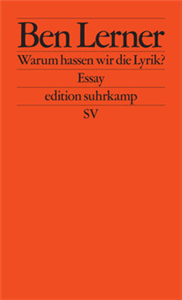
        Warum hassen wir die Lyrik?

        Essay

        by Ben Lerner, Nikolaus Stingl

        Die Lyrik wird heftig denunziert wie keine andere Kunstform sonst. Sogar die Dichter:innen selbst scheinen sie zu missbilligen »Darin, dass sie Lyrik hassen, sind sich viel mehr Menschen einig, als sich darüber einigen können, was Lyrik überhaupt ist.«, schreibt Ben Lerner. »Ich mag sie auch nicht, habe aber mein Leben weitgehend um sie herum organisiert und empfinde das nicht als Widerspruch, weil Gedichte und der Hass auf die Lyrik für mich unentwirrbar miteinander verknüpft sind.« Auf welche Weise sie miteinander verknüpft sind, das wird hier in einem straffen Panorama skizziert. Ben Lerner nimmt die Argumente der größten Lyrikfeinde in Augenschein, er lässt die besten und die schlechtesten Dichter:innen zu Wort kommen und erschließt uns beiläufig neuartige Perspektiven auf die Werke von Keats, Dickinson, McGonagall, Whitman und etlichen anderen. Und dabei versucht er, den grundsätzlich ehrenwerten Anspruch im Kern eines jeden Gedichts zu veranschaulichen – an dem die wahrhaft guten und die sagenhaft schlechten letztlich gleichermaßen scheitern. Hassen wir die Lyrik, weil wir sie nicht verstehen? Oder hassen wir die Lyrik, weil sie Lyrik ist? Ben Lerner hat die originelle, aufschluss- und voltenreiche Verteidigung einer Gattung geschrieben, die seit 2500 Jahren inkriminiert wird.

      • Trusted Partner
        Literature & Literary Studies
        May 2010

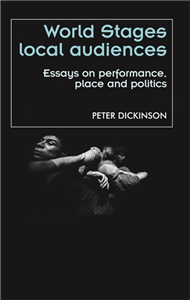
        World stages, local audiences

        Essays on performance, place and politics

        by Peter Dickinson, Maria M. Delgado, Maggie B. Gale, Peter Lichtenfels

        World Stages, local audiences argues that the forms of intimacy and identification that come from being part of the public of a local performance, provide a potential model for rethinking our roles as world citizens. Using his own experience of recent theatrical practice in Vancouver as a starting point, Dickinson maps the spaces of connection and contestation, the flows of sentiment and social responsibility, produced by different communities in response to global sports spectacles. He also analyses how such topics are taken up in the work of playwrights, conceptual, installation, and performance artists like Ai Weiwei, and Rebecca Belmore. In so doing, Dickinson makes an original contribution to the emerging discourse on live art and 'livability' by examining not only the geographical and historical affiliations between different sites of performance, but also the - at times - radical new social bonds created by audiences witness to those performances. ;

      • Trusted Partner
        March 2026

        Wer in meinem Herzen wohnt

        by Emily Dickinson, Sonia Maria Luce Possentini, Mirko Bonné

        Die stimmungsvollen Illustrationen von Sonia Maria Luce Possentini entführen in eine Welt voller Poesie und leiser Kraft. Begleitet von einem Gedicht der amerikanischen Dichterin Emily Dickinson eröffnet es eine Welt der inneren Ruhe und Reflexion und schärft das Gespür für das Unsichtbare, Verborgene und Verbindende. Es lädt dazu ein, der leisen Kraft der Stille zu begegnen und die eigenen Gefühle zu erkunden.  Ein Buch für alle, die inmitten des Trubels einen Moment für sich selbst brauchen und die Stille in ihrem Inneren entdecken möchten.

      • Trusted Partner
        July 1999

        Drama am Mount Everest

        Eine Expedition kämpft gegen den Tod

        by Dickinson, Matt

      • Trusted Partner
      • Trusted Partner
      • Trusted Partner
        January 1997

        Der brennende Dornbusch

        Geschichten aus dem Alten Testament

        by Dickinson, Peter / Englisch The Tjong Khing

      • Trusted Partner
      • Trusted Partner
      • Trusted Partner
      • Trusted Partner
      • Trusted Partner
        May 1994

        Handbuch für WahnsinnsFrauen

        by Luise F. Pusch, Luise F. Pusch

        Bachmann, Ingeborg: Hommage à Maria Callas. Fleißer, Marieluise: Ein Portät Buster Keatons. Dohm, Hedwig: Weib contra Weib. Plath, Sylvia: Papi. Lange, Helene: "Paten" der Mädchenbildung. Rich, Adrienne: Unsichtbarkeit in der Hochschule. Kaléko, Mascha: Die Leistung der Frau in der Kultur. Popp, Adelheid: Als ich von der Schule mein Übersiedlungszeugnis erhalten hatte. Glückel von Hameln: Einen Tag nach der Hochzeit. Glückel von Hameln: Ich will, meine lieben Kinder. Glückel von Hameln: Als wir nach Hamburg kamen. Bombeck, Erma: Drei klassische Mütter-Ansprachen. Baur, Margrit: Ich habe lange überlegt. Baur, Margrit: Vor dem Fenster. Keun, Imgard: Ich spiele nicht mit Männern. McCullers, Carson: Der Tod bleibt sich immer gleich. Haushofer, Marlen: Die Ratte. Gilman, Charlotte Perkins: Die gelbe Tapete. Dickinson, Emily: Die Seele wählt. Droste-Hülshoff, Annette: Das Spiegelbild. Droste-Hülshoff, Annette: Feuer. Kempner, Friederike: Kennst Du das Land. Kempner, Friederike: Vogelin-Prinzeß. Woolf, Virginia: Berufe für Frauen. Kaschnitz, Marie Luise: Nicht gesagt. Baur, Margrit: Ich halte mich an das Beschreibbare. Schwarz-Bart: Die ganze Woche über. LeFort, Gertrud_von: Hymnen an die Kirche. Dickinson, Emily: Er tappt auf deiner Seele. Hildegard von Bingen: Hymnus zu Ehren des Heiligen Geistes. Bachmann, Ingeborg: Auf das Opfer darf sich keiner berufen. Achmatowa, Anna: Im Jahr vierzig. Achmatowa, Anna: Die Dritte. Klüger, Ruth: Noch jetzt, wenn ich Güterwagen sehe. Domin, Hilde: Wen es trifft. Lasker-Schüler, Else: Der Letzte. Sachs, Nelly: Chor der Geretteten. Kolmar, Gertrud: Verwandlungen. Bachmann, Ingeborg: Innen sind deine Augen Fenster. Loos, Cécile Ines: Die Hochzeitsreise. Barrett-Browning, Elizabeth: Wie ich dich liebe? Roten, Iris_von: Der konventionelle Altersvorsprung der Männer in erotischen Beziehungen. Dickinson, Emily: Wilde Nächte. Parker, Dorothy: Der Walzer. Labé, Louise: Küß mich noch.

      • Trusted Partner
      • Trusted Partner
      • Trusted Partner
      • Trusted Partner
        Humanities & Social Sciences
        July 2021

        Post-everything

        An intellectual history of post-concepts

        by Herman Paul, Adriaan van Veldhuizen

        Postmodern, postcolonial and post-truth are broadly used terms. But where do they come from? When and why did the habit of interpreting the world in post-terms emerge? And who exactly were the 'post boys' responsible for this? Post-everything examines why post-Christian, post-industrial and post-bourgeois were terms that resonated, not only among academics, but also in the popular press. It delves into the historical roots of postmodern and poststructuralist, while also subjecting more recent post-constructions (posthumanist, postfeminist) to critical scrutiny. This study is the first to offer a comprehensive history of post-concepts. In tracing how these concepts found their way into a broad range of genres and disciplines, Post-everything contributes to a rapprochement between the history of the humanities and the history of the social sciences.

      Subscribe to our

      newsletter