
Quasis
Quasis publishes books in the genres of imagination literature: fantasy, science fiction, supernatural thriller and magical realism.
View Rights Portal
Quasis publishes books in the genres of imagination literature: fantasy, science fiction, supernatural thriller and magical realism.
View Rights Portal
The Quarto Group creates a wide variety of books and intellectual property products for global distribution, with a mission to inspire life's experiences. Produced in many formats for adults, children and the whole family, our products are visually appealing, information rich and stimulating.
View Rights Portal

Innerhalb der lebenslangen Auseinandersetzung Hannah Arendts mit der ›jüdischen Frage‹ kommt der Verborgenen Tradition eine besondere Bedeutung zu. Hannah Arendt versammelte in diesem Band sieben in den dreißiger und vierziger Jahren verfaßte Essays: Über den Imperialismus – Organisierte Schuld – Die verborgene Tradition – Juden in der Welt von gestern – Franz Kafka – Aufklärung und Judenfrage – Der Zionismus aus heutiger Sicht. Jeder dieser Essays ist, wie sie in der vorausgestellten ›Zueignung an Karl Jaspers‹ ausführt, im Bewußtsein des jüdischen Schicksals in diesem Jahrhundert geschrieben. Sich kurz nach der Shoah in Deutschland, in deutscher Sprache zu politischen, historischen und literarischen Themen aus jüdischer Perspektive zu äußern ist für sie keineswegs selbstverständlich. Der Essayband ist das Zeugnis ihrer frühen Entscheidung, dennoch von jüdischer Seite aus zu der nach 1945 in Deutschland beginnenden Auseinandersetzung mit der Vergangenheit beizutragen. Die verborgene Tradition erschien erstmals 1976 im Suhrkamp Verlag. Die Sammlung geht zum größeren Teil zurück auf die erste Buchveröffentlichung Hannah Arendts im Nachkriegsdeutschland, Sechs Essays (1948).


In diesem Band, in dem alle relevanten geisteswissenschaftlichen Disziplinen vertreten sind, wird das Denken der jüdischen Tradition nicht mehr wie gewohnt an den Rationalitätskriterien des philosophisch-wissenschaftlichen Denkens gemessen, unter denen es dann willkürlich und irrational erscheint, sondern selbst zum Horizont der Kritik gemacht. Ziel ist es, von den namhaftesten Vertretern der jüdischen Tradition her das europäische Denken zur Besinnung über seine Grundentscheidungen zu bringen.
 Trusted Partner

Kurz nach dem Zweiten Weltkrieg erschienen sechs Essays von Hannah Arendt über politisch-soziologische und philosophisch-literarische Themen, geschrieben im Bewußtsein der Zeit, das ein Bewußtsein des jüdischen Schicksals war: Über die organisierte Schuld, den Imperialismus, die Existenzphilosophie, über die verborgene Tradition eines Heine, Kafka, Chaplin oder Stefan Zweig. »Es fällt heute einem Juden nicht leicht, in Deutschland zu veröffentlichen, und sei er ein Jude deutscher Sprache. Angesichts dessen, was geschehen ist, zählt die Verführung, seine eigene Sprache wieder schreiben zu dürfen, wahrhaftig nicht, obwohl dies die einzige Heimkehr aus dem Exil ist, die man nie ganz aus den Träumen verbannen kann«, so definiert Hannah Arendt in einer dem Band vorgestellten Zueignung an ihren Lehrer Karl Jaspers die Situation, aus der heraus sie spontan und zwingend Stellung bezieht. Die Aufsätze dieses bisher nicht mehr erschienenen »Buches seiner Zeit« sind für die vorliegende Ausgabe um zwei Aufsätze über die Aufklärung und die Jugendfrage (in neuer Übersetzung aus dem Englischen) erweitert.
Trusted Partner


This book focuses on current policy discourse in Higher Education, with special reference to Europe. It discusses globalisation, Lifelong Learning, the EU's Higher Education discourse, this discourse's regional ramifications and alternative practices in Higher Education from both the minority and majority worlds with their different learning traditions and epistemologies. It argues that these alternative practices could well provide the germs for the shape of a public good oriented Higher Education for the future. It theoretically expounds on important elements to consider when engaging Higher Education and communities, discussing the nature of the term 'community' itself. Special reference is accorded to the difference that lies at the core of these ever-changing communities. It then provides an analysis of an 'on the ground project' in University community engagement, before suggesting signposts for further action at the level of policy and provision. This book is relevant to United Nations Sustainable Development Goal 4, Quality education
Trusted Partner

This is the first English-language book on Jacques Feyder, one of the Golden Age of French cinema's most prolific directors. Although once hailed as a major filmmaker, Feyder's reputation waned in the decades following his death, and scholars tend to underestimate his contributions to cinema. This study argues that a fuller understanding of Feyder's style involves exploring his provocative portrayals of gender, class and colonialism across his body of work, including films he directed in France, Hollywood, Germany, England and elsewhere. In doing so, the book reveals an ambitious director who took cinema in new aesthetic directions and often crafted provocative reflections on social inequalities in French society.
Trusted Partner


This unique guide brings together the vast experience of the author with the science and the practice of positive psychology in such a way that both new and experienced practitioners will benefit. New practitioners will learn about the core concepts of character and signature strengths and how to fine-tune their approach and troubleshoot. Experienced practitioners will deepen their knowledge about advanced topics such as strengths overuse and collisions, hot button issues, morality, and integrating strengths with savoring, flow, and mindfulness. Hands-on practitioner tips throughout the book provide valuable hints on how to take a truly strengths-based approach. The 24 summary sheets spotlighting each of the universal character strengths are an indispensable resource for client sessions, succinctly summarizing the core features of and research on each strength. 70 evidence-based step-by-step activity handouts can be given to clients to help them develop character strengths awareness and use, increase resilience, set and meet goals, develop positive relationships, and find meaning and engagement in their daily lives. Working with client’s (and our own) character strengths boosts well-being, fosters resilience, improves relationships, and creates strong, supportive cultures in our practices, classrooms, and organizations. Target Group: psychotherapists / clinical psychologists / counselors/ teachers
Trusted Partner

Lunney explores Marlowe's engagement with the traditions of the popular stage in the 1580s and early 1590s and offers a new approach to his major plays in terms of staging and audience response, as well as providing a new account of English drama in these important but largely neglected years. ;
Trusted Partner


The consistent and evidence-based development of Korean medicine in many clinical application areas has significantly improved its international status in recent years. The basis for this development is one of the most important medical books in Korea, the „Donguibogam“, a clinical lexicon of applications compiled about 400 years ago; at that time the traditional work also enjoyed the highest recognition in China. In 2009 it was included in the „Memory of the World“ register of UNESCO. Even now after 400 years, it still serves as a manual for writing prescriptions for many physicians in Korea, and testifies that the understanding of nature and human disease patterns is still current and clinically applicable even in the modern industrialised world. This work provides ■ understanding for Korean medicine, ■ many selected medicinal formulations and their fields of application, ■ the description and evaluation of important traditional single remedies, ■ the corresponding drug monographs with information on analytical testing
Trusted Partner
Trusted Partner
Trusted Partner
In this book, the complexity and the significance of the foods we eat are analysed from a variety of perspectives, by sociologists, economists, geographers and anthropologists. Chapters address a number of intriguing questions: how do people make judgments about taste? How do such judgments come to be shared by groups of people?; what social and organisational processes result in foods being certified as of decent or proper quality? How has dissatisfaction with the food system been expressed? What alternatives are thought to be possible? The multi-disciplinary analysis of this book explores many different answers to such questions. The first part of the book focuses on theoretical and conceptual issues, the second part considers processes of formal and informal regulation, while the third part examines social and political responses to industrialised food production and mass consumption. Qualities of food will be of interest to researchers and students in all the social science disciplines that are concerned with food, whether marketing, sociology, cultural studies, anthropology, human nutrition or economics.
Trusted Partner

Several different pills prescribed by many different physicians: pharmacists encounter patients in this situation every day! What at first seems quite normal can, on closer inspection, be fraught with considerable risks of drug-related problems. Using this analysis as a core component of medication management, pharmacies have the key risk minimisation tool at their disposal. The authors guide their readers step by step through the discussions with the patient, the stages of the analysis, and the clear documentation. Case examples reflect on the content and illustrate implementation. The launch of pharmaceutical services enables an improvement in the safety and efficacy of customers‘ drug therapy in the pharmacy by means of the service „Extended medication counselling for polymedication“. Everything pharmacists need to know for the necessary medication analysis can be found in this book. This completely revised 2nd edition includes: - Important information on pharmaceutical services - Illustrative case examples on many indications - QR codes that lead to additional digital material Whether it is a detailed adjustment or a major change to medication: every patient benefits from the intervention.
Trusted Partner
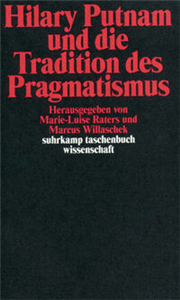
Hilary Putnam ist einer der originellsten Philosophen Amerikas. Seit Beginn der 80er Jahre hat sich sein Denken zunehmend pragmatistischen Positionen angenähert und damit maßgeblich zur gegenwärtigen Renaissance des Pragmatismus beigetragen. In diesem Sammelband setzen sich führende Philosophen aus den USA, England und Deutschland mit Putnams Werk und dessen Verhältnis zum Pragmatismus auseinander (u. a. G. Abel, K.-O. Apel, R. Bernstein, R. Brandom, J. Conant, J. Habermas, C. Hookway, H. Joas, K. Oehler, R. A. Putnam). Putnam hat eigens für diesen Band eine Replik auf die Kritik von Jürgen Habermas verfaßt.
Trusted Partner

Zwischen »stillen Tagen« und »kalten Tagen« stimmt Robert Schindel in Nervös der Meridian seine »Verlustlieder« und andere Gesänge an, in denen es oft um die Liebe geht, um das Unterwegssein und um das langsame Vergehen der Zeit. Die elegischen und balladesken Gedichte erzählen von Politischem und Privatem, von der Sehnsucht nach besseren Welten und verdeutlichen – einmal mehr –, daß ihr Autor ein Meister der Lyrik ist, ein sprachmächtiger Rebell. Robert Schindel, dessen Werk mit dem Erich-Fried-Preis (1993) und dem Eduard-Mörike-Preis (2000) ausgezeichnet wurde, ist ein Dichter in der Tradition von Heine, Brecht und Celan. Mit Nervös der Meridian ist ihm ein reifer, hellsichtig-weiser Band geglückt – ein neuer Schindel.
Trusted Partner
Trusted Partner

 Trusted Partner

 Trusted Partner
Trusted Partner
Trusted Partner
Trusted Partner
Trusted Partner



