Your Search Results

      • Bardon-Chinese Media Agency

        Bardon-Chinese Media Agency licenses European, USA, and Japanese copyrights including academic and trade titles and children books in Chinese language markets. The agency promotes, negotiates and licenses Chinese translation for publications, serializations, permissions, co-production and its derivative rights in form of exhibitions, performances and merchandising on behalf of its clients worldwide. The agency vice versa is handling foreign rights of Chinese original writings on behalf of some prominent Chinese authors or outstanding works. As a local agency specializing in Chinese speaking territories, the agency takes pride in matchmaking numerous translation titles to become million bestsellers in China. The agency facilitates an professional and well experienced crew to consistently monitor and collect the sales reports and following royalty payments of all deals. The agency is widely regarded as one of the Chinese leading literary agencies with its professional and objective knowledge of the market and publishing houses.

        View Rights Portal
      • Trusted Partner
        2021

        aporello - Drugs in Palliative Medicine

        by Christian Redmann

        In the last stage of life, it is all about giving care in a professional manner and providing efficient relief of suffering. In addition to all the important key points about in-label use, this book consisting of drug monographs, includes: - Information about off-label indications with dosages, - Lists of the different dosage forms available, - Instructions about use in renal failure. A clear structure and icons enable rapid orientation in everyday practice. Focussed knowledge at your fingertips? That’s aporello!

      • Trusted Partner
        2020

        Anthroposophic Medicines

        Advisory recommendationsfor self-medication

        by Birgit Emde and Juliane Riedel

        The selection of remedies in anthroposophic medicine is based on a differentiated human image – every patient appreciates such individualised recommendations! In the new edition of their work, the two authors provide clearly structured, comprehensible information and recommendations. The new chapter “Pharmacy practice” provides, for each indication: ■ Explanations of the anthroposophic approach to treatment, ■ Questions to the customer about their medical history and differential diagnosis, ■ Anthroposophic supplements to treatment for patients, who come to the dispensary with prescriptions or wishes for conventional medicines.

      • Trusted Partner
        Humanities & Social Sciences
        March 2019

        Managing diabetes, managing medicine

        Chronic disease and clinical bureaucracy in post-war Britain

        by Martin D. Moore, Keir Waddington, David Cantor

        This book is available as an open access ebook under a CC-BY-NC-ND licence. Through its study of diabetes care in twentieth-century Britain, Managing diabetes, managing medicine offers the first historical monograph to explore how the decision-making and labour of medical professionals became subject to bureaucratic regulation and managerial oversight. Where much existing literature has cast health care management as either a political imposition or an assertion of medical control, this work positions managerial medicine as a co-constructed venture. Although driven by different motives, doctors, nurses, professional bodies, government agencies and international organisations were all integral to the creation of managerial systems, working within a context of considerable professional, political, technological, economic and cultural change.

      • Trusted Partner
        2021

        Self-medication

        Guidelines for providing pharmaceutical advice

        by Dr. Kirsten Lennecke and Kirsten Hagel

        Minor illness or a serious disease ? Through systematic questioning, pharmacists or pharmaceutical technicians can establish the possibilities and limits of self-medication. Each monograph on the over 100 indications for self-medication includes: - A flow chart: basis for the structured consultation - A brief description: additional information about the symptoms - Recommended medications/groups of medications: the treatment options - Additional advice: individual supportive and alternative treatment options - Specific knowledge for advising particular patient groups: e.g. pregnant women, children and senior citizens New for the 7th edition: Monographs that explore the possibilities of supportive self-medication for indications such as hypertension and diabetes. Information about what to do in the case of poisoning, scabies or inflammation of the nail bed (paronychia) is also provided! The details about active substances, products and additional tips have been updated. The pocket guide has long been the standard for providing advice on self-medication – a “must-have”!

      • Trusted Partner
        2020

        Biogenic Drugs

        Textbook of pharmaceutical biology

        by Prof. Dr. Eberhard Teuscher, Prof. Dr. Ulrike Lindequist and Prof. Dr. Matthias F. Melzig. In collaboration with Dr. Elke Langner, Prof. Dr. Timo Niedermeyer and Dr. Alexander Wenig

        The new Teuscher covers the range of relevant areas of biogenic drug substances and medicinal products. In its time-honoured way, it conveys knowledge about the ■ Nature, origin and processing of crude drugs ■ Structure, biosynthesis and metabolism of the constituents ■ Preparation, pharmacology and use of the active substances ■ Dosage and side effects of the medicinal products derived from them The book deals with both classically produced and genetically engineered antibiotics, hormones, enzymes as well as blood and immunological products. Completely new chapters discuss cytokines, gene therapy, use of stem cells and traditional Chinese medicine. For generations, the textbook and companion for both students and fully qualified professionals!

      • Trusted Partner
        2021

        Self-medication in Pregnancy and Breast-feeding

        Counselling handbook

        by Dr. Annette Abhau

        Cough, hay fever or herpes are at least as troublesome during pregnancy and breast-feeding as under normal “conditions” - and yet everything is different. Physiological changes to the body in pregnancy and lactation, together with the vulnerability of the unborn baby or infant, set particular requirements when selecting the correct, safe medication. Especially in the area of self-medication, the needs of pregnant and breast-feeding women for information are great and call for competent advice! This comprehensive handbook is the key: General information about pharmacotherapy, supplementary measures, vaccinations, questions about diet and infections in pregnancy and lactation creates a broad knowledge base. The core feature of the book are the traffic light tables, with precise recommendations for medicinal products for all types of treatment. All the important indications for selfmedication in pregnancy and lactation are listed and the tables are supported by detailed explanations of the individual assessments. The sections “Advice from medical specialists” are particularly useful, with additional tips from gynaecologists and “Footnotes” with relevant information on the use of prescription- only medicines – and as the ultimate practical tool: the enclosed sales counter leaflets with all traffic light tables to enable quick reference for first-class advice!

      • Trusted Partner
        2022

        Medication Management in the Hospital

        A workbook for ward pharmacists

        by Dr. Insa Gross, MSc Andreas Fischer and Dr. Holger Knoth

        The ward pharmacist in the hospital is like the airbag in a car. As part of a fail-safe system, they monitor and optimise the patient’s drug therapy. Ward pharmacists work hand in hand with medical and nursing staff. That situation is also reflected in this workbook. All the cases presented were patients who had been cared for, evaluated and documented by a physician-pharmacist duo or similar team with combined medical and pharmaceutical expertise. The editorial team considered it important to illustrate all critical indications typically encountered in a hospital. In assessing and selecting the examples, they were able to draw upon the many years’ experience of their pioneering work as hospital and ward pharmacists. Practical tips, checklists, comments and advice for working in the ward environment round off the individual chapters. By learning from actual cases, this book offers the unique chance to develop an instinct for the pitfalls of drug safety. That applies to those who have successfully completed further training in the field of “Medication Management in the Hospital” and for all who wish to ensure the optimum treatment for their patients through competent work in clinical pharmacy.

      • Trusted Partner
        Humanities & Social Sciences
        June 2004

        Medicine transformed

        Health, disease and society in Europe 1800–1930

        by Deborah Brunton

        During the nineteenth century medicine underwent a radical transformation. In 1800, the body was still understood in terms of humors and fluids, and a wide range of individuals provided medical care. Institutions were marginal to the medical enterprise, and governments took almost no part in providing medical services. By 1930 a recognisably modern medicine had begun to emerge across Europe. New understandings of the body opened up surgery and treatments, and hospitals became centres for care, research and training. In Medicine transformed, original essays by established scholars in the social history of medicine explore these developments and examine topics such as the military and colonial medicine, the role of women and access to care. The essays provide an accessible introduction to the subject, setting nineteenth and early twentieth-century medicine in its political, cultural, intellectual and economic contexts. Medicine transformed is complemented by a companion volume of primary and secondary readings: Health, disease and society in Europe, 1800-1930: A source book. ;

      • Trusted Partner
      • Trusted Partner
        2021

        Lexicon of Medicinal Plants

        by Prof. Dr. Dietrich Frohne (†), in collaboration with Prof. Dr. Birgit Classen

        Indian mulberry, St. John’s wort, Hawaiian baby woodrose – whether disputed wonder drug, traditional medicinal plant or unknown exotic plant – the Lexicon of Medicinal Plants can always be relied upon. The lexical and classic knowledge about the individual medicinal plants – such as family, origin, use, effect and constituents – garnered over decades and peppered with particular anecdotes on the herbal drugs, can be regarded as unique and largely timeless. At the repeated request of readers, this reference work has therefore been reissued in book form, with its contents largely unchanged but with misprints corrected and its layout modernised. A wealth of experience that even in the fast-moving digital world preserves traditional knowledge.

      • Trusted Partner
        2023

        Medicinal Drugs

        406 index cards

        by Prof. Dr. Matthias F. Melzig and Dr. Joscha Kummer

        Eyebright, Asian holly oak, butcher‘s broom – pharmaceutical drugs play an important role in the studies and profession of pharmacists, and must be learned. The author duo has compiled profiles for 406 important medicinal drugs, including - coloured image of the physical appearance, - name, family, ingredients, effect, application, - synonyms and instructions for use. New in the 2nd edition: - update of all profiles, - over 80 new drugs, including TCM and homeopathy. Thanks to the photo and fact sheet, the drugs can be internalised in no time at all – optimal for exams and practice!

      • Trusted Partner
        2022

        A Workbook of Chemistry for Students of Medicine and Biology

        Introduction to the material covered in standard examinations

        by Dirk Röbke and Udo Wolfgramm

        Rote learning is one way to pass examinations, but really understanding the subject is even better. Most textbooks are limited to presenting facts without helping the reader review and practice. This workbook fills the gap with more than 1,000 sample examination questions from general, inorganic and organic chemistry. With it, students can practice and deepen what they have learned from textbooks. The problems can be solved without aids, and solutions are provided with detailed explanations. The workbook enjoys great popularity after helping countless students study successfully. From the contents: atomic structure and chemical bonds: noble gas configuration, electronegativity, hybridization, intermolecular interactions | nomenclature and structural formulas of inorganic and organic compounds | chemical equations: double transformations, acid-base reactions, complexes | quantities and concentrations of substance: gravimetry, titrations, percent by mass and by volume | law of mass action | acids, bases and salts: calculating pH value, titration curves, buffers, solubility product | redox reactions and oxidation numbers, Nernst equation | complex compounds | configurational and conformational isomerism | inductive and mesomeric effects | substitution, addition, elimination | aromatic compounds: reactions and second substitution | natural products: carbohydrates, lipids, amino acids, peptides | carbonyl reactions: carboxylic acids, aldehydes, ketones

      • Trusted Partner
      • Trusted Partner
        Medicine

        Smart Medicine

        Analogue and Digital from A to Z

        by David Matusiewicz, Alice Martin (Eds.)

        For all felds of the medical profession, working life has undergone serious changes: For physicians, this means providing care between the two ex­tremes – tradition and innovation. This includes topics such as digital infra­structure, electronic patient records, digital health applications, gene­based therapies, digital therapeutics, digital diagnostic methods, all the way to tele­medicine and a new type of doctor­ patient communication. In the form of structured interviews, selected ex­perts from clinics and practices as well as the healthcare industry, provide a practical insight into the digital trans­formation of the respective subsectors of medicine and an exciting outlook on future felds of action.

      • Trusted Partner
        March 2025

        Arts and Medicine

        How music, painting, theatre, dance, literature and architecture heal

        by Stefan N. Willich

        Art, medicine and health have many points of contact and a long tradition. Even in Greek mythology, Apollo was the god of the arts. Artistic approaches to therapy (including visual and performing arts, music, dance and literature) have been used for many centuries and are still offered in some medical institutions today. Despite this long practical experience, there is little scientific evidence of its effectiveness. Basic research provides an important basis for art therapy with interesting new approaches for investigating possible mechanisms of action. In addition, the overall social signifi- cance of art for health is an important topic, especially with regard to preventive effects for the population. The book provides a comprehensive overview of how art can be used as a health-promoting resource and highlights various research approaches. In addition, a brief review of the historical development of art in medicine is given. For the first time, the influence of music, painting, dance, literature and architecture on people’s state of health and the healing effect they can have is shown. Target group: Art therapists, artists, psychotherapists, child and adolescent psychologists, psychoanalysts and psychologists, health professionals, music and dance therapists, art and music educators, community musicians

      • Trusted Partner
        2021

        Pharmacology Workbook

        Practice, revise, consolidate

        by Annette Thomas and Nadine Sprecher

        Pharmacology imparts knowledge about the effects and use of drugs in humans. Knowledge of anatomy, physiology and the development of diseases are also part of the subject matter. However, the abundance of facts can quickly make the head spin. Approaching the subject like a game helps to make it easier to grasp and anchor what has been learnt permanently in the memory, so it can then be confidently used in the day-to-day pharmacy routine. This is where the Pharmacology Workbook comes into play! A whole arsenal of entertaining tasks awaits the reader: crosswords, word and picture puzzles, word search games, “fill in the blanks” quizzes, puzzle games and case examples from pharmacy practice. The section “Linked together, reliably memorised” helps to connect knowledge. “Now it gets tricky” encourages the reader to engage with the material more intensively, while under “Making revision fun” there are tips and suggestions for learning in a group. This work is based on the sequence of chapters in the textbook Pharmacology. But of course, whether pharmaceutical technician, returnee or even pharmacy intern, all can have fun practising, revising and deepening their pharmacological knowledge with the Pharmacology Workbook.

      • Trusted Partner
        2022

        Drugs and Medical Devices in Nursing

        Training for nurses and carers

        by Dr. Constanze Schäfer

        What applies when storing potatoes is also good for drugs and medical devices! But this is where the similarities end. If medicines are not stored correctly or used properly, they may not be effective. Pharmacists - the experts on medicines - explain to the nursing team: - How light, air and temperature can cause damage - Where the pitfalls lie in the use of tablets, drops etc. - What makes medical devices so different from drugs New in the 3rd edition: Improved overview of the types of use. Clearer comparison of drugs and medical devices. Video clips on the use of specific dosage forms can now be directly launched from the presentation. 36 editable PowerPoint slides, videos and a complete text of the presentation are available on CD-ROM and for download

      • Trusted Partner
        Humanities & Social Sciences
        April 2022

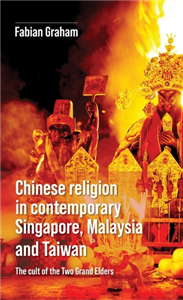
        Chinese religion in contemporary Singapore, Malaysia and Taiwan

        The cult of the Two Grand Elders

        by Fabian Graham

        In Singapore and Malaysia, the inversion of Chinese Underworld traditions has meant that Underworld demons are now amongst the most commonly venerated deities in statue form, channelled through their spirit mediums, tang-ki. The Chinese Underworld and its sub-hells are populated by a bureaucracy drawn from the Buddhist, Taoist and vernacular pantheons. Under the watchful eye of Hell's 'enforcers', the lower echelons of demon soldiers impose post-mortal punishments on the souls of the recently deceased for moral transgressions committed during their prior incarnations. Chinese religion in contemporary Singapore, Malaysia and Taiwan offers an ethnography of contemporary Chinese Underworld traditions, where night-time cemetery rituals assist the souls of the dead, exorcised spirits are imprisoned in Guinness bottles, and malicious foetus ghosts are enlisted to strengthen a temple's spirit army. Understanding the religious divergences between Singapore and Malaysia (and their counterparts in Taiwan) through an analysis of socio-political and historical events, Fabian Graham challenges common assumptions about the nature and scope of Chinese vernacular religious beliefs and practices. Graham's innovative approach to alterity allows the reader to listen to first-person dialogues between the author and channelled Underworld deities. Through its alternative methodological and narrative stance, the book intervenes in debates on the interrelation between sociocultural and spiritual worlds, and promotes the destigmatisation of spirit possession and discarnate phenomena in the future study of mystical and religious traditions.

      Subscribe to our

      newsletter