
Clockwork Books
Clockwork Books publishes for an African audience first, but we believe that our stories resonate with readers further afield. We would especially like to find new global audiences for our titles.
View Rights Portal
Clockwork Books publishes for an African audience first, but we believe that our stories resonate with readers further afield. We would especially like to find new global audiences for our titles.
View Rights Portal

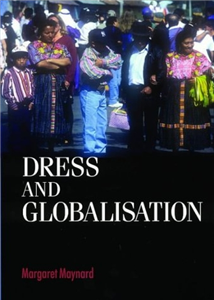
Dress and globalisation is the first work to survey dress around the world, drawing together issues of consumption, ethnicity, gender and the body, as well as anthropological accounts and studies of representation. It examines international western style dress, including jeans and business suits, headwear and hairdressing, ethnicity and so called 'ethnic chic', clothes for the tourist market, the politicisation of traditional dress, 'alternative' dressing, and T-shirts as temporary markers of identity. It also considers dress and environmental issues, touching on adventure gear, the 'green' consumer and the possible impact of 'smart' clothing. Dispelling the myth of universal 'world' attire, this book demonstrates that western-style clothing transcends geographical boundaries but along with other forms of dress, can form a montage of differing tastes, ethnic preferences and national and local imperatives. By discussing the nature of globalisation, this book shows that, if economics permit, all cultures are selective in their choice of what to wear. Dress and globalisation will be welcomed by students of dress history and cultural studies. ;
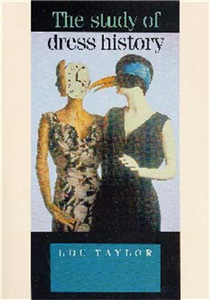
Over the past ten years the study of dress history has finally achieved academic respectability. This book shows how the fields of dress history and dress studies are now benefitting from the adoption of new multi-disciplinary approaches and outlines the full range of these approaches which draw on material culture, ethnography, and cultural studies. Raises a series of frank and fresh issues surrounding approaches to the history of dress, including analysis of the academic gender and subject divides that have riven it in the past. Comprehensive, engaging and trenchant, this will become the benchmark volume in the study of dress history.
 Trusted Partner
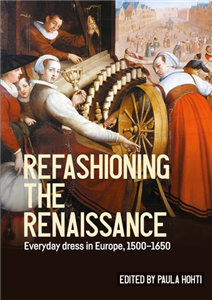
How did ordinary men and women dress in early modern Europe? What fabrics and garments formed the essential elements of fashion for artisans and shopkeepers? Did they rely on affordable alternatives to the silks, jewellery, and decorations favoured by the wealthy elite? Or did those with modest means find innovative ways to express their fashion sense? This book provides new perspectives on early modern clothing and fashion history byinvestigating the consumption and meaning of fashionable clothing and accessories among the 'popular' classes. Through a close examination of the materials, craftsmanship and cultural significance of fashion items owned by and available to a broad group of consumers, it challenges conventional assumptions that the everyday dress of ordinary families was limited to a narrow selection of garments made of coarse textiles, often produced at home and resistant to change.
Trusted Partner


Can You Believe Your Eyes? Dorian has been living on the streets since running away from home, and has always managed to fend for himself pretty well. But when he wakes up one morning beside a dead homeless man who has evidently been murdered, Dorian panics – he can’t remember anything of what happened the previous night. Is he responsible for the man’s murder? Then a stranger appears with an unexpected offer of help, and Dorian seizes the opportunity with both hands – this is his chance to hide from the police. The stranger works with young people in need, and he takes Dorian to a villa where he is given food, new clothes and even schooling.But Dorian soon learns that you get nothing for free in this life. In return for being looked after at the villa, Dorian is expected to distribute mysterious free gifts – gifts which are very carefully sealed. And when an unexpected turn of events results in him keeping one of the gifts, he finds himself being hunted by merciless pursuers. After the international YA-bestseller Erebos, Saeculum and The Eleria-Trilogy Ursula Poznanski now presents her new thriller: Layers Awarded with the Hans-Jörg-Martin Prize 2016 for the best YA-Thriller! More information also available under: www.layers-buch.de
Trusted Partner
Trusted Partner
Trusted Partner
Trusted Partner
Trusted Partner
Trusted Partner
Trusted Partner
Trusted Partner


Juli can’t wait for the holidays. His cousin Jenny and he can once more go to her uncle’s Superhero Hotel. Maybe the next superhero adventure will be awaiting them there? Indeed it is: the evil Snakeman has created an army of mutated giant rabbits, whose underground tunnels threaten one city after another with complete collapse. And as the real superheroes are still lazing around at the swimming pool, and Bruce suddenly has to go and defend the world against an alien invasion, it’s once more left to Juli and Jenny to prevent this disaster! Armed with nothing more than a cheap pair of X-ray laser glasses with which they can see through walls, doors and even people’s clothes (villains in underpants – not a pretty sight!). And while Juli is still asking “What on earth are we doing here?” he and Jenny find themselves in the middle of a crazy adventure that takes them all round the world – across the desert, through London, and on to Paris! Can Juli and Jenny stop the evil villain and his giant rabbits in time?
Trusted Partner
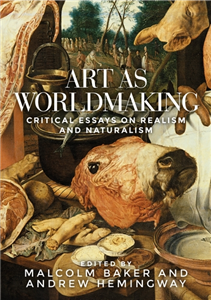
Introduction : Realism and its others in the 21st century: Why Realism won't go away - Andrew Hemingway Part I: Theory 1. The figure as double agent: realism and abstraction in European post-war art - Briony Fer 2. Realism's Credibility Problem - Joshua Shannon 3. If only; only if ... - Adrian Rifkin Part II: Sculpture 4. Confronting the Veristic Sculptural Portrait - Malcolm Baker 5. Sculpture, Realism and the Neo-classical Ideal - Martina Droth 6. Elasticity and Victorian Sculptural Form - Caroline Arscott 7. Image of the People: Charles Ray's Recent Work - Anne M. Wagner Part III: Garden Design 8. Of Gardens and Persons: the English Engagement with China's Garden Design - Martin Powers 9. Traditional Views. Conservative Anti-Naturalism and Landscape Aesthetics in France around 1900 - Neil McWilliam Part IV: Painting and Photography 10. Willem Kalf on Reflexykonst and the Aesthetics of Transformation in Still Life - Celeste Brusati 11. Democratic light: phenomenology and the worldliness of painting - Brendan Prendeville 12. The Visibility of Labor - T.J. Clark 13. Body and Soul in the work of Thomas Eakins and F. Holland Day - Rebecca Zurier Part V: Photography and Conema 14. Photography as counter forensics - Steve Edwards 15. Woman, War and Social Documentary Photography in South Africa - Tamar Garb 16. Antonioni's Blow-Up (1966): photography and film - Lisa Tickner Part VI: Post-Media / Contemporary Practice 17. Peter Dreher's Everyday Realism - Alistair Rider 18. From grey and rainy Vermont - Thomas Crow 19. 'Every day, something happens to us': Realism at the crossroads - Gail Day Index
Trusted Partner
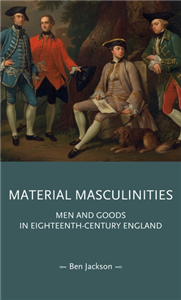
Material Masculinities examines the material and consumer practices of over 1000 men from the middling and upper ranks of eighteenth-century society, c.1650-1850. It draws upon evidence from over 35 archives and museum collections to detail how material objects were integral for men in forming identities and shaping experiences. For men of all social ranks, ages, and geographic locations, material knowledge was imperative for masculine social identities to operate in a commercial society. Before the centralised factory and widespread mass-produced goods, men personalised and repaired their goods; products were shaped by men's attitudes and concerns. Objects were tools in men's identity formation and the exercise of social and gendered power. There was a reciprocal relationship between men and goods in this period; men were active agents of material and commercial change driving product and aesthetic innovation.
Trusted Partner


Max Frisch im Nachwort: »Don Juan ist ein Intellektueller wenn auch von gutem Wuchs und ohne alles Brillenhafte. Was ihn unwiderstehlich macht für die Damen von Sevilla ist durchaus seine Geistigkeit, sein Anspruch auf eine männliche Geistigkeit, die ein Affront ist, indem sie ganz andere Ziele kennt als die Frau und die Frau von vornherein al Episode einsetzt - mit dem bekannten Ergebnis freilich, daß die Episode schließlich sein ganzes Leben verschlingt.«
Trusted Partner
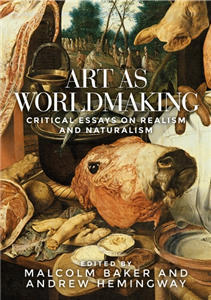
Art as worldmaking is a response to Alex Potts's provocative 2013 book Experiments in modern realism. Twenty essays by leading scholars test Potts's recasting of realism through examinations of art produced in different media and periods, ranging from eighth-century Chinese garden aesthetics to video work by the contemporary Russian collective Radek Community. While the book does not neglect avatars of pictorial realism such as Menzel and Eakins, or the question of nineteenth-century realism's historical antecedents, it is contemporary in orientation in that many contributors are particularly concerned with the questions that sculpture, photography and non-traditional media pose for realism as an aesthetic norm. It will be essential reading for students of art history concerned with art's truth value or more broadly with conceptual problems of representation and the intersections of art and politics.
Trusted Partner

Mobbing, Bodyshaming und Sensationsgier - Eine Geschichte, die alles in Frage stellt, auch das eigene Verhalten. „Halbe Helden“-Autorin Erin Jade Lange rüttelt auf. „Ihr glaubt, ich esse zu viel? Das ist noch gar nichts. Geht am 31. Dezember online, wenn ich die Live-Übertragung meiner Henkersmahlzeit ins Netz stelle. Schaut zu … wie ich mich zu Tode fresse.“ Der dicke Außenseiter «BUTTER» will seinen Mobbern eins auswischen. Sein Plan: sich in einem Livestream zu Tode essen. Als Butter den Entschluss online ankündigt, erwartet er Entrüstung oder Mitleid. Aber das Gegenteil passiert: Seine Mitschüler*innen und Mobber sind von seinem Plan begeistert und feiern ihn wie einen Helden. Zum ersten Mal in seinem Leben hat Butter das Gefühl, wirklich dazuzugehören. Doch sein Todesdatum rückt immer näher und wenn er die Sache nicht durchzieht, verliert er alles, was plötzlich zum Greifen nahe scheint … Die Wiederentdeckung des erstmals bei Rowohlt unter dem Titel „Butter“ erschienenen Romanes. Jetzt so aktuell wie nie!
Trusted Partner
Trusted Partner
 Trusted Partner


T for Tessa – Secret Business (Vol. 3) Fast fashion with a clear conscience? - Tessa and the Fashion MafiaChaos Queen Tessa's comfortable life has finally come to an end since she became a secret agent (by mistake) of the internationally operating secret service R.I.N.G. Now she's out to put a stop to the masterminds of organized crime.Cool, stylish, and exciting, T for Tessa combines classic chick-lit elements with trendy agent plotting. In each volume, there is a new thrilling case to keep readers on their toes.What happens in Volume 3:Tessa joins the school newspaper because she wants to prove to her crush Timo, the editor-in-chief, that she is a damn cool eighth grader. Wouldn't it be laughable if Tessa didn't make a top investigative journalist with her newly acquired agent skills? She wants to research how well recycling clothes works: Customers can return their used clothing, and stores like Fashionista refurbish the clothes and donate them to neighborhood projects. With the help of a GPS tracker sewn into a used sweater, they track the sweater to the Suez Canal ... but this does not fit the promises of Fashionista at all. The problem of old clothes imports seems to be even bigger than Tessa suspects. And then Tessa and the Girl Group receive a tip that calls for RING's intervention ...• Chick-lit with trendy agent plot in international settings: Charlie's Angels meets Austin Powers• Exciting and humorous entertainment for readers aged 11 and up, unmistakably humorous and entertaining à la Frauke Scheunemann• Special topic: fast fashion & greenwashing, narrated with coolness, humor and a touch of romance






