Your Search Results
-

-

ZNN Network Literary and Illustrator Agency
- International Copyright, Licensing, and Literary Agency - International Illustrator Agency and Management Services - Creative Content Development Services
View Rights Portal
-
Promoted Content

 October 2015
Islam - Zivilisation oder Barbarei?
by Alexander Flores
Alles, was Sie über den Islam wissen sollten Die Debatte um den Islam ist immer eine polemische: Salafismus, Scharia, Frauenrechte, Boko Haram, IS – zu allem haben wir eine Meinung. Aber wissen wir denn wirklich, was sich hinter diesen Phänomenen verbirgt? Alexander Flores kann Abhilfe schaffen, denn er widmet sich den Fakten. Flores beschreibt einen Modernismus, der Anfang des 20. Jahrhunderts dem Islam eine weltanschauliche Öffnung ermöglichen sollte; eine Scharia, die über lange Zeit hinweg nicht drakonisches »Gottesrecht« war, sondern Orientierung für eine islamische Lebensführung. Und er erklärt, wie der Koran mit seinen verschiedenen Lesarten instrumentalisiert werden konnte und damit Radikalisierungen ermöglichte, die wir heute mehr denn je zu spüren bekommen.
-
Promoted Content
 1984
1984Gedichte der "Generation von 27"
Eine Anthologie. Span./Dt
by Pere Gimferrer, Pere Gimferrer, J M Castellet, J M Castellet
-
 Trusted Partner
-
Trusted Partner
 April 2004
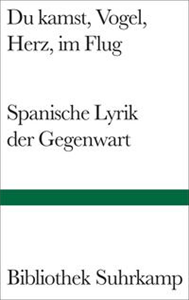
Du kamst, Vogel, Herz, im Flug
Spanische Lyrik der Gegenwart
by Javier Gómez-Montero, Petra Strien-Bourmer, Manfred Bös, Thomas Brovot, Ludger Damm, Julia Gramberg, Alexandra Ihmig, Martin Koppenfels, Susanne Lange, Franck Meyer, Theres Moser, Gerhard Poppenberg, Petra Strien-Bourmer, Javier Gómez-Montero
Erst in den sechziger Jahren erholte sich die Lyrik in Spanien vom Schock des Bürgerkriegs und vom Druck der alles erstickenden Franco-Diktatur. Langsam, aber unüberhörbar erhoben sich die Stimmen junger Autoren, deren Gedichte mit kraftvollen Sprachbildern ästhetische Paradigmen und ethische Grundmuster für die Lyrik unserer Gegenwart entwerfen. Heute sind diese Stimmen unverwechselbar geworden; jede einzelne kann den Status eines Klassikers der Moderne beanspruchen. Ob mit leicht zugänglicher Alltags- und Gedankenlyrik oder mit hermetischen, auf den ersten Blick schwer erschließbaren Texten: Diese Lyriker erdichten den Standort für den Menschen aufs neue – in immer wieder überraschenden Wendungen.Die Anthologie versammelt ein Dutzend dieser poetischen Stimmen, herausragende Beispiele der spanischen Gegenwartslyrik, die selbstbewußt das Erbe der international bekannten Großen der ersten spanischen Moderne – Antonio Machado, Federico García Lorca, Luis Cernuda, Pedro Salinas – antreten: José Ángel Valente, Jaime Gil de Biedma, Leopoldo M. Panero, José Agustín Goytisolo, Carlos Barral, José Hierro, Pere Gimferrer, Ángel González, Juan-Eduardo Cirlot, Antonio Gamoneda, Ángel Crespo, Clara Janés.
-
Trusted Partner
-
Trusted Partner

 The ArtsSeptember 2017
The cinema of Iciar Bollaín
by Nuria Triana-Toribio, Isabel Santaolalla, Andy Willis
Director, actress, scriptwriter and producer, Iciar Bollaín is one of the liveliest of contemporary young Spanish filmmakers and the first female director to have had a film (También la lluvia, 2010) shortlisted by the American Film Academy. Through detailed analysis of film form, socio-cultural contexts and conditions of production and consumption, the book opens up key issues on gender, production, film authorship, the mediation of socio-historical realities and the whole question of 'women's cinema'. Covering all aspects of her career, this book begins by taking in her work in front of the camera, beginning with her emergence as a teenage star in Victor Erice's El Sur (1983), and following on with discussions of her mature roles, such as Un paraguas para tres and Leo . Discussion of her work as a producer and director focus on production and form, as well as on the socio-historical contexts to which they belong. Film scholars and students interested in the increasingly prominent place of modern Spanish cinema will find this highly readable book an indispensable guide to an outstanding film-maker who in her directed films addresses some of the more vibrant of contemporary themes: female friendship in Hola, ¿estás sola?, immigration in Flores de otro mundo, domestic violence in Te doy mis ojos, tensions between public and private commitments in Mataharis, and socio-economic exploitation in También la lluvia.
-
Trusted Partner
 The ArtsJune 2012
The cinema of Iciar Bollaín
by Isabel Santaolalla, Nuria Triana-Toribio, Andy Willis
Director, actress, scriptwriter and producer, Iciar Bollaín is one of the liveliest of contemporary young Spanish filmmakers and the first female director to have had a film (También la lluvia, 2010) shortlisted by the American Film Academy. Through detailed analysis of film form, socio-cultural contexts and conditions of production and consumption, the book opens up key issues on gender, production, film authorship, the mediation of socio-historical realities and the whole question of 'women's cinema'. Covering all aspects of her career, this book begins by taking in her work in front of the camera, beginning with her emergence as a teenage star in Victor Erice's El Sur (1983), and following on with discussions of her mature roles, such as Un paraguas para tres and Leo . Discussion of her work as a producer and director focus on production and form, as well as on the socio-historical contexts to which they belong. Film scholars and students interested in the increasingly prominent place of modern Spanish cinema will find this highly readable book an indispensable guide to an outstanding film-maker who in her directed films addresses some of the more vibrant of contemporary themes: female friendship in Hola, ¿estás sola?, immigration in Flores de otro mundo, domestic violence in Te doy mis ojos, tensions between public and private commitments in Mataharis, and socio-economic exploitation in También la lluvia. ;
-
Trusted Partner
Business, Economics & LawJanuary 2026
Latin America and international investment law
A mosaic of resistance
by Sufyan Droubi, Cecilia Juliana Flores Elizondo
Latin America has been a complex laboratory for the development of international investment law. While some governments and non-state actors have remained true to the Latin American tradition of resistance towards the international investment law regime, other governments and actors have sought to accommodate said regime in the region. Consequently, a profusion of theories and doctrines, too often embedded in clashing narratives, has emerged. In Latin America, the practice of international investment law is the vivid amalgamation of the practice of governments sometimes resisting and sometimes welcoming mainstream approaches; the practice of lawyers assisting foreign investors from outside and within the region; and the practice of civil society, indigenous peoples and other actors in their struggle for human rights and sustainable development. Latin America and international investment law describes the complex roles that governments have played vis-à-vis foreign investors and investments; the refreshing but clashing forces that international organizations, corporations, civil society, and indigenous peoples have brought to the field; and the contribution that Latin America has made to the development of the theory and practice of international investment law, notably in fields in which the Latin American experience has been traumatic: human rights and sustainable development. Latin American scholars have been contributing to the theory of international investment law for over a century; resting on the shoulders of true giants, this volume aims at pushing this contribution a little further.
-

 Business, Economics & LawApril 1905
The Acquisitive Society
by R.H. Tawney
This 1926 survey, written by a distinguished social and economic historian, examines the role of religion in the rise of capitalism. Arguing that material acquisitiveness is morally wrong and a corrupting social influence, the author draws upon his profound knowledge of labor and politics to show how concentrated wealth distorts economic policies. Colorful but credible, this study offers a timeless vision of alternative means toward a just economic, social, and intellectual order.
-

 The ArtsJanuary 1905
The Elements of Drawing
by John Ruskin
Can drawing — sound, honest representation of the world as the eye sees it, not tricks with the pencil or a few "effects" — be learned from a book? One of the most gifted draftsmen, who is also one of the greatest art critics and theorists of all time, answers that question with a decided "Yes." He is John Ruskin, the author of this book, a classic in art education as well as a highly effective text for the student and amateur today. The work is in three parts, cast in the form of letters to a student, successively covering "First Practice," "Sketching from Nature," and "Colour and Composition." Starting with the bare fundamentals (what kind of drawing pen to buy; shading a square evenly), and using the extremely practical method of exercises which the student performs from the very first, Ruskin instructs, advises, guides, counsels, and anticipates problems with sensitivity. The exercises become more difficult, developing greater and greater skills until Ruskin feels his reader is ready for watercolors and finally composition, which he treats in detail as to the laws of principality, repetition, continuity, curvature, radiation, contrast, interchange, consistency, and harmony. All along the way, Ruskin explains, in plain, clear language, the artistic and craftsmanlike reasons behind his practical advice — underlying which, of course, is Ruskin's brilliant philosophy of honest, naturally observed art which has so much affected our aesthetic. Three full-page plates and 48 woodcuts and diagrams (the latter from drawings by the author) show the student what the text describes. An appendix devotes many pages to the art works which may be studied with profit.
-
Trusted Partner

 Children's & YAJuly 2019
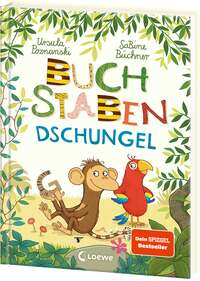
Buchstabendschungel
by Poznanski, Ursula / Illustrated by Büchner, SaBine
Help the animals to find their letters ... easy as ABC!• By best-selling author Ursula Poznanski• Get a first feeling for letters and words!• Humorously illustrated, with funny details!After a big storm in the jungle, the little monkey collects many funny-looking things. “That are letters,” knows the smart parrot. “Somebody must have lost them”. And indeed, monkey and parrot come across strange animals that seem like something is missing. A "iger", a "nake", a "at" … An exciting letter story for reading aloud and early reading, guessing and poetizing by yourself!
-
Trusted Partner

 September 2007
Die Spiegel. Der öde Raum
Gedichte. Edition Lyrik Kabinett
by Gimferrer, Pere / Übersetzt von Sanjosé, Àxel
-
Trusted Partner
-
Trusted Partner

 Children's & YA
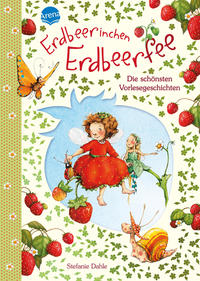
The Strawberry Fairy. The Loveliest Stories to Read Aloud
by Stefanie Dahle
The Strawberry Fairy works her magic again! For this top-quality gift edition, decorated with glitter and foil embossing, the author and illustrator Stefanie Dahle has chosen her own favourite stories from the three books. There is always something going on in the strawberry garden: the little fairy cures the sore throats of the frog choir, helps Don Carlo to win the love of his sweetheart, and enjoys some jolly parties in the garden. Later everyone cuddles up by the fire and makes plans for the spring while drinking a delicious cup of strawberry tea. A book to treasure, and not just for Strawberry Fairy fans.
-
Trusted Partner
 Humanities & Social SciencesMarch 2026
The dilemma of Authority
by Allyn Fives
The moral problem of authority is the challenge of reconciling legitimate authority (the right to rule) with the demands of freedom and rationality. In this book, I argue that authority can have legitimacy, but when it does it generates a moral dilemma, where the obligation to obey comes at some cost to freedom and reason. Hence, not only do I depart from the views of those who insist that authority can never have legitimacy, but also those who maintain that insofar as authority is legitimate it simply satisfies the demands of freedom or rationality. My focus here will be on both what it is that justifies authority (in particular focusing on membership, and the goods of membership) as well what type of reason an authoritative directive is, how it can come into conflict with others reasons, and how those conflicts are resolved.
-
Trusted Partner
Humanities & Social SciencesMay 2021
Disciplined agency
Neoliberal precarity, generational dispossession and call centre labour in Portugal
by Patrícia Alves de Matos
Since the mid-2000s, the harsh reality of call centre employment for a generation of young workers in Portugal has been impossible to ignore. With its endless rows of small cubicles, where human agents endure repetitive telephone conversations with abusive clients under invasive modes of technological surveillance, discipline and control, call centre work remains a striking symbol of labour precarity, a condition particularly associated with the neoliberal generational disenchantment that 'each generation does better than its predecessor'. This book describes the emergence of a regime of disciplined agency in the Portuguese call centre sector. Examining the ascendancy of call centres as icons of precarity in contemporary Portugal, this book argues that call centre labour constitutes a new form of commodification of the labouring subject. De Matos argues that call centres represent an advanced system of non-manual labour power exploitation, due to the underestimation of human creativity that lies at the centre of the regimented structures of call centre labour. Call centres can only guarantee profit maintenance, de Matos argues, through the commodification of the human agency arising from the operators' moral, relational and social embedded agentive linguistic interventions of creative improvisation, decision-making, problem-solving and ethical evaluation.
-

 Technology, Engineering & AgricultureMarch 1905
The First Book of Farming
by Charles L. Goodrich
This book is a result of the author's search for these facts and truths as a student and farmer and his endeavor as a teacher to present them in a simple manner to others. The object in presenting the book to the general public is the hope that it may be of assistance to farmers, students and teachers, in their search for the fundamental truths and principles of farming.
-

 Business, Economics & LawMarch 1905
The Path of the Law
by Oliver Wendell Holmes Jr.
In The Path of the Law, Holmes discusses his personal philosophy on legal practice. The Common Law is a series of lectures that established Holmes's reputation as a witty and articulate writer.
-
 Business, Economics & LawApril 1905
Creating Capital
Money-making as an aim in business
by Fredrick L. Lipman
The object of this paper is to discuss money-making; to examine its prevalence as an aim among people generally and the moral standards which obtain among those who consciously seek to make money.