
ZNN Network Literary and Illustrator Agency
- International Copyright, Licensing, and Literary Agency - International Illustrator Agency and Management Services - Creative Content Development Services
View Rights Portal
- International Copyright, Licensing, and Literary Agency - International Illustrator Agency and Management Services - Creative Content Development Services
View Rights Portal
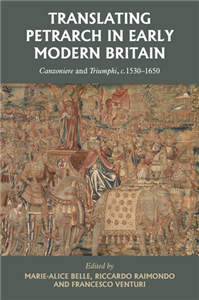
Translating Petrarch in early modern Britain gathers twelve essays by international scholars focusing on the translation of Petrarch's vernacular verse (Canzoniere and Triumphi) into English, from the Tudor age to the mid-seventeenth century (and beyond). Approaching translation as an interpretive process, but also a mode of literary emulation and cultural engagement with Petrarch's prestigious precedent, the collection explores the complex and interconnected trajectories of both poetic works in English and Scottish literary milieux. While situating each translation in its distinct historical, material, and literary context, the essays trace the reception of Petrarch's works in early modern Britain through the combined processes of linguistic and metric innovation, literary imitation, musical adaptation and cultural and material 'domestication'. The collection sheds light on the origins and development of early modern English Petrarchism as part of wider transnational - and indeed, translational-European literary culture.

Francesco Petrarca (1304-1374) soll als einer der ersten den höchsten und eindrucksvollsten Berg der Provence, den von Winden umwehten Mont Ventoux, bestiegen haben. Der Brief, in dem er seinen Aufstieg schildert, ist ob des neuen Naturgefühls, das sich in ihm ausspricht, berühmt geworden.Rainer Maria Rilke war Petrarcas Brief bei einem Aufenthalt in der Provence zum Ereignis geworden durch die in ihm formulierte, auf Augustinus zurückgehende Erkenntnis, dass ein noch so reiches »Außen« übertroffen werde von der Tiefendimension unseres Inneren. Petrarcas Aufstieg nachvollzogen hat ein Urenkel Rilkes, der Fotograf Constantin Beyer.
 Trusted Partner
Mit seinen Gedichten an die Geliebte, dem berühmten Canzoniere, ist Francesco Petrarca zum einflußreichsten Lyriker des Abendlandes geworden. Die einsprachige Ausgabe der Liebesgedichte an Laura umfaßt eine Auswahl von 80 Sonetten und Kanzonen aus dieser Sammlung in der übersetzung von Jürgen von Stackelberg, die, ungereimt, aber in rhythmisierter Prosa, Petrarca auch uns heutigen Lesern nahezubringen versteht.
Trusted Partner

Mit seinen Gedichten an die Geliebte, dem berühmten Canzoniere, ist Francesco Petrarca zum einflußreichsten Lyriker des Abendlandes geworden. Die einsprachige Ausgabe der Liebesgedichte an Laura umfaßt eine Auswahl von 80 Sonetten und Kanzonen aus dieser Sammlung in der übersetzung von Jürgen von Stackelberg, die, ungereimt, aber in rhythmisierter Prosa, Petrarca auch uns heutigen Lesern nahezubringen versteht.
Trusted Partner

 Trusted Partner

 Trusted Partner
Trusted Partner
Trusted Partner
Erst in den sechziger Jahren erholte sich die Lyrik in Spanien vom Schock des Bürgerkriegs und vom Druck der alles erstickenden Franco-Diktatur. Langsam, aber unüberhörbar erhoben sich die Stimmen junger Autoren, deren Gedichte mit kraftvollen Sprachbildern ästhetische Paradigmen und ethische Grundmuster für die Lyrik unserer Gegenwart entwerfen. Heute sind diese Stimmen unverwechselbar geworden; jede einzelne kann den Status eines Klassikers der Moderne beanspruchen. Ob mit leicht zugänglicher Alltags- und Gedankenlyrik oder mit hermetischen, auf den ersten Blick schwer erschließbaren Texten: Diese Lyriker erdichten den Standort für den Menschen aufs neue – in immer wieder überraschenden Wendungen.Die Anthologie versammelt ein Dutzend dieser poetischen Stimmen, herausragende Beispiele der spanischen Gegenwartslyrik, die selbstbewußt das Erbe der international bekannten Großen der ersten spanischen Moderne – Antonio Machado, Federico García Lorca, Luis Cernuda, Pedro Salinas – antreten: José Ángel Valente, Jaime Gil de Biedma, Leopoldo M. Panero, José Agustín Goytisolo, Carlos Barral, José Hierro, Pere Gimferrer, Ángel González, Juan-Eduardo Cirlot, Antonio Gamoneda, Ángel Crespo, Clara Janés.
Trusted Partner
Trusted Partner
 Trusted Partner
Trusted Partner
Trusted Partner
Trusted Partner
Trusted Partner
 Trusted Partner
Trusted Partner
Trusted Partner


This 1926 survey, written by a distinguished social and economic historian, examines the role of religion in the rise of capitalism. Arguing that material acquisitiveness is morally wrong and a corrupting social influence, the author draws upon his profound knowledge of labor and politics to show how concentrated wealth distorts economic policies. Colorful but credible, this study offers a timeless vision of alternative means toward a just economic, social, and intellectual order.


Can drawing — sound, honest representation of the world as the eye sees it, not tricks with the pencil or a few "effects" — be learned from a book? One of the most gifted draftsmen, who is also one of the greatest art critics and theorists of all time, answers that question with a decided "Yes." He is John Ruskin, the author of this book, a classic in art education as well as a highly effective text for the student and amateur today. The work is in three parts, cast in the form of letters to a student, successively covering "First Practice," "Sketching from Nature," and "Colour and Composition." Starting with the bare fundamentals (what kind of drawing pen to buy; shading a square evenly), and using the extremely practical method of exercises which the student performs from the very first, Ruskin instructs, advises, guides, counsels, and anticipates problems with sensitivity. The exercises become more difficult, developing greater and greater skills until Ruskin feels his reader is ready for watercolors and finally composition, which he treats in detail as to the laws of principality, repetition, continuity, curvature, radiation, contrast, interchange, consistency, and harmony. All along the way, Ruskin explains, in plain, clear language, the artistic and craftsmanlike reasons behind his practical advice — underlying which, of course, is Ruskin's brilliant philosophy of honest, naturally observed art which has so much affected our aesthetic. Three full-page plates and 48 woodcuts and diagrams (the latter from drawings by the author) show the student what the text describes. An appendix devotes many pages to the art works which may be studied with profit.
Trusted Partner

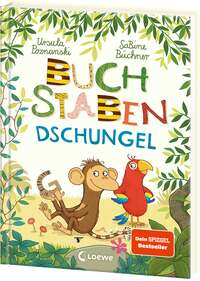
Help the animals to find their letters ... easy as ABC!• By best-selling author Ursula Poznanski• Get a first feeling for letters and words!• Humorously illustrated, with funny details!After a big storm in the jungle, the little monkey collects many funny-looking things. “That are letters,” knows the smart parrot. “Somebody must have lost them”. And indeed, monkey and parrot come across strange animals that seem like something is missing. A "iger", a "nake", a "at" … An exciting letter story for reading aloud and early reading, guessing and poetizing by yourself!
Trusted Partner
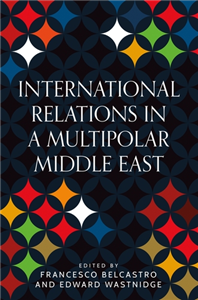
This volume explores the international relations of today's Middle East, a region that has become increasingly multi-polar. The tumult following the Arab Uprisings has expanded the arenas competed over by regional powers, global actors and non-state players. The United States, once seemingly intent on a hegemonic 'Pax Americana' has stepped back, leaving powers such as Russia, China, India and the EU, with opportunities to increase their reach and expand their influence. Meanwhile, regional rivalries and alliances have continued to shape conflict and cooperation in the Middle East. As global politics moves towards a new, multipolar era, this volume sheds important light on how this transition will impact on the region. Comprised of two macro sections that offer theoretical reflections and empirical case studies, this volume is essential reading for scholars of the politics and international relations of the Middle East.
Trusted Partner



