Books from Ukraine
The Ukrainian Book Institute is a government entity, part of the Ministry of Culture and Information Policy of Ukraine.
View Rights Portal
The Ukrainian Book Institute is a government entity, part of the Ministry of Culture and Information Policy of Ukraine.
View Rights Portal
Award Publications is an award-winning independent children’s publisher, producing exciting, creative and best-selling books for children from birth to 12 in more than 70 countries around the world since 1972. From picture books to board books, junior learning to activity, gift to reference, our aim is to bring joy, and to encourage, entertain and inspire children, and those who read with them, to build a life-long love of books and reading
View Rights Portal
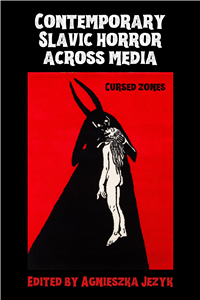
In the Western cultural production that puts individual or collective fear at its center, East/Central Europe has been portrayed as an othered space of horror - lawless, frightening zones where anything can happen. Incorporating articles on literature, film, visual arts, video games, music videos, and music festivals, Contemporary Slavic horror across media: Cursed zones is a pioneering anthology of academic essays devoted to Slavic horror fiction. The book focuses on works from the mid-20th century through the present, particularly the post-Soviet period. Assessing current trends in Czech, Polish, Russian, Slovak, Ukrainian, and East/Central European horror media, the book looks at similarities and idiosyncrasies of the genre in its Slavic variant. With this anthology we hope to tame 'the Easterner Other' and start exorcising 'monstrous' East/Central Europe.


— Comprehensive and detailled analysis of the Euromaidan and the ongoing war in Ukraine — Brussels versus Moscow, Russian aggression and geopolitical interests — China's role in a new East-West conflict The years between 2013 and 2019 were almost as significant for Ukraine as the attainment of independence in 1991, as this very independence was in danger of being lost again after the Euromaidan. The nationwide popular uprising against the regime of President Yanukovych had led to a change of power: the former parliamentary opposition formed a new government, resulting in a loss of influence for Russia. Russian agents therefore tried to bring about a "Crimea scenario", another secession in the eastern and southern parts of Ukraine. The resulting "Ukraine conflict", often called a civil war, is in fact a Russian war of attrition against Ukraine. President Putin intends to resolve it on his terms in the Minsk process: through a de facto "autonomous" part of the Donbass in the Ukrainian state, independent of Kiev, as a lever for Russian political influence. Winfried Schneider- Deters, a renowned expert on Ukraine, analyses narratively and in detail the events from 2013 to 2019 and places the Russian- Ukrainian conflict in the context of the dawning "Chinese century".
 Trusted Partner
Trusted Partner
Trusted Partner

This book charts the building of 1 Angel Square, the remarkable new head office for The Co-operative Group in Manchester's new NOMA district. Combining text and photographs to illustrate the building from commissioning to completion, Len Grant has interviewed the whole project team - clients, architects, engineers, project managers and builders - and has had unreserved access to document the creation of this already award-winning structure. The design of 1 Angel Square by the architects 3DReid, is currently the UK's highest BREEAM (Building Research Establishment's Environmental Assessment Method) rated office building to date, and it is set to be one of the most sustainable buildings in Europe. 1 Angel Square, the book, is an intimate record of this fascinating building. Some of the impressive facts include: 3,157 internal and external window panels make up the façade; there are 10,500 data and power outlets; it sits on 539 foundation piles, with an average depth of 18 metres below ground; and there are approximately 22km of power cables. This book will be required reading for students of architecture and construction, sustainability studies and urban planning, and for those with an interest in the history of one of the world's great businesses. ;
Trusted Partner
 Trusted Partner
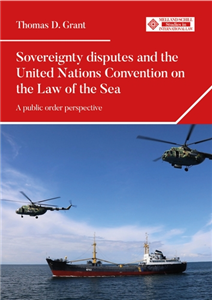
Because maritime questions are often admixed with territorial sovereignty questions, parties sometimes seek to settle them together. Jurisdiction under the United Nations Convention on the Law of the Sea-UNCLOS-according to the received view does not encompass disputes concerning territorial sovereignty. In this book, international law scholar and practitioner Thomas D. Grant argues that the received view overstates the exclusion of sovereignty disputes. In Coastal State Rights, UNCLOS Annex VII arbitrators overstated the scope of the term 'sovereignty dispute' as well, an error of definition compounded when they ignored evidence probative as to whether a sovereignty dispute exists. Examining UNCLOS, its drafting history, and decades of decided cases, Sovereignty Disputes and the United Nations Convention on the Law of the Sea relates an important problem of international dispute settlement to the public order of which UNCLOS forms part.
Trusted Partner

The book examines the transformation of European football in recent years by focusing on the impact of Europe in general and the EU in particular on the way that the game has evolved in a broad cross section of European states. The book brings together two significant research agendas: first, that on the governance of sport in Europe/the European Union; secondly, that within European integration studies on 'Europeanisation' (most commonly understood at the process of change in the domestic arena resulting from European integration). The concept of Europeanisation and in particular' top down' Europeanisation is used to shape the individual country case studies. Other transformational factors such as globalization are also assessed. The three chapters in the introductory section set the context within which the transformation of European football has occurred with particular emphasis on the role of UEFA and EU institutions. The ten country studies in the central part of the book include the five leading football nations in Europe and smaller countries that are facing new challenges in the competitive environment of modern European football. They include an example of a country that is a recent accession state and one outside the EU. What emerges from these chapters is both the shaping influence of Europeanisation but also the extent to which it is countered and modified by national culture and structures. What is also noticeable the sense of decline amongst some of the small and even larger footballing nations in the continent. This book will be of interest to students of European politics, sports governance and football, it also represents a substantial contribution to the debate on Europeanisation. ;
Trusted Partner

Catherine Deneuve is indisputably one of the world's most celebrated actresses, both in her native France and throughout the world. Her career has spanned five decades during which she has worked with the most significant of French auteurs, as well as forging partnerships with international directors such as Bunuel and Polanski. The Deneuve star persona has attained such iconic status that it can now symbolise the very essence of French womanhood and civic identity. In this wide-ranging and authoritative collection of essays by a selection of international film academics and writers, the Deneuve persona is scrutinised and illuminated. Beyond the glamorous iconographic status of Yves Saint Laurent's muse, and the epitome of sexual inviolability, Deneuve's status as actress is foregrounded. The book will be essential reading for students and lecturers in star studies.
Trusted Partner
Trusted Partner
Trusted Partner
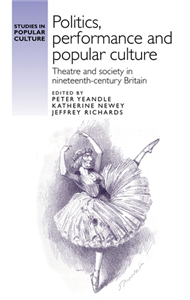
This collection brings together studies of popular performance and politics across the nineteenth century, offering a fresh perspective from an archivally grounded research base. It works with the concept that politics is performative and performance is political. The book is organised into three parts in dialogue regarding specific approaches to popular performance and politics. Part I offers a series of conceptual studies using popular culture as an analytical category for social and political history. Part II explores the ways that performance represents and constructs contemporary ideologies of race, nation and empire. Part III investigates the performance techniques of specific politicians - including Robert Peel, Keir Hardie and Henry Hyndman - and analyses the performative elements of collective movements.
Trusted Partner
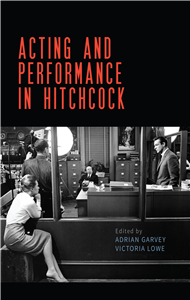
Hitchcock's professed disdain for actors is belied by the extraordinary range and depth of performances featured in his films. It might even be argued that many stars gave their richest and most complex performances in his work. Hitchcock's films are also imbued with the theme of performance, as when his fugitive men and errant women assume fragile new identities and move between roles. Actors and other performers also often feature as characters. However, the exhaustive academic literature on Hitchcock has to date produced surprisingly little work about acting and performance in his films. The collection includes contributions from a range of leading scholars on Hitchcock, performance, stardom, and British Cinema, including Charles Barr, David Greven, Mark Glancy, Lucy Bolton, Lawrence Napper and Michael Williams, and an interview with leading composers/accompanists Neil Brand and Stephen Horne on scoring performance in Silent Hitchcock.
Trusted Partner

This electronic version has been made available under a Creative Commons (BY-NC-ND) open access license. This book is about science in theatre and performance. It explores how theatre and performance engage with emerging scientific themes from artificial intelligence to genetics and climate change. The book covers a wide range of performance forms from Broadway musicals to educational theatre, from Somali drama to grime videos. It features work by pioneering companies including Gob Squad, Headlong Theatre and Theatre of Debate as well as offering fresh analysis of global blockbusters such as Wicked and Urinetown. The book offers detailed description and analysis of theatre and performance practices as well as broader commentary on the politics of theatre as public engagement with science. Science in performance is essential reading for researchers, students and practitioners working between science and the arts within fields such as theatre and performance studies, science communication, interdisciplinary arts and health humanities.
Trusted Partner
 Trusted Partner
Trusted Partner
Trusted Partner

 Trusted Partner
Trusted Partner
Trusted Partner
 Trusted Partner
Trusted Partner
Trusted Partner

This unique and exciting collection, inspired by the scholarship of literary critic Stephanie Trigg, offers cutting-edge responses to the writings of Geoffrey Chaucer for the current critical moment. The chapters are linked by the organic and naturally occurring affinities that emerge from Trigg's ongoing legacy; containing diverse methodological approaches and themes, they engage with Chaucer through ecocriticism, medieval literary and historical criticism, and medievalism. The contributors, trailblazing international specialists in their respective fields, honour Trigg's distinctive and energetic mode of enquiry (the symptomatic long history) and intellectual contribution to the humanities. At the same time, their approaches exemplify shifting trends in Chaucer scholarship. Like Chaucer's pilgrims, these scholars speak to and alongside each other, but their essays are also attentive to 'hearing Chaucer speak' then, now and in the future.