Your Search Results

      • University of Washington Press

        Who We Are   The University of Washington Press is celebrating its centennial this year. We publish compelling and transformative work with regional, national, and global impact. We are committed to the idea of scholarship as a public good and work collaboratively with our authors to produce books that meet the highest editorial and design standards. We value and promote equity, justice, and inclusion in all our work.   What We Publish   We publish in the following core academic areas:   American Studies Anthropology Art History / Visual Culture Asian American Studies Asian Studies Critical Ethnic Studies Environmental History Native American and Indigenous Studies US History Women’s, Gender, and Sexuality Studies   We also publish vibrant nonfiction about the Pacific Northwest and beyond, often in partnership with museums, cultural organizations, and Indigenous nations and communities.

        View Rights Portal
      • Jadavpur University Press

        Founded in 2012, JUP primarily publishes in English and Bengali. Most of the English titles are in the humanities and social sciences, with authors from both within and outside India.

        View Rights Portal
      • Trusted Partner
        Humanities & Social Sciences
        February 2023

        Globalized urban precarity in Berlin and Abidjan

        Young men and the digital economy

        by Hannah Schilling

        Digital technologies promise efficiency and comfort, but the smoothness of platform services relies on the hidden social labour of those who keep the gig economy running. This book presents a comparative ethnography of young men making a living through digital technologies: selling mobile airtime in Abidjan, Côte d'Ivoire, and app-based delivery riders in Berlin, Germany. These case studies explore the significance of symbolic capital in urban youth's social existence and organisation of livelihood in the digital economy, and the technological mechanisms producing a new form of urban precarity. Globalized urban precarity in Berlin and Abidjan puts forward an original comparative approach to develop a global urban sociology for the digital era. It provides an innovative analytical toolbox that decentres discussions of precarity from the standard of a normal employment contract. With its focus on symbolic capital, the ethnography shows the consequences of the proliferating gig economy for status struggles among urban youth, and carefully embeds the densification of software and services into the socio-material relations on which these new urban infrastructures are built.

      • Trusted Partner
      • Trusted Partner
        Business, Economics & Law
        January 2026

        Capitalism in contemporary Iran

        by Kayhan Valadbaygi

      • Trusted Partner
        Business, Economics & Law
        June 2026

        False profits of ethical capital

        by Claire Parfitt

      • Trusted Partner
        Humanities & Social Sciences
        January 2026

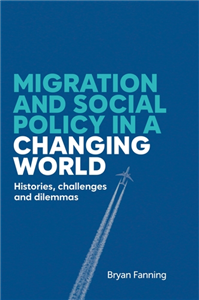
        Migration and social policy in a changing world

        Histories, challenges and dilemmas

        by Bryan Fanning

        Migration and social policy in a changing world bridges the generally separate fields of social policy and migration studies. This book traces social policy responses to migration from the Industrial Revolution to today's era of globalisation and large-scale migration. Through case studies from across the globe, the book explores key themes including rural-urban migration, social citizenship, welfare internationalism and diasporic care systems. It examines how migrants are included in or excluded from social citizenship in host societies, and how they become providers of welfare services such as health and social care. Moving beyond a methodological nationalist focus, the book investigates migrant incorporation into welfare states through family networks, faith communities, and other informal welfare structures. It combines migrants' experiences with host societies' immigration politics, institutional perspectives and policies to present a comprehensive analysis of the migration-welfare relationship. This volume fills a gap in academic literature and offers policymakers, practitioners and scholars a framework for understanding the interplay between migration and social policy in our changing world.

      • Trusted Partner
        Literature & Literary Studies
        April 2025

        Speculative endeavors

        Cultures of knowledge and capital in the long nineteenth century

        by Selina Foltinek, Karin Hoepker, Katrin Horn

        Speculative endeavours contributes to an emerging field of scholarship that focuses on alternative forms of knowledge production and speculation in nineteenth century US-American society. It sheds light on unofficial knowledges such as insider information, rumour, gossip, slander, emphasising how knowledges excluded by institutional discourses and authorities form a core part of the developing market economy. Ranging from the Early Republic to the Gilded Age, contributions analyse entanglements of financial, cultural, and social capital. They focus on social actors who differ from the newly minted ideal of the (free, white, male) entrepreneurial individual. The speculative endeavours discussed include illicit communications located in slave quarters and domestic spaces, communal interventions into a commercialised print market, debates on immigrant fiduciary and legal competency, and disciplinary techniques of pecuniary pedagogy. Taken together they offer unprecedented interdisciplinary insights into an emerging age of capital.

      • Trusted Partner
        Humanities & Social Sciences
        July 2025

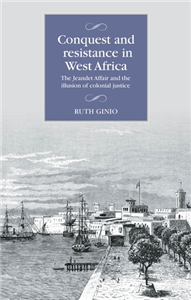
        Conquest and resistance in West Africa

        The Jeandet Affair and the illusion of colonial justice

        by Ruth Ginio

        This book is an enthralling account of a legal scandal, which erupted in colonial Senegal in 1890 and reached the French metropolitan press and the parliament. The murder of a colonial administrator, Abel Jeandet, by one of his soldiers led to the brutal and illegal executions without trial of the killer and two local dignitaries. The volume follows the fascinating story of Ndiereby Ba, the widow of one of the dignitaries, who with the help of powerful métis men in the capital Saint Louis sued the French administrators who had supervised the executions for the murder of her husband. Through this captivating tale the book articulates the French expansion into West Africa, the resistance to colonial rule both violent and non-violent, and the lack of interest on the part of French politicians in the brutal conquest of a territory they know nothing about.

      • Trusted Partner
      • Trusted Partner
        Humanities & Social Sciences
        September 2021

        Human capital and empire

        by Andrew Mackillop

      • Trusted Partner
        Humanities & Social Sciences
        March 2026

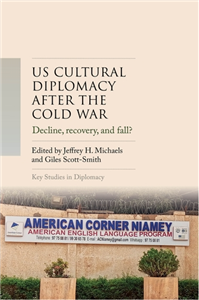
        US cultural diplomacy after the Cold War

        Decline, recovery, and fall

        by Jeffrey H. Michaels, Giles Scott-Smith

        In the decades following the USSR's collapse, the US has gone from unrivalled hegemon to a position of relative decline. With America 'triumphant' after 1991, its culture, like its diplomatic, military and economic power, remained unmatched. Such favourable circumstances seemed to undercut the need for cultural diplomacy. Why should the US government sell a product that was already selling so well? After 9/11, however, it was apparent the US image was less popular than previously assumed. To reverse this negative image, cultural diplomacy was revived. Despite being beset by internal and external challenges, US officials supported various cultural initiatives and partnerships to promote the American brand globally. Along the way, cultural diplomacy has made use of new forms of expression to promote American culture and build positive foreign relations. The arrival of the second Trump administration in 2025 has clearly signalled an end to using cultural diplomacy to further causes of empowerment and diversity, making the future uncertain for this field of activity.

      • Trusted Partner
        Teaching, Language & Reference
        February 2020

        A writer's guide to Ancient Rome

        by Carey Fleiner, Jerome de Groot

      • Trusted Partner
        The Arts
        December 2025

        The double game of music

        Paradoxes of power, status and class in music education

        by Live Weider Ellefsen, Petter Dyndahl, Anne Jordhus-Lier, Siw Graabræk Nielsen

        The double game of music imagines music education as a series of games - each with its own rules, play currency and players - to challenge readers to rethink the significance of music and musical upbringing in shaping social structures. Drawing on their own empirical research and a wide range of international contributions, the authors unravel the intertwining of social positioning and power hierarchies with players beliefs in the pure values and virtues of their games, whether these relate to parenting, children's play, schooling, academic pursuits, musical leisure activities or the television and music industries. In a world where music is often celebrated as an important tool for inclusion and democratisation, this groundbreaking book offers a timely critique, revealing complexities and contradictions that tend to be overlooked by teachers, researchers, politicians and others interested in the powers of music education.

      • Trusted Partner
        Humanities & Social Sciences
        October 2023

        The illusion of the Burgundian state

        by Élodie Lecuppre-Desjardin, Christopher Fletcher

        On 25 January 1474, Charles the Bold, duke of Burgundy, appeared before his subjects in Dijon. Robed in silk, gold and precious jewels and wearing a headpiece that gave the illusion of a crown, he made a speech in which he cryptically expressed his desire to become a king. Three years later, Charles was killed at the battle of Nancy, an event that plunged the Great Principality of Burgundy into chaos. This book, innovative and essential, not only explores Burgundian history and historiography but offers a complete synthesis about the nature of politics in this region, considered both from the north and the south. Focusing on political ideologies, a number of important issues are raised relating to the medieval state, the signification of the nation under the 'Ancien Regime', the role of warfare in the creation of political power and the impact of political loyalties in the exercise of government. In doing so, the book challenges a number of existing ideas about the Burgundian state.

      • Trusted Partner
        Teaching, Language & Reference
        May 2025

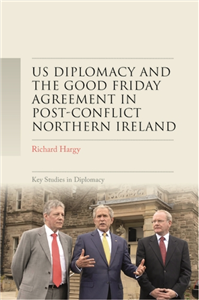
        US diplomacy and the Good Friday Agreement in post-conflict Northern Ireland

        by Richard Hargy

        Richard Haass and Mitchell Reiss, as autonomous diplomats in the George W. Bush State Department, were able to alter US intervention in Northern Ireland and play critical roles in the post-1998 peace process. Their contributions have not been fully appreciated or understood. The restoration of Northern Ireland's power-sharing government in 2007 was made possible by State Department-led intervention in the peace process. There are few references to Northern Ireland in work examining the foreign policy legacy of the George W. Bush presidency. Moreover, the ability to control US foreign policy towards the region brought one of George W. Bush's Northern Ireland special envoys into direct diplomatic conflict with the most senior actors inside the British government. This book will uncover the extent of this fall-out and provide original accounts on how diplomatic relations between these old allies became so fraught.

      • Trusted Partner
        Humanities & Social Sciences
        April 2016

        University engagement and environmental sustainability

        by Michael Osborne, Patricia Inman, Diana Robinson

        Universities have a key role to play in contributing to environmental development and combating climate change. The chapters within this volume detail the challenges faced by higher education institutions in considering environmental sustainability, and provide both a broad view of university engagement and a detailed examination of various projects. As part of this series in association with the Place and Social Capital and Learning (PASCAL) International Observatory, the three key PASCAL themes of place management, lifelong learning and the development of social capital are considered throughout the book. While universities have historically generated knowledge outside of specific local contexts, this book argues that it is particularly important for them to engage with the local community and to consider diverse perspectives and assets when looking at issues within an ecological context. The chapters in this volume provide new perspectives and frames of reference for transforming universities by engaging in the development of resilient communities.

      • Trusted Partner
        Humanities & Social Sciences
        November 2024

        US public diplomacy in socialist Yugoslavia, 1950–70

        Soft culture, cold partners

        by Carla Konta

        The first comprehensive account of the public and cultural diplomacy campaigns carried out by the US in Yugoslavia during the height of the Cold War, this book examines the political role of culture in US-Yugoslav bilateral relations and the fluid links between information and propaganda. Tito allowed the US Information Agency and the State Department's cultural programmes to enter Yugoslavia, liberated from Soviet control. The exchange of intellectual and political personnel helped foster the US-Yugoslav relationship, yet it posed severe ideological challenges for both sides. By providing new insights into porous borders between freedom and coercion in Tito's regime, this book shows how public diplomacy acted as an external input for Yugoslav liberalisation and dissident movements. Using extensive archival research and interviews, Konta analyses the links between information and propaganda, and the unintended effects of propaganda beyond the control of producers and receivers.

      • Trusted Partner
      • Trusted Partner

      Subscribe to our

      newsletter