Your Search Results
-

-

sally : deja-vu
SALLY, a comic/manga/graphic novel author, is from Taipei, TAIWAN.Originally a student of architecture, she is currently a member of the manga colllective Club Zip and publishes her work commercially and independently. Her work "Left Hand" won the Silver Award of Japan International MANGA Award and "Going My Way?" has been serialized in Taiwan, Thailand, Korea, and Indonesia.promotion clips of work in youtube
View Rights Portal
-
Promoted Content

 September 2001
BabySprache - BabyTalk
Wie Eltern die Intelligenz ihrer Kinder fördern können
by Ward, Sally
-
Promoted Content
 July 2008
BabySprache - BabyTalk
Wie Eltern die Intelligenz ihrer Kinder fördern können
by Ward, Sally / Englisch Herbst, Gabriele
-
 Trusted Partner
 May 2003
BabySprache - BabyTalk
Wie Eltern die Intelligenz ihrer Kinder fördern können
by Ward, Sally / Übersetzt von Herbst, Gabriele
-
Trusted Partner

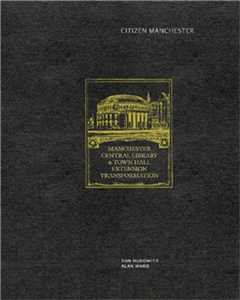 Photography & photographsMarch 2014
Citizen Manchester
by Dan Dubowitz, Alan Ward
In 2008, Manchester decided to embark on a counter-cyclical project, much as the city fathers had done in the last great recession, and invest significantly in two civic buildings, two buildings that were cornerstones of the making of the first modern industrialised city: Manchester Town Hall Extension and Manchester Central Library. Early on in this major redevelopment project, artists Dan Dubowitz and Alan Ward were given privileged and open access to witness this transformational period in the life of these two iconic buildings. Through large-format photographs and interviews taken and conducted over a period of eighteen months, they captured the moment when the city's citizens and workers had been locked out and the spaces were being stripped bare; revealing both a glimpse of what they had been and what they might become. The artwork provides insights on the reciprocal relationship between people and place, and reveals how the refurbishment of a building can go far beyond physical refurbishment, questioning the relationships between a city, its citizens and place.
-
Trusted Partner
 Humanities & Social SciencesSeptember 2023
The break-up of Greater Britain
by Stuart Ward, Christian Pedersen
-
Trusted Partner
 Humanities & Social SciencesJanuary 2013
Women of the English Nobility and Gentry, 1066-1500
by Jennifer Ward
While there is increasing interest in the lives of medieval women, the documentary evidence for their activities remains little known. This book provides a collection of sources for an important and influential group of women in medieval England, and examines changes in their role and activities between 1066 and 1500. For most noble and gentry-women, early marriage led to responsibilities for family and household, and, in the absence of their husbands, for the family estates and retainers. Widowhood enabled them to take control of their affairs and to play an independent part in the local community and sometimes further afield. Although many women's lives followed a conventional pattern, great variety existed within family relationships, and individuality can also be seen in religious practices and patronage. Piety could take a number of different forms, whether a woman became a nun, a vowess or a noted philanthropist and benefactor to religious institutions. This volume provides a broad-ranging and accessible coverage of the role of noble women in medieval society. It highlights the significant role played by these women within their families, households, estates and communities.
-
Trusted Partner
 Literature: history & criticismJuly 2012
Caryl Phillips, David Dabydeen and Fred D'Aguiar
by Abigail Ward
-
Trusted Partner
-
Trusted Partner
 Humanities & Social SciencesMarch 2017
British culture and the end of empire
by Stuart Ward
This book is the first major attempt to examine the cultural manifestations of the demise of imperialism as a social and political ideology in post-war Britain. Far from being a matter of indifference or resigned acceptance as is often suggested, the fall of the British Empire came as a profound shock to the British national imagination, and resonated widely in British popular culture. The sheer range of subjects discussed, from the satire boom of the 1960s to the worlds of sport and the arts, demonstrates how profoundly decolonisation was absorbed into the popular consciousness. Offers an extremely novel and provocative interpretation of post-war British cultural history, and opens up a whole new field of enquiry in the history of decolonisation.
-
Trusted Partner
-
Trusted Partner
 Literature & Literary StudiesJune 2011
Caryl Phillips, David Dabydeen and Fred D'Aguiar
by Abigail Ward, John Thieme
-
Trusted Partner
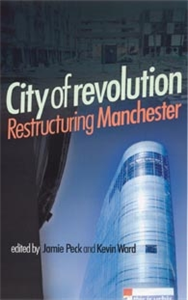 Humanities & Social SciencesAugust 2002
City of Revolution
Restructuring Manchester
by Jamie Peck, Kevin Ward, Martin Hargreaves
Provides a critical account of one of Europe's most celebrated examples of urban transformation, getting beneath the hype to ask what has really changed in the 'new' Manchester.. The first comprehensive account of contemporary political and economic change in Manchester.. Explores the costs and consequences of making the transition from an industrial to a post-industrial or 'entrepreneurial' city, with broad implications for other major cities. ;
-
Trusted Partner
-
Trusted Partner
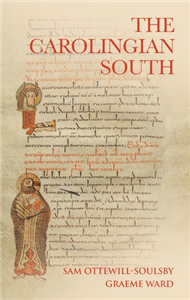 Humanities & Social SciencesMay 2026
The Carolingian South
by Sam Ottewill-Soulsby, Graeme Ward
The Carolingian South turns the Frankish world upside down by taking as its subject the lands of the Carolingian empire south of the Loire and the Alps. It assembles an international group of scholars from different disciplines to examine how the Carolingians defined and were defined by this region. This book asks how Carolingian power was created and negotiated in the south. It views the Frankish empire from the perspective of the Christian and Muslim polities of the Mediterranean, while also following the movement of people and ideas through the endlessly fascinating world that they made.
-
Trusted Partner
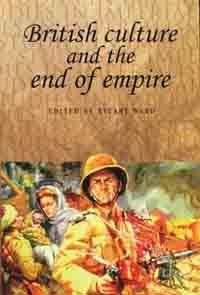 Humanities & Social SciencesDecember 2001
British culture and the end of empire
by Andrew Thompson, Stuart Ward, John Mackenzie
This book is the first major attempt to examine the cultural manifestations of the demise of imperialism as a social and political ideology in post-war Britain. Far from being a matter of indifference or resigned acceptance as is often suggested, the fall of the British Empire came as a profound shock to the British national imagination, and resonated widely in British popular culture. The sheer range of subjects discussed, from the satire boom of the 1960s to the worlds of sport and the arts, demonstrates how profoundly decolonisation was absorbed into the popular consciousness. Offers an extremely novel and provocative interpretation of post-war British cultural history, and opens up a whole new field of enquiry in the history of decolonisation. ;
-
Trusted Partner
-
Trusted Partner
 Business, Economics & LawNovember 2016
The econocracy
by Joe Earle, Cahal Moran, Zach Ward-Perkins, Mick Moran
-
Trusted Partner

 October 2008
Gipfel des Unwahrscheinlichen
Wunder der Evolution
by Dawkins, Richard / Illustriert von Ward, Lalla; Deutsch Vogel, Sebastian
-
Trusted Partner
 January 1999
Gipfel des Unwahrscheinlichen
Wunder der Evolution
by Dawkins, Richard / Illustriert von Ward, Lalla; Übersetzt von Vogel, Sebastian
-
Trusted Partner