
Water Environment Federation
Water Environment Federation (WEF)publishes a variety of technical publications, including newsletters,manuals of practice and other books, magazines, and journals.
View Rights Portal
Water Environment Federation (WEF)publishes a variety of technical publications, including newsletters,manuals of practice and other books, magazines, and journals.
View Rights Portal
Watkins Media Ltd. consists of 4 imprints - Watkins (self-help, personal development and mind, body, spirit), Nourish (healthy living and cookery), Angry Robot (science fiction and fantasy) and Repeater (Radical Politics, Fiction and Philosophy). The story of Watkins Publishing dates back to March 1893, when John M. Watkins, a scholar of esotericism, overheard his friend and teacher Madame Blavatsky lamenting the fact that there was nowhere in London to buy books on mysticism, occultism or metaphysics. At that moment Watkins was born, soon to become the home of many of the leading lights of spiritual literature, including Carl Jung, Rudolf Steiner, Alice Bailey and Chögyam Trungpa. Today our passion for vigorous questioning is still resolute, our books have continued to reflect the development of spiritual thinking and new science over the past 120 years. We remain at the cutting edge, committed to publishing books that change lives.
View Rights Portal

Can drawing — sound, honest representation of the world as the eye sees it, not tricks with the pencil or a few "effects" — be learned from a book? One of the most gifted draftsmen, who is also one of the greatest art critics and theorists of all time, answers that question with a decided "Yes." He is John Ruskin, the author of this book, a classic in art education as well as a highly effective text for the student and amateur today. The work is in three parts, cast in the form of letters to a student, successively covering "First Practice," "Sketching from Nature," and "Colour and Composition." Starting with the bare fundamentals (what kind of drawing pen to buy; shading a square evenly), and using the extremely practical method of exercises which the student performs from the very first, Ruskin instructs, advises, guides, counsels, and anticipates problems with sensitivity. The exercises become more difficult, developing greater and greater skills until Ruskin feels his reader is ready for watercolors and finally composition, which he treats in detail as to the laws of principality, repetition, continuity, curvature, radiation, contrast, interchange, consistency, and harmony. All along the way, Ruskin explains, in plain, clear language, the artistic and craftsmanlike reasons behind his practical advice — underlying which, of course, is Ruskin's brilliant philosophy of honest, naturally observed art which has so much affected our aesthetic. Three full-page plates and 48 woodcuts and diagrams (the latter from drawings by the author) show the student what the text describes. An appendix devotes many pages to the art works which may be studied with profit.

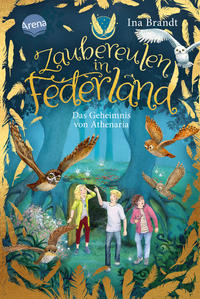
Flora is very excited: together with her magic owl Goldwing, she is to be part of a new team. The owl rulers of the Magical Kingdom have summoned them to Featherland, a hidden place in a mysterious monastery. There they meet the snowy owl Nordis, the spectacled owl Claro and, of course, Jona, who always tries to compete with Flora. How will they ever manage to make a team? It’s not long before they are given their first job: during the night of the next full moon they must help one another to awaken the magic of Featherland – and this proves to be more difficult than expected. Because suddenly Claro disappears from the face of the earth. And without him, no magic can ever succeed…
 Trusted Partner

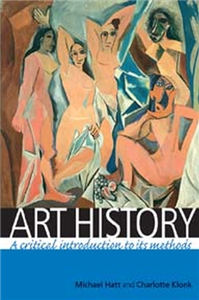
Art History: A critical introduction to its methods provides a lively and stimulating introduction to methodological debates within art history. Offering a lucid account of approaches from Hegel to post-colonialism, the book provides a sense of art history's own history as a discipline from its emergence in the late-eighteenth century to contemporary debates. By explaining the underlying philosophical and political assumptions behind each method, along with clear examples of how these are brought to bear on visual and historical analysis, the authors show that an adherence to a certain method is, in effect, a commitment to a set of beliefs and values. The book makes a strong case for the vitality of the discipline and its methodological centrality to new fields such as visual culture. This book will be of enormous value to undergraduate and graduate students, and also makes its own contributions to ongoing scholarly debates about theory and method. ;

