
Verlag Kiepenheuer & Witsch GmbH & Co. KG
Publishing House Kiepenheuer & Witsch GmbH & Co. KG with its Imprint Galiani Berlin
View Rights Portal Trusted Partner

Publishing House Kiepenheuer & Witsch GmbH & Co. KG with its Imprint Galiani Berlin
View Rights Portal
 Trusted Partner


Driving Home … for Christmas. Einmal im Jahr fahren Heerscharen gestandener Großstädter zu ihren Eltern, um sich – Widerstand zwecklos – wieder in Söhne und Töchter zu verwandeln. Es erwarten sie: eherne Rituale, das alte Kinderzimmer, abendliche Treffen mit anderen Heimkehrern, die auch nicht jünger werden. Und eine Befangenheit, die erst verfliegt, wenn sie anderen davon erzählen und den Druck schön anekdotisch verpuffen lassen können – bis zum nächsten Jahr. Dier Geschichten in Driving Home fangen die Gefühle in Verbindung mit der weihnachtlichen Heimfahrt in leichten, bitteren, ironischen, nostalgischen und manchmal auch ganz anderen Klangfarben ein – ein unterhaltendes und geistvolles Lesebuch mit Originaltexten von Natalie Balkow, Paul Brodowsky, Guy Helminger, Kathrin Passig, Jagoda Marinić, Thees Uhlmann, Kevin Vennemann und vielen mehr.
Trusted Partner

 Trusted Partner
Trusted Partner
Trusted Partner
Trusted Partner
Trusted Partner
Trusted Partner
Trusted Partner
Trusted Partner
Trusted Partner
Trusted Partner
Trusted Partner

 Trusted Partner

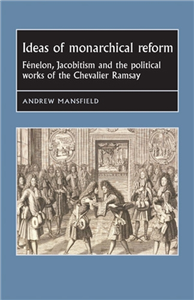
This book examines the political works of Andrew Michael Ramsay (1683-1743) within the context of early eighteenth-century British and French political thought. In the first monograph on Ramsay in English for over sixty years, the author uses Ramsay to engage in a broader evaluation of the political theory in the two countries and the exchange between them. At the beginning of the eighteenth century, Britain and France were on divergent political paths. Yet in the first three decades of that century, the growing impetus of mixed government in Britain influenced the political theory of its long-standing enemy. Shaped by experiences and ideologies of the seventeenth century, thinkers in both states exhibited a desire to produce great change by integrating past wisdom with modern knowledge.
Trusted Partner
Trusted Partner
Trusted Partner

The age of steam was the age of Britain's global maritime dominance, the age of enormous ocean liners and human mastery over the seas. The world seemed to shrink as timetabled shipping mapped out faster, more efficient and more reliable transoceanic networks. But what did this transport revolution look like at the other end of the line, at the edge of empire in the South Pacific? Through the historical example of the largest and most important regional maritime enterprise - the Union Steam Ship Company of New Zealand - Frances Steel eloquently charts the diverse and often conflicting interests, itineraries and experiences of commercial and political elites, common seamen and stewardesses, and Islander dock workers and passengers. Drawing on a variety of sources, including shipping company archives, imperial conference proceedings, diaries, newspapers and photographs, this book will appeal to cultural historians and geographers of British imperialism, scholars of transport and mobility studies, and historians of New Zealand and the Pacific.
Trusted Partner
Trusted Partner
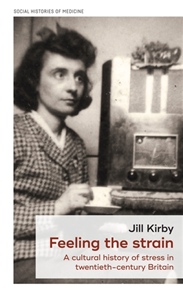
Examining the popular discourse of nerves and stress, this book provides a historical account of how ordinary Britons understood, explained and coped with the pressures and strains of daily life during the twentieth century. It traces the popular, vernacular discourse of stress, illuminating not just how stress was known, but the ways in which that knowledge was produced. Taking a cultural approach, the book focuses on contemporary popular understandings, revealing continuity of ideas about work, mental health, status, gender and individual weakness, as well as the changing socio-economic contexts that enabled stress to become a ubiquitous condition of everyday life by the end of the century. With accounts from sufferers, families and colleagues it also offers insight into self-help literature, the meanings of work and changing dynamics of domestic life, delivering a complementary perspective to medical histories of stress.
Trusted Partner

This book is the first analysis of the dynamics of British press reporting of India and the attempts made by the British Government to manipulate press coverage as part of a strategy of imperial control. The press was an important forum for debate over the future of India and was used by significant groups within the political elite to advance their agendas. Focuses on a period which represented a critical transitional phase in the history of the Raj, witnessing the impact of the First World War, major constitutional reform initiatives, the tragedy of the Amritsar massacre, and the launching of Gandhi's mass movement. Asserts that the War was a watershed in official media manipulation and in the aftermath of the conflict the Government's previously informal and ad hoc attempts to shape press reporting were placed on a more formal basis.
Trusted Partner
Trusted Partner
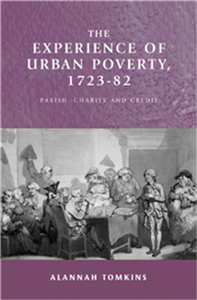
This comparative study of urban poverty is the first to chart the irregular pulse of poverty's encounters with officialdom. It exploits an unusual methodology to secure new perspectives from familiar sources. The highly localised characteristics of the welfare economy generated a peculiarly urban environment for the poor. Separate chapters examine the parameters of workhouse life when the preconceptions of contemporaries have been stripped away; the reach of institutional charities such as almshouses, schools and infirmaries; and the surprisingly broad clientele of urban pawnbrokers. Detailed analysis of the poor is achieved via meticulous matching of individuals who fell within the purview of two or more authorities. The result is a unique insight into the survival economics of urban poverty, arising not from a tidy network of welfare but from a loose assembly of options, where the impoverished positioned themselves repeatedly to fit official, philanthropic, or casual templates of the 'deserving'. This book will be essential reading for historians of English poverty and welfare, and eighteenth-century social and economic life. ;
Trusted Partner


Friedrich Schleiermacher (1768-1834), Repräsentant der Frühromantik und Vertreter des sich formierenden preußischen Bürgertums, hat den neuzeitlichen Protestantismus geprägt wie kaum ein anderer. Pietistisches Erbe und Impulse der Aufklärungstheologie, reformatorische Überlieferung und neuzeitlich-moderne Problemstellungen sind in Schleiermachers Denken zum Ausgleich und zur Vermittlung gebracht. Auch als Prediger und Gelehrter, als Pädagoge, Wissenschaftsorganisator, Universitätspolitiker und Übersetzer Platons hat er gewirkt.



