
Gyeonggi Content Agency
GCA supports the planning, production, distribution, overseas expansion of contents including videos and films, music, publishing, webtoons and animations, games, etc
View Rights Portal
GCA supports the planning, production, distribution, overseas expansion of contents including videos and films, music, publishing, webtoons and animations, games, etc
View Rights Portal
Contrappunto House Of Books accompanies its authors in every aspect of their publishing journey: review and editing of the manuscript, negotiation with potential publishers, promotion, press and communication office. Thanks to its professional staff, the company covers the entire publishing chain, providing authors with a path that combines the creative aspect of writing with editorial and commercial ones. Contrappunto House Of Books goes beyond the traditional concept of a literary agency, working on the development of the Personal Branding of each author. The Agency also works along with publishers on the promotion of their catalogs, enhancing the "mission" of each brand. From the work on the text to that of promotion, from the organization of events to the participation in book fairs, Contrappunto traces an original path for each individual author.
View Rights Portal

Colonial governments, institutions and companies recognised that in many ways the effective operation of the Empire depended upon sexual arrangements. For example, nuclear families serving agricultural colonization, and prostitutes working for single men who powered armies and plantations, mines and bureaucracies. For this reason they devised elaborate systems of sexual governance, such as attending to marriage and the family. However, they also devoted disproportionate energy to marking and policing the sexual margins. In Sex, Politics and Empire, Richard Phillips investigates controversies surrounding prostitution, homosexuality and the age of consent in the British Empire, and revolutionises our notions about the importance of sex as a nexus of imperial power relations.
 Trusted Partner


With a pinch of humor, the authors tell the story of Julia, her husband Peter, and their little whirlwind Alexander, who is starting elementary school. How do the three of them deal with this new stage in Alexander’s life? What problems do they encounter and what do they find stressful? The book sets out to help parents, uncles, aunts, and grandparents understand how children of elementary school age develop. Professionals who work with children of this age may also find it of interest. Petra Jansen and Stefanie Richter are both parents and psychologists. Through the fictional Julia they share their subjective experience as mothers, while also providing background information based on scientific studies. They demonstrate in a clear and entertaining way that some of the problems experienced by children of this age are not unexpected and are no cause for despair. Target Group: Parents of children in their early years at school.
Trusted Partner
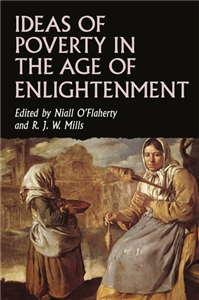
This collection of essays examines the ways in which poverty was conceptualised in the social, political, and religious discourses of eighteenth-century Europe. It brings together experts with a wide range of expertise to offer pathbreaking discussions of how eighteenth-century thinkers thought about the poor. Because the theme of poverty played important roles in many critical issues in European history, it was central to some of the key debates in Enlightenment political thought throughout the period, including the controversies about sovereignty and representation, public and private charity, as well as questions relating to crime and punishment. The book examines some of the most important contributions to these debates, while also ranging beyond the canonical Enlightenment thinkers, to investigate how poverty was conceptualised in the wider intellectual culture, as politicians, administrators and pamphlet writers grappled with the issue.
Trusted Partner

Offering a complete reading of English Literature throughout 1558-1689, this book demonstrates the continuity of Roman Catholicism in English Literature from the accession of Elizabeth I to the deposing of James II. Rist shows that poetry and plays promoted Roman Catholic ideas in a Biblicist age which established the Church of England through the Book of Common Prayer. From the very idea of literary works to chapters on the Eucharist, Purgatory, Christian worship and the Virgin Mary, Rist joins together major and minor authors of the era to present English Literature afresh. Important literary figures include William Shakespeare, Ben Jonson, Thomas Middleton, Queen Henrietta Maria, John Donne, John Dryden, Robert Herrick, Margaret Cavendish and Aphra Behn.
Trusted Partner
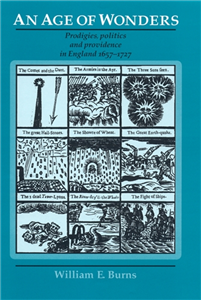
Monstrous births, rains of blood, apparitions of battles in the sky - people in early modern England found all of these events to carry important religious and political meanings. In An age of wonders, available in paperback for the first time, William E. Burns explores the process by which these events became religiously and politically insignificant in the Restoration period. The story involves the establishment of early modern science, the shift from 'enthusiastic' to reasonable religion, and the fierce political combat between the Whigs and the Tories. This historical study is based on close readings of a variety of primary sources, both print and manuscript. Burns claims that prodigies lost their religious meaning and became subjects of scientific enquiry as a result of political struggles, first by the supporters of the restored monarchy and the Church of England against Protestant dissenters, and then by the Whig defenders of the Revolution of 1688 against the Tories and the Jacobites. By integrating religious and political history with the history of science, An age of wonders will be of great use to those working in the field of early modern history. ;
Trusted Partner
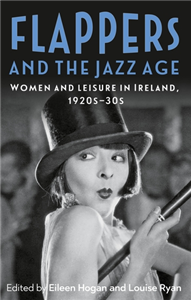
People's ordinary, everyday lives - and more specifically, their leisure activities - are often obscured within existing academic research on 1920s-30s Ireland. This book seeks to redress that neglect by exploring the relationship between identity, recreation, and culture both North and South of the border, with particular attention to women's lived experiences. Leisurely pursuits during this period were commonly overshadowed by religious influence and the nation-building projects in post-partition Ireland. Nevertheless, there existed alternative spaces, where people enjoyed dancing, singing, listening to music, shopping, glamour, reading magazines, swimming, travelling, and going to the cinema. Such activities reflected international trends beyond national borders. This book documents those activities and spaces through a feminist lens and intersectional analysis of gender, class, religion and rural/urban identities. It brings together multi-disciplinary perspectives including cultural studies, architecture, geography, fashion, and musicology. In so doing, we present new insights and advance understanding of this under-researched aspect of Irish history.
Trusted Partner

The politics of old age in the twenty first century is contentious, encompassing ideological debates about the rights and welfare entitlements of individuals in later life. An important aspect is the manner in which older people and their representative groups are given the opportunity to articulate their interests in the policy-making process. Drawing upon key literature in political science, social gerontology and cultural sociology, The politics of old age explores the relationship between ageing, politics and representation. It reveals the complexity of older people's representation and how the power the organisations exercise, their legitimacy and existence remain highly contingent on government policy design, political opportunity structures and the prevailing cultural and socioeconomic milieu. This book is essential reading for policymakers and organisations interested in ageing, policy and the political process and for students of ageing, social policy and political sociology.
Trusted Partner

This book offers a new critical framework for understanding the processes of politicising and gendering care for older people and their manifestations in several European contexts. It interrogates how care for older adults varies across time and place while searching for an in-depth comprehension of how it becomes an arena of political struggle and the object of public policy in different countries and at various societal and political levels. It brings together multidisciplinary contributions that examine the issue of care for older people as a political concern from many angles, such as problematising care needs, long-term care policies, home care services, institutional services and family care. The contributions reveal the diversity of situations in which the processes of politicising and gendering care for older adults overlap, contradict or reinforce each other while leading to increased gender (in)equalities on different levels.
Trusted Partner
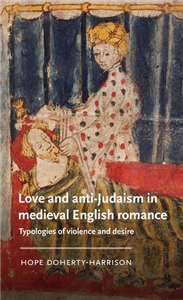
Love and anti-Judaism is a new examination of medieval romance for the questions it poses of the most significant events in Christian history. Providing new readings of Sir Gawain and the Green Knight, Sir Orfeo, Sir Gowther and Sir Amadace, the book argues that romance explores depictions of love-and the sacrifices it may necessitate-in the Hebrew Bible, especially where they do not easily fit into interpretations asserting that this history must prefigure Christ and the crucifixion. An examination of anti-Judaism as a discourse of violence and desire that could be turned inwardly to expose the irresolution in Christianity, this book will provoke new investigations into the religious crises of medieval romance.
Trusted Partner


— The book on men's health — Confessions from a urologist — Compact, competent, concise Men are often unwilling to seek medical advice when they have problems. However, a lot of diseases can only be treated if they are detected in time. This book contains comprehensible and entertaining information on all the important questions relating to men's health, from the erection and its disorders, fertility and prostate issues, to sexuality in old age. The author knows what matters to men: he speaks from his experience as a urologist.
Trusted Partner


Not a single soul as far as the eye can see. Just sea, cliffs and the beach. And a lighthouse. It’s a wondrously beautiful place – not that Airin has a chance to enjoy it. The lighthouse has been converted into a cosy living space available for rent, and 24-year-old Airin has to look after the property while at the same time running her own bed and breakfast in Castledunn. It’s a lot of work for one person, but normally everything runs smoothly. Until Joshua, the nephew of the lighthouse owner, moves in. Arrogant and priggish, he complains ceaselessly about everything. Airin feels like strangling him. Or kissing him. Who cares, just as long as he stops talking! 16+ years The third volume of a unique romance trilogy about three young women, a lighthouse and love. All titles can be read separately! Rousing characters and a fine dry humor For all fans of Mona Kasten, Laura Kneidl and Colleen Hoover! More than 60.000 copies of this series were sold!
Trusted Partner
 Trusted Partner
Trusted Partner
Trusted Partner


Ein Mädcheninternat im Appenzell der sechziger Jahre. Gehorsam und Disziplin prägen die Ordnung des Hauses. Die heitere Landschaft vor den Fenstern treibt die vierzehnjährige Ich-Erzählerin zu stundenlangen einsamen Spaziergängen. Eines Tages erscheint eine Neue während des Mittagessens: Frédérique, schön, streng, verächtlich und voller Überdruss. Frédérique ist anders, etwas Leises und Schreckliches umgibt sie. Ihr sind Beherrschung, Gehorsam und Perfektion bereits zur zweiten Natur geworden. Die Erzählerin ist gebannt von ihrer Erscheinung, sie will sie erobern, sucht ihre Freundschaft. Empfänglich für den morbiden Reiz der Disziplin verfällt sie Frédérique mehr und mehr. Und erst ein ganzes Leben später kann die Erzählerin ihre abgründige Liebe in Worte fassen.
Trusted Partner

Media reports often praise movement as a cure-all. But apart from its undisputed positive effect on health, does movement really make us smarter? Consider a national football team, for example – are these excessively sports-driven players automatically the smartest people? Should we simply replace all school subjects with sports? The authors provide a detailed summary of the latest scientific findings on the influence of movement on cognitive ability. They describe the effects of movement, on old age, embodiment, emotion, school as well as other factors that influence cognition. Target Group: teachers, lecturers, psychologists, psychiatrists, neurologists, psychotherapists, movement therapists.
Trusted Partner

This book marks an important new intervention into a vibrant area of scholarship, creating a dialogue between the histories of imperialism and of women and gender. By engaging critically with both traditional British imperial history and colonial discourse analysis, the essays demonstrate how feminist historians can play a central role in creating new histories of British imperialism. Chronologically, the focus is on the late eighteenth to early twentieth centuries, while geographically the essays range from the Caribbean to Australia and span India, Africa, Ireland and Britain itself. Topics explored include the question of female agency in imperial contexts, the relationships between feminism and nationalism, and questions of sexuality, masculinity and imperial power.
Trusted Partner
Trusted Partner

Is modern digital technology changing our social behavior, communication, and the way we see ourselves? How do we cope with the increasing flood of information pouring over us? Does this flood have an effect on our work and personal life? Based on the premise that in the course of evolution humans have developed into social beings for whom communication with group members is of paramount importance, the author demonstrates how not only our communication but also our entire social behavior is suffering as a result of modern digital technology. In the truest sense of the word, we are being inundated with information that we are no longer able to manage. The volume and constant availability of interesting and attention- sapping news and information overload our brains. Are our brains capable of adapting to the modern internet world? Are we already overloaded? How will the future pan out? For:• anyone who is interested in the digital world• wider audience
Trusted Partner

The international exhibitions held around the world between 1851 and 1939 were spectacular gestures, which briefly held the attention of the world before disappearing into an abrupt oblivion, of the victims of their planned temporality. Known in Britain as Great Exhibitions, in France as Expositions Universelles and in America as World's Fairs, the genre became a self-perpetuating phenomenon, the extraordinary cultural spawn of industry and empire. Thoroughly in the spirit of the first industrial age, the exhibitions illustrated the relation between money and power, and revelled in the belief that the uncontrolled expression of that power was the quintessence of freedom. Philanthropy found its place on exhibition sites functioning as a conscience to the age although even here morality was inextricably linked to economic efficiency and expansion. Imperial achievement was celebrated to the full at international exhibitions. Nevertheless, most World's Fairs maintained an imperial element and out of this blossomed a vibrant racism. Between 1889 and 1914, the exhibitions became a human showcase, when people from all over the world were brought to sites in order to be seen by others for their gratification and education. In essence, the English national profile fabricated in the closing decades of the nineteenth century was derived from the pre-industrial world. The Fine Arts were an important ingredient in any international exhibition of calibre. This book incorporates comparative work on European and American empire-building, with the chronological focus primarily on the nineteenth and twentieth centuries, when these cultural exchanges were most powerfully at work.



