
Your Search Results

-
Promoted Content

 Teaching, Language & ReferenceFebruary 2020
A writer's guide to Ancient Rome
by Carey Fleiner, Jerome de Groot
-
Promoted Content

 2024
2024My Italy with Berlusconi
And what has become of it. Essays, conversations, reports
by Michaela Namuth
The political era of media entrepreneur and multi-billionaire Silvio Berlusconi began in 1994. German journalist Michaela Namuth also arrived in Rome at that time. He became prime minister, she became a freelance correspondent for various newspapers. She spent the long period of his government with him. During this time, the populist Berlusconi not only paved the way for a far-right government, he was also an ice-breaker for other right-wing populists in Europe and elsewhere. What else happened during and after Berlusconi's time in power is told in 20 chapters of articles, reports and interviews. The result is a colourful mosaic of contemporary Italy. It is about publishing, design, crime fiction, the mafia, a women's factory, the south and Nutella. Under Berlusconi, the country has changed. Many speak of “Berlusconisation”, by which they mean the gradual weakening of democracy. It is a critical book, but also a declaration of love to a contradictory country whose name still has a special ring to many ears.
-
 Trusted Partner
 The ArtsNovember 2009
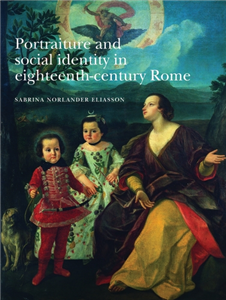
Portraiture and social identity in eighteenth-century Rome
by Sabrina Eliasson
Portraiture and Social Identity in Eighteenth-Century Rome sheds new light on the relationship between portraiture, social affirmation and the myth of Antiquity as it was experienced and elaborated in eighteenth-century Rome. Drawing upon a wealth of unpublished documents and previously unexamined literary texts, it offers new insights and readings into how the experience of the City in terms of abstract or concrete appropriation affected the ways of portraying native or visiting elite sitters. The Grand Tour portrait, usually discussed as a purely British phenomenon, is here put in its original context of production and compared to the portraits of the Romans themselves. Portraiture and social identity in eighteenth-century Rome will become essential reading for anyone with a particular interest in eighteenth-century art and its social use. ;
-
Trusted Partner
 Humanities & Social SciencesFebruary 2026
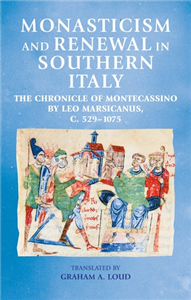
Monasticism and renewal in southern Italy
The Chronicle of Montecassino by Leo Marsicanus, c. 529–1075
by Graham Loud
The chronicle of Leo Marsicanus recounts the history of the abbey of Montecassino from its foundation by St. Benedict in the sixth-century up to 1075. It presents a detailed and compelling story of tribulation and renewal, with the abbey twice destroyed and abandoned in the early Middle Ages and then rebuilt. It concludes with an informative account of the building and dedication of the new abbey church by Abbot Desiderius in 1066-71. The chronicle is also a key source for the more general history of southern Italy in the early Middle Ages, and of the conquest of the region by the Normans during the eleventh century. In addition, Montecassino was one of the great intellectual centres of western Christendom and a major contributor to the reform movement within the Church during the later eleventh century. Leo's chronicle is a crucial witness to that role.
-
Trusted Partner
 Humanities & Social SciencesNovember 2023
Rethinking Norman Italy
Studies in honour of Graham A. Loud
by Joanna Drell, Paul Oldfield
This volume on Norman Italy (southern Italy and Sicily, c. 1000-1200) honours and reflects the pioneering scholarship of Graham A. Loud. An international group of scholars reassesses and recasts the paradigm by which Norman Italy has been conventionally understood, addressing varied subjects across four key themes: historiographies, identities and communities, religion and Church, and conquest. The chapters revise and refine our understanding of Norman Italy in the eleventh and twelfth centuries, demonstrating that it was not just a parochial Norman or Mediterranean entity but also an integral player in the medieval mainstream.
-
Trusted Partner
 Humanities & Social SciencesMay 2025
The politics of Unbelonging
Understanding and challenging racialisation of Roma in Europe and beyond
by Andreja Zevnik, Andrew Russell
This book offers a comprehensive study of racialisation of Romani communities in Europe (and beyond). Drawing on the idea of unbelonging it demonstrates how Romani communities are placed in a position of visceral visibility by local, national and international institutions as well as public media discourses. It shows how such positionality impacts the ability of Roma to self-represent politically and build capacity for change. From the position of unbelonging the book offers an account of Romani agency which both challenges the mainstream representations of Roma but also develops an alternative none-nation-state sense of belonging. In doing so the book outlines an account of Romani alternative expressions in order to take control of their relationship with their own history, future, knowledge, and identity, and the rest of the society.
-
Trusted Partner

 May 2007
Paris, Joyce, Paris
by Djuna Barnes, Karin Kersten, Kyra Stromberg
»Ein Liebhaberbändchen zum Mit-sich-Herumschleppen (nicht nur in Paris), zum Fotos-Anschauen (Paris, wie es einmal war, von unnachahmlichem Zauber), zum Sich-Freuen, daß es solche Bücher noch gibt.« BuchJournal
-
Trusted Partner
 Humanities & Social SciencesApril 2026
Surplus lives under racial capitalism
Roma in post-socialist Czechia
by Barbora Cernušáková
Surplus lives under racial capitalism is a critical contribution to the study of racial capitalism. It theorises the link between political economy, anti-Roma racism and modern forms of white supremacy in East Central Europe. The book shows how the introduction of capitalism in the 1990s overlapped with the rise of racialised disposability of Roma workers. Since then, their surplusing recurrently comes into sharp relief during the time of crisis. Surplus lives under racial capitalism is built on an investigation of how race and class structure the Czech labour regime and how they form a single site of struggle. One which binds workers across racialised divisions as surplusing continuously expands.
-
Trusted Partner
 International lawSeptember 2009
War crimes and crimes against humanity in the Rome Statute of the International Criminal Court
by Christine Byron
This book provides a critical analysis of the definitions of war crimes and crimes against humanity as construed in the Rome Statute of the International Criminal Court. Each crime is discussed from its origins in treaty or customary international law, through developments as a result of the jurisprudence of modern ad hoc or internationalised tribunals, to modifications introduced by the Rome Statute and the Elements of Crimes. The influence of human rights law upon the definition of crimes is discussed, as is the possible impact of State reservations to the underlying treaties which form the basis for the conduct covered by the offences in the Rome Statute. Examples are also given from recent conflicts to aid a 'real life' discussion of the type of conduct over which the International Criminal Court may take jurisdiction. This will be relevant to postgraduates, academics and professionals with an interest in the International Criminal Court and the normative basis for the crimes over which the Court may take jurisdiction.
-
Trusted Partner
 Humanities & Social SciencesJuly 2021
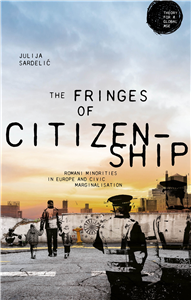
The fringes of citizenship
Romani minorities in Europe and civic marginalisation
by Julija Sardelic, Gurminder Bhambra
This book presents a socio-legal enquiry into the civic marginalisation of Roma in Europe. Instead of looking only at Roma's position as migrants, an ethnic minority or a socio-economically disadvantage group, it considers them as European citizens, questioning why they are typically used to describe exceptionalities of citizenship in developed liberal democracies rather than as evidence for how problematic the conceptualisation of citizenship is at its core. Developing novel theoretical concepts, such as the fringes of citizenship and the invisible edges of citizenship, the book investigates a variety of topics around citizenship, including migration and free movement, statelessness and school segregation, as well as how marginalised minorities respond to such predicaments. It argues that while Roma are unique as a minority, the treatment that marginalises them is not. This is demonstrated by comparing their position to that of other marginalised minorities around the globe.
-
Trusted Partner
September 2012
Paris. Eine Liebe
Erzählung
by Urs Faes, Nanne Meyer
Milde Septembertage in Paris: Nach fast dreißig Jahren kehrt Eric zurück in die Stadt, von der er einmal gehofft hatte, sie würde ihm die Erfüllung bringen. Statt dessen brachten ihn die Tage mit Claudine an den Rand der Verzweiflung – Claudine mit ihren hellen, fast weißblonden Haaren, die Hände in den Taschen ihres grünen Mantels vergraben. Jetzt scheint eine Wiederbegegnung möglich. Und es stellt sich die Frage, ob »einer nicht genauso aus dem besteht, was er nicht gelebt hat, wie aus dem, was durch Zufall seine Wirklichkeit geworden ist«. -- Mit Zeichnungen von Nanne Meyer.
-
Trusted Partner
 October 2008
Die Geheimnisse von Paris
Vollständige Ausgabe. Zwei Bände in Kassette
by Eugène Sue, Helmut Kossodo, Helmut Kossodo
Paris 1838: Ein geheimnisvoller deutscher Herzog kämpft in den verrufensten Gegenden der Stadt für Gerechtigkeit, denn im Labyrinth der nächtlichen Gassen treiben so allerhand finstre Gestalten ihr Unwesen. Eugène Sue (1804-1857) gehört zu den meistgelesenen Autoren des 19. Jahrhunderts. Die Geheimnisse von Paris wurden bei Erscheinen 1843 schlagartig zum Bestseller. Einer der spannendsten und furiosesten Romane der europäischen Literatur!
-
Trusted Partner
 May 2005
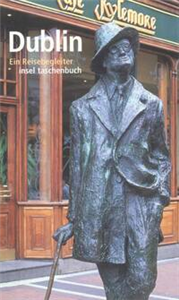
Dublin
Ein Reisebegleiter
by Hans-Christian Oeser
Dublin, mit London, Paris und Rom das beliebteste städtische Reiseziel Europas, ist zugleich auch das literarischste. Spätestens seit James Joyce' Ulysses (1924) findet sich die irische Hauptstadt auf der literarischen Weltkarte eingezeichnet. Auf acht Spaziergängen führt Hans-Christian Oeser zu ihren literarisch bedeutsamen Stätten.Geburts-, Wohn- und Sterbehäuser, Grab- und Denkmäler, Pubs und Theater sowie einige wenige Museen – sie alle eröffnen Zugang zu den Persönlichkeiten der irischen Literatur: den Autoren und ihren Figuren. Ein Serviceteil mit den wichtigsten Adressen und Telefonnummern ergänzt den Band.
-
Trusted Partner
 Literature & Literary StudiesJanuary 2013
The towns of Italy in the later Middle Ages
by Trevor Dean
The towns of Italy in the later middle ages presents over one hundred fascinating documents, carefully selected and coordinated from the richest, most innovative and most documented society of the European Middle Ages. No other English language sourcebook has the same geographical or chronological range. This collection is carefully structured around the crisis of the fourteenth century and arranged in contrasting groups of texts. By connecting documents in translation to recent scholarship and debates, it addresses five key areas of medieval urban history: the physical environment, civic religion, economy, society and politics. Offers students well-translated and effectively contextualised documents along with some guidance to the secondary work of Italian scholars which is largely inaccessible to undergraduate students.
-
Trusted Partner
Humanities & Social SciencesMarch 2017
Imperial cities
Landscape, display and identity
by Felix Driver, David Gilbert
Imperial cities explores the influence of imperialism in the landscapes of modern European cities including London, Paris, Rome, Vienna, Marseilles, Glasgow and Seville. Examines large-scale architectural schemes and monuments, including the Queen Victoria Memorial in London and the Vittoriano in Rome. Focuses on imperial display throughout the city, from spectacular exhibitions and ceremonies, to more private displays of empire in suburban gardens. Cconsiders the changing cultural and political identities in the imperial city, looking particularly at nationalism, masculinity and anti-imperialism.
-
Trusted Partner

 September 2010
Amsterdam und zurück
Roman
by Marente Moor, Waltraud Hüsmert
Es ist ein ganzer Haufen Russen, den es zu Beginn der Neunziger in Amsterdam an Land gespült hat. Die Sowjetunion gibt es nicht mehr, die Grenzen sind durchlässiger geworden, aber Heimweh ist trotzdem ein Thema für diese Jungs, denen Puschkin-Büsten und Salzgurken inneren Halt geben, die ihre Tage auf dem pittoresken Rembrandtplein verbringen, wo sie Aquarelle an die Touristen verscherbeln, und ihre Nächte dem Studium des Wodkas widmen. Witali Kirillow ist einer von ihnen, der Mann mit den meergrünen Augen. Längst ist sein Visum abgelaufen, seit dem Tag, an dem er »illegal« wurde, fährt er vorsichtshalber in der Straßenbahn nicht mehr schwarz. Doch das ist nicht das einzige Delikt in Witalis Leben. Acht Jahre zuvor, als Offizier an der sowjetisch-finnischen Grenze, hinderte er einen Kameraden nicht daran, sich in den Westen abzusetzen. Von der Familie gutmütig als »das größte Loch im eisernen Vorhang« verspottet, wurde er von der Armee hart bestraft. Seitdem läßt der Gedanke an den Flüchtling Witali nicht mehr los. Und schließlich, unterstützt von der rasant-energischen Jessie, macht er sich auf, um herauszufinden, was aus ihm geworden ist. Nur zwei, drei Pinselstriche braucht Marente de Moor, um in ihrem Debütroman die unterschiedlichsten Viertel Amsterdams lebendig werden zu lassen und vor allem die russische Szene der Stadt zu porträtieren: lauter Charakterköpfe, die – hochsympathisch und besorgniserregend tiefgründig – ganz nebenbei verhandeln, was Grenze, was Identität, was Heimat bedeutet. »Ein mitreißendes Bild – manchmal herrlich komisch, manchmal voller Nostalgie – von einem ungebärdigen Pulk Russen, die wie Schiffbrüchige in Amsterdam gestrandet sind.« Haarlems Dagblad
-
Trusted Partner

 October 1993
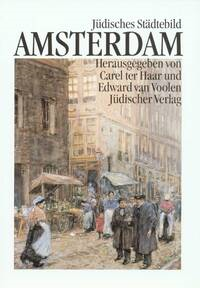
Jüdisches Städtebild Amsterdam
by Edward Voolen, Carel Haar, Helga Beuningen
Dieser Band stellt das jüdische Amsterdam vor. In literarischen Texten, Bildern und Dokumenten wird die Blütezeit des 17. Jahrhunderts laut. Geschildert wird die Zeit der französischen Besatzung von 1795, die jüdische Lebenswelt des 19. Jahrhunderts, die Zeit der deutschen Besetzung der Niederlande 1940, die Deportation und Ermordung der meisten niederländischen Juden. Das gegenwärtige jüdische Leben kommt in literarischen Zeugnissen zu Wort. Die Anthologie literarischer Texte zeigt die deutschsprachige Literatur im holländischen Exil und gibt zugleich eine Übersicht der modernen niederländischen Literatur.
-
Trusted Partner
March 2006
London
Bilder einer großen Stadt
by Virginia Woolf, Kyra Stromberg, Kyra Stromberg
Als zusammenhängende Folge für eine große Londoner Frauenzeitschrift 1931 entstanden, beschreiben diese Prosabilder aus London genau jene Orte, die ein großes Publikum in einer klassischen Schilderung der englischen Hauptstadt erwarten durfte. Es ist das Portrait einer Metropole, die ihrer großen Vergangenheit nachsinnt und die Gegenwart noch nicht recht fassen kann, die längst von ihr Besitz ergriffen hat.
-
Trusted Partner
 May 1995
Ein Sommer in London
by Theodor Fontane, Harald Raykowski
Theodor Fontane wurde am 30.Dezember 1819 in Neuruppin geboren. Nach der Apothekerlehre publizierte er ab 1839 erste Novellen und Gedichte. Nach einem längeren Auslandsaufenthalt in London lebte Fontane ab 1849 als freier Schriftsteller in Berlin und arbeitete u.a. als Theaterrezensent für die Vossische Zeitung. Er starb am 20. September 1898 in Berlin.
-
Trusted Partner


