
Your Search Results
-

-

Naufal Hachette Antoine
In 2009, Hachette Livre (# 3 publishing group worldwide) and Librairie Antoine (one of the most renowned Lebanese bookseller groups) joined their strengths to set up Hachette Antoine, a joint-venture based in Beirut, Lebanon. The aim of the JV between Hachette Livre and Librairie Antoine was to create a leading trade publisher in the Arabic speaking world, covering the Middle East (Levant and GCC) and North-Africa regions, with a business focus on high potential markets. Our strength: • Large-scale distribution channels in the MENA region with warehouses in Lebanon, Saudi Arabia, UAE and Egypt. • Strong PR and Media connections throughout the region with efficient online and offline marketing tools. • The only Arab publishing house to provide professional and exhaustive editing on both translated and original Arabic books. • Full financial transparency: All audit assertions and financial statements are served by PricewaterhouseCoopers. Our imprints Naufal: is dedicated to fiction and non-fiction. Our list includes well established classical and contemporary authors from the Arab world among which the best-selling/phenomenon Algerian author, Ahlem Mosteghanemi, Syrian novelist Khaled Khalifa, and Lebanese journalist and women’s rights activist, Joumana Haddad. Fiction/translated: In translated fiction, our strategy consists of publishing authors from Arab origins who write in languages other than Arabic, alongside international best-selling authors. We also leave room for a few “coups de cœur” by debut authors. Thrillers and suspense: Include names such as J.K. Rowling aka Robert Galbraith, Mary Higgins Clark, Harlan Coben, Anthony Horowitz and others, and providing quality translations. Non-Fiction: Biographies and Memoirs: Becoming, A promised land. HA Kids: Licenses: Hachette Antoine is the official licensee of Disney, Marvel, Star Wars, Nickelodeon, Ferrari... in the MENA region, with more brands to come. History and Topical books, Illustrated, Inspirational stories, HA Lifestyle, HA Education, HA Reference
View Rights Portal
-
Promoted Content

 Literature & Literary StudiesJanuary 2013
Eleventh-century Germany
The Swabian chronicles
by I. Robinson
Three of the most important chronicles of eleventh-century Germany were composed in the south-western duchy of Swabia. The chronicles reveal how between 1049 and 1100 the centripetal attraction of the reform papacy became the dominant fact of intellectual life in German reformed monastic circles. In the abbey of Reichenau Herman 'the Lame' composed a chronicle of the reign of Emperor Henry III (1039-56). His pupil, Berthold of Reichenau, continued his master's work, composing a detailed account of 1076-1079 in Germany. Bernold, a clergyman of Constance, continued the work of Herman and Berthold in a text containing the fullest extant account of 1080-1100. Herman's waning enthusiasm for the monarchy and growing interest in the newly reformed papacy were intensified in Berthold's chronicle, and writing in the new context of the reformed monasteries of south-western Germany, Bernold preached total obedience to the Gregorian papacy. The Swabian chronicles are an indispensable resource to the student of the changing loyalties and conflicts of eleventh-century Germany.
-
Promoted Content
 Literature & Literary StudiesJanuary 2013
The Papal Reform of the Eleventh Century
Lives of Pope Leo IX and Pope Gregory VII
by I. Robinson
The eleventh-century papal reform transformed western European Church and society and permanently altered the relations of Church and State in the west. The reform was inaugurated by Pope Leo IX (1048-54) and given a controversial change of direction by Pope Gregory VII (1073-85). This book contains the earliest biographies of both popes, presented here for the first time in English translation with detailed commentaries. The biographers of Leo IX were inspired by his universally acknowledged sanctity, whereas the biographers of Gregory VII wrote to defend his reputation against the hostility generated by his reforming methods and his conflict with King Henry IV. Also included is a translation of Book to a Friend, written by Bishop Bonizo of Sutri soon after the death of Gregory VII, as well as an extract from the violently anti-Gregorian polemic of Bishop Benzo of Alba (1085) and the short biography of Leo IX composed in the papal curia in the 1090s by Bishop Bruno of Segni. These fascinating narrative sources bear witness to the startling impact of the papal reform and of the 'Investiture Contest', the conflict of empire and papacy that was one of its consequences. An essential collection of translated texts for students of medieval history.
-
 Trusted Partner
 Literature & Literary StudiesAugust 2004
The Papal Reform of the Eleventh Century
Lives of Pope Leo IX and Pope Gregory VII
by Rosemary Horrox, Simon Maclean, I. Robinson
The eleventh-century papal reform transformed western European Church and society and permanently altered the relations of Church and State in the west. The reform was inaugurated by Pope Leo IX (1048-54) and given a controversial change of direction by Pope Gregory VII (1073-85). This book contains the earliest biographies of both popes, presented here for the first time in English translation with detailed commentaries. The biographers of Leo IX were inspired by his universally acknowledged sanctity, whereas the biographers of Gregory VII wrote to defend his reputation against the hostility generated by his reforming methods and his conflict with King Henry IV. Also included is a translation of Book to a Friend, written by Bishop Bonizo of Sutri soon after the death of Gregory VII, as well as an extract from the violently anti-Gregorian polemic of Bishop Benzo of Alba (1085) and the short biography of Leo IX composed in the papal curia in the 1090s by Bishop Bruno of Segni. These fascinating narrative sources bear witness to the startling impact of the papal reform and of the 'Investiture Contest', the conflict of empire and papacy that was one of its consequences. An essential collection of translated texts for students of medieval history. ;
-
Trusted Partner
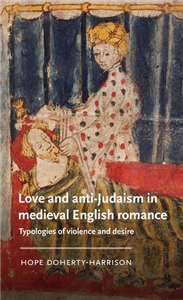 Literature & Literary StudiesSeptember 2025
Love and anti-Judaism in medieval English romance
Typologies of violence and desire
by Hope Doherty-Harrison
Love and anti-Judaism is a new examination of medieval romance for the questions it poses of the most significant events in Christian history. Providing new readings of Sir Gawain and the Green Knight, Sir Orfeo, Sir Gowther and Sir Amadace, the book argues that romance explores depictions of love-and the sacrifices it may necessitate-in the Hebrew Bible, especially where they do not easily fit into interpretations asserting that this history must prefigure Christ and the crucifixion. An examination of anti-Judaism as a discourse of violence and desire that could be turned inwardly to expose the irresolution in Christianity, this book will provoke new investigations into the religious crises of medieval romance.
-
Trusted Partner
 Humanities & Social SciencesApril 2025
Islamophobia, anti-racism and the British left
by Scarlet Harris
Islamophobia is one of the most misunderstood and pernicious forms of racism in Britain. But how do those committed to challenging Islamophobia understand it? And what does this mean for their practices 'on the ground'? Islamophobia, anti-racism and the British left combines first-hand accounts from activists and community workers across two British cities with sociological theory, critically interrogating Islamophobia's relationship to 'race', racial capitalism and other modalities of racism. Setting this discussion against some of the most pertinent political shifts in Britain in recent years - from the resurgence of left nationalism to Black Lives Matter - the book assesses the limits of recent attempts to think about and tackle Islamophobia, and considers the possibilities of an alternative approach from and for the anti-racist left.
-
Trusted Partner
 Teaching, Language & ReferenceApril 2025
Anti-colonial research praxis
Methods for knowledge justice
by Caroline Lenette
How can anti-colonial research methodologies be transformative and achieve knowledge justice? This book brings together an eclectic group of leading scholars from around the world to share methodological knowledge grounded in First Nations and majority-world expertise and wisdom. The authors challenge western-centric and colonial approaches to knowledge production and redefine the possibilities of what we can achieve through social research. First Nations and majority-world perspectives are contextual and unique. They share a common aim of disrupting established beliefs on research methodologies and the unquestioned norms that dictate whose knowledge the academy values. The ten chapters in this edited collection describe how the authors draw on Indigenous knowledge systems, feminist frameworks, and creative methodologies as anti-colonial research praxis. The examples span several disciplines such as development studies, geography, education, sexual and reproductive health, humanitarian studies, and social work. Authors use a reflexive approach to discuss specific factors that shape how they engage in research ethically, to lead readers through a reflection on their own practices and values. The book reimagines social research using an anti-colonial lens and concludes with a collaboratively developed and co-written set of provocations for anti-colonial research praxis that situate this important work in the context of ongoing colonial violence and institutional constraints. This book is an essential guide for researchers and scholars within and beyond the academy on how anti-colonial research praxis can produce meaningful outcomes, especially in violent and troubled times. Cover art courtesy of Tawny Chatmon
-
Trusted Partner
 Humanities & Social SciencesApril 2020
Anarchism, 1914–18
Internationalism, anti-militarism and war
by Ruth Kinna, Matthew S. Adams
Anarchism 1914-18 is the first systematic analysis of anarchist responses to the First World War. It examines the interventionist debate between Peter Kropotkin and Errico Malatesta which split the anarchist movement in 1914 and provides a historical and conceptual analysis of debates conducted in European and American movements about class, nationalism, internationalism, militarism, pacifism and cultural resistance. Contributions discuss the justness of war, non-violence and pacifism, anti-colonialism, pro-feminist perspectives on war and the potency of myths about the war and revolution for the reframing of radical politics in the 1920s and beyond. Divisions about the war and the experience of being caught on the wrong side of the Bolshevik Revolution encouraged anarchists to reaffirm their deeply-held rejection of vanguard socialism and develop new strategies that drew on a plethora of anti-war activities.
-
Trusted Partner

 December 2023
Hatred of Jews
A never-ending story?
by Sebastian Voigt
— An overall presentation of the history of anti-Semitism based on the latest research — A necessary book that helps to recognise (and combat) anti-Jewish attitudes and patterns of behaviour even in the present day The Hamas attack on Israel is further aggravating the situation in the Middle East, and will continue to intensify anti-Semitism. And this plague, combined with Israel’s denied right to exist; the attacks in Brussels and Paris; the aggressive violence against everything Jewish in the Islamic world – is as dangerous as ever. Hatred of the Jews is old, vast and strong. The anamnesis began 2500 years ago in the Middle Ages, and came to head in the 18th and 19th centuries. It culminated ideologically in the Wannsee Conference, and became murderous in Auschwitz. Historian Sebastian Voigt provides a dense history of the hatred of the Jews – and combines it with a passionate call for courageous resistance.
-
Trusted Partner
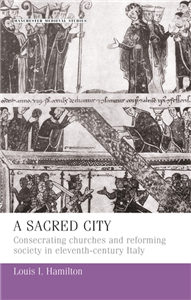 Humanities & Social SciencesJuly 2010
A sacred city
Consecrating churches and reforming society in eleventh-century Italy
by Louis Hamilton, Steve Rigby
The so-called Investiture Conflict was a watershed moment in the political life of the Latin West and the history of the papacy. Occurring at a time of rapid social change and political expansion, the eleventh-century reform movement became a debate centered on a ritual: the investment of bishops with the signs of their sacred and secular authority. The consecration of bishops, however, was only one of several contemporaneous conflicts over the significance of consecrations. Less well known is that which occurred over the dedication of churches. This book provides an examination of the consecration, placing the fundamental questions of the Gregorian Reform and Investiture Conflict back into their original liturgical framework. This context allows us to consider the symbolic richness of the liturgy that attracted large numbers of people. ;
-
Trusted Partner
 Humanities & Social SciencesJuly 2020
Race talk
Languages of racism and resistance in Neapolitan street markets
by Antonia Lucia Dawes
This electronic version has been made available under a Creative Commons (BY-NC-ND) open access license. Race talk is about language use as an anti-racist practice in multicultural city spaces. The book contends that attention to talk reveals the relations of domination and subordination in heterogeneous, ethnically diverse and multilingual contexts, while also helping us to understand how transcultural solidarity might be expressed. Drawing on original ethnographic research conducted on licensed and unlicensed market stalls in in heterogeneous, ethnically diverse and multilingual contexts, this book examines the centrality of multilingual talk to everyday struggles about difference, positionality and entitlement. In these street markets, Neapolitan street vendors work alongside documented and undocumented migrants from Bangladesh, China, Guinea Conakry, Mali, Nigeria and Senegal as part of an ambivalent, cooperative and unequal quest to survive and prosper. As austerity, anti-immigration politics and urban regeneration projects encroached upon the possibilities of street vending, talk across linguistic, cultural, national and religious boundaries underpinned the collective action of street vendors struggling to keep their markets open. The edginess of their multilingual organisation offered useful insights into the kinds of imaginaries that will be needed to overcome the politics of borders, nationalism and radical incommunicability.
-
Trusted Partner
Humanities & Social SciencesJune 2025
Transnational solidarity
Anticolonialism in the global sixties
by Zeina Maasri, Cathy Bergin, Francesca Burke
Transnational solidarity excavates the forgotten histories of solidarity that were vital to radical political imaginaries during the 'long' 1960s. It decentres the conventional Western focus of this critical historical moment by foregrounding transnational solidarity with, and across, anticolonial and anti-imperialist liberation struggles. The book traces the ways in which solidarity was conceived, imagined and enacted in the border crossings - of nation, race and class - made by grassroots activists. This diverse collection draws links between exiled revolutionaries in Uruguay, post-colonial immigrants in Britain, and Greek communist refugees in East Germany who campaigned for their respective causes from afar while identifying and linking up with wider liberation struggles. Meanwhile, Arab immigrants in France, Pakistani volunteers and Iraqi artists found myriad ways to express solidarity with the Palestinian cause. Neglected archives also reveal Tricontinental Cuban-based genealogies of artistic militancy, as well as transnational activist networks against Portuguese colonial rule in Africa. Bringing together original research with contributions from veteran activists and artists, this interdisciplinary volume explores how transnational solidarity was expressed in and carried through the itineraries of migrants and revolutionaries, film and print cultures, art and sport, political campaigns and armed struggle. It presents a novel perspective on radical politics of the global sixties which remains crucial to understanding anti-racist solidarity today. With a foreword by Vijay Prashad.
-
Trusted Partner
 September 2021
Imagine Being a Jew for One Hour
Stories against anti-Semitism
by Kurt Oesterle
Hatred of Jews is long-standing, widespread and powerful. After Auschwitz, the lesson used to be: “Never again!” However, anti-Semitic resentment, like an epidemic, still grips the bourgeois middle-class in our society. In his book “A Jew for One Hour”, Kurt Oesterle convincingly demonstrates how hatred of Jews functions in aesthetic and emotional terms with no empathy whatsoever. He also shows that for the past 200 years of German literature a line of tradition can be acknowledged “in defence of Jewishness”. Kurt Oesterle accounts for this in his book of stories with an impressive depth of knowledge, with a generous heart and mind and incredible commitment. A truly significant book.
-
Trusted Partner
 Civil rights & citizenshipJuly 2015
Anti-terrorism, citizenship and security
by Lee Jarvis, Michael Lister
This book explores how different publics make sense of and evaluate anti-terrorism powers within the UK, and the implications of this for citizenship and security. Drawing on primary empirical research, the book argues that whilst white individuals are not unconcerned about the effects of anti-terrorism, ethnic minority citizens (including, but not only those identifying as Muslim) believe that anti-terrorism powers have impacted negatively on their citizenship and security. This book thus offers the first systematic engagement with 'vernacular' or 'everyday' understandings of anti-terrorism policy, citizenship and security. It argues that while transformations in anti-terrorism frameworks impact on public experiences of security and citizenship, they do not do so in a uniform, homogeneous, or predictable manner. At the same time, public understandings and expectations of security and citizenship themselves shape how developments in anti-terrorism frameworks are discussed and evaluated. This important new book will be of interest to researchers and students working in a wide range of disciplines including Political Science, International Relations, Security Studies and Sociology.
-
Trusted Partner
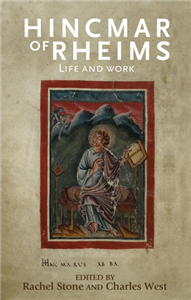 Humanities & Social SciencesAugust 2016
Hincmar of Rheims
Life and work
by Rachel Stone, Charles West
Archbishop Hincmar of Rheims (d. 882) is a crucial figure for all those interested in early medieval European history in general, and Carolingian history in particular. For forty years he was an advisor to kings and religious controversialist; his works are a key source for the political, religious and social history of the later ninth century, covering topics from papal politics to the abduction of women and the role of parish priests. For the first time since Jean Devisse's biography of Hincmar in the 1970s, this book offers a three-dimensional examination of a figure whose actions and writings in different fields are often studied in isolation. It brings together the latest international research across the spectrum of his varied activities, as history-writer, estate administrator, hagiographer, canonist, pastorally engaged bishop, and politically minded royal advisor. The introduction also provides the first substantial English-language survey of Hincmar's whole career.
-
Trusted Partner
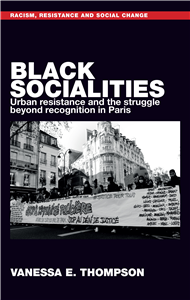 Humanities & Social SciencesMarch 2026
Black socialities
Urban resistance and the struggle beyond recognition in Paris
by Vanessa Eileen Thompson
From author: This is a cutting-edge exploration of black urban politics in Parisian racialized working class and working poor districts, the formation of abolition geography, and the possibilities of new forms of political blackness. In Black Socialities. Urban resistance and the struggle beyond recognition in Paris, Vanessa E. Thompson argues that black urban politics in the French banlieues are multi-racial and spatially grounded towards abolition. Based on a close engagement with urban black activist practices against racial imagery in the city, policing and state racism, and housing insecurity, she shows how radical anti-racism goes beyond struggles for recognition and unfolds alongside new formations of political blackness that is based on urban conviviality. This form of black politics has much to teach us in this current conjuncture of liberal anti-racism and state recognition politics.
-
Trusted Partner
 Humanities & Social SciencesJune 2025
Faith, folk and the far right
Racist and anti-racist Heathenry and Occultism in Britain
by Dominic Alessio, Robert J. Wallis
This book offers the first examination of extremist Heathenry and occultism in the UK and how anti-racist Heathens act to counter this discourse. It explores the spectrum of Heathen practice today and the historical origins of racist Heathenry in nineteenth century Germanic romanticism and twentieth century folkish nationalism. Treating each of the three main extremist Heathen organisations, the book extends the analysis to the neo-Nazi occult organization the Order of the Nine Angles (O9A), and the wider racist Heathen cultural scene in Black Metal and Dark Folk music. The authors balance this with discussion of how inclusivist Heathens are countering this discourse, from visible protests at far-right rallies to inter-faith forums and an active presence on social media platforms. The book makes an important contribution to the intersecting fields of new religious movements, nationalist history and racist politics.
-
Trusted Partner
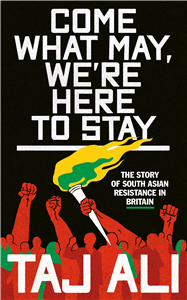 Humanities & Social SciencesSeptember 2026
Come what may, we're here to stay
The story of South Asian resistance in Britain
by Taj Ali
As British South Asians reel from the riots of summer 2025, this book tells the inspirational story of how the community organised against racism in the past and how it continues to fight in the present. British South Asians have a long tradition of radical political activism. The 1970s and 1980s saw the community grappling with prejudice in the workplace and violence in the streets. But this history is deeper than you might think, from students agitating for independence at the heart of the British Empire to seafarers organising global strikes on the eve of the Second World War. In Come what may, we're here to stay, Taj Ali reveals how successive generations fought for rights, dignity and a sense of belonging while actively shaping the country they now call home. He shows that British South Asian political life has often been defined less by religious difference than by shared commitments to anti-imperialism and anti-racism. In pursuit of these goals, alliances have been forged with other movements, from Irish republicanism to Black Power. As racism rears its ugly head again, Come what may, we're here to stay asks: are we are doomed to repeat the past or will we learn from our mistakes and build a better world together?
-
Trusted Partner
 Humanities & Social SciencesNovember 2021
Anti-racist scholar-activism
by Remi Joseph-Salisbury, Laura Connelly
-
Trusted Partner

 Psychology
Developing Anti-Racist Cultural Competence
by Rehman Abdulrehman
Learn to understand how you see others with this no-nonsense,practical guide• Teaches cultural humility• Provides practical guidance• Addresses internalized racismIn today’s society, anti-racist cultural competence is an essentialskill and not something meant only to be addressedby some. Issues tied to resolving racism and understandingand including diverse cultural points of view remain highlyconflictual – and the ability to deal with these issues effectivelyis often hindered by fear, anxiety, and a misunderstandingof what it means to be culturally competent withoutmaking people feel like outsiders. While many other modelsof cultural competence approach the issue as though lookinginto a fishbowl, this book views the issue as everyoneswimming in the water together, as part of a common ecosystemand community.
-
Trusted Partner


