
Armin Lear Press
Armin Lear Press is home to award-winning editorial and design talent.
View Rights Portal
Armin Lear Press is home to award-winning editorial and design talent.
View Rights Portal


In an age when engraving and photography were making artistic images available to a much wider public, artists were able to influence public attitudes more powerfully than ever before. This book examines works of art on military themes in relation to ruling-class ideologies about the army, war and the empire. The first part of the book is devoted to a chronological survey of battle painting, integrated with a study of contemporary military and political history. The chapters link the debate over the status and importance of battle painting to contemporary debates over the role of the army and its function at home and abroad. The second part discusses the intersection of ideologies about the army and military art, but is concerned with an examination of genre representations of soldiers. Another important theme which runs through the book is the relation of English to French military art. During the first eighty years of the period under review France was the cynosure of military artists, the school against which British critics measured their own, and the place from which innovations were imported and modified. In every generation after Waterloo battle painters visited France and often trained there. The book shows that military art, or the 'absence' of it, was one of the ways in which nationalist commentators articulated Britain's moral superiority. The final theme which underlies much of the book is the shifts which took place in the perception of heroes and hero-worship.
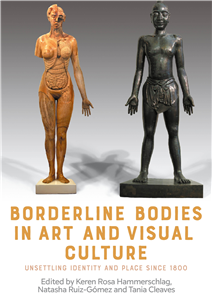
Borderline bodies offers original interpretations of visual representations of human bodies as bounded and unbounded, fortified and permeable, mobile and static-subject to borders and able to traverse and challenge them. It also takes as its focus images and objects that might be considered 'borderline' because they sit at the intersection of disciplines or sit outside accepted notions of what constitutes serious 'art.' By mapping the ways human bodies traverse borders and straddle-even dismantle-categories, this volume's essays approach afresh the relationship of bodies to traditional modes of representation, especially in art and medicine, and encourage us to think anew about how we understand the relationship between human corporeality, identity and place. Critical transdisciplinary and transnational analyses of objects and images from a range of geographies shed new light on the themes of: bodies and identity; typologies of the body; racialised bodies; 'normal' and 'abnormal' bodies; encounters between bodies; bodies in transition; bodies and mobility; and the bounded and unbounded human body. The outcome is a fresh approach to depictions of the human body produced for the purposes of artistic and medical education, aesthetic edification, and scientific and professional advancement, which disrupts assumptions about the normative human body perpetuated through Western image-making traditions.
 Trusted Partner
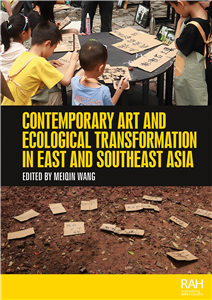
This anthology, presenting new research from fourteen scholars, delves into the interplay between contemporary art and ecological concerns in East and Southeast Asia. Focused on the concept of artistic remediation, the book unravels the diverse capacities of art to combat systemic anthropogenic destruction to the environment and ecology. At its core, the book articulates the ongoing ecological transformation in art and art history that embraces a paradigm shift in human-nature relationships, emphasizing interconnectedness of all life forms of the Earth. Bridging art studies, activism, and environmental studies, the book examines how artistic practices in the region have engaged with ecocritical reflection, biodiversity advocacy, sustainable practices, and environmental justice, among others. Providing a platform for critical and timely analysis of artistic interventions in the face of existential crises, the book acknowledges diverse voices of scholars who have situated their scholarship in the cultural and artistic specificities of various societies, locales, and communities in the region.
Trusted Partner

A considered investigation of a long-standing army base's impact on the British countryside. What is it like to live next door to a British Army base? Beyond the barracks provides an eye-opening account of the sprawling military presence on Salisbury Plain, drawing on a wide range of voices from both sides of the divide. Targeted for expansion under government plans to reorganise the UK's global defence estate, the Salisbury 'super garrison' offers a unique opportunity to explore the impact of the military footprint in a particular place. But this is no ordinary environment: as well as being the world-famous site of Stonehenge, the grasslands of Salisbury Plain are home to rare plants and wildlife. How does the army take responsibility for conserving this unique landscape as it trains young men and women to use lethal weapons? Are its claims that its presence is a positive for the environment anything more than propaganda? Beyond the barracks investigates these questions against the backdrop of a historic landscape inscribed with the legacy of perpetual war.


A pioneering work in the movement to free art from its traditional bonds to material reality, this book is one of the most important documents in the history of modern art. Written by the famous nonobjective painter Wassily Kandinsky (1866–1944), it explains Kandinsky's own theory of painting and crystallizes the ideas that were influencing many other modern artists of the period. Along with his own groundbreaking paintings, this book had a tremendous impact on the development of modern art. Kandinsky's ideas are presented in two parts. The first part, called "About General Aesthetic," issues a call for a spiritual revolution in painting that will let artists express their own inner lives in abstract, non-material terms. Just as musicians do not depend upon the material world for their music, so artists should not have to depend upon the material world for their art. In the second part, "About Painting," Kandinsky discusses the psychology of colors, the language of form and color, and the responsibilities of the artist. An Introduction by the translator, Michael T. H. Sadler, offers additional explanation of Kandinsky's art and theories, while a new Preface by Richard Stratton discusses Kandinsky's career as a whole and the impact of the book. Making the book even more valuable are nine woodcuts by Kandinsky himself that appear at the chapter headings. This English translation of Über das Geistige in der Kunst was a significant contribution to the understanding of nonobjectivism in art. It continues to be a stimulating and necessary reading experience for every artist, art student, and art patron concerned with the direction of 20th-century painting.
Trusted Partner

What is it like to live next door to a British Army base? England's military heartland provides an eye-opening account of the sprawling military presence on Salisbury Plain, drawing on a wide range of voices from both sides of the divide. Targeted for expansion under government plans to reorganise the UK's global defence estate, the Salisbury 'super garrison' offers a unique opportunity to explore the impact of the military footprint in a particular place. But this is no ordinary environment: as well as being the world-famous site of Stonehenge, the grasslands of Salisbury Plain are home to rare plants and wildlife. How does the army take responsibility for conserving this unique landscape as it trains young men and women to use lethal weapons? Are its claims that its presence is a positive for the environment anything more than propaganda? This book investigates these questions against the backdrop of a historic landscape inscribed with the legacy of perpetual war.
Trusted Partner
 Trusted Partner
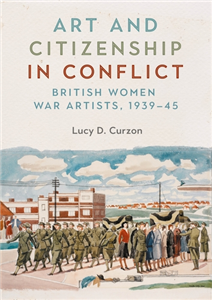
Art and Citizenship in Conflict examines the work of women war artists in order to highlight the complexity of citizenship and gender in Britain during the Second World War. Evelyn Dunbar, Mary Kessell, Ethel Gabain, Stella Schmolle, and Laura Knight, among others, were commissioned by the War Artists' Advisory Committee (WAAC) to document the millions of women who took up sometimes unconventional roles-in agriculture, the auxiliary services, and manufacturing, among others-to support the British war effort. Indeed, their prints, drawings, and paintings were part of a broader scheme to uphold morale and promote much-needed citizen involvement on the home front. While there is growing interest, the importance of their remit in the history of the Second World War and the quality of their artistry have nonetheless not yet secured them a significant place in scholarship. Art and Citizenship in Conflict seeks to amend this gap while also broadening approaches to the study of war itself.
Trusted Partner
Democratizing AI offers a powerful rethinking of how artificial intelligence should be governed. Challenging the dominance of tech elites in shaping AI's future, Zimmermann argues that AI deployment is a political act-one that must be subject to democratic control. She proposes a practical "playbook" for reclaiming agenda-setting power through civic participation, public ownership, and institutional reform. Engaging with leading critics, Zimmermann defends a risk-sensitive proceduralist approach while acknowledging the deeper structural challenges posed by capitalism, inequality, and democratic fatigue. This book is a call to action: to resist learned helplessness, confront techno-authoritarianism, and shape AI's trajectory in line with democratic values. Thoughtful, urgent, and visionary, the book is essential reading for anyone concerned with the future of technology and democracy.
Trusted Partner
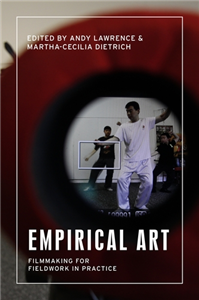
Empirical art: Filmmaking for fieldwork in practice is an insightful exploration of what the craft of filmmaking brings to social science research. Providing creative avenues on how to narrate encounters, relationships, and experiences during fieldwork, this comprehensive volume offers a rich tapestry of theoretical explorations and explorative methodologies. Skilfully connecting the worlds of ethnography, art and cinema, the contributors in this book act as a compass for filmmakers and researchers venturing to use a camera and microphone to relate and narrate their research collaborations and fieldsites. Drawing from the authors' extensive experience in disciplines like social anthropology, environmental humanities, and political science, "Empirical Art" breaks down the intricate process of crafting ethnographic films that departs from the researcher's subjectivity. Covering aspects of filmmaking from conceptualisation to production and distribution, readers are equipped with a treasure trove of collaborative techniques, innovative approaches, and ethical considerations necessary to generate and examine storytelling practices in contemporary fields of study. The authors discuss the significance of the multiple roles that technologies of filmmaking play in reflecting on cultural practices, social dynamics, and (beyond) human storytelling and their transformative potentials. Whether a seasoned filmmaker, an aspiring ethnographer, or an academic seeking new dimensions for their research, Empirical Art serves as a guide to integrating visual storytelling, cinema craft and empirical research.
Trusted Partner
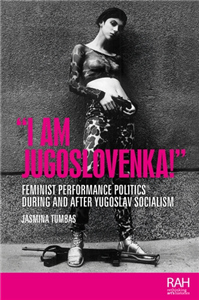
"I am Jugoslovenka" argues that queer-feminist artistic and political resistance were paradoxically enabled by socialist Yugoslavia's unique history of patriarchy and women's emancipation. Spanning performance and conceptual art, video works, film and pop music, lesbian activism and press photos of female snipers in the Yugoslav wars, the book analyses feminist resistance in a range of performative actions that manifest the radical embodiment of Yugoslavia's anti-fascist, transnational and feminist legacies. It covers celebrated and lesser-known artists from the 1970s to today, including Marina Abramovic, Sanja Ivekovic, Vlasta Delimar, Tanja Ostojic, Selma Selman and Helena Janecic, along with music legends Lepa Brena and Esma Redzepova. "I am Jugoslovenka" tells a unique story of women's resistance through the intersection of feminism, socialism and nationalism in East European visual culture.
Trusted Partner
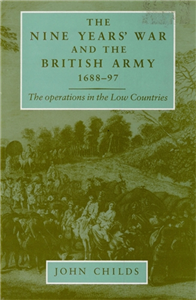
Between 1689 and 1697 the British army fought as a member of the Grand Alliance against Louis XIV. Despite the military and political significance of the European conflict, this book is the first historical investigation for over a century dealing with the operations of the principal campaigns in the Low Countries. John Childs begins his comprehensive study by exploring the diplomatic origins of the Nine Years' War. Leading on from this political background, the author then focuses on the detailed organisation of the British, Dutch and other allied armies and the conduct of the operations. The specific campaigns are also examined and in particular the author looks at the strategic and tactical role played by the British. This campaign and operational study of the British army will be of interest to both specialist and general military historians, as well as to political historians. ;
Trusted Partner

A Vision of Battlements is the first novel by the writer and composer Anthony Burgess, who was born in Manchester in 1917. Set in Gibraltar during the Second World War, the book follows the fortunes of Richard Ennis, an army sergeant and incipient composer who dreams of composing great music and building a new cultural world after the end of the war. Following the example of his literary hero, James Joyce, Burgess takes the structure of his book from Virgil's Aeneid. The result is, like Joyce's Ulysses, a comic rewriting of a classical epic, whose critique of the Army and the postwar settlement is sharp and assured. The Irwell Edition is the first publication of Burgess's forgotten masterpiece since 1965. This new edition includes an introduction and notes by Andrew Biswell, author of a prize-winning biography of Anthony Burgess.
Trusted Partner
Trusted Partner
Trusted Partner
Trusted Partner
Trusted Partner
Trusted Partner
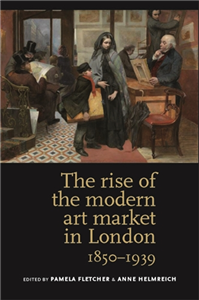
Now available in paperback for the first time, this study of the modern London art market establishes the central importance of London for the development of the modern retail market in fine art. Leading experts track the emergence and development of the structures and practices that have come to characterize the commercial art system, including the commercial art gallery, the professional dealer, the exhibition cycle and its accompanying rhetoric of press coverage and publicity, and an international network for the circulation of goods. This new commercial system involved a massive transformation of the experience of viewing art; of the relationships between artists, dealers, collectors, art objects and audiences; and of the very criteria of aesthetic value itself. Its history is thus a vital part of the history of modern art, and this anthology will be of interest to art historians as well as scholars of Victorian Studies, Museum Studies, and Social History.
Trusted Partner
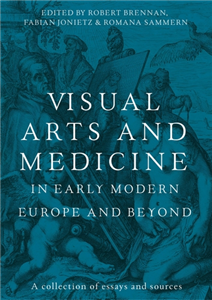
This book opens up new perspectives on the relationship between art, medicine, and science in late-medieval and early modern Europe. Looking beyond the traditional nexus of art, anatomy, and optics, the volume sheds light on a broader array of connections between artists and physicians: collaborations between painters and doctors on colour charts, handwork skills common to sculptors and surgeons, the transmission of art theory through medical texts long before the emergence of art writing itself as an independent genre, and the kinship of medical diagnosis with early modes of connoisseurship. Reconfiguring the histories of art, medicine, and science, the book also traverses conventional boundaries between physical and mental health, religious and medical modes of healing, menial and exalted forms of knowledge and labour, as well as vernacular and scientific understandings of human difference, including gender, race, and neurodiversity.



