Your Search Results

      • Arkan for Studies, Research and Publishing

        Arkan is an independent research center established in Egypt in February 2017, aiming to drive scientific research movement forward, promote its various tools in Social Science and Humanities, and support their active individuals and institutions.Arkan is one of the most promising emerging research centers and publishers in Egypt and the Middle East and has a staff of nearly 100 people. It cooperates with individuals, institutions and entities as a scientific, cultural, awareness-raising research center in a way that never exceeds the center's vision, mission, work fields and general objectives.Arkan entered into many interactions with eminent thinkers and academics not to mention international business partners. Further, it is a member of the Egyptian Publishers’ Association and Arab Publishers’ Association and it is to become one of the main actors in the various cultural and scientific forums and book fairs throughout the world in the years to come.To find out more, visit our website: https://www.arkan-srp.com/?lang=en

        View Rights Portal
      • Organisation for Researching and Composing University Textbooks in the Humanities (SAMT)

        Over 140 titles of books in cooperation with universities and research centers in countries in Asia and Europe

        View Rights Portal
      • Trusted Partner
      • Trusted Partner
      • Trusted Partner
        1985

        Gentechnik als Waffe

        SIPRI-Rüstungsjahrbuch 5. 'Deep Strike' /C-Waffen /Gentechnik als Waffe /Atomarer Winter /Kriegsdienstverweigerung weltweit /Dossier: Afghanistan

        by Herausgegeben von Stockholm International Peace Research Institute (SIPRI)

      • Trusted Partner
      • Trusted Partner
      • Trusted Partner
        October 2023

        Watching the Brain Think

        Facets of neuroscience: short thought provoking texts for the curious

        by Monika Niehaus/Martin Osterloh

        — An exciting and entertaining explanation of neuroscience — In the diverting and humorous style for which the author is known – learning has never been this much fun What processes in the brain are responsible for intelligence, free will, empathy or reason? Can memories be falsified? And what does actually happen in the brain when we reach puberty? Monika Niehaus and Martin Osterloh answer these and many other neuroscientific questions in their book – a fundamental work on brain research, and easy to understand, exciting and entertaining.

      • Trusted Partner

        Is the Brain Rational?

        The Findings of a Neuropsychologist

        by L. Jäncke

        This book takes the reader on a fascinating journey, demonstrating in an understandable and entertaining way how the brain affects our thoughts, actions, and feelings - and that this sometimes only peripherally involves reason. It shows, that the subconscious actually exists and how it affects us, how we arrive at both right and wrong decisions, how our memory works, how fragile it can be, and yet also how robust. Using insightful experiments and the latest research results, including many examples, this book presents the reader what an incredibly impressive thinking organ the brain actually is – even if it is not a purely “rational machine”.   Target Group: For people interested in the results of research into the workings of the brain in the areas of decision-making, memory, and consciousness.

      • Trusted Partner
        Teaching, Language & Reference
        April 2025

        Anti-colonial research praxis

        Methods for knowledge justice

        by Caroline Lenette

        How can anti-colonial research methodologies be transformative and achieve knowledge justice? This book brings together an eclectic group of leading scholars from around the world to share methodological knowledge grounded in First Nations and majority-world expertise and wisdom. The authors challenge western-centric and colonial approaches to knowledge production and redefine the possibilities of what we can achieve through social research. First Nations and majority-world perspectives are contextual and unique. They share a common aim of disrupting established beliefs on research methodologies and the unquestioned norms that dictate whose knowledge the academy values. The ten chapters in this edited collection describe how the authors draw on Indigenous knowledge systems, feminist frameworks, and creative methodologies as anti-colonial research praxis. The examples span several disciplines such as development studies, geography, education, sexual and reproductive health, humanitarian studies, and social work. Authors use a reflexive approach to discuss specific factors that shape how they engage in research ethically, to lead readers through a reflection on their own practices and values. The book reimagines social research using an anti-colonial lens and concludes with a collaboratively developed and co-written set of provocations for anti-colonial research praxis that situate this important work in the context of ongoing colonial violence and institutional constraints. This book is an essential guide for researchers and scholars within and beyond the academy on how anti-colonial research praxis can produce meaningful outcomes, especially in violent and troubled times. Cover art courtesy of Tawny Chatmon

      • Trusted Partner
        2018

        The Woman Who Thought Her Husband Was a Doppelganger

        When the brain goes haywire: 36 rare and unusual psychiatric syndromes

        by Monika Niehaus

        The human brain is a wondrous thing, highly complex and highly functional. However, the control centre of our feelings, thoughts and actions can sometimes go out of sync. Some reasons for this are known, such as genetic factors, hormonal effects or trauma. In other cases, we are still in the dark. In an extreme case scenario, the brain may create bizarre delusions – masterful narrations that the people affected fi nd completely conclusive and reasonable. Monika Niehaus has compiled 36 such disorders ranging from love madness and the gourmand syndrome – where gourmet food becomes the purpose of life – to people who desire nothing more than to have their limbs amputated. She tells gripping tales of famous and not so famous cases. With sensitivity and a considerable dose of humour she takes us into the history of art and literature, and presents scientifi c explanations. This fascinating book shows that our brain is a genius – and madness is quite often NOT inexplicable.

      • Trusted Partner
        2019

        The Nobel Laureate Who Met a Polite Raccoon in the Woods

        When the brain goes mad: 30 rare and unusual mental syndromes

        by Monika Niehaus

        The human brain is a highly complex and highly functional structure consisting of almost 90 billion nerve cells. But it can go out of sync, due to genetic factors, hormonal effects, trauma or other causes. In extreme cases, our control centre then creates bizarre delusions – brilliant narratives that are completely convincing to the person concerned. In her second book on such phenomena, Monika Niehaus has compiled 30 rare psychological disorders – from a conviction to have been abducted by aliens, to being sexually attracted to criminals, to the hyperthymestical syndrome where people can remember every detail of their past life. Narrated in an interesting, humorous and sensitive way, the author relates a variety of cases, some of them famous, others less so, while introducing us to the history of art and literature and presenting scientific explanations. This fascinating book shows the genius that resides in our brain – and how madness can often be explained.

      • Trusted Partner
      • Trusted Partner
        Humanities & Social Sciences
        May 2024

        Knowing COVID-19

        The pandemic and beyond

        by Des Fitzgerald, Fred Cooper

        Knowing COVID-19 demonstrates how researchers in the humanities shone a light on some of the many hidden problems of COVID-19, in the very depths of the pandemic crisis. Drawing on eight COVID-19 research projects, the volume shows how humanities researchers, alongside colleagues in the clinical and life sciences, addressed some of the major critical unknowns about this new infectious disease - from the effects of racism to the risks of deploying shame; from how to design an effective instructional leaflet to how to communicate effectively to bus passengers. Across eight novel case studies, the book showcases how humanities research during a pandemic is not only about interpreting the crisis when it has safely passed, but how it can play a vital, collaborative and instrumental role as events are still unfolding.

      • Trusted Partner
        Medicine
        June 2025

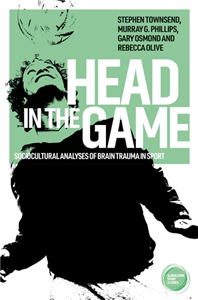
        Head in the game

        Sociocultural analyses of brain trauma in sport

        by Stephen Townsend, Murray G. Phillips, Gary Osmond, Rebecca Olive

        Head in the game brings together international scholars from multiple humanities, social science, and scientific disciplines to critically examine one of the most vexing issues in global sport: concussion. It argues that science and medicine alone cannot solve the concussion crisis: sociocultural factors must also be considered. This edited collection draws attention to the ways that social, cultural, historical, political, literary, philosophical, and legal factors have shaped the concussion crisis in sport. Head in the game is essential reading for those who want to understand how the concussion crisis came to be, and provides guidance for developing ethical and evidence-based solutions in the future.

      • Trusted Partner
      • Trusted Partner
        February 1999

        Brainpower-Training

        Das Aktivprogramm für Wissen und geistige Fitneß

        by Savant, Marilyn vos / Deutsch Nutto, Kirsten

      • Trusted Partner
        July 2001

        Brainpower

        Die Kraft des logischen Denkens

        by Savant, Marilyn vos / Deutsch Kober, Hainer

      • Trusted Partner
        Literature & Literary Studies
        October 2009

        Euphues: The Anatomy of Wit and Euphues and His England John Lyly

        An annotated, modern-spelling edition

        by Paul Edmondson, Martin White

        John Lyly's Euphues: The Anatomy of Wit and Euphues and his England, created a literary sensation in their own age, and had a profound influence on Elizabethan prose. This modern-spelling edition of the two works, the first for nearly a century, is designed to allow the twenty-first century reader access to this culturally significant text and to explore the fascination that it exerted. Attuned to the needs of both students and specialists, the text is edited from the earliest complete witnesses, is richly annotated, and facilitates an understanding of Lyly's narrative technique by distinguishing typographically between narrative levels. The introduction explores the relationship between the dramatic and non-dramatic work, locating Lyly's highly influential plays in a wider context and Euphues' Latin poem in praise of Elizabeth I, translated for the first time, is discussed in an Appendix. A work of primary importance for students of Renaissance prose, this edition complements the on-going publication of Lyly's dramatic works in The Revels Plays. ;

      • Trusted Partner

      Subscribe to our

      newsletter