
Brush Education
Livres Canada Books
View Rights Portal


— By two renowned authors from the fields of philosophy and education — Julian Nida-Rümelin – a popular talk show guest The debate about the correct school policy has been going on for many years. And there's no end to the bad news regarding the shortage of teachers, poor performance by students at PISA or the lack of suitable equipment in schools. What is being neglected in the discussions about the education policy but is, in fact, a central momentum in its development, is the school's task of conveying democratic values and patterns of action. This is the only way our society's supporting pillars can be strengthened in future generations. In the light of the complex situation, from the authors' point of view it is important to formulate a wake-up call: Democracy education – now!


This book focuses on current policy discourse in Higher Education, with special reference to Europe. It discusses globalisation, Lifelong Learning, the EU's Higher Education discourse, this discourse's regional ramifications and alternative practices in Higher Education from both the minority and majority worlds with their different learning traditions and epistemologies. It argues that these alternative practices could well provide the germs for the shape of a public good oriented Higher Education for the future. It theoretically expounds on important elements to consider when engaging Higher Education and communities, discussing the nature of the term 'community' itself. Special reference is accorded to the difference that lies at the core of these ever-changing communities. It then provides an analysis of an 'on the ground project' in University community engagement, before suggesting signposts for further action at the level of policy and provision. This book is relevant to United Nations Sustainable Development Goal 4, Quality education
 Trusted Partner
Trusted Partner
Trusted Partner
 Trusted Partner
 Trusted Partner

The double game of music imagines music education as a series of games - each with its own rules, play currency and players - to challenge readers to rethink the significance of music and musical upbringing in shaping social structures. Drawing on their own empirical research and a wide range of international contributions, the authors unravel the intertwining of social positioning and power hierarchies with players beliefs in the pure values and virtues of their games, whether these relate to parenting, children's play, schooling, academic pursuits, musical leisure activities or the television and music industries. In a world where music is often celebrated as an important tool for inclusion and democratisation, this groundbreaking book offers a timely critique, revealing complexities and contradictions that tend to be overlooked by teachers, researchers, politicians and others interested in the powers of music education.
Trusted Partner
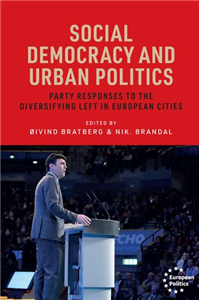
Social democratic parties struggle to appeal to a divided electorate. Particularly prescient is the clash between working-class voters thatare socially conservative and middle-class voters who are liberally inclined but economicallyleft. Are politics and policies that appeal to both even a possibility? Nowhere is thatdebate more acute than in European cities, yet in no other political space are answers more likely to be found.Where urban voters turn left, they are increasingly attracted by radical and green alternatives to social democracy.Social democracy and urban politicsdelves into the changing relationship between these three party families on the urban scene. Mapping electoral geography, governing strategies and the interface between parties and social movements on the left, the authors reflect upon the formation and dilemmas of a broader progressive alliance.
Trusted Partner

On 25 January 1474, Charles the Bold, duke of Burgundy, appeared before his subjects in Dijon. Robed in silk, gold and precious jewels and wearing a headpiece that gave the illusion of a crown, he made a speech in which he cryptically expressed his desire to become a king. Three years later, Charles was killed at the battle of Nancy, an event that plunged the Great Principality of Burgundy into chaos. This book, innovative and essential, not only explores Burgundian history and historiography but offers a complete synthesis about the nature of politics in this region, considered both from the north and the south. Focusing on political ideologies, a number of important issues are raised relating to the medieval state, the signification of the nation under the 'Ancien Regime', the role of warfare in the creation of political power and the impact of political loyalties in the exercise of government. In doing so, the book challenges a number of existing ideas about the Burgundian state.
Trusted Partner

The Labour Party and citizenship education provides the definitive account of why and how Labour introduced citizenship education as a compulsory subject in the National Curriculum. Based on interviews with the key players, it contributes to our understanding of the role of ideas and policy networks in the policy process, to debates about the nature of New Labour as a political phenomenon, and addresses the significant and topical issues of political disaffection and community cohesion. This book is essential reading for academics and students of political science, public and social policy, education, contemporary history, and political theory. Written in an accessible style, it will also be of interest to the general reader concerned about issues of citizenship, political participation, disengagement and re-engagement. ;
Trusted Partner
This book focuses on current policy discourse in Higher Education, with special reference to Europe. It discusses globalisation, Lifelong Learning, the EU's Higher Education discourse, this discourse's regional ramifications and alternative practices in Higher Education from both the minority and majority worlds with their different learning traditions and epistemologies. It argues that these alternative practices could well provide the germs for the shape of a public good oriented Higher Education for the future. It theoretically expounds on important elements to consider when engaging Higher Education and communities, discussing the nature of the term 'community' itself. Special reference is accorded to the difference that lies at the core of these ever-changing communities. It then provides an analysis of an 'on the ground project' in University community engagement, before suggesting signposts for further action at the level of policy and provision.
Trusted Partner
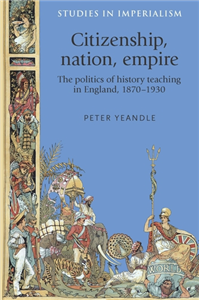
Citizenship, nation, empire investigates the extent to which popular imperialism influenced the teaching of history between 1870 and 1930. It is the first book-length study to trace the substantial impact of educational psychology on the teaching of history, probing its impact on textbooks, literacy primers and teacher-training manuals. Educationists identified 'enlightened patriotism' to be the core objective of historical education. This was neither tub-thumping jingoism, nor state-prescribed national-identity teaching, but rather a carefully crafted curriculum for all children which fused civic as well as imperial ambitions. The book will be of interest to those studying or researching aspects of English domestic imperial culture, especially those concerned with questions of childhood and schooling, citizenship, educational publishing and anglo-British relations. Given that vitriolic debates about the politics of history teaching have endured into the twenty-first century, Citizenship, nation, empire is a timely study of the formative influences that shaped the history curriculum in English schools
Trusted Partner
Risk, anxiety and moral panic are endemic to contemporary societies and media forms. How do these phenomena manifest in a place like South Africa, which features heightened insecurity, deep inequality and accelerated social change? What happens when cultures of fear intersect with pervasive systems of gender, race and class? Worrier state investigates four case studies in which fear and anxiety appear in radically different ways: the far right myth of 'white genocide'; so-called 'Satanist' murders of young women; an urban legend about township crime; and social theories about safety and goodness in the suburbs. Falkof foregrounds the significance of emotion as a socio-political force, emphasising South Africa's imbrication within globalised conditions of anxiety and thus its fundamental and often-ignored hypermodernity. The book offers a bold and creative perspective on the social roles of fear and emotion in South Africa and thus on everyday life in this complex place.
Trusted Partner
Knowledge Diplomacy examines particular and cultural antecedents to the development of the field; and its predominance in western thinking and critiques. Crucially, it does so not just from the perspective of scholars but also by consciously drawing on the perspectives of practitioners. The development of Knowledge Diplomacy allows for increased understanding of the role of research, innovation and higher education institutions as actors in international relations; shaping knowledge as they do. As such Knowledge Diplomacy presents a meaningful means of understanding how understanding knowledge impacts scholars, students and decisions makers as those who use knowledge in their practice.
Trusted Partner

The great public schools are central to any discussion of English secondary education. Founded as public endowments, they are the basis of private education. Set apart from the other grammar schools by the Clarendon Commission of 1861, their influence on the state system has been enormous. Severed from the national provision of public education, they have put prestige and ancient endowments at the service of wealth and patronage. This book, available in paperback for the first time, shows how this came to pass. How the schools' attempts at reform, reliance on fees, the defence of the Classics, public criticism of Eton, European ideas and foreign economic competition led to the Carendon Commission. How Lord Clarendon himself, in conflict with Palmerston over foreign policy, came to lead the Commission and attempt curricular reform. How the Public Schools Acts created a separate school system for the benefit of Eton and how the Lords sought to establish that system for the upper classes. How the fee-paying, class-based principles of the Commission influenced the other grammar schools and all later English education. How the Public schools Acts reduced the influence of local parents and how new governors were appointed nationally. How Shrewsbury School, an example of an endowed grammar school with strong local connections, came to be part of the public school system. It is not the conflict between state education and private schools that makes so much discussion of English education bitter and controversial. It is the loss to state education of the public schools - the original political purpose of the Acts - and the impoverishment of national education by the class divisions of Victorian legislation. ;
Trusted Partner
Local government in the UK is in crisis. It is now neither local in terms of the geography and populations of its principle units, nor does it truly govern in these areas. As this book reveals, over the previous 200 years local government has moved from a system in which local interests held governance over localities to one in which central government and national and multi-national agencies such as corporate businesses hold governance over local and community decision-making. These changes seriously undermine the important role that local government can play in liberal democracy in the UK. The book explains the nature of local government today and asks if there is any possibility of change.
Trusted Partner

Despite the essential role diplomatic training plays in the everyday workings of international relations, international law and in the various multilateral organisations, this practice has received little critical attention in the humanities, social and political sciences. Bringing together detailed accounts of the histories, development and contemporary practices of diplomatic training with insights from key practitioners, this edited collection places training centrally within our understanding of international relations. It argues that diplomatic training both reflects and reproduces hegemonic power relations, whilst at the same time offering opportunities to contest them, and imagine alternative futures. The book includes a substantive introduction, nine full-length chapters from a range of disciplinary and regional perspectives drawing on archival research, oral history, interviews, and ethnographic methods, and four 'interventions': reflection pieces from trainers and directors of training programmes. It offers a globe-spanning, interdisciplinary account of the politics of diplomatic training and appeals to both scholarly and practitioner audiences.
Trusted Partner
Emigration of scale challenges states at the European periphery at their core. The book documents these struggles along their effects for politics and policy within their economic and welfare dimensions. The politics of emigration describe changing voter attitudes and behaviour pointing towards more support for nationalist and right-wing parties. The policies of emigration show state and local level efforts for the return of emigrant citizens. The welfare and economic dimensions explore the context for emigration and its effects for growth models and systems of health and care within the European single market. The book observes two types of state transformations: the re-emergent nation-state that re-discovers its core resource, the citizenry, as well as states that functionally and socially adapt to population loss.
Trusted Partner
How has French society been made, by whom and why? And how in turn has it influenced the French? This book sets out the institutionalized rules and norms that continue to structure France, together with the 'political work' that has recently changed or reproduced these power relations. Exploring a range of age groups and types of social activity, including work, business, entertainment, political mobilizations and retirement, Made in France examines where significant change has occurred over the last four decades. Smith argues that while transformation has occurred in France's financial and education sectors, only relatively marginal shifts have occurred elsewhere in French society. To explain this pattern of continuity and isolated change, the book strongly nuances claims that neo-liberalism, globalization or a rise in populism have been its causes. References to these trends have impacted upon French politics to varying extents, Smith argues; however, France continues to be dominated by issues which are specific to the country and linked to its deep societal structures and history. Smith provides a comprehensive account of French society and politics and in doing so proposes an insightful analytical framework applicable to the comparative analysis of other nations.
Trusted Partner
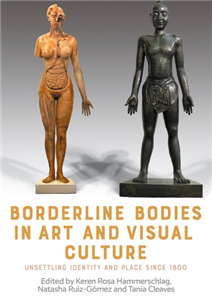
Borderline bodies offers original interpretations of visual representations of human bodies as bounded and unbounded, fortified and permeable, mobile and static-subject to borders and able to traverse and challenge them. It also takes as its focus images and objects that might be considered 'borderline' because they sit at the intersection of disciplines or sit outside accepted notions of what constitutes serious 'art.' By mapping the ways human bodies traverse borders and straddle-even dismantle-categories, this volume's essays approach afresh the relationship of bodies to traditional modes of representation, especially in art and medicine, and encourage us to think anew about how we understand the relationship between human corporeality, identity and place. Critical transdisciplinary and transnational analyses of objects and images from a range of geographies shed new light on the themes of: bodies and identity; typologies of the body; racialised bodies; 'normal' and 'abnormal' bodies; encounters between bodies; bodies in transition; bodies and mobility; and the bounded and unbounded human body. The outcome is a fresh approach to depictions of the human body produced for the purposes of artistic and medical education, aesthetic edification, and scientific and professional advancement, which disrupts assumptions about the normative human body perpetuated through Western image-making traditions.
Trusted Partner

Are we all still only moving around in our bubbles, unwilling and unprepared to engage in the positions of "the others"? Will only someone be heard who polarises and defames loudly enough, who ignores facts, denies them, twists them, who even calls for violence? The debate over the corona measures has given a new urgency as we address the question of how democracy can be lived and protected in times of an erosion of the centre and social cohesion. Karoline M. Preisler asks herself these questions and, as a passionate democrat, advocates creating new tools and meeting places for the necessary dialogue on controversial topics such as the limits of freedom, religion, climate crisis, immigration and the family.


