
Your Search Results
-

-

Reading Luxembourg
Reading Luxembourg is Luxembourg's export programme. Beyond the annual national stand at Frankfurt Book Fair, Reading Luxembourg is in charge of various missions, such as the presence at other fairs, festivals and literary events, a training offer for professionals of the book and publishing sector and strategic support to foreign rights sales. Reading Luxembourg is linking up publishers and authors from Luxembourg with stakeholders on an international level and providing information on available translation and publication grants.
View Rights Portal
-
Promoted Content

 Literature & Literary StudiesAugust 2025
Translating Petrarch in early modern Britain
Canzoniere and Triumphi, c. 1530–1650
by Marie-Alice Belle, Riccardo Raimondo, Francesco Venturi
Translating Petrarch in early modern Britain gathers twelve essays by international scholars focusing on the translation of Petrarch's vernacular verse (Canzoniere and Triumphi) into English, from the Tudor age to the mid-seventeenth century (and beyond). Approaching translation as an interpretive process, but also a mode of literary emulation and cultural engagement with Petrarch's prestigious precedent, the collection explores the complex and interconnected trajectories of both poetic works in English and Scottish literary milieux. While situating each translation in its distinct historical, material, and literary context, the essays trace the reception of Petrarch's works in early modern Britain through the combined processes of linguistic and metric innovation, literary imitation, musical adaptation and cultural and material 'domestication'. The collection sheds light on the origins and development of early modern English Petrarchism as part of wider transnational - and indeed, translational-European literary culture.
-
Promoted Content
 Literature & Literary StudiesJune 2022
The early modern English sonnet
Ever in motion
by Laetitia Sansonetti, Rémi Vuillemin, Enrica Zanin
This volume questions and qualifies commonly accepted assumptions about the early modern English sonnet: that it was a strictly codified form, most often organised in sequences, which only emerged at the very end of the sixteenth century and declined as fast as it had bloomed, and that minor poets merely participated in the sonnet fashion by replicating established conventions. Drawing from book history and relying on close reading and textual criticism, this collection offers a more nuanced account of the history of the sonnet. It discusses how sonnets were written, published and received in England as compared to mainland Europe, and explores the works of major (Shakespeare, Sidney, Spenser) and minor (Barnes, Harvey) poets alike. Reflecting on current editorial practices, it also provides the first modern edition of an early seventeenth-century Elizabethan miscellany including sonnets presumably by Sidney and Spenser.
-
 Trusted Partner
 Literature & Literary StudiesOctober 2025
Early modern drama and the theatre of war
Militarism, conflict and disruption in the plays of Shakespeare and his contemporaries
by Bronwen Price, Hilary Hinds
This volume explores the disruptive effects of militarism, war and social unrest in early modern drama. Engaging with Simon Barker's seminal work on dramatic representations of war and militarism, contributors highlight what often lies hidden beneath the surface of martial narratives, treating them as formative interventions in contemporary discourses, whether in justifying war, excluding dissident voices or shaping cultural identities. Discussions include new examinations of militarism, the figure of the soldier and early modern theories of war in Shakespearean tragedy, history and comedy, alongside antimasque and dramatic satire by lesser-known playwrights. The essays investigate how ideas of war underpin emerging concepts of gender, leadership, marriage and the family, as well as the continuing mobilisation of Shakespearean drama in the context of modern armed conflict. Together, they offer rich new contributions to the current lively critical debates on this topic.
-
Trusted Partner
 Literature & Literary StudiesJuly 2021
Old Fortunatus
By Thomas Dekker
by David McInnis
With its fantasy of magical travel and inexhaustible riches, Thomas Dekker's Old Fortunatus is the quintessential early modern journeying play. The adventures of Fortunatus and his sons, aided by a magical purse and wishing-hat, offers the period's most overt celebration of the pleasures of travel, as well as a sustained critique of the dangers of intemperance and prodigality. Written following a period of financial difficulty for Dekker, the play is also notable for its fascination with the symbolic, mercantile and ethical uses of gold. This Revels Plays edition is the first fully annotated, single-volume critical edition of Old Fortunatus. It offers scholarly discussion of the play's performance and textual history, including attention to the German version printed and performed in the early seventeenth century. It provides a long overdue critical reappraisal of this unjustly neglected play.
-
Trusted Partner
 Literature & Literary StudiesApril 2021
Positive emotions in early modern literature and culture
by Cora Fox, Bradley J. Irish, Cassie M. Miura
-
Trusted Partner
 Literature & Literary StudiesMarch 2021
The daring muse of the early Stuart funeral elegy
by James Doelman
-
Trusted Partner
 Literature & Literary StudiesNovember 2019
Transnational connections in early modern theatre
by Pavel Drábek, M. A. Katritzky
-
Trusted Partner
 Literature & Literary StudiesApril 2020
The early modern English sonnet
by Laetitia Sansonetti, Rémi Vuillemin, Enrica Zanin, Tamsin Badcoe
-
Trusted Partner
 Humanities & Social SciencesOctober 2020
A global history of early modern violence
by Erica Charters, Marie Houllemare, Peter H. Wilson
-
Trusted Partner
 Humanities & Social SciencesJune 2026
Women in exile in early modern Europe and the Americas
by Linda Levy Peck, Adrianna E. Bakos
-
Trusted Partner
 Humanities & Social SciencesJuly 2012
The politics of the public sphere in early modern England
Public Persons and Popular Spirits
by Peter Lake, Peter Lake, Steve Pincus, Anthony Milton, Jason Peacey, Alexandra Gajda
This book uses the notion of the public sphere to produce a new view of the history of England in the post reformation period, tracing its themes from the 1530s to the early eighteenth century. The contributors, who are all leaders in their own fields, bring a diverse range of approaches to bear on the central theme. The book aims to put the results of some of the most innovative and exciting work in the field before the reader in accessible form. Each chapter stands alone in representing an important contribution to its own area of study and sub-period as well as to the overall argument of the book. Politics, culture and religion all feature prominently in the resulting analysis, which should be of interest to students and academics of early modern English history and literature. ;
-
Trusted Partner
 Literature & Literary StudiesMarch 2020
Enacting the Bible in medieval and early modern drama
by Chanita Goodblatt, Eva von Contzen, David Matthews
-
Trusted Partner
 Literature & Literary StudiesSeptember 2020
The early Spenser, 1554–80
'Minde on honour fixed'
by Jean R. Brink, Joshua Samuel Reid
Brink's provocative biography shows that Spenser was not the would-be court poet whom Karl Marx's described as 'Elizabeth's arse-kissing poet'. In this readable and informative account, Spenser is depicted as the protégé of a circle of London clergymen, who expected him to take holy orders. Brink shows that the young Spenser was known to Alexander Nowell, author of Nowell's Catechism and Dean of St. Paul's. Significantly revising the received biography, Brink argues that that it was Harvey alone who orchestrated Familiar Letters (1580). He used this correspondence to further his career and invented the portrait of Spenser as his admiring disciple. Contextualising Spenser's life by comparisons with Shakespeare and Sir Walter Ralegh, Brink shows that Spenser shared with Sir Philip Sidney an allegiance to the early modern chivalric code. His departure for Ireland was a high point, not an exile.
-
Trusted Partner
 Humanities & Social SciencesNovember 2020
Early Anglo-Saxon cemeteries
by Duncan Sayer, Joshua Pollard
-
Trusted Partner
 Humanities & Social SciencesAugust 2002
Sodomy in early modern Europe
by Joseph Bergin, Tom Betteridge, Penny Roberts, Bill Naphy
This fascinating collection of essays reflects closely the main areas of debate within gay historiography. For the last twenty years scholars have argued over the nature of early modern sodomy, responding in a number of different and contradictory ways. Questions addressed in the book include: was early modern sodomy the same as modern homosexuality? Were there homosexuals in early modern Europe? Did men who had sex with each other in this period regard their behaviour as determining their identity? What was the relationship between the grave sin of sodomy and the homoerotic images that fill Renaissance culture?. The volume includes essays on sodomy in English Protestant history writing, in Calvin's Geneva, in early modern Venice and the trial of sodomy in Germany. ;
-
Trusted Partner
 Literature & Literary StudiesFebruary 2015
Biblical women in early modern literary culture, 1550–1700
1550–1700
by Edited by Victoria Brownlee and Laura Gallagher
At once pervasive and marginal, appealing and repellent, exemplary and atypical, the women of the Bible provoke an assortment of readings across early modern literature. Biblical women in early modern literary culture, 1550-1700 draws attention to the complex ways in which biblical women's narratives could be reimagined for a variety of rhetorical and religious purposes. Considering a confessionally diverse range of writers, working across a variety of genres, this volume reveals how women from the Old and New Testaments exhibit an ideological power that frequently exceeds, both in scope and substance, their associated scriptural records. The essays explore how the Bible's women are fluidly negotiated and diversely redeployed to offer (conflicting) comment on issues including female authority, speech and sexuality, and in discussions of doctrine, confessional politics, exploration and grief. As it explores the rich ideological currency of the Bible's women in early modern culture, this volume demonstrates that the Bible's women are persistently difficult to evade. ;
-
Trusted Partner
 Humanities & Social SciencesApril 2020
Early modern war narratives and the Revolt in the Low Countries
by Raymond Fagel, Leonor Álvarez Francés, William G. Naphy, Beatriz Santiago Belmonte
-
Trusted Partner
 Humanities & Social SciencesFebruary 2025
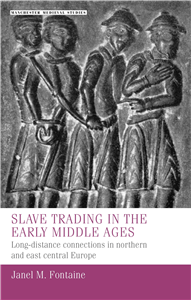
Slave trading in the Early Middle Ages
Long-distance connections in northern and east central Europe
by Janel M. Fontaine
This book examines slave trading in northern and eastern central Europe from the seventh century through the eleventh century, tracing its growth, climax, and decline. Demand from the Islamic world in the ninth and tenth centuries prompted changes in warfare, trade logistics, and administrative responses to slavery in the slaving zones centred on the British Isles and the Czech lands. This study establishes slave trading as a core driver of connectivity and presents a model for this practice in politically fragmented areas of Europe.
-
Trusted Partner
 Literature & Literary StudiesFebruary 2020
The senses in early modern England, 1558–1660
by Simon Smith, Jacqueline Watson, Amy Kenny
Considering a wide range of early modern texts, performances and artworks, the essays in this collection demonstrate how attention to the senses illuminates the literature, art and culture of early modern England. Examining canonical and less familiar literary works alongside early modern texts ranging from medical treatises to conduct manuals via puritan polemic and popular ballads, the collection offers a new view of the senses in early modern England. The volume offers dedicated essays on each of the five senses, each relating works of art to their cultural moments, whilst elsewhere the volume considers the senses collectively in particular cultural contexts. It also pursues the sensory experiences that early modern subjects encountered through the very acts of engaging with texts, performances and artworks. This book will appeal to scholars of early modern literature and culture, to those working in sensory studies, and to anyone interested in the art and life of early modern England.
-
Trusted Partner
 Literature & Literary StudiesJuly 2015
The senses in early modern England, 1558–1660
by Edited by Simon Smith, Jackie Watson and Amy Kenny
Considering a wide range of early modern texts, performances and artworks, the essays in this collection demonstrate how attention to the senses illuminates the literature, art and culture of early modern England. Examining canonical and less familiar literary works alongside early modern texts ranging from medical treatises to conduct manuals via puritan polemic and popular ballads, the collection offers a new view of the senses in early modern England. The volume offers dedicated essays on each of the five senses, each relating works of art to their cultural moments, whilst elsewhere the volume considers the senses collectively in particular cultural contexts. It also pursues the sensory experiences that early modern subjects encountered through the very acts of engaging with texts, performances and artworks. This book will appeal to scholars of early modern literature and culture, to those working in sensory studies, and to anyone interested in the art and life of early modern England. ;

