
Folklore Publishing
Livres Canada Books
View Rights Portal

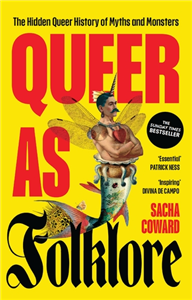
A celebration of queer history like you've never seen it before. Queer as folklore travels across centuries and continents to reveal the unsung heroes and villains of storytelling, magic and fantasy. Featuring images from archives, galleries and museums around the world, each chapter investigates the queer history of different mythic and folkloric characters, both old and new. Leaving no headstone unturned, Sacha Coward takes you on a wild ride through the night from ancient Greece to the main stage of RuPaul's Drag Race, visiting cross-dressing pirates, radical fairies and the graves of the 'queerly departed' along the way. Queer communities have often sought refuge in the shadows and created safe spaces in underworlds. But these forgotten narratives tell stories of resilience that deserve to be heard. Join any Pride march and you will see a glorious display of papier-mâché unicorn heads, drag queens in mermaid tails and more fairy wings than you can shake a trident at. These are not just accessories: they are queer symbols with historic roots. To truly understand who queer people are today, we must confront the twisted tales of the past.
 Trusted Partner

Nordic Gothic traces Gothic fiction in the Nordic region from its beginnings in the nineteenth century, with a main focus on the development of Gothic from the 1990s onwards in literature, film, TV and new media. The volume gives an overview of Nordic Gothic fiction in relation to transnational developments and provides a number of case studies and in-depth analyses of individual narratives. It creates an understanding of this under-researched cultural phenomenon by showing how the narratives make visible cultural anxieties haunting the Nordic countries, their welfare systems, identities and ideologies. Nordic Gothic examines how figures from Nordic folklore function as metaphorical expressions of Gothic themes and Nordic settings are explored from perspectives such as ecocriticism and postcolonialism. The book will be of interest to researchers and post- and- undergraduate students in various fields within the Humanities.
Trusted Partner

The Chronicon of Thietmar of Merseburg has long been recognised as one of the most important sources for the history of the tenth and early eleventh centuries, especially for the history of the Ottonian Empire. Thietmar's testimony also has special value because of his geographical location, in eastern Saxony, on the boundary between German and Slavic cultures. He is arguably the single most important witness to the early history of Poland, and his detailed descriptions of Slavic folklore are the earliest on record. This is a very important source in the medieval period, translated here in its entirety for the first time. It relates to an area of medieval studies generally dominated by German scholars, in which Anglo-phone scholars are beginning to make a substantial contribution.


Hamlet is Shakespeare's longest play, and is considered among the most powerful and influential works of world literature, with a story capable of "seemingly endless retelling and adaptation by others". The play likely was one of Shakespeare's most popular works during his lifetime, and still ranks among his most performed, topping the performance list of the Royal Shakespeare Company and its predecessors in Stratford-upon-Avon since 1879. It has inspired many other writers—from Johann Wolfgang von Goethe and Charles Dickens to James Joyce and Iris Murdoch—and has been described as "the world's most filmed story after Cinderella"
Trusted Partner
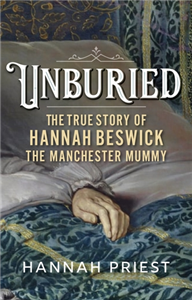
The macabre tale of an eighteenth-century woman immortalised in folklore as the 'Manchester Mummy'. In 1835, the Manchester Natural History Society opened the doors of its museum. Taking pride of place in its collection were three mummies: one was Egyptian, one was Peruvian and one was a woman from Cheetham Hill. This is the first time the true story of Hannah Beswick, the so-called 'Manchester Mummy', has been told. Over the years, explanations for the Manchester Mummy have ranged from the chilling - Hannah's fear of being buried alive - to the downright bizarre - the legend of her buried gold - but the truth is more complex. Exploring this fascinating episode from museum history, Unburied sheds light on the Victorian turn to the macabre and changing attitudes to the display of human remains. It debunks the legends and asks what Hannah Beswick can tell us about death and dying, mummies and museums.


This book is a result of the author's search for these facts and truths as a student and farmer and his endeavor as a teacher to present them in a simple manner to others. The object in presenting the book to the general public is the hope that it may be of assistance to farmers, students and teachers, in their search for the fundamental truths and principles of farming.


Can drawing — sound, honest representation of the world as the eye sees it, not tricks with the pencil or a few "effects" — be learned from a book? One of the most gifted draftsmen, who is also one of the greatest art critics and theorists of all time, answers that question with a decided "Yes." He is John Ruskin, the author of this book, a classic in art education as well as a highly effective text for the student and amateur today. The work is in three parts, cast in the form of letters to a student, successively covering "First Practice," "Sketching from Nature," and "Colour and Composition." Starting with the bare fundamentals (what kind of drawing pen to buy; shading a square evenly), and using the extremely practical method of exercises which the student performs from the very first, Ruskin instructs, advises, guides, counsels, and anticipates problems with sensitivity. The exercises become more difficult, developing greater and greater skills until Ruskin feels his reader is ready for watercolors and finally composition, which he treats in detail as to the laws of principality, repetition, continuity, curvature, radiation, contrast, interchange, consistency, and harmony. All along the way, Ruskin explains, in plain, clear language, the artistic and craftsmanlike reasons behind his practical advice — underlying which, of course, is Ruskin's brilliant philosophy of honest, naturally observed art which has so much affected our aesthetic. Three full-page plates and 48 woodcuts and diagrams (the latter from drawings by the author) show the student what the text describes. An appendix devotes many pages to the art works which may be studied with profit.


Chopin: The Man and His Music reflects the intimate, thorough knowledge of Chopin's music that Huneker acquired while studying to be a concert pianist and his unusually keen insight into the character of the great Polish composer whose music he adored.


The popularity of the dog as a companion, as a guardian of property, as an assistant in the pursuit of game, and as the object of a pleasurable hobby, has never been so great as it is at the present time.


Examining the nature of law and grace, the novel elaborates upon the history of France, the architecture and urban design of Paris, politics, moral philosophy, antimonarchism, justice, religion, and the types and nature of romantic and familial love. Les Misérables has been popularized through numerous adaptations for the stage, television, and film, including a musical and a film adaptation of that musical.

Little Women "has been read as a romance or as a quest, or both. It has been read as a family drama that validates virtue over wealth", but also "as a means of escaping that life by women who knew its gender constraints only too well".[6]:34 According to Sarah Elbert, Alcott created a new form of literature, one that took elements from Romantic children's fiction and combined it with others from sentimental novels, resulting in a totally new format. Elbert argued that within Little Women can be found the first vision of the "All-American girl" and that her multiple aspects are embodied in the differing March sisters.

A pioneering work in the movement to free art from its traditional bonds to material reality, this book is one of the most important documents in the history of modern art. Written by the famous nonobjective painter Wassily Kandinsky (1866–1944), it explains Kandinsky's own theory of painting and crystallizes the ideas that were influencing many other modern artists of the period. Along with his own groundbreaking paintings, this book had a tremendous impact on the development of modern art. Kandinsky's ideas are presented in two parts. The first part, called "About General Aesthetic," issues a call for a spiritual revolution in painting that will let artists express their own inner lives in abstract, non-material terms. Just as musicians do not depend upon the material world for their music, so artists should not have to depend upon the material world for their art. In the second part, "About Painting," Kandinsky discusses the psychology of colors, the language of form and color, and the responsibilities of the artist. An Introduction by the translator, Michael T. H. Sadler, offers additional explanation of Kandinsky's art and theories, while a new Preface by Richard Stratton discusses Kandinsky's career as a whole and the impact of the book. Making the book even more valuable are nine woodcuts by Kandinsky himself that appear at the chapter headings. This English translation of Über das Geistige in der Kunst was a significant contribution to the understanding of nonobjectivism in art. It continues to be a stimulating and necessary reading experience for every artist, art student, and art patron concerned with the direction of 20th-century painting.
Trusted Partner

This is the first major study of Britain's pioneering graphic satirist, Sir Francis Carruthers Gould (1844-1925), the first staff political cartoonist on a daily newspaper in Britain, and the first of his kind to be knighted. Written by the distinguished media historian, Colin Seymour-Ure, it is essential reading for anyone interested in cartoons, caricature and illustration and will also be welcomed by students of history, politics and the media. It examines Gould's career in Fleet Street until his retirement after the First World War. It also discusses his illustrations for magazines and books and there is an analysis of his use of symbolism and literary allusion to lampoon such eminent politicians as Gladstone and Joseph Chamberlain. As Lord Baker says in his Foreword, this book is 'a major contribution to our knowledge of British cartooning.'
Trusted Partner
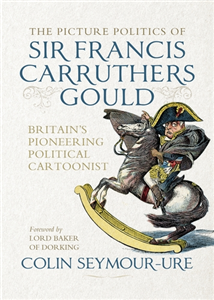
This is the first major study of Britain's pioneering graphic satirist, Sir Francis Carruthers Gould (1844-1925), the first staff political cartoonist on a daily newspaper in Britain, and the first of his kind to be knighted. Written by the distinguished media historian, Colin Seymour-Ure, it is essential reading for anyone interested in cartoons, caricature and illustration and will also be welcomed by students of history, politics and the media. It examines Gould's career in Fleet Street until his retirement after the First World War. It also discusses his illustrations for magazines and books and there is an analysis of his use of symbolism and literary allusion to lampoon such eminent politicians as Gladstone and Joseph Chamberlain. As Lord Baker says in his Foreword, this book is 'a major contribution to our knowledge of British cartooning.'
Trusted Partner
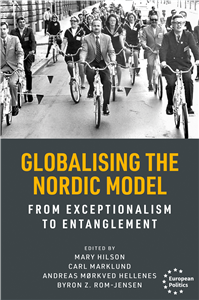
The five Nordic countries - Denmark, Finland, Iceland, Norway and Sweden - frequently attract attention as examples of a 'Nordic model'. The meanings of the term vary, but especially since the global financial crisis of 2008-9 the Nordic countries have often been portrayed positively, as examples of economic dynamism, innovation and social equality. Studies of these images of the Nordic countries and Nordic region and their international circulations are now a well-established field of research. This volume explores how the Nordic model has been shaped by global entanglements, in exchange not only with Western Europe and North America, but also with the Global South. Drawing on selected case studies, the volume offers new perspectives on the meanings of the Nordic model and Nordic exceptionalism in a global context during the half century since c. 1970.


Published anonymously in 1776, six months before the Declaration of Independence, Thomas Paine’s Common Sense was a radical and impassioned call for America to free itself from British rule and set up an independent republican government. Savagely attacking hereditary kingship and aristocratic institutions, Paine urged a new beginning for his adopted country in which personal freedom and social equality would be upheld and economic and cultural progress encouraged.


The object of this paper is to discuss money-making; to examine its prevalence as an aim among people generally and the moral standards which obtain among those who consciously seek to make money.

This 1926 survey, written by a distinguished social and economic historian, examines the role of religion in the rise of capitalism. Arguing that material acquisitiveness is morally wrong and a corrupting social influence, the author draws upon his profound knowledge of labor and politics to show how concentrated wealth distorts economic policies. Colorful but credible, this study offers a timeless vision of alternative means toward a just economic, social, and intellectual order.



