
Fossil Rock Ltd
Publishers of sci-fi, fantasy, adventure, historical, mystery, horror, suspense, crime, drama and modern fiction.
View Rights Portal
Publishers of sci-fi, fantasy, adventure, historical, mystery, horror, suspense, crime, drama and modern fiction.
View Rights Portal

Was immer der »Motor« moderner Gesellschaften sein mag, fossile Brennstoffe sind ihr Treibstoff. Gegenwärtige Formen von Freiheit und Fortschritt, Krieg, Kolonialismus und Kapitalismus, linearer Zeit und globalem Raum sind kohlenstoffhaltig, wie Andreas Folkers in diesem brillanten Buch zeigt. Die Moderne ist immer schon fossil gewesen, darum sieht sie in Zeiten der Klimakrise ziemlich alt aus. Trotzdem tritt sie nicht einfach ab. Vielmehr führt sie in CO 2 , Plastikmüll und petrochemischen Rückständen ein desaströses Nachleben. Sie umfasst nicht nur die alte Industriegesellschaft, sondern steht zugleich für eine planetare Zukunft, die sich auf dem Müllhaufen der fossilen Geschichte zusammenbraut.
 Trusted Partner

 Trusted Partner


This guide gives patients up-to-date information based on solid medical and scientific facts. It teaches them how they can use omega-3 oil to - improve health and successfully prevent disease, - increase physical and mental performance, - make the most of their medication and therapy, and - improve quality of life and increase vitality. Small changes can make a surprising improvement in health!
Trusted Partner
Trusted Partner
Trusted Partner
Trusted Partner

 Trusted Partner
Trusted Partner
Trusted Partner
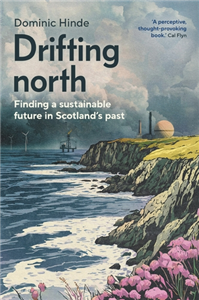
Scotland's past and future collide in this engaging journey through climate change, fossil capitalism and the struggle for a sustainable world. Scotland's history and future are entangled with climate change and the story of the modern world. This small country on the fringes of northern Europe pioneered fossil capitalism and played a key role in its spread across the planet. It is a living museum of the crisis of the west, of deindustrialisation, stagnation and the struggle to build a better future from the ashes. Journalist and sociologist Dominic Hinde travels from the treeless Highlands to the lowland cities, struggling to balance memories with aspiration. Through this journey he finds that his own sensory turmoil, shaped by recovery from a near fatal accident, mirrors the disarray of the fossil fuel transition - an uncertain passage between what was and what must be. Part memoir, part environmental history, part travelogue, this is a compelling narrative of connections - to place, energy and the possibility of renewal. Through the lens of one country, it asks a vital question: can the lessons of the past help us build a more sustainable future?
Trusted Partner
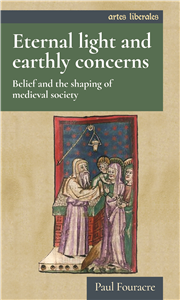
In early Christianity it was established that every church should have a light burning on the altar at all times. In this unique study, Eternal light and earthly concerns, looks at the material and social consequences of maintaining these 'eternal' lights. It investigates how the cost of lighting was met across western Europe throughout the whole of the Middle Ages, revealing the social organisation that was built up around maintaining the lights in the belief that burning them reduced the time spent in Purgatory. When that belief collapsed in the Reformation the eternal lights were summarily extinguished. The history of the lights thus offers not only a new account of change in medieval Europe, but also a sustained examination of the relationship between materiality and belief.
Trusted Partner
 Trusted Partner

Power Plants offers an unflinching assessment of society's underappreciated but growing addiction to the industrial burning of crops and trees for energy. As vehicles increasingly run on fuels made from sugarcane and oil-palm, wood pellets replace coal, and scientists rush to engineer crops to produce renewable jet fuel, this book blows apart bioenergy's reputation as a simple, benign substitute for fossil fuels. Scrutinising modern bioenergy systems in the UK, Europe and United States, Power Plants shows how vegetal lifeforms are being enrolled to reinforce energy cultures centred around logics of efficiency, productivity and economic growth at all costs. Nonetheless, the book insists that a closer attention to plants could yet provoke a rethink of the social and economic purposes of all kinds of energy, with radical implications for ideas about growth, waste, prosperity and even pleasure.
Trusted Partner
 Trusted Partner
Wie Philosophie im Zeichen der Klimakrise betreiben? Wie die Geschichte der Aufklärung erzählen, wenn mit ihr zugleich die Grundlagen für das Zeitalter der Verbrennung fossiler Energien gelegt wurden? Und warum entwickelte die Moderne Ideen wie Fortschritt und Freiheit losgelöst von ihren materiellen Bedingungen? Die Beiträge in diesem Band von u. a. Jacob Blumenfeld, Alyssa Battistoni, Dipesh Chakrabarty, Pierre Charbonnier, Eva Horn, Kohei Saito, Eva von Redecker und Isabelle Stengers gehen diesen grundsätzlichen Fragen sowie alternativen Denkentwürfen nach, die im Kanon der Philosophie keinen Platz gefunden haben. Eine Neujustierung der Philosophie und ihrer Geschichte im Zeichen der planetaren Krise.
Trusted Partner

The new Teuscher covers the range of relevant areas of biogenic drug substances and medicinal products. In its time-honoured way, it conveys knowledge about the ■ Nature, origin and processing of crude drugs ■ Structure, biosynthesis and metabolism of the constituents ■ Preparation, pharmacology and use of the active substances ■ Dosage and side effects of the medicinal products derived from them The book deals with both classically produced and genetically engineered antibiotics, hormones, enzymes as well as blood and immunological products. Completely new chapters discuss cytokines, gene therapy, use of stem cells and traditional Chinese medicine. For generations, the textbook and companion for both students and fully qualified professionals!
Trusted Partner
This book offers new insight into the end of the British Empire in the Middle East. It takes a fresh look at the relationship between Britain and the Gulf rulers at the height of the British Empire, and how its effects are still felt internationally today. Over the last four decades, the Persian Gulf region has gone through oil shocks, wars and political changes, and yet the basic entities of the southern Gulf states have remained largely in place. Drawing on extensive multi-archival research in the British, American and Gulf archives, this book illuminates a series of negotiations between British diplomats and the Gulf rulers that inadvertently led Bahrain, Qatar and the UAE to take their current shapes. The story addresses the crucial question of self-determination versus 'better together', a dilemma pertinent to anyone interested in the transformation of the modern world.
Trusted Partner
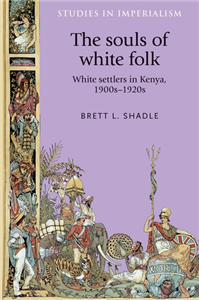
Kenya's white settlers have been alternately celebrated and condemned, painted as romantic pioneers or hedonistic bed-hoppers or crude racists. The souls of white folk examines settlers not as caricatures, but as people inhabiting a unique historical moment. It takes seriously - though not uncritically - what settlers said, how they viewed themselves and their world. It argues that the settler soul was composed of a series of interlaced ideas: settlers equated civilisation with a (hard to define) whiteness; they were emotionally enriched through claims to paternalism and trusteeship over Africans; they felt themselves constantly threatened by Africans, by the state, and by the moral failures of other settlers; and they daily enacted their claims to supremacy through rituals of prestige, deference, humiliation and violence. The souls of white folk will appeal to those interested in the histories of Africa, colonialism, and race, and can be appreciated by scholars and students alike.
Trusted Partner

Daniel Calparsoro, a director who has made a crucial contribution to contemporary Spanish and Basque cinema, has provoked strong reactions from the critics. Reductively dismissed as a works of crude violence by those lamenting a 'lost golden age' of Spanish filmmaking, Calparsoro's films in fact reveal a more complex interaction with trends and traditions in both Spanish and Hollywood cinema. This book is the first full-length study of the director's work, from his early social-realist films set in the Basque Country to his later forays into the genres of the war and horror. It offers an in-depth film-by-film analysis while simultaneously exploring the director's position in the contemporary Spanish context, the tension between directors and critics and the question of national cinema in an area - the Basque Country - of heightened national and regional sensitivities.
Trusted Partner
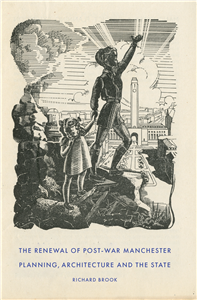
A compelling account of the project to transform post-war Manchester, revealing the clash between utopian vision and compromised reality. Urban renewal in Britain was thrilling in its vision, yet partial and incomplete in its implementation. For the first time, this deep study of a renewal city reveals the complex networks of actors behind physical change and stagnation in post-war Britain. Using the nested scales of region, city and case-study sites, the book explores the relationships between Whitehall legislation, its interpretation by local government planning officers and the on-the-ground impact through urban architectural projects. Each chapter highlights the connections between policy goals, global narratives and the design and construction of cities. The Cold War, decolonialisation, rising consumerism and the oil crisis all feature in a richly illustrated account of architecture and planning in post-war Manchester.



