
Water Environment Federation
Water Environment Federation (WEF)publishes a variety of technical publications, including newsletters,manuals of practice and other books, magazines, and journals.
View Rights Portal
Water Environment Federation (WEF)publishes a variety of technical publications, including newsletters,manuals of practice and other books, magazines, and journals.
View Rights Portal
Global Collective Publishers, based in Philadelphia, Pennsylvania, is an independent publisher whose mission is to provide a platform for voices from around the world, crossing the borders of language, culture, religion, and gender, and to create a space where diverse communities can share and exchange stories that express their individual and shared sense of humanity through a variety of literary genres in fiction and non-fiction. In a world that feels increasingly more alienating, it is our aim to work towards dispelling the fear of the other and stand against literature of hatred, embracing the shared human experience in its myriad textures and voices through a curiosity-driven life. Global Collective is committed to publishing across a diverse landscape of fiction and non-fiction, in the areas of religion and spirituality, personal growth and self-transformation, gender and LGBT+ studies, social awareness, art and cinema. Global Collective takes to heart Booker Prize winner Ben Okri’s assertion that “stories can conquer fear… they can make the heart bigger.”Global Collective Publishers seeks unique and extraordinary literature that satiates our desire to gain a deeper understanding of the world around us and to discover points of commonality amongst our differences where words have no borders.
View Rights Portal

— Water as a reason for war and a political instrument of power — Unique overview of global water conflicts — Foreword by Wolfgang Ischinger Every year, droughts in African countries cause hundreds of thousands of deaths and much suffering. Europe also experienced drought in 2022's summer of record temperatures. Without water, there can be no life. More and more people are suffering from water shortages. Climate change is fuelling the distribution battles for water; violent conflicts over this precious resource are the order of the day. Whether the protests in Iraq, the war in Syria, in the Himalayas, the Nile conflict and in many other places, water is already a reason for war and is being misused as a political instrument of power. The construction of huge dams, the targeted closure of locks, river diversions, water and land grabbing bring wars over the "blue gold" with them. In a unique overview, journalist Jürgen Rahmig describes the struggle for water in the 21st century. Where do dangers lurk today; where will they be tomorrow, and how can we prevent wars over precious water?


 Trusted Partner

Living with water brings together sociologists, geographers, artists, writers and poets to explore the ways in which water binds, immerses and supports us. Drawing from international research on river crossings, boat dwelling, wild swimming, sea fishing, and drought impacts, and navigating urban waters, glacial lagoons, barrier reefs and disappearing tarns, the collection illuminates the ways that we live with and without water, and explores how we can think and write with water on land. Water offers a way of attending to emerging and enduring social and ecological concerns and making sense of them in lively and creative ways. By approaching Living with water from different disciplinary and methodological perspectives, and drawing on research from around the world, this collection opens up discussions that reinvigorate and renew previously landlocked debates. This book is relevant to United Nations Sustainable Development Goal 6, Clean water and sanitation
Trusted Partner
Trusted Partner
Trusted Partner
Trusted Partner
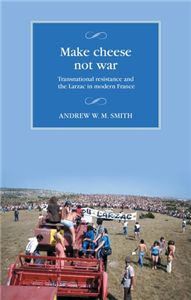
In 1971, the French government announced a massive extension of its military base on the Larzac plateau in southern France. Land was to be expropriated from 107 farms around the small town of La Cavalerie. Limited resistance was expected, but what happened next exceeded all expectations. Local sheep farmers set up protest camps and occupied the land. They soon attracted an astonishing level of support, pioneering a form of regional radicalism with global implications. Drawing out the international dimensions of the protest, Make cheese not war explores a transnational resistance movement in the 1970s that challenged dominant visions of modernity and became a wellspring of radical alternatives. Exploring previously unconsulted archives in France and elsewhere, the book offers an in-depth analysis of the decade-long peasant movement and its aftermath. Repositioning the Larzac struggle within a wider network of French and international solidarities, from the US to the UK, Germany, Burkina Faso, New Caledonia and Japan, the book retraces political networks of pacifist activism, as well as environmental movements and anti-nuclear protest. It shows how this French peasant campaign became both a platform and a model for popular engagement.
Trusted Partner
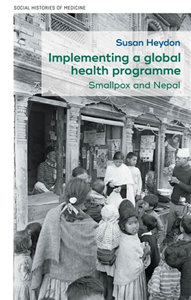
Worldwide eradication of the devastating viral disease of smallpox was devised as a distant global policy, but success depended on implementing a global vaccination programme within nation states. How this was achieved remains relevant and topical for responding to today's global communicable disease challenges. The small and poor Himalayan kingdom of Nepal faced enormous geographical and infrastructure challenges if it was going to succeed in a nationwide vaccination programme. This book acknowledges the key role of the WHO but disrupts the top-down, centre-led standard narrative. Against a background of widespread internal political and social change, Nepal's programme was expanded, effectively decentralised and a vaccination strategy introduced that aligned with people's beliefs. Few foreign personnel were involved.
Trusted Partner
As the international order begins to crumble, this incisive book asks what the rise of the Asian superstates means for the future. The Western-dominated world we have known for the past three hundred years is coming to an end. As America withdraws from its role as enforcer of the international order, other countries are moving in to fill the void. Among them are two rising Asian 'superstates'. Accounting for almost half of the world's population, China and India have the potential to wield enormous economic and political power. China is already vying with the US for the top spot in the global economy, and on some measures has surpassed it. By the middle of the century India may be number two. How will these countries navigate their growing roles on the world stage? What are the implications for commerce, international law and the fight against climate change? Vince Cable has followed China and India for decades, first as a professional economist and later as a senior government minister. In Eclipsing the West he draws on the latest data and a lifetime of political and economic experience to offer a compelling account of what the rise of the Asian superstates means for the future.
Trusted Partner


Seit die zwölfjährige Alea bei einem Sturm von Bord der Crucis fiel, weiß das Meermädchen endlich, wer sie ist und wo sie hingehört. Doch was geschah vor elf Jahren mit ihrer Mutter? Warum wirkt die Unterwasserwelt so ausgestorben? Und weshalb fühlt sie eine so starke Verbindung zu dem dreizehnjährigen Lennox, als hätten sie sich schon immer gekannt? Eine magische Botschaft aus dem Bauch eines Wales führt Alea und die Alpha Cru zu unglaublichen Antworten, die neue Fragen aufwerfen. Inklusive Alea Aquarius- Song, komponiert und gesungen von der Autorin.
Trusted Partner
At every level of human interaction new levels of identity-based tension are in evidence. Contributors to this book explore facets of fragmentation processes within systems of state and interstate organisation, how they influence the use of negotiation, and how negotiation might be used to effect renewed coherence. Following Anstey's (Ch1) introductory chapter framing the nature and shape of fragmentation dynamics, Zartman (Ch 2) argues that the use of negotiation as a process of conflict resolution is deeply shaped by identity groups whose internal coherence is dependent on sustaining a negative identity of others. International relations are no longer solely the realm of experienced diplomats but are shaped as Meerts (Ch3) points out by politicians seeking to be responsive to voting publics rather than wider concerns. Anstey digs into problems of fragmentation (Ch. 4) and Troitskiy (Ch 5) points out how a reluctant acceptance of the power of 'the other' can lead to a form of strategic stability in relations. Anstey and Meerts (Ch 6) point out in their analysis of the Israeli-Palestinian case as an identity conflict turned very bad. Guggenbuhl (Ch 7 ) reveals how structures and processes have been designed within the EU to prevent, contain and regulate conflicts to limit risks of confrontation and fragmentation. Schuessler (Ch 8) to advocates a shift away from a template or roadmap approach to EU membership to a cohesion based on non-dominance. There is still a strong desire on the part of some states, like Northern Macedonia, to become EU members, as reflected in Manton's (Ch 9). Paula Garzon and Frans Schram explain the success of the Colombia Peace Negotiations (Ch 10), while Odigie and da Rocha (Ch 11) analyse the struggle faced by ECOWAS to influence coup leaders in Mali to return to constitutional government and changes of government by constitutional means. Liang (Ch12) discusses how the internet as the modern vehicle of inter-state, inter-group and interpersonal communication has become weaponised. In Ch 13 Anstey draws some lessons from contributions to the compilation.
Trusted Partner


Media reports often praise movement as a cure-all. But apart from its undisputed positive effect on health, does movement really make us smarter? Consider a national football team, for example – are these excessively sports-driven players automatically the smartest people? Should we simply replace all school subjects with sports? The authors provide a detailed summary of the latest scientific findings on the influence of movement on cognitive ability. They describe the effects of movement, on old age, embodiment, emotion, school as well as other factors that influence cognition. Target Group: teachers, lecturers, psychologists, psychiatrists, neurologists, psychotherapists, movement therapists.
Trusted Partner

Drawing on a wide range of archival sources, Karen Garner documents international women's history through the lens of the long-established Western-led international organisations that defined and dominated women's involvement in global politics from the 1925 founding of the Joint Standing Committee of Women's International Organisations up through the UN Decade for Women (1976-85). Documenting specific global campaigns in episodes that span the twentieth century, Garner includes biographical information about lesser known international leaders as she discusses important historic debates regarding feminist goals and strategies among women from the East and West, North and South. This interdisciplinary study addresses questions of interest to historians, political scientists, international relations scholars, sociologists, and feminist scholars and activists whose work promotes women's and human rights. ;
Trusted Partner
 Trusted Partner
Windows for the world explores the display and reception of nineteenth-century British stained glass in a secular exhibition context. International in scope, the book focuses on the global development of stained glass in this period as showcased at, and influenced by, these exhibitions. It recognises those who made and exhibited stained glass and demonstrates the long-lasting impact of the classification and modes of display at these events. A number of exhibits are illustrated in colour and are analysed in relation to stylistic developments, techniques and material innovations, as well as the broader iconographies of nation and empire in the nineteenth century.
Trusted Partner

This book focuses on current policy discourse in Higher Education, with special reference to Europe. It discusses globalisation, Lifelong Learning, the EU's Higher Education discourse, this discourse's regional ramifications and alternative practices in Higher Education from both the minority and majority worlds with their different learning traditions and epistemologies. It argues that these alternative practices could well provide the germs for the shape of a public good oriented Higher Education for the future. It theoretically expounds on important elements to consider when engaging Higher Education and communities, discussing the nature of the term 'community' itself. Special reference is accorded to the difference that lies at the core of these ever-changing communities. It then provides an analysis of an 'on the ground project' in University community engagement, before suggesting signposts for further action at the level of policy and provision. This book is relevant to United Nations Sustainable Development Goal 4, Quality education
Trusted Partner

This collection aims to inaugurate a new direction in research on counterterrorism by exploring global connections - both in terms of practices and discourses, as well as shared ideas and epistemes - that animate counterterrorism practices. The chapters - grouped under the themes of postcoloniality and coloniality, and entanglements of the transnational and the local, and counterterrorism and right-wing extremism - are attentive to global connections and are mindful of the complexities of global historical processes that constitute the politics of counterterrorism. This book aims to bring together scholars studying counterterrorism in the global North and the global South to explore convergence and divergence in how counterterrorism policies function in a range of national and local contexts.
Trusted Partner

Available in paperback for the first time, and drawing on a wide range of archival sources, Shaping a global women's agenda documents international women's history through the lens of the long-established Western-led international organisations that defined and dominated women's involvement in global politics from the 1925 founding of the Joint Standing Committee of Women's International Organisations up through the UN Decade for Women (1976-85). Documenting specific global campaigns in episodes that span the twentieth century, Garner includes biographical information about lesser known international leaders as she discusses important historic debates regarding feminist goals and strategies among women from the East and West, North and South. This interdisciplinary study addresses questions of interest to historians, political scientists, international relations scholars, sociologists, and feminist scholars and activists whose work promotes women's and human rights.
Trusted Partner
Trusted Partner



