
Your Search Results
-

-

Wolters Kluwer Health
Wolters Kluwer Health is a leading global publisher of medical, nursing and allied health information resources in book, journal, newsletter, looseleaf and electronic media formats.
View Rights Portal
-
Promoted Content

 May 2020
Metalmorphoses
The Fantastic Mutations of Heavy Metal
by Jörg Scheller
How did heavy metal get started? What’s behind the fascination of many bands with the occult? Which women liven up the scene? What is the Heavy Metal Knitting World Championship in Finland about? Jörg Scheller invites you to find out more about the mainstream trends as well as less well-known bizarre facts. Heavy metal began in the 1970s in the subculture of British industrial centres and until today it is an unruly and agile art form. Wellknown warhorses like Iron Maiden or Metallica still pack stadiums, while new trends come from the strong Scandinavian scene. Scheller credits the genre with “exciting synchronism of freedom and order, rebellion and retreat, scepticism and enthusiasm, toughness and diversity”.
-
Promoted Content

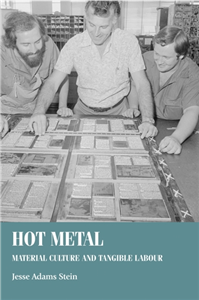 History of Art / Art & Design StylesOctober 2016
Hot metal
Material culture and tangible labour
by Jesse Stein. Series edited by Bill Sherman, Christopher Breward
The world of work is tightly entwined with the world of things. Hot metal illuminates connections between design, material culture and labour between the 1960s and the 1980s, when the traditional crafts of hot-metal typesetting and letterpress were finally made obsolete with the introduction of computerised technologies. This multidisciplinary history provides an evocative rendering of design culture by exploring an intriguing case: a doggedly traditional Government Printing Office in Australia. It explores the struggles experienced by printers as they engaged in technological retraining, shortly before facing factory closure. Topics explored include spatial memory within oral history, gender-labour tensions, the rise of neoliberalism and the secret making of objects 'on the side'. This book will appeal to researchers in design and social history, labour history, material culture and gender studies. It is an accessible, richly argued text that will benefit students seeking to learn about the nature and erosion of blue-collar work and the history of printing as a craft.
-
 Trusted Partner
 Humanities & Social SciencesMarch 2008
Great Satan's rage
American negativity and rap/metal in the age of supercapitalism
by Scott Wilson
This book looks at how rap and metal, the two most pervasive popular music forms of the 1990s, have been highly engaged with America's role in the world, supercapitalism and their own role within it. This has especially been the case when genres - hitherto clearly identified as indelibly 'black' or 'white' forms of music - have crossed over as an effect of cross-racial forms of identification and desire, marketing strategy, political engagement, opportunism and experimentation. It is how examples of these forms have negotiated, contested, raged against, survived, exploited, simulated and performed 'Satan's rage' that is the subject of this book. The book offers a highly original approach in relating rap/metal to critical theories of economy and culture, introducing a new method of cultural analysis based on theories of negativity and expenditure that will be of great interest to students in media and cultural studies, American studies, critical and cultural theory, advertising and marketing, and sociology and politics. ;
-
Trusted Partner
-
Trusted Partner
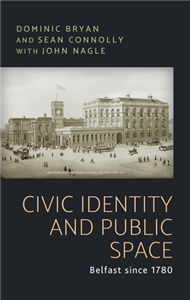 Humanities & Social SciencesMarch 2022
Civic identity and public space
Belfast since 1780
by Dominic Bryan, Sean J. Connolly, John Nagle
Civic identity and public space, focussing on Belfast, and bringing together the work of a historian and two social scientists, offers a new perspective on the sometimes lethal conflicts over parades, flags and other issues that continue to disrupt political life in Northern Ireland. It examines the emergence during the nineteenth century of the concept of public space and the development of new strategies for its regulation, the establishment, the new conditions created by the emergence in 1920 of a Northern Ireland state, of a near monopoly of public space enjoyed by Protestants and unionists, and the break down of that monopoly in more recent decades. Today policy makers and politicians struggle to devise a strategy for the management of public space in a divided city, while endeavouring to promote a new sense of civic identity that will transcend long-standing sectarian and political divisions.
-
Trusted Partner
 Biography & True StoriesNovember 2024
Walking in the dark
James Baldwin, my father and I
by Douglas Field
A moving exploration of the life and work of the celebrated American writer, blending biography and memoir with literary criticism. Since James Baldwin's death in 1987, his writing - including The Fire Next Time, one of the manifestoes of the Civil Rights Movement, and Giovanni's Room, a pioneering work of gay fiction - has only grown in relevance. Douglas Field was introduced to Baldwin's essays and novels by his father, who witnessed the writer's debate with William F. Buckley at Cambridge University in 1965. In Walking in the dark, he embarks on a journey to unravel his life-long fascination and to understand why Baldwin continues to enthral us decades after his death. Tracing Baldwin's footsteps in France, the US and Switzerland, and digging into archives, Field paints an intimate portrait of the writer's life and influence. At the same time, he offers a poignant account of coming to terms with his father's Alzheimer's disease. Interweaving Baldwin's writings on family, illness, memory and place, Walking in the dark is an eloquent testament to the enduring power of great literature to illuminate our paths.
-
Trusted Partner
-
Trusted Partner
-
Trusted Partner
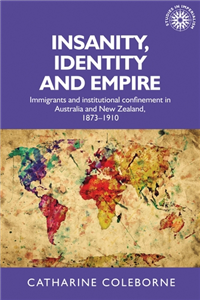 Humanities & Social SciencesJune 2021
Insanity, identity and empire
Immigrants and institutional confinement in Australia and New Zealand, 1873–1910
by Catharine Coleborne
Insanity, identity and empire examines the formation of colonial social identities inside the institutions for the insane in Australia and New Zealand. Taking a large sample of patient records, it pays particular attention to gender, ethnicity and class as categories of analysis, reminding us of the varied journeys of immigrants to the colonies and of how and where they stopped, for different reasons, inside the social institutions of the period. It is about their stories of mobility, how these were told and produced inside institutions for the insane, and how, in the telling, colonial identities were asserted and formed. Having engaged with the structural imperatives of empire and with the varied imperial meanings of gender, sexuality and medicine, historians have considered the movements of travellers, migrants, military bodies and medical personnel, and 'transnational lives'. This book examines an empire-wide discourse of 'madness' as part of this inquiry.
-
Trusted Partner
 Humanities & Social SciencesSeptember 2021
Nostalgia and the post-war Labour Party
by Richard Jobson
-
Trusted Partner
 Humanities & Social SciencesFebruary 2023
Cold, hard steel
by Agnes Arnold-Forster, Keir Waddington
-
Trusted Partner

 2021
2021Micronutrient Depleters: Cholesterol-lowering Drugs
Things to know about medicines and micronutrients
by Uwe Gröber and Prof. Dr. Klaus Kisters
Elevated blood lipid levels are among the major risk factors for cardiovascular diseases. The class of substances most commonly used for lowering blood lipids is the type of cholesterol-lowering drug known as statins. Taking cholesterol-lowering drugs can lead to disruption of the coenzyme Q10 balance and muscle metabolism. In addition, statin therapy increases the need for selenium, vitamin D, omega-3 fatty acids, B vitamins and L-carnitine. This guide provides patients with important medical information about the interactions of their medicines with these micronutrients. This way, patients can optimise their treatment, reduce the side effects of their medication, and improve their quality of life!
-
Trusted Partner
 Humanities & Social SciencesJuly 2026
Weaponizing demography
The transformation of radical right-wing populism
by Oscar Mazzoleni, Klaudia Koxha
This book introduces a new framework for understanding how the radical right reimagines demographic change as an existential threat. Across Europe and the Americas, low birth rates, immigration, and gender equality are reframed as signs of civilisational decline. This volume explores how radical right actors mobilise fears around fertility, migration, race, family, and sexuality through narratives of crisis, ethnic purity, and control over borders, reproduction, and social norms. It examines conspiracy thinking fuelled by demographic anxiety to justify attacks on gender and sexual rights and reinforce exclusionary ideas of national belonging. Grounded in empirical case studies and interdisciplinary approaches, this book reveals how these narratives converge to reinforce dominance of a native, heteronormative, Christian population. In linking domains often treated separately, it provides a timely and critical perspective on the evolving logic of radical right politics worldwide.
-
Trusted Partner
 Humanities & Social SciencesSeptember 2023
The break-up of Greater Britain
by Stuart Ward, Christian Pedersen
-
Trusted Partner
Business, Economics & LawJune 2024
The labour movement in Lebanon
Power on hold
by Lea Bou Khater
The labour movement in Lebanon: Power on hold narrates the history of the Lebanese labour movement from the early twentieth century to today. Bou Khater demonstrates that trade unionism in the country has largely been a failure, for reasons including state interference, tactical co-optation, and the strategic use of sectarianism by an oligarchic elite, together with the structural weakness of a service-based laissez-faire economy. Drawing on a vast body of Arabic-language primary sources and difficult-to-access archives, the book's conclusions are significant not only for trade unionism, but also for new forms of workers' organisations and social movements in Lebanon and beyond. The Lebanese case study presented here holds significant implications for the wider Arab world and for comparative studies of labour. This authoritative history of the labour movement in Lebanon is vital reading for scholars of trade unionism, Lebanese politics, and political economy.
-
Trusted Partner

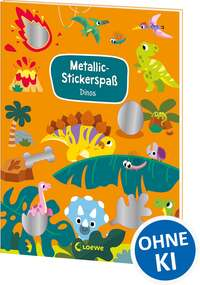 January 2026
Metallic-Stickerspaß - Dinos
by Svenja Pidde
Stickern, Malen, Rätseln Kannst du den Brachiosaurus in bunten Farben ausmalen? Welche Sticker fehlen im Dino-Skelett? Und wie viele Blätter essen die Brontosaurier? Male und knoble dich durch die aufregende Welt der Dinos und verschönere sie mit coolen Metallic-Stickern. So ist gute Laune garantiert! Für Kinder ab 5 Jahren Fördert Feinmotorik und Kreativität Abwechslungsreiche Rätsel trainieren logisches DenkenDieses Beschäftigungsbuch eignet sich perfekt gegen Langeweile. Hier haben Kinder ab 5 Jahren viel mit Spaß mit coolen Metallic-Stickern, kniffligen Rätseln und lustigen Ausmalbildern rund um das Thema Dinosaurier.
-
Trusted Partner
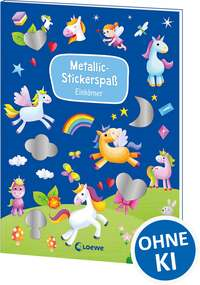 January 2026
Metallic-Stickerspaß - Einhörner
by Svenja Pidde
Stickern, Malen, Rätseln Kannst du das Einhorn in bunten Farben ausmalen? Mit welchen Stickern soll die Torte dekoriert werden? Und wer hat vom Cupcake genascht? Male und knoble dich durch die magische Welt der Einhörner und verschönere sie mit coolen Metallic-Stickern. So ist gute Laune garantiert! Für Kinder ab 5 Jahren Fördert Feinmotorik und Kreativität Abwechslungsreiche Rätsel trainieren logisches DenkenDieses Beschäftigungsbuch eignet sich perfekt gegen Langeweile. Hier haben Kinder ab 5 Jahren viel mit Spaß mit coolen Metallic-Stickern, kniffligen Rätseln und lustigen Ausmalbildern rund um das Thema Einhörner.
-
Trusted Partner
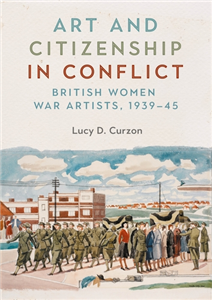 The ArtsOctober 2025
Art and citizenship in conflict
British women war artists, 1939–45
by Lucy Curzon
Art and Citizenship in Conflict examines the work of women war artists in order to highlight the complexity of citizenship and gender in Britain during the Second World War. Evelyn Dunbar, Mary Kessell, Ethel Gabain, Stella Schmolle, and Laura Knight, among others, were commissioned by the War Artists' Advisory Committee (WAAC) to document the millions of women who took up sometimes unconventional roles-in agriculture, the auxiliary services, and manufacturing, among others-to support the British war effort. Indeed, their prints, drawings, and paintings were part of a broader scheme to uphold morale and promote much-needed citizen involvement on the home front. While there is growing interest, the importance of their remit in the history of the Second World War and the quality of their artistry have nonetheless not yet secured them a significant place in scholarship. Art and Citizenship in Conflict seeks to amend this gap while also broadening approaches to the study of war itself.
-
Trusted Partner
 Humanities & Social SciencesAugust 2022
The power of citizens and professionals in welfare encounters
The influence of bureaucracy, market and psychology
by Nanna Mik-Meyer
This book is about power in welfare encounters. Present-day citizens are no longer the passive clients of the bureaucracy and welfare workers are no longer automatically the powerful party of the encounter. Instead, citizens are expected to engage in active, responsible and coproducing relationships with welfare workers. However, other factors impact these interactions; factors which often pull in different directions. Welfare encounters are thus influenced by bureaucratic principles and market values as well. Consequently, this book engages with both Weberian (bureaucracy) and Foucauldian (market values/NPM) studies when investigating the powerful welfare encounter. The book is targeted Academics, post-graduates, and undergraduates within sociology, anthropology and political science.
-
Trusted Partner
 Humanities & Social SciencesJanuary 2025
‘Ten Pound Poms’
A life history of British postwar emigration to Australia
by A. James Hammerton, Alistair Thomson, Becca Parkinson
A riveting history of the 'Ten Pound Poms', a wave of British citizens who migrated to Australia and New Zealand after the Second World War. Between the 1940s and 1970s, more than a million Britons migrated to Australia. They were the famous 'Ten Pound Poms' and this is their story. The authors draw on a vast trove of letters, diaries and personal photographs, as well as hundreds of interviews with former migrants, to offer original insights into key historical themes. They explore people's motivations for emigrating, gender relations and family dynamics, the clashing experience of the 'very familiar and awfully strange', homesickness and the personal and national identities of both settlers and returnees. Filled with fascinating testimonies that shed light on migrant life histories, 'Ten Pound Poms' will engage readers interested in British and Australian migration history and intrigued about the power of migrant memories for individuals, families and nations.



