Your Search Results

      • Pastrengo Agenzia Letteraria

        Pastrengo is a Milan-based literary agency founded on September 2016 by Francesco Sparacino and Michele Turazzi. Pastrengo represents Italian authors of fiction (commercial and literary, young adult) and non fiction.

        View Rights Portal
      • Gilam Agency - Giovanni Lamanna Agenzia Letteraria

        The Gilam Agency – founded by Giovanni Lamanna – is based in Italy and is specialized in Italian Fiction and Non-Fiction, and Children's Books. We represent about 25 authors, some already established (such as Attilio Del Giudice, Francesco Forlani, Peppe Lanzetta, Gianfranco Pecchinenda, Felice Piemontese, Elena Starace, Giulia Bracco, Roger Salloch), some beginners. We also hold the rights to Non-Fiction books (books about Maria Montessori, pedagogy, sport, social science, philosophy...) The Gilam Agency is partner of some Italian publishers (Neo Edizioni, Lavieri, Funambolo, Dalia, Fefé) in selling translation rights on foreign market. We are also going to represent foreign publishers for selling translation rights in Italy. The Gilam Agency takes part in the most important book fairs and exhibitions in Italy and in Europe. In 2020 the Agency has created a new brand (with its own dedicated staff) for Children's and Illustrated Book Rights (the Wrong Cat Rights Agency).

        View Rights Portal

      • Trusted Partner
        Literature & Literary Studies
        May 2023

        Suicide and the Gothic

        by William Hughes, Andrew Smith

        Suicide and the Gothic is the first protracted study of how the act of self-destruction recurs and functions within one of the most enduring and popular forms of fiction. Comprising eleven original essays and an authoritative introduction, this collection explores how the act of suicide has been portrayed, interrogated and pathologised from the eighteenth century to the present. The featured fictions embrace both canonical and the less-studied texts and examine the crisis of suicide - a crisis that has personal, familial, religious, legal and medical implications - in European, American and Asian contexts. Featuring detailed interventions into the understanding of texts as temporally distant as Thomas Percy's Reliques and Patricia Highsmith's crime fictions, and movements as diverse as Wertherism, Romanticism and fin-de-siècle decadence, Suicide and the Gothic provides a comprehensive and compelling overview of this recurrent crisis in fiction and culture.

      • Trusted Partner
        Humanities & Social Sciences
        June 2026

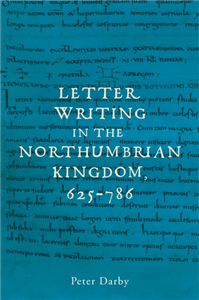
        Letter writing in the Northumbrian Kingdom, 625–786

        by Peter Darby

        Letter writing in the Northumbrian Kingdom offers the first comprehensive study of Northumbria's vibrant epistolary culture in the seventh and eighth centuries. Through a close examination of more than fifty surviving Latin letters-many written by or to figures such as Bede, Acca of Hexham, Ælfflæd of Whitby, and Alcuin -this book uncovers the literary, political, and spiritual dimensions of early medieval correspondence. From royal diplomacy to theological debate, these letters reveal a world where communication was both a practical necessity and a refined art. Drawing on previously underexamined texts and placing Northumbria in its broader European context, this groundbreaking study sheds new light on the role of letter writing in shaping a Christian kingdom's identity, influence, and intellectual legacy.

      • Trusted Partner
        Literature & Literary Studies
        May 2026

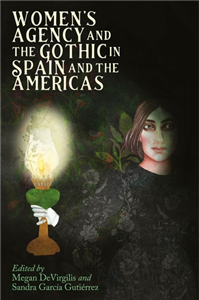
        Women’s Agency and the Gothic in Spain and the Americas

        by Megan DeVirgilis, Sandra García Gutiérrez

        This volume has emerged to fulfill two main purposes: Primarily, to constitute the first collaborative work that traces the relationship between the Gothic and Women in Spain and the Americas, but also, to surpass the term 'Female Gothic,' coined by Ellen Moers, by transferring the focus towards women and their agency as writers, readers and characters. This volume functions as a manifesto per se to open new avenues into understanding how women have interacted with the Gothic between the nineteenth and twenty-first centuries in Spain and the Americas. The question, we determine, is not simply about identity, but rather about agency. We define women's agency as the total capacity of characters, authors and readers to act freely within a social framework in relation to gothic texts. In our exploration of authorship, we reject the claim that the Gothic is a simplistic literary genre, instead sustaining that the plasticity of the Gothic has enabled it to survive for centuries; by shifting from a genre to a mode, it has surpassed literary forms and invaded all kinds of media: from film to music and merchandise such as clothing and pop culture collectables, fostering an authentic goth fandom.

      • Trusted Partner
        The Arts
        June 2017

        Gothic television

        by Helen Wheatley

        Gothic television is the first full length study of the Gothic released on British and US television. An historical account, the book combines detailed archival research with analyses of key programmes, from Mystery and Imagination and Dark Shadows, to The Woman in White and Twin Peaks, and uncovers an aspect of television drama history which has, until now, remained critically unexplored. While some have seen television as too literal or homely a medium to successfully present Gothic fictions, Gothic television argues that the genre, in its many guises, is, and has always been, well-suited to television as a domestic medium, given the genre's obsessions with haunted houses and troubled families. This book will be of interest to lecturers and students across a number of disciplines including television studies, Gothic studies, and adaptation studies, as well as to the general reader with an interest in the Gothic, and in the history of television drama.

      • Trusted Partner
        The Arts
        December 2025

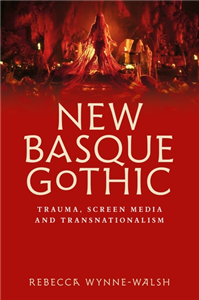
        New Basque Gothic

        Trauma, screen media and transnationalism

        by Rebecca Wynne-Walsh

        This monograph addresses the twenty-first century upsurge in Gothic screen media emanating from the Autonomous Basque Community, Euskadi, in Northern Spain. The book focuses on online video sharing, streaming and social media platforms, demonstrating the impact of multi-national co-production and distribution on the development of Basque film production; looking to the future of regional production in the digital era. This monograph fills a critical gap, presenting Basque Gothic screen media as a regionalist challenge to national models of cinema and identity. Wynne-Walsh establishes Basque Gothic as an expression of transgenerational trauma engendered by a history of state-suppression and socio-political violence. This regional iteration of the mode is addressed as a window into community perception and projection. While this project centres a Basque case study, it establishes a model for the reimagination of critical approaches to global, twenty-first century screen cultures.

      • Trusted Partner
        Literature & Literary Studies
        July 2022

        Nordic Gothic

        by Maria Holmgren Troy, Johan Hõglund, Yvonne Leffler, Sofia Wijkmark

        Nordic Gothic traces Gothic fiction in the Nordic region from its beginnings in the nineteenth century, with a main focus on the development of Gothic from the 1990s onwards in literature, film, TV and new media. The volume gives an overview of Nordic Gothic fiction in relation to transnational developments and provides a number of case studies and in-depth analyses of individual narratives. It creates an understanding of this under-researched cultural phenomenon by showing how the narratives make visible cultural anxieties haunting the Nordic countries, their welfare systems, identities and ideologies. Nordic Gothic examines how figures from Nordic folklore function as metaphorical expressions of Gothic themes and Nordic settings are explored from perspectives such as ecocriticism and postcolonialism. The book will be of interest to researchers and post- and- undergraduate students in various fields within the Humanities.

      • Trusted Partner
        Literature & Literary Studies
        September 2025

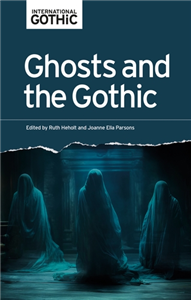
        Ghosts and the Gothic

        by Ruth Heholt, Joanne Ella Parsons

        Ghosts have long been connected with the Gothic, but until now there has not been a book dedicated to the subject. This collection examines ghostly presences (and absences) in both classic and lesser-known Gothic texts from the beginning of the genre to the present in a global context. Arguing that the undead, in the form of ghosts, are intrinsic to the Gothic mode, essays in the collection question the place of manifested spirits. The Gothic has always been 'political', and essays in this collection examine some of the most relevant issues facing us today: from the destruction of the natural environment, to questions of 'freedom', to gender politics.

      • Trusted Partner
        Humanities & Social Sciences
        December 2019

        Connecting sounds

        by Nick Crossley

      • Trusted Partner
        Literature & Literary Studies
        December 2025

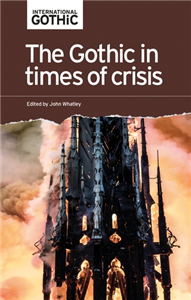
        The Gothic in times of crisis

        by John Whatley

        The Gothic in times of crisis reflects contemporary society, showing how the Gothic modes continually resets its own forms to encompass each new reality, each new apocalypse, each new plague or crisis. This collection expands oncurrent scholarship to show how the Gothic challenges our understanding of both older and recent crises and, in turn, disturbs all genre complacencies to expose and confront the problems and contradictions in what our world has been, has become, or is in danger of becoming. This collection explores Gothic's current relevance to the contestations of ideas and the underlying and visible conflicts it dramatizes across a wide range of media. In various ways, it reveals what happens to Gothic modes now they confront the increasingly Gothic realities of our times, sometimesby recalling earlier crises and ideological contestations leading up to them.

      • Trusted Partner
        September 2023

        Being Able to Stop

        Against the delusion of permanent growth

        by Edited by Jean-Pierre Wils

        We moderns were the inhabitants of an age of impetuous forward movement and voracious discontent. Our main virtue was to increase our reach. Increasing our having and accelerating our being were the signposts towards the future. We just could not get enough. Using the blinkers of ignorance and self-anaesthesia, however, we managed to forget the tremendous costs incurred by this intoxication. Now disillusionment has set in. We look to the future with anxiety. We know that we have long since crossed a line and that a revision of our lifestyle is imminent. We have a bad feeling, and doubts about progress often give way to anger and rebellion. Which stocks of the modern narrative should we defend; which would we do better to let go? How will we even "be able to stop"? The path to a different society needs an attractive goal, because without the prospect of a different, better life, we will not move forward. We should start practising immediately. There is no time to lose.

      • Trusted Partner
      • Trusted Partner
        Children's & YA
        July 2019

        Buchstabendschungel

        by Poznanski, Ursula / Illustrated by Büchner, SaBine

        Help the animals to find their letters ... easy as ABC!• By best-selling author Ursula Poznanski• Get a first feeling for letters and words!• Humorously illustrated, with funny details!After a big storm in the jungle, the little monkey collects many funny-looking things. “That are letters,” knows the smart parrot. “Somebody must have lost them”. And indeed, monkey and parrot come across strange animals that seem like something is missing. A "iger", a "nake", a "at" …   An exciting letter story for reading aloud and early reading, guessing and poetizing by yourself!

      • Trusted Partner
        Humanities & Social Sciences
        September 2021

        Human capital and empire

        by Andrew Mackillop

      • Trusted Partner
        Humanities & Social Sciences
        June 2021

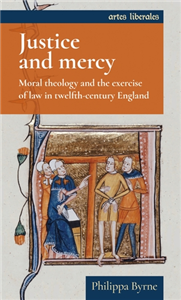
        Justice and mercy

        Moral theology and the exercise of law in twelfth-century England

        by Philippa Byrne

        This book examines one of the most fundamental issues in twelfth-century English politics: justice. It demonstrates that during the foundational period for the common law, the question of judgement and judicial ethics was a topic of heated debate - a common problem with multiple different answers. How to be a judge, and how to judge well, was a concern shared by humble and high, keeping both kings and parish priests awake at night. Using theological texts, sermons, legal treatises and letter collections, the book explores how moralists attempted to provide guidance for uncertain judges. It argues that mercy was always the most difficult challenge for a judge, fitting uncomfortably within the law and of disputed value. Shining a new light on English legal history, Justice and mercy reveals the moral dilemmas created by the establishment of the common law.

      • Trusted Partner
        Humanities & Social Sciences
        August 2023

        Critical theory and legal autopoiesis

        The case for societal constitutionalism

        by Gunther Teubner, Diana Göbel

        This volume collects and revises the key essays of Gunther Teubner, one of the world's leading sociologists of law. Written over the past twenty years, these essays examine the 'dark side' of functional differentiation and the prospects of societal constitutionalism as a possible remedy. Teubner's claim is that critical accounts of law and society require reformulation in the light of the sophisticated diagnoses of late modernity in the writings of Niklas Luhmann, Jacques Derrida and select examples of modernist literature. Autopoiesis, deconstruction and other post-foundational epistemological and political realities compel us to confront the fact that fundamental democratic concepts such as law and justice can no longer be based on theories of stringent argumentation or analytical philosophy. We must now approach law in terms of contingency and self-subversion rather than in terms of logical consistency and rational coherence.

      • Trusted Partner
      • Trusted Partner
      • Trusted Partner
        Business, Economics & Law
        June 2026

        False profits of ethical capital

        by Claire Parfitt

      Subscribe to our

      newsletter