
Your Search Results


-
Promoted Content

 2024
2024The second half of your life - a manual
Tips and strategies for successful ageing
by Dr. Petra Kiedaisch
In the middle of our lives, the cards are reshuffled: marriages are divorced, careers are questioned, friendships are ended, questions of meaning are asked, bodies change - and not just hormonally. At the same time, children leave home and parents become carers. From the age of 45, the majority of our population is at the centre of a second upheaval that affects all facets of our lives and leaves us at a loss in many ways. Not only in our daily lives, but also when it comes to planning for our own old age. This guide is designed to help us find our way. It presents the most important information from all areas relevant to a good life after 45. Leading experts from the fields of medicine, nutrition, philosophy, theology, psychology, care, law and finance give recommendations on what to look out for and what tools are needed to get through these challenging years unscathed. Useful checklists round off the articles. The book shows us the unique opportunity to see these challenges not as a crisis but as a source of strength. Not only can we come through this period of our lives healthy and happy, but we can also shape it so that the next age threshold is no longer frightening. During the second phase of adolescence, we lay the foundations for whether and how we will grow older. Be it in terms of health or living together with family and friends. With contributions from: Prof. Dr. Martin Gessmann (philosophy), Dipl. Psych. Claudia Kühner (psychology), Dr Suso Lederle (medicine), Dr Petra Forster (nutrition), Christian Hald, Anja Heine (law), Prof Dr Philipp Schreiber (finance), Prof Dr Thomas Klie (nursing care insurance), Georg Eberhardt (religion).
-
Promoted Content

 Humanities & Social SciencesJanuary 2020
The life–cycle in Western Europe, c.1300–c.1500
by S. H. Rigby, Deborah Youngs
This is the first study to examine the entire life cycle in the Middle Ages. Drawing on a wide range of secondary and primary material, the book explores the timing and experiences of infancy, childhood, adolescence and youth, adulthood, old age and, finally, death. It discusses attitudes towards ageing, rites of passage, age stereotypes in operation, and the means by which age was used as a form of social control, compelling individuals to work, govern, marry and pay taxes. The wide scope of the study allows contrasts and comparisons to be made across gender, social status and geographical location. It considers whether men and women experienced the ageing process in the same way, and examines the differences that can be discerned between northern and southern Europe. The fourteenth and fifteenth centuries suffered famine, warfare, plague and population collapse. This fascinating consideration of the life cycle adds a new dimension to the debate over continuity and change in a period of social and demographic upheaval.
-
 Trusted Partner
 Medieval historyMay 2006
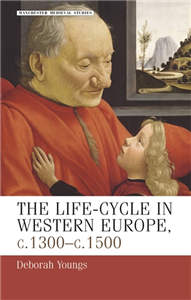
The life–cycle in Western Europe, c.1300–c.1500
by Deborah Youngs
This is the first study to examine the entire life cycle in the Middle Ages. Drawing on a wide range of secondary and primary material, the book explores the timing and experiences of infancy, childhood, adolescence and youth, adulthood, old age and, finally, death. It discusses attitudes towards ageing, rites of passage, age stereotypes in operation, and the means by which age was used as a form of social control, compelling individuals to work, govern, marry and pay taxes. The wide scope of the study allows contrasts and comparisons to be made across gender, social status and geographical location. It considers whether men and women experienced the ageing process in the same way, and examines the differences that can be discerned between northern and southern Europe. The fourteenth and fifteenth centuries suffered famine, warfare, plague and population collapse. This fascinating consideration of the life cycle adds a new dimension to the debate over continuity and change in a period of social and demographic upheaval.
-
Trusted Partner
 Humanities & Social SciencesOctober 2021
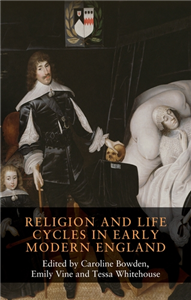
Religion and life cycles in early modern England
by Caroline Bowden, Emily Vine, Tessa Whitehouse
Religion and life cycles in early modern England assembles scholars working in the fields of history, English literature and art history to further our understanding of the intersection between religion and the life course in the period c. 1550-1800. Featuring chapters on Catholic, Protestant and Jewish communities, it encourages cross-confessional comparison between life stages and rites of passage that were of religious significance to all faiths in early modern England. The book considers biological processes such as birth and death, aspects of the social life cycle including schooling, coming of age and marriage and understandings of religious transition points such as spiritual awakenings and conversion. Through this inclusive and interdisciplinary approach, it seeks to show that the life cycle was not something fixed or predetermined and that early modern individuals experienced multiple, overlapping life cycles.
-
Trusted Partner
 April 2021
On the Purposes of Life and Whether They Exist
A philosophical fitting
by Axel Braig
The musician, doctor and philosopher Axel Braig considers philosophy a little like the weather: he looks for the right clothes for every situation. Braig is primarily concerned with practical, effective things from the two-and-a-half millennia fund of (Western) thinking, such as helpful approaches in existential crises. In this book, he introduces us to philosophical thinkers from Plato to Montaigne to Levinas and Feyerabend. Braig not only shares his own philosophical biography, but above all encourages us to philosophise ourselves.
-
Trusted Partner
 Humanities & Social SciencesAugust 2000
Discourse theory and political analysis
Identities, hegemoni
by David Howarth, Aletta J. Norval, Aletta Norval, Yannis Stavrakakis, Avril Ehrlich
One of the few books which systematically brings post-structuralist theory to bear on substantive political analysis. Offers accessible accounts of different strands of discourse theory such as deconstruction, psychoanalysis and genealogy, which are applied to the analysis of specific cases such as Northern Ireland and contemporary East European politics. Each chapter addresses a key theme and issue in contemporary politics. Draws on inspiration from Ernesto Laclau, Jacques Derrida, Michel Foucault and Jacques Lacan. Contains a clear introductory statement of the theoretical approach used and concludes with an assessment of the future directions of discourse theory in the social sciences. ;
-
Trusted Partner
-
Trusted Partner
 July 2021
My Life with Viruses
A researcher’s history of the fascinating world of pathogens
by Ernst-Ludwig Winnacker in association with Jeanne Rubner
In times of the coronavirus pandemic many people have certainly condemned them, but Professor Ernst-Ludwig Winnacker has dedicated his life to researching them and is intrigued by viruses – even if sometimes he is keenly aware of their fatal effects. To mark his 80th birthday the biochemist describes the co-evolution and co-existence as well as the eternal ‘battle’ between humans and viruses. Winnacker takes up the cause of these ‘biological elements between animate and inanimate nature’ because they play an important role in fundamental research and genetic technology, and without them human beings would not be what they are.
-
Trusted Partner

 July 2021
The World of the North
Between Ragnarok and welfare utopia: A cultural-historical deconstruction
by Bernd Henningsen
— Analysis of how we view Europe's North and how this image emerged — An outsider's perspective on Nordic societies and their self image — Serves as an introduction into Northern European culture and society Our image of Northern Europe has been shaped by projections and desires in the long history of encounters: berserkers and war atrocities, bad weather, beautiful nature, stable political systems, social welfare, equality and prosperity, peacefulness, low corruption, hygge and Bullerby – all this is part of the Nordic narrative. But what about the religious, linguistic and ethnic homogeneity, what about the muchvaunted Nordic cooperation? How do politics "work" in the North? Why are Northern Europeans the happiest people?
-
Trusted Partner
 Humanities & Social SciencesFebruary 2022
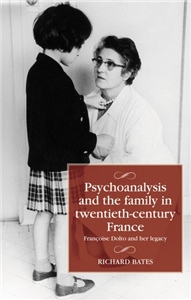
Psychoanalysis and the family in twentieth-century France
Françoise Dolto and her legacy
by Richard Bates, David Hopkin, Maire Cross, Jennifer Sessions
In the last quarter of the twentieth century, if French people had a parenting problem or dilemma there was one person they consulted above all: Françoise Dolto (1908-88). But who was Dolto? How did she achieve a position of such influence? What ideas did she communicate to the French public? This book connects the story of Dolto's rise to two broader histories: the dramatic growth of psychoanalysis in postwar France and the long-running debate over the family and the proper role of women in society. It shows that Dolto's continued reputation in France as a liberal and enlightened educational thinker is at best only partially deserved and that conservative and anti-feminist ideas often underpinned her prominent public interventions. While Dolto retains the status of a national treasure, her career has had far-reaching and sometimes harmful repercussions for French society, particularly in the treatment of autism.
-
Trusted Partner
-
Trusted Partner
 Literature & Literary StudiesMay 2026
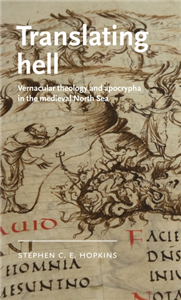
Translating hell
Vernacular theology and apocrypha in the medieval North Sea
by Stephen C. E. Hopkins
In the Middle Ages, hell was useful because it was vaguely defined. Canonical scriptures scarcely mention hell, leaving much to the imaginations of early Christians, who used it to sort out who belonged within the faith. This book explores how hell became a place for literary experiments with local challenges in theology and identity. Following the reception and transformations of two popular hell apocrypha, it argues that they served as this role because of their liminal textual authority. As noncanonical scriptures, apocrypha afforded medieval writers space to revise their hells (since they were not actually scripture), while also encouraging readers to revere those experiments as valid (since they seemed like scripture). The book brings together adaptations from early medieval England, Iceland, Ireland, and Wales, placing the early vernacular theologies of the North Sea in comparative conversation.
-
Trusted Partner
 AnthropologyMarch 2017
Ageing selves and everyday life in the north of England
Years in the making
by Series edited by Alexander Smith, Cathrine Degnen
Seeking to explore what it means to grow older in contemporary Britain from the perspective of older people themselves, this richly detailed ethnographic study engages in debates over selfhood and people's relationships with time. Based on research conducted in a former coal mining village in South Yorkshire, England, Cathrine Degnen explores how the category of 'old age' comes to be assigned and experienced in everyday life through multiple registers of interaction, including that of social memory, in a postindustrial context of great social transformation. Degnen argues that the complex interplay of social, cultural and physical attributes of ageing means that older people can come to have a different position in relation to time and to the self than younger people, unseating normative conventions about narrative and temporality.
-
Trusted Partner
 AnthropologyJanuary 2014
Ageing selves and everyday life in the north of England
Years in the making
by Cathrine Degnen
Seeking to explore what it means to grow older in contemporary Britain from the perspective of older people themselves, this richly detailed ethnographic study engages in debates over selfhood and people's relationships with time. Based on research conducted in a former coal mining village in South Yorkshire, England, Cathrine Degnen explores how the category of 'old age' comes to be assigned and experienced in everyday life through multiple registers of interaction, including that of social memory, in a postindustrial context of great social transformation. Challenging both the notion of a homogenous relationship with time across generations and the idea of a universalised middle-aged self, Degnen argues that the complex interplay of social, cultural and physical attributes of ageing means that older people can come to have a different position in relation to time and to the self than younger people, unseating normative conventions about narrative and temporality.
-
Trusted Partner

 2023
2023Medication Analysis
Basic principles and case examples
by Pharm. D. Ina Richling
Several different pills prescribed by many different physicians: pharmacists encounter patients in this situation every day! What at first seems quite normal can, on closer inspection, be fraught with considerable risks of drug-related problems. Using this analysis as a core component of medication management, pharmacies have the key risk minimisation tool at their disposal. The authors guide their readers step by step through the discussions with the patient, the stages of the analysis, and the clear documentation. Case examples reflect on the content and illustrate implementation. The launch of pharmaceutical services enables an improvement in the safety and efficacy of customers‘ drug therapy in the pharmacy by means of the service „Extended medication counselling for polymedication“. Everything pharmacists need to know for the necessary medication analysis can be found in this book. This completely revised 2nd edition includes: - Important information on pharmaceutical services - Illustrative case examples on many indications - QR codes that lead to additional digital material Whether it is a detailed adjustment or a major change to medication: every patient benefits from the intervention.
-
Trusted Partner
 Humanities & Social SciencesJanuary 2023
Rural quality of life
by Pia Heike Johansen, Anne Tietjen, Evald Bundgård Iversen, Henrik Lauridsen Lolle, Jens Kaae Fisker
-
Trusted Partner

 Biography & True StoriesJune 2014
A Biography of Paul Watzlawick
The Discovery of the Present Moment
by Andrea Köhler-Ludescher
This book, the world's first biography of Paul Watzlawick, written by his great-niece, describes the life of this philosopher, therapist, and best-selling author. Paul Watzlawick had a talent for languages and he led an adventurous life, from his childhood in Villach to studying in Venice after the war, to analyst training under C. G. Jung in Zurich, an attempt at establishing himself in India and then in El Salvador as a therapist, and finally to the Mental Research Institute (MRI) in the United States, headed by Don D. Jackson, a venerable scientist. This marked the beginning of the second half of his life, his amazing career as a communication researcher, a pioneer of systemic therapy, a radical constructivist, and a great thinker regarding the divisions between East and West. With many letters, lectures, interviews, and statements from contemporary witnesses and family members, this book makes Paul Watzlawick accessible as a human being and as a spiritually inspired, leading 20th century thinker. It includes a variety of unpublished material from Watzlawick, and introduces a comprehensive and exciting picture of the scientist and cosmopolitan person, Paul Watzlawick. Target Group: For people interest in Paul Watzlawick, communication sciences, systemic therapy, and constructivism.
-
Trusted Partner
 Lifestyle, Sport & LeisureJune 2024
Round our way
Sam Hanna's visual legacy
by Heather Nicholson
Sam Hanna (1903-96), a pioneering filmmaker from Burnley, Lancashire, was dubbed the 'Lowry of filmmaking' by BBC broadcaster Brian Redhead in the 1980s. The well-meant label stuck, even though it misses the variety of Hanna's remarkable output. Hanna's intimate glimpses into the lives of strangers enable us to imagine the possible stories that lie behind the images. Away from mid-century exponents of documentary filmmaking and photography, Hanna shows us humanity and a microcosm of a world in change, where his subjects are caught up in issues far beyond their grasp that we, as onlookers years later, encounter and see afresh. Written and curated by historian Heather Norris Nicholson, Round our way combines stills, essays and archive photography to document Hanna's unique visual record on film, particularly in northern England, but also further afield, during decades of profound change.
-
Trusted Partner
 November 2016
Coming to Terms with Life
by Matthias Wengenroth
Do you struggle with thoughts and feelings that make life difficult? Have you tried all sorts of ways of dealing with this without getting anywhere? Do you feel that life is passing you by? Acceptance and commitment therapy (ACT), which this book describes in a clear and entertaining way, provides new and very enlightening insights into the causes of human suffering. At the same time, ACT shows how we can improve the way we handle the difficult aspects of being human, while also developing our abilities and strengths. This title shows how using the described simple but effective methods can lead you to a happier, better life. Target Group: people who want to utilize their potential more fully, people interested in acceptance and commitment therapy, people practicing or interested in psychotherapy (psychologists, doctors, coaches, social workers)
-
Trusted Partner
 Humanities & Social SciencesJune 2024
Passages
On Geo-Analysis and the aesthetics of precarity
by Sam Okoth Opondo, Michael J. Shapiro
Passages: On geo-analysis and the aesthetics of precarity is a multi-genre and transdisciplinary text addressing themes such as colonialism, nuclear zones of abandonment, migration control regimes, transnational domestic work, the biocolonial hostilities of the hospitality industry, legal precarities behind the international criminal justice regime, the shadow-worlds of the African soccerscape, and immunity regimes related to the COVID-19 pandemic. This book invites inquiry into today's apocalyptic narratives, humanitarian reason, and international criminal justice regimes, as well as the precarity generated by citizen time and 'consulate time'. The aesthetic breaks emerging from the book's image-text montage draw attention to the ethics of encounter and passage that challenges colonial, domestic, and nation-statist sovereignty regimes of inattention.




