
Rachel Amphlett
USA Today bestselling author Rachel Amphlett is the creator of over 25 crime thrillers. Rachel’s titles are available for consideration to all parties interested in licensing IP.
View Rights Portal
USA Today bestselling author Rachel Amphlett is the creator of over 25 crime thrillers. Rachel’s titles are available for consideration to all parties interested in licensing IP.
View Rights Portal

This book offers the first comprehensive history of white workers from the end of the First World War to Zimbabwean independence in 1980. It reveals how white worker identity was constituted, examines the white labouring class as an ethnically and nationally heterogeneous formation comprised of both men and women, and emphasises the active participation of white workers in the ongoing and contested production of race. White wage labourers' experiences, both as exploited workers and as part of the privileged white minority, offer insight into how race and class co-produced one another and how boundaries fundamental to settler colonialism were regulated and policed. Based on original research conducted in Zimbabwe, South Africa and the UK, this book offers a unique theoretical synthesis of work on gender, whiteness studies, labour histories, settler colonialism, Marxism, emotions and the New African Economic History.
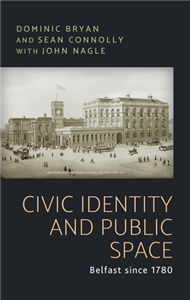
Civic identity and public space, focussing on Belfast, and bringing together the work of a historian and two social scientists, offers a new perspective on the sometimes lethal conflicts over parades, flags and other issues that continue to disrupt political life in Northern Ireland. It examines the emergence during the nineteenth century of the concept of public space and the development of new strategies for its regulation, the establishment, the new conditions created by the emergence in 1920 of a Northern Ireland state, of a near monopoly of public space enjoyed by Protestants and unionists, and the break down of that monopoly in more recent decades. Today policy makers and politicians struggle to devise a strategy for the management of public space in a divided city, while endeavouring to promote a new sense of civic identity that will transcend long-standing sectarian and political divisions.
 Trusted Partner
Insanity, identity and empire examines the formation of colonial social identities inside the institutions for the insane in Australia and New Zealand. Taking a large sample of patient records, it pays particular attention to gender, ethnicity and class as categories of analysis, reminding us of the varied journeys of immigrants to the colonies and of how and where they stopped, for different reasons, inside the social institutions of the period. It is about their stories of mobility, how these were told and produced inside institutions for the insane, and how, in the telling, colonial identities were asserted and formed. Having engaged with the structural imperatives of empire and with the varied imperial meanings of gender, sexuality and medicine, historians have considered the movements of travellers, migrants, military bodies and medical personnel, and 'transnational lives'. This book examines an empire-wide discourse of 'madness' as part of this inquiry.
Trusted Partner
 Trusted Partner


Questions of identity trigger controversial and highly emotional discussions in the political and social debate. The positions range from radically emancipatory perspectives to authoritarian and restorative efforts on the far right wing of politics. Liberal democracies are now opening up – slowly – as identity- and gender-sensitive forums. Opposite them are the 'new ethics' of illiberal democracies and totalitarian states that are aimed at ethnic homogeneity and gender uniformity. But that's not to say that there is unity in the liberal settings on the necessary degree of identity politics. Both language and gender politics are deeply controversial. Do we need an 'identity' and, if so, which one or how many? Can the identity debate be extended by means of other concepts?
Trusted Partner

Making home explores the figure of the orphan child in a broad selection of contemporary US novels by popular and critically acclaimed authors Barbara Kingsolver, Linda Hogan, Leslie Marmon Silko, Marilynne Robinson, Michael Cunningham, Jonathan Safran Foer, John Irving, Kaye Gibbons, Octavia Butler, Jewelle Gomez and Toni Morrison. The orphan child is a continuous presence in US literature, not only in children's books and nineteenth-century texts, but also in a variety of genres of contemporary fiction for adults. Making home examines the meanings of this figure in the contexts of American literary history, social history and ideologies of family, race and nation. It argues that contemporary orphan characters function as links to literary history and national mythologies, even as they may also serve to critique the limits of literary history, as well as the limits of familial and national belonging.
Trusted Partner

British culture after Empire is the first collection of its kind to explore the intertwined social, cultural and political aftermath of empire in Britain from 1945 up to and beyond the Brexit referendum of 2016, combining approaches from the fields of history, English and cultural studies. Against those who would deny, downplay or attempt to forget Britain's imperial legacy, the various contributions expose and explore how the British Empire and the consequences of its end continue to shape Britain at the local, national and international level. As an important and urgent intervention in a field of increasing relevance within and beyond the academy, the book offers fresh perspectives on the colonial hangovers in post-colonial Britain from up-and-coming as well as established scholars.
Trusted Partner

For the first time, this volume explores the identities of leprosy sufferers and other people affected by the disease in medieval Europe. The chapters, including contributions by leading voices such as Luke Demaitre, Carole Rawcliffe and Charlotte Roberts, challenge the view that people with leprosy were uniformly excluded and stigmatised. Instead, they reveal the complexity of responses to this disease and the fine line between segregation and integration. Ranging across disciplines, from history to bioarchaeology, Leprosy and identity in the Middle Ages encompasses post-medieval perspectives as well as the attitudes and responses of contemporaries. Subjects include hospital care, diet, sanctity, miraculous healing, diagnosis, iconography and public health regulation. This richly illustrated collection presents previously unpublished archival and material sources from England to the Mediterranean.
Trusted Partner
Trusted Partner
Trusted Partner
At every level of human interaction new levels of identity-based tension are in evidence. Contributors to this book explore facets of fragmentation processes within systems of state and interstate organisation, how they influence the use of negotiation, and how negotiation might be used to effect renewed coherence. Following Anstey's (Ch1) introductory chapter framing the nature and shape of fragmentation dynamics, Zartman (Ch 2) argues that the use of negotiation as a process of conflict resolution is deeply shaped by identity groups whose internal coherence is dependent on sustaining a negative identity of others. International relations are no longer solely the realm of experienced diplomats but are shaped as Meerts (Ch3) points out by politicians seeking to be responsive to voting publics rather than wider concerns. Anstey digs into problems of fragmentation (Ch. 4) and Troitskiy (Ch 5) points out how a reluctant acceptance of the power of 'the other' can lead to a form of strategic stability in relations. Anstey and Meerts (Ch 6) point out in their analysis of the Israeli-Palestinian case as an identity conflict turned very bad. Guggenbuhl (Ch 7 ) reveals how structures and processes have been designed within the EU to prevent, contain and regulate conflicts to limit risks of confrontation and fragmentation. Schuessler (Ch 8) to advocates a shift away from a template or roadmap approach to EU membership to a cohesion based on non-dominance. There is still a strong desire on the part of some states, like Northern Macedonia, to become EU members, as reflected in Manton's (Ch 9). Paula Garzon and Frans Schram explain the success of the Colombia Peace Negotiations (Ch 10), while Odigie and da Rocha (Ch 11) analyse the struggle faced by ECOWAS to influence coup leaders in Mali to return to constitutional government and changes of government by constitutional means. Liang (Ch12) discusses how the internet as the modern vehicle of inter-state, inter-group and interpersonal communication has become weaponised. In Ch 13 Anstey draws some lessons from contributions to the compilation.
Trusted Partner

This is the first book to situate the territories and collective identities of former Yugoslavia within the politics of race - not just ethnicity - and the history of how ideas of racialised difference have been translated globally. The book connects critical race scholarship, global historical sociologies of 'race in translation' and south-east European cultural critique to show that the Yugoslav region is deeply embedded in global formations of race. In doing this, it considers the everyday geopolitical imagination of popular culture; the history of ethnicity, nationhood and migration; transnational formations of race before and during state socialism, including the Non-Aligned Movement; and post-Yugoslav discourses of security, migration, terrorism and international intervention, including the War on Terror and the present refugee crisis.
Trusted Partner
 Trusted Partner
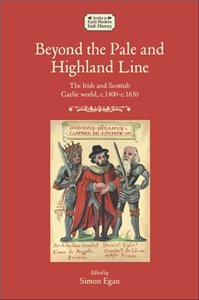
This book offers important new insights into the history and culture of the Gaelic-speaking world from the mid-fifteenth century through to the reign of James VI and I. Throughout this period, the reach of the English and Scottish crowns within these western regions was limited. The initiative lay with local communities and royal power was contingent upon negotiating with well-established and largely autonomous aristocratic lineages. Moreover, events within this western world could exert a powerful, often unpredictable, influence upon the affairs of the wider archipelago. Using a series of case studies, this collection examines the evolving relationship between Ireland and Scotland in rich detail. It demonstrates how this world interacted with the encroaching English and Scottish states and underlines the importance of paying closer attention to this neglected area of Irish and British history.
Trusted Partner
 Trusted Partner

Considers how notions of Britishness were constructed and promoted through architecture, landscape, painting, sculpture and literature. Maps important moments in the self-conscious evolution of the idea of 'nation' against a broad cultural historical framework. An important addition to the field of postcolonial studies as it looks at how British identity creation affected those living in England - most study in this area has thus far focused on the effect of such identity creation upon the colonial subject. Broad appeal due to wide subject matter covered. Examines just how 'constructed' a national identity is - past and present.
Trusted Partner
 Trusted Partner
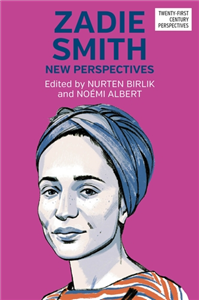
Zadie Smith's fiction reimagines subjectivity, relationality, and the conditions of contemporary life. This book offers a timely reassessment of her work, addressing identity, urban experience, and the category of the human. Moving beyond postcolonial and multiculturalist readings, it brings psychoanalytic, historical, symptomatic, and cultural materialist perspectives to bear across her novels, stories, essays, and plays. The collection explores how Smith's characters, shaped by diverse backgrounds and settings, challenge fixed ideas of Britishness and personhood. It argues that her writing opens up a new ontological space-defined by fluid identities, shifting subjectivities, and evolving forms of relationality. By reconsidering both the human and the spatial in Smith's work, the book makes a valuable contribution to contemporary literary criticism and to current thinking on narrative, identity, and urban life.
Trusted Partner

The Russian Revolution of 1917 was not just a world-historical event in its own right, but also struck powerful blows against racism and imperialism, and so inspired many black radicals internationally. This edited collection explores the implications of the creation of the Soviet Union and the Communist International for black and colonial liberation struggles across the African diaspora. It examines the critical intellectual influence of Marxism and Bolshevism on the current of revolutionary 'black internationalism' and analyses how 'Red October' was viewed within the contested articulations of different struggles against racism and colonialism. Challenging European-centred understandings of the Russian Revolution and the global left, The Red and the Black offers new insights on the relations between Communism, various lefts and anti-colonialisms across the Black Atlantic - including Garveyism and various other strands of Pan-Africanism. The volume makes a major and original intellectual contribution by making the relations between the Russian Revolution and the Black Atlantic central to debates on questions relating to racism, resistance and social change.
Trusted Partner



