
Your Search Results
-

-

Modjaji Books
Modjaji Books is a small, independent, feminist publishing company, that started in 2007 in Cape Town.
View Rights Portal
-
Promoted Content
-
Promoted Content
-
 Trusted Partner

 March 1990
Vereinsstrafen als Vertragsstrafen.
Ein Beitrag zum inneren Vereinsrecht.
by Look, Frank van
-
Trusted Partner
-
Trusted Partner

 March 2026
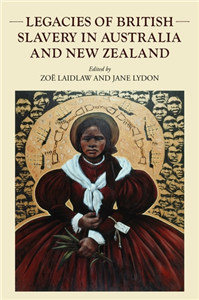
Legacies of British slavery in Australia and New Zealand
by Zoë Laidlaw, Jane Lydon
This book investigates the legacies of British slavery beyond Britain, focusing upon the colonisation of Australia and New Zealand, and explores why this history has been overlooked. After August 1833, when the British Parliament abolished slavery in the British Caribbean, Mauritius and the Cape, the former slave-owners were paid compensation for the loss of their 'property'. New research has begun to show that many beneficiaries had ties to other parts of the British Empire, including the settler colonies of Australia, New Zealand, Canada and South Africa. Through a range of case studies, contributors to this collection trace the movement of people, goods, capital, and practices from the Caribbean to the new Australasian settler colonies. Chapters consider a range of places, people and themes to reveal the varied ways that slavery continued to shape imperial relationships, economic networks, and racial labour regimes after 1833.
-
Trusted Partner
Humanities & Social SciencesSeptember 2024
Ireland, slavery and the Caribbean
Interdisciplinary perspectives
by Finola O'Kane, Ciarán O'Neill
Ireland, slavery and the Caribbean is a complex and ground-breaking collection of essays. Grounded in history, it integrates perspectives from art historians, architectural and landscape historians, and literary scholars to produce a genuinely interdisciplinary collection that spans from 1620-1830: the high point of European colonialism. By exploring imperial, national and familial relationships from their building blocks of plantation, migration, property and trade, it finds new ways to re-create and question how slavery made the Atlantic world.
-
Trusted Partner
 Humanities & Social SciencesMarch 2017
The harem, slavery and British imperial culture
Anglo-Muslim relations in the late nineteenth century
by Diane Robinson-Dunn
This book focuses on British efforts to suppress the traffic in female slaves destined for Egyptian harems during the late-nineteenth century. It considers this campaign in relation to gender debates in England, and examines the ways in which the assumptions and dominant imperialist discourses of these abolitionists were challenged by the newly-established Muslim communities in England, as well as by English people who converted to or were sympathetic with Islam. While previous scholars have treated antislavery activity in Egypt first and foremost as an extension of earlier efforts to abolish plantation slavery in the New World, this book considers it in terms of encounters with Islam during a period which it argues marked a new departure in Anglo-Muslim relations. This approach illuminates the role of Islam in the creation of English national identities within the global cultural system of the British Empire. This book would appeal to those with an interest in British imperial history; Islam; gender, feminism, and women's studies; slavery and race; the formation of national identities; global processes; Orientalism; and Middle Eastern studies.
-
Trusted Partner
 Humanities & Social SciencesNovember 2022
Ireland, slavery and the Caribbean
by Finola O'Kane, Ciarán O'Neill, Alan Lester
-
Trusted Partner
 Literature & Literary StudiesAugust 2025
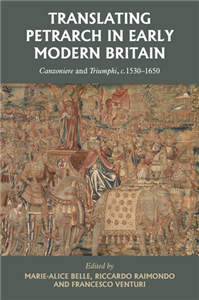
Translating Petrarch in early modern Britain
Canzoniere and Triumphi, c. 1530–1650
by Marie-Alice Belle, Riccardo Raimondo, Francesco Venturi
Translating Petrarch in early modern Britain gathers twelve essays by international scholars focusing on the translation of Petrarch's vernacular verse (Canzoniere and Triumphi) into English, from the Tudor age to the mid-seventeenth century (and beyond). Approaching translation as an interpretive process, but also a mode of literary emulation and cultural engagement with Petrarch's prestigious precedent, the collection explores the complex and interconnected trajectories of both poetic works in English and Scottish literary milieux. While situating each translation in its distinct historical, material, and literary context, the essays trace the reception of Petrarch's works in early modern Britain through the combined processes of linguistic and metric innovation, literary imitation, musical adaptation and cultural and material 'domestication'. The collection sheds light on the origins and development of early modern English Petrarchism as part of wider transnational - and indeed, translational-European literary culture.
-
Trusted Partner
The ArtsJune 2025
Death in modern theatre
Stages of mortality
by Adrian Curtin
Death in modern theatre offers a unique account of modern Western theatre, focusing on the ways in which dramatists and theatre-makers have explored historically informed ideas about death and dying in their work. It investigates the opportunities theatre affords to reflect on the end of life in a compelling and socially meaningful fashion. In a series of interrelated, mostly chronological, micronarratives beginning in the late nineteenth century and ending in the early twenty-first century, this book considers how and why death and dying are represented at certain historical moments using dramaturgy and aesthetics that challenge audiences' conceptions, sensibilities, and sense-making faculties. It includes a mix of well-known and lesser-known plays from an international range of dramatists and theatre-makers, and offers original interpretations through close reading and performance analysis.
-
Trusted Partner
 Literature & Literary StudiesOctober 2025
Early modern drama and the theatre of war
Militarism, conflict and disruption in the plays of Shakespeare and his contemporaries
by Bronwen Price, Hilary Hinds
This volume explores the disruptive effects of militarism, war and social unrest in early modern drama. Engaging with Simon Barker's seminal work on dramatic representations of war and militarism, contributors highlight what often lies hidden beneath the surface of martial narratives, treating them as formative interventions in contemporary discourses, whether in justifying war, excluding dissident voices or shaping cultural identities. Discussions include new examinations of militarism, the figure of the soldier and early modern theories of war in Shakespearean tragedy, history and comedy, alongside antimasque and dramatic satire by lesser-known playwrights. The essays investigate how ideas of war underpin emerging concepts of gender, leadership, marriage and the family, as well as the continuing mobilisation of Shakespearean drama in the context of modern armed conflict. Together, they offer rich new contributions to the current lively critical debates on this topic.
-
Trusted Partner
 Humanities & Social SciencesJune 2014
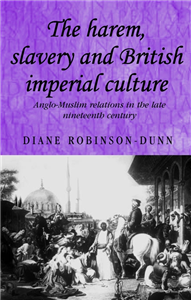
The harem, slavery and British imperial culture
Anglo-Muslim relations in the late nineteenth century
by Diane Robinson-Dunn, Andrew Thompson, John Mackenzie, Kim Latham
This book focuses on British efforts to suppress the traffic in female slaves destined for Egyptian harems during the late nineteenth century. It considers this campaign in relation to gender debates in England, and examines the ways in which the assumptions and dominant imperialist discourses of these abolitionists were challenged by the newly established Muslim communities in England, as well as by English people who converted to or were sympathetic with Islam. While previous scholars treated antislavery activity in Egypt first and foremost as an extension of earlier efforts to abolish plantation slavery in the New World, this book considers it in terms of encounters with Islam during a period which it argues marked a new departure in Anglo-Muslim relations. This approach illuminates the role of Islam in the creation of English national identities within the global cultural system of the British Empire. This book will appeal to those with an interest in British imperial history; Islam; gender, feminism and women's studies; slavery and race; the formation of national identities; global processes; Orientalism; and Middle Eastern studies. ;
-
Trusted Partner
 The ArtsFebruary 2026
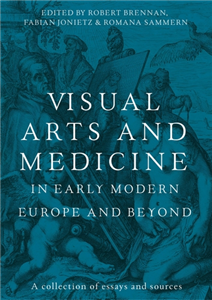
Visual arts and medicine in early modern Europe and beyond
A collection of essays and sources
by Robert Brennan, Fabian Jonietz, Romana Sammern
This book opens up new perspectives on the relationship between art, medicine, and science in late-medieval and early modern Europe. Looking beyond the traditional nexus of art, anatomy, and optics, the volume sheds light on a broader array of connections between artists and physicians: collaborations between painters and doctors on colour charts, handwork skills common to sculptors and surgeons, the transmission of art theory through medical texts long before the emergence of art writing itself as an independent genre, and the kinship of medical diagnosis with early modes of connoisseurship. Reconfiguring the histories of art, medicine, and science, the book also traverses conventional boundaries between physical and mental health, religious and medical modes of healing, menial and exalted forms of knowledge and labour, as well as vernacular and scientific understandings of human difference, including gender, race, and neurodiversity.
-
Trusted Partner
 Literature & Literary StudiesJune 2022
The early modern English sonnet
Ever in motion
by Laetitia Sansonetti, Rémi Vuillemin, Enrica Zanin
This volume questions and qualifies commonly accepted assumptions about the early modern English sonnet: that it was a strictly codified form, most often organised in sequences, which only emerged at the very end of the sixteenth century and declined as fast as it had bloomed, and that minor poets merely participated in the sonnet fashion by replicating established conventions. Drawing from book history and relying on close reading and textual criticism, this collection offers a more nuanced account of the history of the sonnet. It discusses how sonnets were written, published and received in England as compared to mainland Europe, and explores the works of major (Shakespeare, Sidney, Spenser) and minor (Barnes, Harvey) poets alike. Reflecting on current editorial practices, it also provides the first modern edition of an early seventeenth-century Elizabethan miscellany including sonnets presumably by Sidney and Spenser.
-
Trusted Partner
 Humanities & Social SciencesApril 2025
Beyond the antislavery haven
Slavery in early Canadian print culture, 1789–1889
by Ellie Bird
This book challenges the idealised narrative of Canada as an antislavery haven for self-liberated people to explore Canada's complicated relationship with slavery. Examining advertisements, abolitionist texts and narratives about slavery in Canadian newspapers and the texts that were printed alongside them, it shows how Canadian readers and enslavers developed an image of themselves as belonging to an antislavery community even while recognising their own complicity in slavery. The book explores narratives that depict the lives of Black settlers in Canada and how slave narratives circulated in Canada. Canada's relationship with slavery is far more complicated than seeing it as either an antislavery haven or a slaveholding space. Canada was connected to Britain, France, the Caribbean and the United States and this was central to how Canadians and Canadian readers fashioned their self-image in relation to slavery.
-
Trusted Partner
 Humanities & Social SciencesOctober 2020
A global history of early modern violence
by Erica Charters, Marie Houllemare, Peter H. Wilson
-
Trusted Partner
 Humanities & Social SciencesFebruary 2025
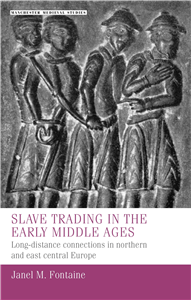
Slave trading in the Early Middle Ages
Long-distance connections in northern and east central Europe
by Janel M. Fontaine
This book examines slave trading in northern and eastern central Europe from the seventh century through the eleventh century, tracing its growth, climax, and decline. Demand from the Islamic world in the ninth and tenth centuries prompted changes in warfare, trade logistics, and administrative responses to slavery in the slaving zones centred on the British Isles and the Czech lands. This study establishes slave trading as a core driver of connectivity and presents a model for this practice in politically fragmented areas of Europe.
-
Trusted Partner
 Literature & Literary StudiesApril 2021
Positive emotions in early modern literature and culture
by Cora Fox, Bradley J. Irish, Cassie M. Miura
-
Trusted Partner
 Literature & Literary StudiesNovember 2019
Transnational connections in early modern theatre
by Pavel Drábek, M. A. Katritzky
-
Trusted Partner
 Humanities & Social SciencesApril 2020
Early modern war narratives and the Revolt in the Low Countries
by Raymond Fagel, Leonor Álvarez Francés, William G. Naphy, Beatriz Santiago Belmonte



