
NeWest Press
Livres Canada Books
View Rights Portal


 Trusted Partner


A sibling? Duck Merle is about to haveeight! No wonder she’s so excited!She happily makes a mobile with Dad.When the chicks finally hatch, Merle isenchanted. In the hustle and bustle ofeveryday family life, Merle discovershow nice it is to cuddle with the littleones, help mum and dad with nappychanging and feeding, make her siblingslaugh and take good care of them.And luckily, there’s enough room forthem all in mummy and daddy’s heartsand on their laps!A sensitive read-aloud story about theadventure of becoming a big sibling,the happiness of still being allowed tobe small when you’re big, and all thebeautiful aspects of a strong sibling relationship– from the very beginning.
Trusted Partner


The dream of the ideal city is as old as the city itself. Since real cities often develop chaotically, the idea of perfecting them, even tearing them down if necessary, and rebuilding them according to the prevailing patterns of thought is an obvious one. The latest manifestation of this utopia is the smart city - the intelligent city, packed with the latest technology and extensively digitised. But will air taxis and hyperloops, ubiquitous sensors, access control systems and data-driven management really make the city of the future a better place to live? Are they the answer to the enormous challenges facing today's fast-growing metropolises? Or will the supposed administrative paradise ultimately mutate into a digital juggernaut?
Trusted Partner

The turn of the twenty-first century has witnessed the striking advance of pornography into the Western cultural mainstream. Symptomatic of this development has been the use by writers, artists, and film-makers of the imagery and aesthetics of pornography, in works which have, often on this basis, achieved considerable international success. Amongst these artists are a number of French authors and directors - such as Michel Houellebecq, Catherine Breillat, Virginie Despentes, or Catherine Millet - whose work has often been dismissed as trashy or exploitative, but whose use of pornographic material may in fact be indicative of important contemporary concerns. In this, the first study of this significant trend, the authors explore how the reference to pornography encodes diverse political, cultural, and existential questions, including relations between the sexes, the collapse of avant-garde politics, gay sexualities in the time of AIDS, the anti-feminist backlash, the relation to the body and illness, the place of fantasy, and the sexualisation of children. It will be of interest to undergraduates, graduates, and researchers in the fields of French culture, gender, film and media studies.
Trusted Partner

The turn of the twenty-first century has witnessed the striking advance of pornography into the Western cultural mainstream. Symptomatic of this development has been the use by writers, artists, and film-makers of the imagery and aesthetics of pornography, in works which have, often on this basis, achieved considerable international success. Amongst these artists are a number of French authors and directors - such as Michel Houellebecq, Catherine Breillat, Virginie Despentes, or Catherine Millet - whose work has often been dismissed as trashy or exploitative, but whose use of pornographic material may in fact be indicative of important contemporary concerns. In this study of a very significant trend, the authors explore how the reference to pornography encodes diverse political, cultural, and existential questions, including relations between the sexes, the collapse of avant-garde politics, gay sexualities in the time of AIDS, the anti-feminist backlash, the relation to the body and illness, the place of fantasy, and the sexualisation of children. It will be of interest to undergraduates, graduates, and researchers in the fields of French culture, gender, film and media studies.
Trusted Partner
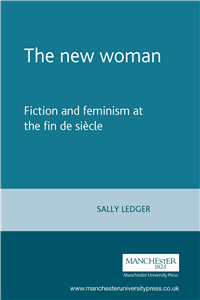
Sexually transgressive, politically astute and determined to claim educational and employment rights equal to those enjoyed by men, the new woman took centre stage in the cultural landscape of late-Victorian Britain. By comparing the fictional representations with the lived experience of the new woman, Ledger's book makes a major contribution to an understanding of the 'woman question' at the fin de siecle. She alights on such disparate figures as Eleanor Marx, Gertrude Dix, Dracula, Oscar Wilde, Olive Schreiner and Radclyffe Hall. Focusing mainly on the last two decades of the nineteenth century, the book's later chapters project forward into the twentieth century, considering the relationship between new woman fiction and early modernism as well as the socio-sexual inheritance of the 'second generation' new woman writers. ;
Trusted Partner
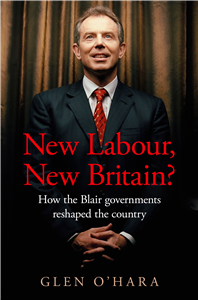
A bold and balanced re-appraisal of New Labour in power. Rewriting the story of New Labour, Glen O'Hara challenges the prevailing narrative to present a more balanced and positive assessment. New Labour, new Britain is the first book to examine both the intentions behind New Labour's domestic policies and their real-world effects, moving beyond the entrenched left-right debates that have dominated the party's legacy. The period from 1997 to 2007 marked a pivotal moment in modern British history, as New Labour sought to reshape Britain into a more cohesive and forward-thinking society. It saw the rise of socially liberal attitudes and flourishing public services under a government committed to rebuilding and investing in them. Yet New Labour's track record was far from flawless and its legacy remains complicated and contested. Through interviews with key players and rigorous archival research, O'Hara offers a new perspective on Tony Blair's years in power. Painting a fuller picture of New Labour's successes and challenges, he highlights its lasting impact on Britain and offers a thoughtful reassessment of its place in history.
Trusted Partner
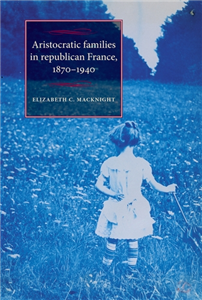
This is a study of the daily life, concerns, and dynamics of aristocratic families in the France of the Third Republic. Elizabeth Macknight draws on a vast range of material from private archives to contest assumptions about the irrelevancy of the nobility under the republican regime. Within a challenging political and economic environment nobles were determined to protect their interests and conserve the integrity of the aristocratic way of life. The convictions that underpinned nobles' responses to government initiatives emerge from the sources with freshness and clarity. Macknight interweaves male and female perspectives to provide a very full account of familial activities and decision-making with attention to all stages of the human lifecycle. Nobles' experiences of parenting and grandparenting, sibling and cousin relations, marriage, property negotiations, and interaction with servants are brought to light in a vivid and engaging narrative.
Trusted Partner
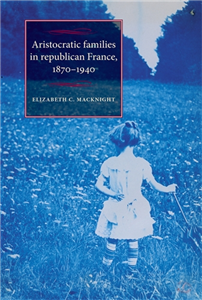
This is a study of the daily life, concerns, and dynamics of aristocratic families in the France of the Third Republic. Elizabeth Macknight draws on a vast range of material from private archives to contest assumptions about the irrelevancy of the nobility under the republican regime. Within a challenging political and economic environment nobles were determined to protect their interests and conserve the integrity of the aristocratic way of life. The convictions that underpinned nobles' responses to government initiatives emerge from the sources with freshness and clarity. Macknight interweaves male and female perspectives to provide a very full account of familial activities and decision-making with attention to all stages of the human lifecycle. Nobles' experiences of parenting and grandparenting, sibling and cousin relations, marriage, property negotiations, and interaction with servants are brought to light in a vivid and engaging narrative. ;
Trusted Partner

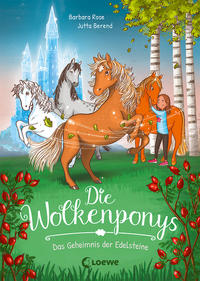
The Magic Cloud Ponies - The Secret of the Diamonds (Vol.1) Four Hooves full of Magic Lotti, her parents and her sister have just moved to Wetterstein, because they have inherited Grandma Luna's big beautiful house. When Lotti moves into her new room, she finds a thick book on the shelf - the book of magical ponies. And just as she is about to open it, a dainty little bracelet with four precious stones on it falls out. Shortly thereafter, an unknown pony appears at the horse farm to which Lotti's older sister Paula has dragged her. It won't let anyone touch it - except Lotti. And then the pony starts talking to her! The pony is called Whirlwind because it comes from a magical land, the land of Light Blue. And this land is in great danger. Only Lotti, who is magically connected to Whirlwind and his three siblings by the bracelet, can help now.
Trusted Partner
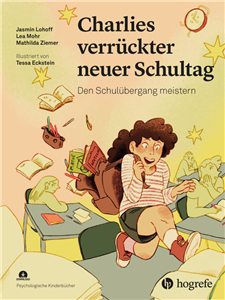
Charlie’s fi rst day at her new school is total chaos – but shefi nds her way through it! This lively story helps childrenface the big step to secondary school with less fear andmore confi dence. With exercises and tips, it supports kidsin understanding and managing their worries about change. • Eases fears about switching schools• Encourages confi dence through storytelling• Includes exercises for kids and professionals
Trusted Partner
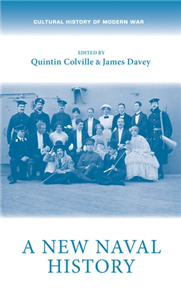
A New Naval History brings together the most significant and interdisciplinary approaches to contemporary naval history. The last few decades have witnessed a transformation in how this field is researched and understood and this volume captures the state of a field that continues to develop apace. It examines - through the prism of naval affairs - issues of nationhood and imperialism; the legacy of Nelson; the socio-cultural realities of life in ships and naval bases; and the processes of commemoration, journalism and stage-managed pageantry that plotted the interrelationship of ship and shore. This bold and original publication will be essential for undergraduate and postgraduate students of naval and maritime history. Beyond that, though, it marks an important intervention into wider historiographies that will be read by scholars from across the spectrum of social history, cultural studies and the analysis of national identity.
Trusted Partner

In A New Genre for Television?, filmmaker Justin Hardy argues the dramatised history documentaries broadcast by British public service channels in the 2000s constituted a distinct television genre. Offering a vital distinction between docudramas and drama documentaries, Hardy contributes to the field of television history through exclusive interviews with key figures from BBC and Channel 4 - many of whom have never been publicly interviewed before - and envisions a future model for the portrayal of national histories on screen.
Trusted Partner
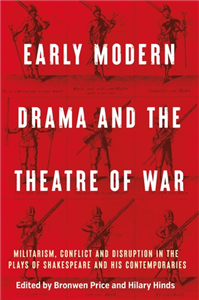
This volume explores the disruptive effects of militarism, war and social unrest in early modern drama. Engaging with Simon Barker's seminal work on dramatic representations of war and militarism, contributors highlight what often lies hidden beneath the surface of martial narratives, treating them as formative interventions in contemporary discourses, whether in justifying war, excluding dissident voices or shaping cultural identities. Discussions include new examinations of militarism, the figure of the soldier and early modern theories of war in Shakespearean tragedy, history and comedy, alongside antimasque and dramatic satire by lesser-known playwrights. The essays investigate how ideas of war underpin emerging concepts of gender, leadership, marriage and the family, as well as the continuing mobilisation of Shakespearean drama in the context of modern armed conflict. Together, they offer rich new contributions to the current lively critical debates on this topic.
Trusted Partner
Trusted Partner
Trusted Partner
Trusted Partner
 Trusted Partner



