Your Search Results

      • NORLA

        Books from Norway is a website providing you with information in English about Norwegian literature in all genres: Fiction, Non-fiction and Children and Young Adults’ literature.NORLA - Norwegian Literature Abroad, promotes the export of Norwegian literature through active profiling work and translation subsidies. The organisation disseminates knowledge about Norwegian books and authors abroad, and operations are financed by the Norwegian Ministry of Culture.

        View Rights Portal
      • NordSüd Verlag AG

        From North to South – Founded in 1961, NordSüd is a tradition-steeped children’s book publisher based in Zurich, Switzerland. NordSüd publishes around 50 new publications every year, all of which are high-quality illustrated children’s books in German and English, focusing on fictional and non-fictional picture books, fairy tales and classics. It is our aim to work closely with artists and create new books together, which we represent worldwide and sell translation rights. Next to our own creations we buy German rights for well-known illustrators like Jon Klassen, Oliver Jeffers, Kazuo Iwamura, Sophie Blackall, Isabelle Arsenault and many more.

        View Rights Portal
      • Trusted Partner
        Humanities & Social Sciences
        June 2026

        From Iceland to the Americas

        Vinland and historical imagination

        by Tim William Machan, Jón Karl Helgason

        This volume investigates the reception of a small historical fact with wide-ranging social, cultural and imaginative consequences. Inspired by Leif Eiriksson's visit to Vinland in about the year 1000, novels, poetry, history, politics, arts and crafts, comics, films and video games have all come to reflect rising interest in the medieval Norse and their North American presence. Uniquely in reception studies, From Iceland to the Americas approaches this dynamic between Nordic history and its reception by bringing together international authorities on mythology, language, film and cultural studies, as well as on the literature that has dominated critical reception. Collectively, the chapters not only explore the connections among medieval Iceland and the modern Americas, but also probe why medieval contact has become a modern cultural touchstone.

      • Trusted Partner
      • Trusted Partner
        July 2021

        The World of the North

        Between Ragnarok and welfare utopia: A cultural-historical deconstruction

        by Bernd Henningsen

        — Analysis of how we view Europe's North and how this image emerged — An outsider's perspective on Nordic societies and their self image — Serves as an introduction into Northern European culture and society Our image of Northern Europe has been shaped by projections and desires in the long history of encounters: berserkers and war atrocities, bad weather, beautiful nature, stable political systems, social welfare, equality and prosperity, peacefulness, low corruption, hygge and Bullerby – all this is part of the Nordic narrative. But what about the religious, linguistic and ethnic homogeneity, what about the muchvaunted Nordic cooperation? How do politics "work" in the North? Why are Northern Europeans the happiest people?

      • Trusted Partner
        Literature & Literary Studies
        June 2025

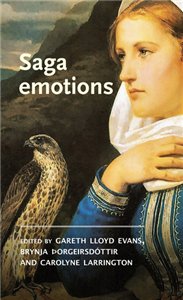
        Saga emotions

        by Gareth Lloyd Evans, Brynja Þorgeirsdóttir, Carolyne Larrington

        Focusing particularly on historically oriented sagas, Saga emotions identifies and examines a range of emotions from across Old Norse-Icelandic saga literature. Each chapter begins with a discrete emotion term, such as reiði (anger), gleði (joy), or the peculiarly Old Norse víghugr (killing-mood), exploring its usages within the broad saga corpus, and focusing on its contextual meanings and narrative purposes. The contributions explore the specifics of the lexical terms used for different emotion states and offer in-depth case studies that consider how various emotions manifest within particular examples of saga literature. The book offers the emotional granularity lacking in current studies of Norse emotion and serves as an essential foundation for future research and study into emotional depiction in Old Norse-Icelandic saga literature.

      • Trusted Partner
      • Trusted Partner
        2020

        History of the German Language

        A textbook for German studies; Part 1: Introduction, prehistory and history; Part 2: Old High German, Middle High German and Early New High German

        by Wilhelm Schmidt, Edited by Dr. Elisabeth Berner and Prof. Dr. Dr. h.c. Dr. h.c. Norbert Richard Wolf

        The 12th revised and updated version of the History of the German language – long regarded as an indispensable standard work for German Studies, has just been published. From now on, this comprehensive textbook on the history of the language is divided into two volumes. In addition to introducing questions about historical linguistics, the first volume provides a detailed account of the prehistory and history of German right up to the present day. Based on extensive source analyses, the focus is on aspects of culture and social history; only the chapters on the Indo-Germanic and Germanic language include key information about structural history. The second part contains concise, but readily understandable accounts of Old, Middle and Early New High German in terms of phonology, graphemics, morphology and syntax. Not only are synchronous descriptions given of the particular language period, but also the development of German language construction at all structural levels is explained. The association of grammatical synchrony and structural diachrony is a particular characteristic of this second part of Schmidt’s work on the history of language.

      • Trusted Partner
        Literature & Literary Studies
        June 2025

        Contemporary Slavic horror across media

        Cursed zones

        by Agnieszka Jezyk

        In the Western cultural production that puts individual or collective fear at its center, East/Central Europe has been portrayed as an othered space of horror - lawless, frightening zones where anything can happen. Incorporating articles on literature, film, visual arts, video games, music videos, and music festivals, Contemporary Slavic horror across media: Cursed zones is a pioneering anthology of academic essays devoted to Slavic horror fiction. The book focuses on works from the mid-20th century through the present, particularly the post-Soviet period. Assessing current trends in Czech, Polish, Russian, Slovak, Ukrainian, and East/Central European horror media, the book looks at similarities and idiosyncrasies of the genre in its Slavic variant. With this anthology we hope to tame 'the Easterner Other' and start exorcising 'monstrous' East/Central Europe.

      • Trusted Partner
      • Trusted Partner
        Humanities & Social Sciences
        March 2017

        Guardians of Empire

        The Armed Forces of the Colonial Powers, C.1700-1964

        by Andrew Thompson, John M. MacKenzie, David Killingray

        For imperialists, the concept of guardian is specifically to the armed forces that kept watch on the frontiers and in the heartlands of imperial territories. Large parts of Asia and Africa, and the islands of the Pacific and the Caribbean were imperial possessions. This book discusses how military requirements and North Indian military culture, shaped the cantonments and considers the problems posed by venereal diseases and alcohol, and the sanitary strategies pursued to combat them. The trans-border Pathan tribes remained an insistent problem in Indian defence between 1849 and 1947. The book examines the process by which the Dutch elite recruited military allies, and the contribution of Indonesian soldiers to the actual fighting. The idea of naval guardianship as expressed in the campaign against the South Pacific labour trade is examined. The book reveals the extent of military influence of the Schutztruppen on the political developments in the German protectorates in German South-West Africa and German East Africa. The U.S. Army, charged with defending the Pacific possessions of the Philippines and Hawaii, encountered a predicament similar to that of the mythological Cerberus. The regimentation of military families linked access to women with reliable service, and enabled the King's African Rifles to inspire a high level of discipline in its African soldiers, askaris. The book explains the political and military pressures which drove successive French governments to widen the scope of French military operations in Algeria between 1954 and 1958. It also explores gender issues and African colonial armies.

      • Trusted Partner
        Humanities & Social Sciences
        September 2025

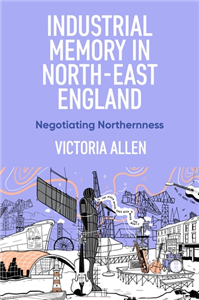
        Industrial memory in North East England

        Negotiating northernness

        by Victoria Allen

        Industrial memory in North East England examines how the region's industrial myth and memory have been articulated in the renegotiation of northernness. The book offers a critical contextualisation of the concept of northernness and the English North, and an introduction to the concept of the PopCultural Portfolio, a mixed-methods approach to conjunctural analysis in cultural and memory studies. The book provides six richly illustrated case studies to demonstrate the practical application of cultural studies' expansive and inclusive understanding of texts, bringing together materials from North East football, folk, indie and exhibition culture to establish how the North East's industrial past continues to be remembered and functionalised as industrial memory. In turn, the conjunctural analysis demonstrates how industrial memory is articulated and mythologised as north(east)ernes in contemporary popular culture.

      • Trusted Partner
        2023

        German for Pharmaceutical Practice

        Communicate, research, present

        by Nadine Yvonne Sprecher, Annette Thomas, Annegret Lehmann and Anke Schichte. In collaboration with Christiane Schneider

        In the pharmacy, the staff communicate with customers, colleagues, the medical profession, sales representatives and nursing home staff. Pharmacy employees produce written information based on well-chosen sources and represent the pharmacy to the outside world through presentations, on social media, or with the help of flyers, posters and other promotional materials. All this presupposes the confident use of language, and is best trained in advance. Part A of this work provides assistance for the most diverse communicative requirements in the pharmacy. A short theoretical explanation is always followed by several tasks so that you can immediately put what you have learned into practice and try it out. The „Brief overview of grammar and language knowledge“ boxes point out linguistic stumbling blocks. Those who are not yet sure of the technical terms can make themselves fit in Part B. Here one learns how to conduct a good counselling interview according to the BAC guideline. Extensive lists of technical terms and their explanations suitable for everyday use – all arranged according to organ systems – contain the most important vocabulary for everyday pharmacy work. A totally practical German lesson!

      • Trusted Partner
        Humanities & Social Sciences
        December 2025

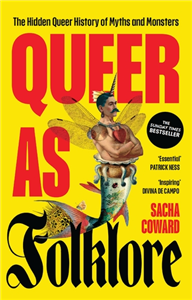
        Queer as folklore

        The hidden queer history of myths and monsters

        by Sacha Coward

        A celebration of queer history like you've never seen it before. Queer as folklore travels across centuries and continents to reveal the unsung heroes and villains of storytelling, magic and fantasy. Featuring images from archives, galleries and museums around the world, each chapter investigates the queer history of different mythic and folkloric characters, both old and new. Leaving no headstone unturned, Sacha Coward takes you on a wild ride through the night from ancient Greece to the main stage of RuPaul's Drag Race, visiting cross-dressing pirates, radical fairies and the graves of the 'queerly departed' along the way. Queer communities have often sought refuge in the shadows and created safe spaces in underworlds. But these forgotten narratives tell stories of resilience that deserve to be heard. Join any Pride march and you will see a glorious display of papier-mâché unicorn heads, drag queens in mermaid tails and more fairy wings than you can shake a trident at. These are not just accessories: they are queer symbols with historic roots. To truly understand who queer people are today, we must confront the twisted tales of the past.

      • Trusted Partner
        Literature & Literary Studies
        January 2013

        The English manor c.1200–c.1500

        by Mark Bailey

        Provides a comprehensive introduction and essential guide to one of the most important institutions in medieval England and to its substantial archive. This is the first book to offer a detailed explanation of the form, structure and evolution of the manor and its records. Offers translations of, and commentaries upon, each category of document to illustrate their main features. Examples of each category of record are provided in translation, followed by shorter extracts selected to illustrate interesting, commonly occurring, or complex features. A valuable source of reference for undergraduates wishing to understand the sources which underpin the majority of research on the medieval economy and society.

      • Trusted Partner
        Literature & Literary Studies
        October 2002

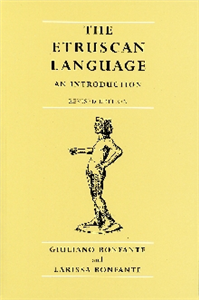
        The Etruscan language

        An Introduction

        by Giuliano Bonfante, Larissa Bonfante

        A revised, updated and expanded edition of the first concise introduction to the study of the Etruscan language in English. The standard historical reference and a popular textbook for students of languages, linguistics, ancient civilization and Etruscan studies. Provides the best collection of Etruscan inscriptions and texts currently in print. A substantial archeological introduction sets language and inscriptions in their historical, geographical and cultural context. The overview of Etruscan grammar, the glossary and chapters on mythological figures all incorporate the latest scholarship and innovative discoveries. ;

      • Trusted Partner
        Literature & Literary Studies
        March 2023

        Sleep and its spaces in Middle English literature

        Emotions, ethics, dreams

        by Megan Leitch

        Middle English literature is intimately concerned with sleep and the spaces in which it takes place. In the medieval English imagination, sleep is an embodied and culturally determined act. It is both performed and interpreted by characters and contemporaries, subject to a particular habitus and understood through particular hermeneutic lenses. While illuminating the intersecting medical and moral discourses by which it is shaped, sleep also sheds light on subjects in favour of which it has hitherto been overlooked: what sleep can enable (dreams and dream poetry) or what it can stand in for or supersede (desire and sex). This book argues that sleep mediates thematic concerns and questions in ways that have ethical, affective and oneiric implications. At the same time, it offers important contributions to understanding different Middle English genres: romance, dream vision, drama and fabliau.

      • Trusted Partner
        Literature & Literary Studies
        June 2026

        The politics of Middle English parables

        Fiction, theology, and social practice

        by Mary Raschko

        The politics of Middle English parables examines the dynamic intersection of fiction, theology and social practice in late-medieval England. Parables occupy a prominent place in Middle English literature, appearing in dream visions and story collections as well as in lives of Christ and devotional treatises. While most scholarship approaches the translated stories as stable vehicles of Christian teaching, this book highlights the many variations and points of conflict across Middle English renditions of the same story. In parables related to labour, social inequality, charity and penance, the book locates a creative theological discourse through which writers attempted to re-construct Christian belief and practice. Analysis of these diverse retellings reveals not what a given parable meant in a definitive sense but rather how Middle English parables inscribe the ideologies, power structures and cultural debates of late-medieval Christianity.

      • Trusted Partner
        Literature & Literary Studies
        May 2026

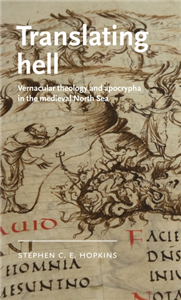
        Translating hell

        Vernacular theology and apocrypha in the medieval North Sea

        by Stephen C. E. Hopkins

        In the Middle Ages, hell was useful because it was vaguely defined. Canonical scriptures scarcely mention hell, leaving much to the imaginations of early Christians, who used it to sort out who belonged within the faith. This book explores how hell became a place for literary experiments with local challenges in theology and identity. Following the reception and transformations of two popular hell apocrypha, it argues that they served as this role because of their liminal textual authority. As noncanonical scriptures, apocrypha afforded medieval writers space to revise their hells (since they were not actually scripture), while also encouraging readers to revere those experiments as valid (since they seemed like scripture). The book brings together adaptations from early medieval England, Iceland, Ireland, and Wales, placing the early vernacular theologies of the North Sea in comparative conversation.

      • Trusted Partner
        March 2025

        Arts and Medicine

        How music, painting, theatre, dance, literature and architecture heal

        by Stefan N. Willich

        Art, medicine and health have many points of contact and a long tradition. Even in Greek mythology, Apollo was the god of the arts. Artistic approaches to therapy (including visual and performing arts, music, dance and literature) have been used for many centuries and are still offered in some medical institutions today. Despite this long practical experience, there is little scientific evidence of its effectiveness. Basic research provides an important basis for art therapy with interesting new approaches for investigating possible mechanisms of action. In addition, the overall social signifi- cance of art for health is an important topic, especially with regard to preventive effects for the population. The book provides a comprehensive overview of how art can be used as a health-promoting resource and highlights various research approaches. In addition, a brief review of the historical development of art in medicine is given. For the first time, the influence of music, painting, dance, literature and architecture on people’s state of health and the healing effect they can have is shown. Target group: Art therapists, artists, psychotherapists, child and adolescent psychologists, psychoanalysts and psychologists, health professionals, music and dance therapists, art and music educators, community musicians

      Subscribe to our

      newsletter