

Social & cultural history
December 2014


 Trusted Partner


For thirty years, the British economy has repeated the same old experiment of subjecting everything to competition and market because that is what works in the imagination of central government. This book demonstrates the repeated failure of that experiment by detailed examination of three sectors: broadband, food supply and retail banking. The book argues for a new experiment in social licensing whereby the right to trade in foundational activities would be dependent on the discharge of social obligations in the form of sourcing, training and living wages. Written by a team of researchers and policy advocates based at the Centre for Research on Socio Cultural Change, this book combines rigour and readability, and will be relevant to practitioners, policy makers, academics and engaged citizens.


In The Path of the Law, Holmes discusses his personal philosophy on legal practice. The Common Law is a series of lectures that established Holmes's reputation as a witty and articulate writer.
Trusted Partner

Law across imperial borders offers new perspectives on the complex legal connections between Britain's presence in Western China in the western frontier regions of Yunnan and Xinjiang, and the British colonies of Burma and India. Bringing together a transnational methodology with a social-legal focus, it demonstrates how inter-Asian mobility across frontiers shaped British authority in contested frontier regions of China. It examines the role of a range of actors who helped create, constitute and contest legal practice on the frontier-including consuls, indigenous elites and cultural mediators. The book will be of interest to historians of China, the British Empire in Asia and legal history.
Trusted Partner
Latin America has been a complex laboratory for the development of international investment law. While some governments and non-state actors have remained true to the Latin American tradition of resistance towards the international investment law regime, other governments and actors have sought to accommodate said regime in the region. Consequently, a profusion of theories and doctrines, too often embedded in clashing narratives, has emerged. In Latin America, the practice of international investment law is the vivid amalgamation of the practice of governments sometimes resisting and sometimes welcoming mainstream approaches; the practice of lawyers assisting foreign investors from outside and within the region; and the practice of civil society, indigenous peoples and other actors in their struggle for human rights and sustainable development. Latin America and international investment law describes the complex roles that governments have played vis-à-vis foreign investors and investments; the refreshing but clashing forces that international organizations, corporations, civil society, and indigenous peoples have brought to the field; and the contribution that Latin America has made to the development of the theory and practice of international investment law, notably in fields in which the Latin American experience has been traumatic: human rights and sustainable development. Latin American scholars have been contributing to the theory of international investment law for over a century; resting on the shoulders of true giants, this volume aims at pushing this contribution a little further.
Trusted Partner

This book provides an accessible collection of translated legal sources through which the exploits of criminals and developments in the English criminal justice system (c.1215-1485) can be studied. Drawing on the wealth of archival material and an array of contemporary literary texts, it guides readers towards an understanding of prevailing notions of law and justice and expectations of the law and legal institutions. Tensions are shown emerging between theoretical ideals of justice and the practical realities of administering the law during an era profoundly affected by periodic bouts of war, political in-fighting, social dislocation and economic disaster. Introductions and notes provide both the specific and wider legal, social and political contexts in addition to offering an overview of the existing secondary literature and historiographical trends. This collection affords a valuable insight into the character of medieval governance as well as revealing the complex nexus of interests, attitudes and relationships prevailing in society during the later Middle Ages.
Trusted Partner

In 1660 Charles II was restored to the thrones of England, Scotland and Ireland, but his hold on power was precarious. In particular, Ireland was fundamentally unstable - Catholics formed the majority of the population in a country where Protestantism was the established religion, a state of affairs unique in Europe. It was through the law that the restored Stuart monarchy governed its subjects and its colonial dependencies, and this book examines how Catholics engaged with and experienced English common law primarily through the eyes of Catholic clerics and Gaelic poets. It also examines how Catholics engaged with the Courts and the particular challenges they faced as lawyers. The book draws on an extensive body of primary source materials, including Irish-language poetry and little-used archival material relating to elite Catholic families.
Trusted Partner
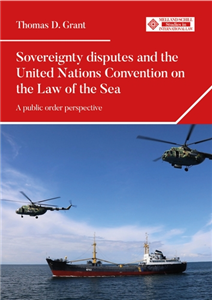
Because maritime questions are often admixed with territorial sovereignty questions, parties sometimes seek to settle them together. Jurisdiction under the United Nations Convention on the Law of the Sea-UNCLOS-according to the received view does not encompass disputes concerning territorial sovereignty. In this book, international law scholar and practitioner Thomas D. Grant argues that the received view overstates the exclusion of sovereignty disputes. In Coastal State Rights, UNCLOS Annex VII arbitrators overstated the scope of the term 'sovereignty dispute' as well, an error of definition compounded when they ignored evidence probative as to whether a sovereignty dispute exists. Examining UNCLOS, its drafting history, and decades of decided cases, Sovereignty Disputes and the United Nations Convention on the Law of the Sea relates an important problem of international dispute settlement to the public order of which UNCLOS forms part.
Trusted Partner
Trusted Partner
 Trusted Partner
 Trusted Partner
Beyond the Happening uncovers the heterogeneous, uniquely interdisciplinary performance-based works that emerged in the aftermath of the early Happenings. By the mid-1960s Happenings were widely declared outmoded or even 'dead', but this book reveals how many practitioners continued to work with the form during the late 1960s and 1970s, developing it into a vehicle for studying interpersonal communication that simultaneously deployed and questioned contemporary sociology and psychology. Focussing on the artists Allan Kaprow, Marta Minujín, Carolee Schneemann and Lea Lublin, it charts how they revised and retooled the premises of the Happening within a wider network of dynamic international activity. The resulting performances directly intervened in the wider discourse of communication studies, as it manifested in the politics of countercultural dropout, soft power and cultural diplomacy, alternative pedagogies, sociological art and feminist consciousness-raising.
Trusted Partner
 Trusted Partner
 Trusted Partner


—300th birthday of Tobias Mayer in February 2023 — The rediscovery of a great scientist — A chapter in the fascinating history of science The story of Tobias Mayer's life (1723 to 1762) is that of a child prodigy and orphan who became a pioneer of the Enlightenment as a cartographer, mathematician, physicist and astronomer. Having never been to university, at the age of 28 he was appointed a professor in Göttingen by the Elector of Hanover and King of England. He revolutionised cartography with his zeal and skill, helping sailors to find the right path across the seas and providing people with the firstever clear view of the moon. 17th February 2023 marks the 300th anniversary of the birth of Tobias Mayer. High time to recall this prototype of a scientist.
Trusted Partner

Leó Szilárd is a brilliant physicist - although he originally began his studies in Berlin without even being enrolled. On long walks home from university, he discusses scientific issues of all kinds with his professor and neighbour Albert Einstein. Szilárd, who is of Jewish descent, flees to London in 1933. His goal is to prevent the Germans from being the first to have nuclear weapons. With Albert Einstein and other scientists, he puts himself at the service of the American government to advance the development of an atomic bomb for defence purposes. When he realises that the Manhattan Project is not about defence, but about an attack on Japan, he is horrified. Author and journalist Arne Molfenter traces the life of this brilliant man whose invention was used completely against his intentions. It is an exciting book about a scientist whose research influenced the course of history.
Trusted Partner
 Trusted Partner


Seit dem 17. Jahrhundert wird die Diskussion in der Philosophie durch den Begriff der Repräsentation bestimmt. Man vergleicht das Bewußtsein mit einem Spiegel, der die Realität reflektiert. Das Erkennen bemüht sich um die Genauigkeit dieser Reflexion, und die Arbeit des Erkennens besteht im Prüfen, Instandsetzen und Polieren des Spiegels der Natur. In einer eindringlichen und weit ausgreifenden Kritik dieser Metaphorik gibt Richard Rorty eine Übersicht ihres Einflusses auf die Philosophie des 20. Jahrhunderts: eine kritische Selbstreflexion der analytischen Philosophie, die zur Dekonstruktion der bezeichneten Metaphorik führt. In den drei Teilen dieses Buches diskutiert Rorty jeweils die Begriffe des Mentalen, der Erkenntnis und der Philosophie in einer von Dewey, Heidegger und Wittgenstein ausgehenden historischen Perspektive.
Trusted Partner
This book explores radical dissent from orthodox mainstream economics, and sets out a theoretically grounded vision for the emerging paradigm of social ecological economics. At the heart of this paradigmatic shift lies an acknowledgement of the inextricable embeddedness of economies in biophysical reality and social structure. The struggle for this transformative vision unfolds through a critical examination of mainstream environmental thought, followed by a nuanced evaluation of contributions from Marxists, socialists, critical institutionalists, feminists and Post-Keynesians grappling with the urgent environmental crisis. Synthesising insights from these diverse and heterodox schools, the book navigates the philosophical underpinnings of science, embracing a critical realist approach that challenges not only mainstream economic thought but also eclectic pluralism, relativism and strong constructionism. The question of what constitutes revolutionary science is explored in light of works by Kuhn, Schumpeter and Neurath, emphasising the pivotal role of values and ideology in works from Marx to Gramsci. Building on these radical and philosophical foundations, the book articulates a preanalytic vision of social ecological economics, dismantling entrenched notions of growth and efficiency in favour of a framework centered on social provisioning and needs embedded in ethics. In a thought-provoking conclusion, the book applies its analytical lens to the multiple crises of modernity within industrialised capital-accumulating economies. An agenda for social ecological transformation toward diverse alternative economies emerges, providing a compelling call to action in the face of contemporary challenges.


