Your Search Results

      • Manilla Press

        Manilla Press is a home for novelists, journalists, memoirists, thinkers, dreamers, influencers. Our reach is international, our range broad, we publish with focus, passion and conviction, and we seek to find and publish underrepresented voices.

        View Rights Portal
      • Piccadilly Press

        Piccadilly Press publishes books primarily for readers aged 5 – 12 years old. Their books are fun, family-orientated stories that possess the ability to capture readers’ imagination and inspire them to develop a life-long love of reading.

        View Rights Portal
      • Trusted Partner
        September 2023

        Being Able to Stop

        Against the delusion of permanent growth

        by Edited by Jean-Pierre Wils

        We moderns were the inhabitants of an age of impetuous forward movement and voracious discontent. Our main virtue was to increase our reach. Increasing our having and accelerating our being were the signposts towards the future. We just could not get enough. Using the blinkers of ignorance and self-anaesthesia, however, we managed to forget the tremendous costs incurred by this intoxication. Now disillusionment has set in. We look to the future with anxiety. We know that we have long since crossed a line and that a revision of our lifestyle is imminent. We have a bad feeling, and doubts about progress often give way to anger and rebellion. Which stocks of the modern narrative should we defend; which would we do better to let go? How will we even "be able to stop"? The path to a different society needs an attractive goal, because without the prospect of a different, better life, we will not move forward. We should start practising immediately. There is no time to lose.

      • Trusted Partner
        Literature & Literary Studies
        November 2021

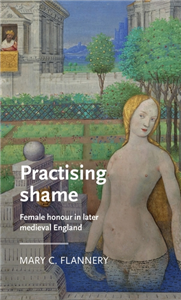
        Practising shame

        Female honour in later medieval England

        by Mary C. Flannery, Anke Bernau, David Matthews

        Practicing shame investigates how the literature of medieval England encouraged women to safeguard their honour by cultivating hypervigilance against the possibility of sexual shame. A combination of inward reflection and outward comportment, this practice of 'shamefastness' was believed to reinforce women's chastity of mind and body, and to communicate that chastity to others by means of conventional gestures. The book uncovers the paradoxes and complications that emerged from these emotional practices, as well as the ways in which they were satirised and reappropriated by male authors. Working at the intersection of literary studies, gender studies and the history of emotions, it transforms our understanding of the ethical construction of femininity in the past and provides a new framework for thinking about honourable womanhood now and in the years to come.

      • Trusted Partner
        Humanities & Social Sciences
        April 2003

        Step-daughters of England

        British Women Modernists and the National Imaginary

        by Jane Garrity

        Jane Garrity shows how four British women modernists - Dorothy Richardson, Sylvia Townsend Warner, Mary Butts and Virginia Woolf - used experimental literary techniques in order to situate themselves as national subjects. Reading literary texts through the lens of material culture, this book makes a major contribution to the new modernist studies by arguing that women's imaginative work is inseparable from their ambivalent and complicated relation to Britain's imperial history. Drawing on extensive archival research, Garrity takes as her point of departure the ubiquitous maternal and racial link to national identification during the interwar period. Each chapter foregrounds a different range of cultural developments that coincided with the rise of modernism, such as emerging visual techniques, the revival of British neo-medievalism, ethnographic work on primitive mysticism, and nostalgia for English ruralism. By locating both canonical and non-canonical works of female literary modernism within broader cultural discourses, Garrity demonstrates the intersections among nationalism, imperialism, gender and sexuality in the construction of English national culture.

      • Trusted Partner
        Humanities & Social Sciences
        May 2026

        Sexual violence in racial capitalism

        by Alison Phipps

        Most texts on sexual violence treat capitalism as backdrop or afterthought. In contrast, political economy is the core of this book. Phipps explores the centrality of sexual violence to racial capitalist processes: the enclosure of bodies, the extraction of labour, the expropriation of land and resources, and the disposal of unwanted populations. Importantly, she argues that both sexual violence and sexual fear create social control and surplus value. Through a framework called the coloniality of sexual violence, Phipps conjoins acts of sexual violence and ideas of sexual threat in an analysis of gendered and raced property relations and the split colonial/modern psyche. She argues that fantasies of sexual danger represent the infolded violence of racial capitalism, which is why fear of revolution is often fear of rape. Revolution, however, is always imminent: violence is necessary because power is incomplete.

      • Trusted Partner
        Medicine

        Protection in In-home Care for the Elderly

        Preventing and Identifying Abusive Situations – Supporting Care Recipients and Caregivers

        by Barbara Baumeister, Trudi Beck (editors)

        Why and how are elderly people abused when they receive care in their own homes? How can this abuse be identified and prevented? The authors explains why the elderly are abused when they receive at-home care, differentiate between various forms of abuse, and demonstrate how it can be identified. They present interventions and provide tools for preventing and identifying abuse and for supporting care recipients and caregivers.   Target Group: Geriatric nurses, social workers, geriatricians

      • Trusted Partner
        Humanities & Social Sciences
        April 2009

        Tensions in the struggle for sexual minority rights in Europe

        Que(e)rying political practices

        by Nico Beger

        Tensions in the struggle for sexual minority rights in Europe, newly available in paperback, is the first queer and poststructuralist reading of political rights concepts in the specific European transnational context. In the last thirty years Europe has seen the rise of gay, lesbian, bisexual and transgender movements fighting nationally and transnationally for participation rights in society. In addition academic theorists have increasingly paid attention to the epistemological and ontological roles gender and sexuality play in modern politics. However, in the political process of arguing for rights the centrality of those roles is mostly hidden from view in official institutional and movement discourses. This book investigates the conceptual themes of lesbian, gay and transgender rights and lobby politics in Europe and their open and hidden relations to binary and hierarchical orders of dominance. It contributes to an understanding of the conditions upon which politics of inclusion, participation, social justice and equality rest and why struggles for sexual minority rights have been so difficult and slow. It illuminates how the paradigms of political discourse constitute, consolidate and contest the meaning and cultural significance of gender and sexuality on modern, democratic, capitalist European societies. ;

      • Trusted Partner
        Psychology

        Harm Reduction Treatment for Substance Use

        by Susan E. Collins / Seema L. Clifasefi

        Concrete guidance on harm reduction treatment (HaRT) with substance-using patients:• Written by experts from the field• Details a unique evidence-based approach• Includes example scripts• Provides case studies• Includes downloadable handouts Harm reduction approaches are effective alternatives to abstinence-based treatment for people who are not ready, willing, or able to stop using substances. This volume outlines the scientific basis and historical development of these approaches, and reviews why abstinence-based approaches often do not work. The authors then share their expertise about harm reduction treatment (HaRT), an empirically based approach co-developed with community members impacted by substance-related harm – a first of its kind. The reader learns in detail about the pragmatic mindset and compassionate heartset of HaRT and the three treatment components: measurement and tracking of patient-preferred substance-related metrics, harm-reduction goal setting and achievement, and discussion of safer-use strategies. In addition, the book provides example scripts for use in daily practice.

      • Trusted Partner
        The Arts
        March 2026

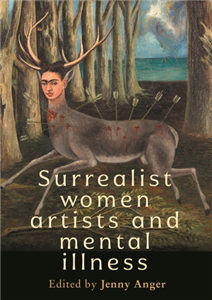
        Surrealist women artists and mental illness

        by Jenny Anger

        Female mental illness has been a prominent and complicated theme in surrealist cultural traditions, including the idealization of women with mental illness in works such as André Breton's Nadja (1928). Art historians have examined this tendency before, but to date there has been no comprehensive study of the lived reality of women surrealist artists with mental illness. How did women's experience and their work intersect with this romanticized vision? Was the masculine dream of feminized, "mad" genius prohibitive or productive for these women artists? After establishing the ideological field within which these women worked, the book turns to case studies of well-known and some lesser-known artists, including Ángeles Santos, Leonora Carrington, Dora Maar, Claude Cahun, Frida Kahlo, Meret Oppenheim, Sonja Sekula, and Unica Zürn. This collection of essays contains a wide range of responses, revealing surrealism's generative as well as restrictive force.

      • Trusted Partner
        Humanities & Social Sciences
        March 2025

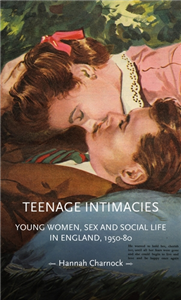
        Teenage intimacies

        Young women, sex and social life in England, 1950-80

        by Hannah Charnock

        Teenage Intimacies offers a new account of 'sexual revolution' in mid-twentieth century England. Rather than focusing on 'Swinging London', the book reveals the transformations in social life that took place in school playgrounds, local cinemas, and suburban bedrooms. Based on over 300 personal testimonies, Teenage Intimacies traces the everyday experiences of teenage girls, illuminating how romance, sex and intimacy shaped their young lives. The book shows how sex became embedded in ideas about 'growing up' and explores how heterosexuality influenced young women's social lives and vice versa. It offers new explanations of why sexual mores shifted in this period, revealing the pivotal role that young women played in changing sexual values, cultures and practices in the 1950s, 1960s and 1970s.

      • Trusted Partner
        Humanities & Social Sciences
        September 2020

        Sexual progressives

        Reimagining intimacy in Scotland, 1880-1914

        by Tanya Cheadle

        Sexual Progressives is a major new study of the feminists and socialists who campaigned against the moral conservatism of the Victorian period. Drawing on a range of sources, from letters and diaries to radical newspapers and utopian novels, it provides the first group portrait of Scotland's hitherto neglected sexual rebels. They include Bella and Charles Pearce, prominent Glasgow socialists and disciples of an American-based mystic who taught that religion needed 're-sexed'; Jane Hume Clapperton, a feminist freethinker with advanced views on birth-control and women's right to sexual pleasure; and Patrick Geddes, founder of an avant-garde Edinburgh subculture and co-author of an influential scientific book on sex. A consideration of their lives and work forces a reappraisal of our understanding of British sexual progressivism during this period and will therefore be of interest to all historians of modern gender and sexuality.

      • Trusted Partner
        May 2007

        Dirty blonde

        Die Tagebücher

        by Love, Courtney

      • Trusted Partner
        Humanities & Social Sciences
        December 2024

        States of enmity

        The politics of hatred in the early modern Kingdom of Naples

        by Stephen Cummins

        State of enmity explores how relations of hatred and enmity played political and social roles in the early modern Kingdom of Naples. Exploring the pervasive notion of enmity and practices of reconciliation, the book provides new insight into the social dynamics of southern Italy in the early modern period. In particular, widespread banditry and the violent tenor of local politics are analysed through a wide variety of criminal trials and other sources.

      • Trusted Partner
        Humanities & Social Sciences
        June 2026

        Radicalisation, counter-radicalisation, and Prevent

        A vernacular approach

        by Lee Jarvis, Andrew Whiting, Stuart Macdonald

        This book offers the first sustained investigation into non-elite understandings of radicalisation and counter-radicalisation policy. Drawing on original focus group research with students from universities across England and Wales, the book explores how 'ordinary' citizens understand radicalisation, how they make sense of counter-radicalisation initiatives like the UK Prevent Strategy, and how they evaluate its functioning and effects across society. Radicalisation, counter-radicalisation and Prevent demonstrates that these non-elite insights often contradict and diverge from traditional (elite) security knowledge and thus shed new light on wider questions around the politics of security. This has vitally important implications not only for counter-radicalisation and counter-terrorism policy but for the very study and practice of security.

      • Trusted Partner
      • Trusted Partner
        March 2024

        Anything Is Possible, Nothing Is Working

        Why we are having less and less sex

        by Juliane Burghardt

        Many would agree that we are living in one of humanity’s most permissive times. Sex seems to be available anywhere, anytime. These developments can lead to the conclusion that we are all having all the sex we want today. In fact, though, a number of international studies have shown in recent years that our mobile phone and pornography consumption in particular, as well as women’s empowerment, have led to a decrease rather than an increase in sexuality. In her entertaining book, Juliane Burghardt analyses and evaluates the situation in our bedrooms.

      • Trusted Partner

        SEX CULTURE

        What is sex? Or: why don't we just let it be?

        by Bettina Stangneth

        Above all else, and despite all the enlightenment of the age, sex in the 21st century seems to be a problem. Abuse, MeToo, human trafficking, circumcision, role-playing, body cult... But if sex is a mere abyss for modern humans, then why not just let it be? We are the first generation that could actually do it without endangering the survival of the species. And voices are getting louder that once again call for abstinence in a supposedly over-sexualised society. Artificial insemination and artificially intelligent technology for the safe removal of instincts should finally pacify what humans cannot control: instinctive nature. Sex is not the epitome of our animal nature. Every attempt to control the animal in us, either by taming it or by freeing it from tamers in a sexual revolution, inevitably misses the point. Bettina Stangneth asks the quite simple question: what is sex? If every culture of prohibition has failed so far, clearer ideas are obviously needed. Even if we prefer to ignore it, attempts to establish a culture through desire instead of the cultivation of desire have been around for a long time. After all, if you don't want to learn to talk positively about sex, you can't talk meaningfully about coercion and violence.

      • Trusted Partner
        Humanities & Social Sciences
        January 2024

        Dog politics

        Species stories and the animal sciences

        by Mariam Motamedi Fraser

        Do dogs belong with humans? Scientific accounts of dogs' 'species story,' in which contemporary dog-human relations are naturalised with reference to dogs' evolutionary becoming, suggest that they do. Dog politics dissects this story. This book offers a rich empirical analysis and critique of the development and consolidation of dogs' species story in science, asking what evidence exists to support it, and what practical consequences, for dogs, follow from it. It explores how this story is woven into broader scientific shifts in understandings of species, animals, and animal behaviours, and how such shifts were informed by and informed transformative political events, including slavery and colonialism, the Second World War and its aftermath, and the emergence of anti-racist movements in the twentieth and twenty-first centuries. The book pays particular attention to how species-thinking bears on 'race,' racism, and individuals.

      • Trusted Partner
        Children's & YA

        Hamster Humboldt. Small and Steady Wins the Race

        by Meike Betz

        This intrepid hamster plunges into every adventure with full cheeks! Humboldt is a detective, adventurer and – a hamster. His size doesn’t stop him from helping the people of Villy Village out of all sorts of fixes whenever he’s not helping his owner Babs and her daughter Elli in the post office. No problem is too big for him! Only his owner’s money worries leave him flummoxed. But then Babs and Elli win the lottery and are over the moon – until they receive an anonymous postcard. Humboldt’s life is suddenly in dire straits because the unknown blackmailer wants Babs and Elli’s lottery ticket – or he’s going to hurt Humboldt. When the police refuses to get to the bottom of the case, Humboldt decides to take matters into his own paws. He’s keen to put a stop to this lottery villain’s antics! HAMSTER HUMBOLDT. SMALL AND STEADY WINS THE RACE is a detective and adventure story full of animal-entertainment for girls and boys aged 8+.

      Subscribe to our

      newsletter