
Bentang Pustaka
We are a publisher of quality books for Indonesia. Very passionate about educating the nation.
View Rights Portal
We are a publisher of quality books for Indonesia. Very passionate about educating the nation.
View Rights Portal
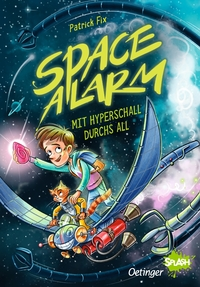
Ein intergalaktisches Abenteuer! Eines Morgens findet Sammy Supernova findet ein seltsames Hologramm in seiner Müslipackung. Es ist eine Botschaft aus dem All! Seine Eltern sind interstellare Geheimagenten. Sie werden zu einer wichtigen Weltraum-Mission gerufen. Der Weltraumpirat Grimmlin Graubrot ist aus dem Gefängnis ausgebrochen und nimmt Kurs auf die Erde. Er sucht den unendlich wertvollen Edelstein „Das Herz der Sonne“. Dummerweise befindet sich dieser im Küchenschrank von Sammys Familie. Für Sammy beginnt ein neues Leben. Er zieht mit seinen Eltern nach Proxima Centauri, dem Hauptquartier der Weltraumagenten. Wird es ihnen gelingen, „Das Herz der Sonne“ in Sicherheit zu bringen? Auf Sammy und seine neuen Freunde wartet ein rasantes, intergalaktisches Weltall-Abenteuer bei dem Sammy über sich hinauswachsen wird… Spaß am Lesen mit SPLASH! Galaktisches Lesevergnügen: eine rasantes Weltall-Abenteuer voller Humor und Freundschaft. Starkes Thema: So mutig sind schüchterne Kinder. Neue Reihe Oetinger SPLASH: spannende Leseabenteuer für Kinder ab 8 Jahren. Riesenspaß für leseungeübte Kinder: kurze Kapitel und überschaubare Textmengen. Maßgeschneidert für die Zielgruppe: interaktiv mit vielen Rätseln und Illustrationen. Ob Abenteuer, Action, Freundschaft oder Rätsel: Der SPLASH-Score auf der Rückseite zeigt, was im Buch steckt. „Space Alarm 1 – Mit Hyperschall ins All“ ist ein rasantes Weltraum-Abenteuer voller Spaß, Spannung und Freundschaft. Ein interaktiver Lesespaß für leseungeübte und lesefaule Kinder ab 8 Jahren. Ein geniales Geschenk von Eltern und Großeltern für Wenigleser und Kinder, die bereits selbst lesen möchten.

Die Roboter sind los! Auf Proxima Centauri steht die alljährliche Klassenfahrt an: Sammy Supernova düst mit seiner Klasse zum Zelten auf einen Waldplaneten. Auf dem Weg dorthin wird das Schulraumschiff in ein Schwarzes Loch gezogen und am anderen Ende des Universums kaputt wieder ausgespuckt. Die Kinder können den SPACE-BUS gerade noch rechtzeitig mit Rettungskapseln verlassen. Sammy und seine Freunde landen auf einem scheinbar unbewohnten Planeten. Dort türmt sich der Weltraumschrott haushoch. Inmitten der Müllberge finden sie einen kleinen Roboter. Mit seiner Hilfe finden und reparieren sie den SPACE-BUS. Doch kaum ist er wieder startklar, gibt es eine Explosion. Das kann doch kein Zufall sein! Wer treibt auf dem Schrottplaneten sein Unwesen? Der zweite Band von Space Alarm ist ein interaktives Weltraumabenteuer für Lesemuffel ab 8 Jahren, mit wenig Text und vielen lustigen Illustrationen. Eine coole Geschichte voller Humor, Freundschaft und Action! Space Alarm: Spaß, Spannung und Freundschaft im Weltall Galaktisches Lesevergnügen: Ein rasantes Weltraumabenteuer voller Humor und Freundschaft für Kinder ab 8 Jahren. Hochaktuelles Thema: Sind Roboter cool, gefährlich – oder beides? Ideal für leseungeübte Kinder: Mit kurzen Kapiteln und überschaubarer Textmenge. Riesenspaß für Lesemuffel: Interaktives Buch mit vielen Rätseln und witzigen Illustrationen. Abenteuer, Action, Freundschaft und Weltall: Der SPLASH-Score auf der Rückseite zeigt, wie viel davon im Buch steckt. Das rasante Weltraumabenteuer Space Alarm ist ein riesengroßer, interaktiver Lesespaß für Leseanfänger und Lesemuffel ab 8 Jahren. Eine geniale Geschenkidee für Eltern und Großeltern, die nach dem richtigen Lesestoff für ihre Kinder und Enkel, besonders für Jungs, suchen.
 Trusted Partner

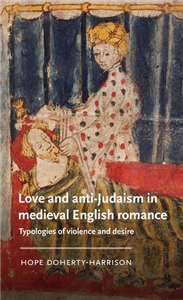
Love and anti-Judaism is a new examination of medieval romance for the questions it poses of the most significant events in Christian history. Providing new readings of Sir Gawain and the Green Knight, Sir Orfeo, Sir Gowther and Sir Amadace, the book argues that romance explores depictions of love-and the sacrifices it may necessitate-in the Hebrew Bible, especially where they do not easily fit into interpretations asserting that this history must prefigure Christ and the crucifixion. An examination of anti-Judaism as a discourse of violence and desire that could be turned inwardly to expose the irresolution in Christianity, this book will provoke new investigations into the religious crises of medieval romance.
Trusted Partner
Trusted Partner
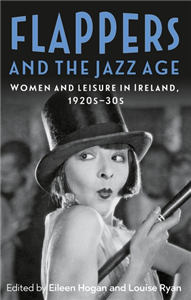
People's ordinary, everyday lives - and more specifically, their leisure activities - are often obscured within existing academic research on 1920s-30s Ireland. This book seeks to redress that neglect by exploring the relationship between identity, recreation, and culture both North and South of the border, with particular attention to women's lived experiences. Leisurely pursuits during this period were commonly overshadowed by religious influence and the nation-building projects in post-partition Ireland. Nevertheless, there existed alternative spaces, where people enjoyed dancing, singing, listening to music, shopping, glamour, reading magazines, swimming, travelling, and going to the cinema. Such activities reflected international trends beyond national borders. This book documents those activities and spaces through a feminist lens and intersectional analysis of gender, class, religion and rural/urban identities. It brings together multi-disciplinary perspectives including cultural studies, architecture, geography, fashion, and musicology. In so doing, we present new insights and advance understanding of this under-researched aspect of Irish history.
Trusted Partner
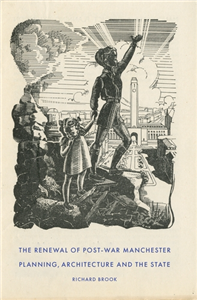
A compelling account of the project to transform post-war Manchester, revealing the clash between utopian vision and compromised reality. Urban renewal in Britain was thrilling in its vision, yet partial and incomplete in its implementation. For the first time, this deep study of a renewal city reveals the complex networks of actors behind physical change and stagnation in post-war Britain. Using the nested scales of region, city and case-study sites, the book explores the relationships between Whitehall legislation, its interpretation by local government planning officers and the on-the-ground impact through urban architectural projects. Each chapter highlights the connections between policy goals, global narratives and the design and construction of cities. The Cold War, decolonialisation, rising consumerism and the oil crisis all feature in a richly illustrated account of architecture and planning in post-war Manchester.
Trusted Partner
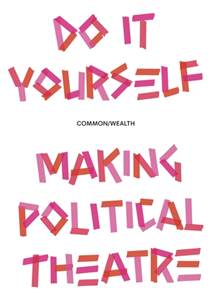
A unique guide to creating political theatre, produced by one of the UK's most exciting companies. Do It Yourself is a vital resource for anyone interested in exploring theatre culture grounded in and produced by working-class, multi-racial communities. Designed for artists, activists and community organisers, the book offers a step-by-step guide to creating political theatre that is relevant, impactful and rooted in the lives of everyday people. Common Wealth have spent fifteen years working at the cutting edge of political theatre. In Do It Yourself, they share their experimental and activist approach to performance-making, based on DIY principles and the belief that ground-breaking theatre can be made with anyone, anywhere, in ways that truly resonate with the communities it serves. Do It Yourself introduces Common Wealth's artistic and political ethos, provides unique insights into their most significant performances and offers practical exercises for creating your own work. But this is not just a manual. It is a celebration of culture as a collective endeavour, one that can challenge the status quo and inspire change.
Trusted Partner
Trusted Partner

Power Plants offers an unflinching assessment of society's underappreciated but growing addiction to the industrial burning of crops and trees for energy. As vehicles increasingly run on fuels made from sugarcane and oil-palm, wood pellets replace coal, and scientists rush to engineer crops to produce renewable jet fuel, this book blows apart bioenergy's reputation as a simple, benign substitute for fossil fuels. Scrutinising modern bioenergy systems in the UK, Europe and United States, Power Plants shows how vegetal lifeforms are being enrolled to reinforce energy cultures centred around logics of efficiency, productivity and economic growth at all costs. Nonetheless, the book insists that a closer attention to plants could yet provoke a rethink of the social and economic purposes of all kinds of energy, with radical implications for ideas about growth, waste, prosperity and even pleasure.
Trusted Partner
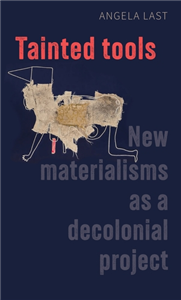
Tainted Tools makes a provocative intervention into the fraught intersection between new materialist and decolonial approaches. Despite a common project of challenging European philosophical and social categories and hierarchies, the discourses are considered incompatible. Most prominently, new materialisms have been accused of harbouring a White vision of the human while disregarding the racist resonances of the 'nonhuman'. The book traces this conflict to an earlier meeting point of new materialist and decolonial projects, which came about through the experimental combination of Marx and Nietzsche. Used to fight fascism, Stalinism and colonialism, this politically contentious fusion gradually became depoliticised, leading to unaddressed tensions today. While the book does not argue for a revival of these early 'new materialisms', it brings their strategies into dialogue with today's new materialisms and decolonial approaches to develop greater theoretical solidarity in times of crisis.
Trusted Partner
Trusted Partner
Trusted Partner

How and why did the Nazis seize power in Germany? Nearly seventy years on, the question remains heated and important discoveries continue to challenge long standing assumptions. Beginmning with an overview of the historical context within which Nazism grew, looking at the foreign relations, politics and society of Weimar and in particular at the role of the elites in the rise of Nazism. The book questions the anatomy of Nazism itself: What lent Nazi ideology its coherence and credibility? What distinguished the Nazi's programme from their competitors' and how did they project it so effectively? How was Hitler able to put together and fund an organisation so quickly and effectively that it could launch a sustained assault on Weimar? Who supported the Nazis and what were their motives? Where, precisely, does Nazism belong in the history of Europe?. Since the publication of the first edition, important new works have appeared and this new scholarship has been incorporated into the text. ;
Trusted Partner
 Trusted Partner

Devolution to Scotland and Wales represented the most fundamental reform of the British state for almost a century. Ten years on, how successful has the reform been? Drawing on the views of citizens, elected representatives and interest groups in Scotland and Wales, this book provides an answer. The book is based on a wide ranging programme of research, involving dedicated surveys and interviews across Scotland, Wales and England. The results provide important new evidence on how devolution has been seen to have performed. What are its perceived achievements? What are its shortcomings? Is the new devolution 'settlement' stable, or is there a demand for further reform? By bringing together perspectives from the public, members of the devolved legislatures and representatives of civil society, the book establishes a unique picture of where devolution in Britain stands today. The book is accessibly written, and contains a wide range of useful primary data. It is ideal for undergraduate and postgraduate students studying devolution in Britain, as well as for general readers with an interest in constitutional reform and territorial politics. ;
Trusted Partner
Trusted Partner
Trusted Partner

Governance is among the most used of new ideas in the social sciences, most notably in the fields of political science, public administration, sociology, social and political theory. As ever, debates within disciplines rarely transcend disciplinary boundaries. This volume, newly available in paperback, brings together authors from these fields to elaborate on the development of governance analysis in new conceptions of political and democratic communication. It not only seeks to identify, describe and evaluate the contribution of each discipline to a theory of communicative governance, but also lays the foundation of a multidisciplinary framework for studying the mediation in communicative governance of societal concerns for effectiveness, order and participation. The book is theoretical and comparative, drawing on authors and research in Britain, Denmark, France, Germany, the Netherlands and the US. It adopts an anti-foundational approach to deconstruct the essentialist discourses endemic in each discipline and the disciplinary traditions of each country. Notions such as steering and control in public administration, identities and domination in sociology, and the community and self in social and political theory are analysed in depth. The book will demonstrate clearly how the distinctive traditions of each discipline lead them to construct overlapping, loosely coupled, and sometimes incommensurable ideas about the institutions, politics and policies of governance. ;
Trusted Partner
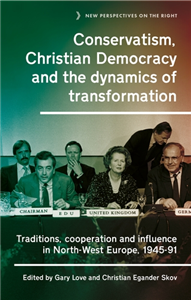
Conservatism, Christian Democracy, and the Dynamics of Transformation compares the centre-right political traditions of Britain, the Nordic countries, France, West Germany, and Austria and looks for evidence of political cooperation and influence across borders during the period 1945-90. The book explores howa variety of intellectuals, politicians, and political parties transformed their politics in response to major economic, social, and political challenges and seeks to explain why conservatives and Christian democrats came to feel that they belonged to a wider centre-right political family by the end of this period. It also examines why these political traditions found it difficult to cooperate with each other after the Second World War and why they decided to invest more political capital in inter-party relations and wider transnational projects from the 1960s. As the book shows, these developments resulted in two new centre-right internationals: the European Democrat Union and the International Democrat Union.
Trusted Partner




